
Translated material
1914-2014
“Izbornik” Khlebnikov and “Roads” by Akhmatova. Music to the words of poets. The results of the cycle
Alexander Genis: Today: in the December issue of our cultural and historical section “1914 - A century later,” we bring the results of the thoughts of the main shock of the entire twentieth century. This event is the beginning of the World War, which is undoubtedly one of the most gloomy anniversary in all Western history. Indeed, unlike what Putin thinks, the central event of the twentieth century was not the collapse of the USSR, but that made it possible, the USSR, the birth of the First World War, the century of which we recalled the entire outgoing year.
The Great, as it is still often called, the war was an almost successful attempt by the suicide of the West. Having reached an unprecedented heyday, civilization, left without rivals, grabbed with herself. In essence, it was a civilian - fraternal - war, for each side fought for the same European values. Not ideology, but a political map shared opponents. They united their industrial power, which escaped from the obedience of man, the progress of science and technology, the sovereign will, the stubbornness of the generals and the great misunderstanding that led to the disaster. Historians have been arguing for a whole century about the reasons for this monstrous and meaningless war, but there are no doubts for its consequences. Without the First World War, there would be no second. Without her, there would be neither Hitler, nor Lenin, nor Stalin. Do not be this inhuman, not distinguishing heroes from the panties of the massacre, we would not know the totalitarian society, who abolished the personality and deified the state. It was this war that gave rise to the vile temptations of the twentieth century, which tormented us until we outlined them, almost destroying ourselves and the planet in the process.
And yet, a century later, we again see the free world as we dreamed about him before the First World War. Europe, becoming the European Union, finally ended with fratricidal strife. The nations that have entered the new union have no border that would prevent the movement of people, ideas and goods. Marriages became mixed, currency - one, languages - different, but many live bilinguals and polyglots. And most importantly, it would never have occurred to anyone, as today, to wait for the war between “eternal enemies” or, as they said in 1914, between “Gauls” and “Huns”.
Against the backdrop of this historical triumph of the eternal dream of peace, a war unleashed by Putin against the rowing about Europe of Ukraine, it seems an anachronism and is it. This is an act of a lost story that turned back.
That is why it is so important to insert today in a centenary perspective that allows you to outline, make out, to learn the true scale of events and the prospect of historical development.
The idea of this led us to the decision to continue the cycle next year. In the meantime, we will complete this year of the December release of our column
“1914 - century later”: paradoxes and analogies. ”
What happened, what happened, what could have been.
(Music)
Alexander Genis: Today, in the latest program of our cycle this year, we will talk about two poetic collections that were published in 1914, and largely determined the course of the development of Russian literature for the next century. Actually, they are still relevant today, more than ever.
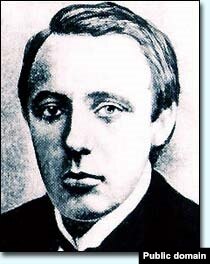
The first book that I want to say is called "Izbornik". This is the book of Veleemir Khlebnikov, which collected his opuses of 1907-1914. The bibliographic description of this book is a rare delicacy. I quote:
“The Izbrier of verses with the afterword of the speech. 1907 - 1914 .. /11 Figorov. Filonov. 1 Fig. K. Malevich. Simony V. Khlebnikov Fig. N. Burlyuk. - St. Petersburg;“ EUS ”, 1914. - 48 p.; [16] l. With Il.; 20x15 cm. C. 70 kopecks.
I must say that first of all I was struck by a bold printing house that released this rarity. I read this book in its present form on Ecarne, fortunately, now everything can be found on the Internet. But once I saw this book and alive-it was at the exhibition of the avant-garde Russian book at Yale University. I just arrived in America and Bakhchanyan took me there because he was a big lover of a futurist book. Then in America for a lot of money, such rarities were sold at auctions, including Khlebnikov’s “Izbornik”. This book must be seen, because it is a typographic curiosity, it is all printed by different fonts. I even thought: where did they find such a printing house that can make such hooliganism? There was a printing house on Nevsky Prospekt, by the way, that is, it was quite large. All letters, all typographic letters were used, including Old Slavonic, including some superstructure records, titles as on icons, all this resembled a kind of poetic rebus. If we take into account the amazing graphic works of Filonov, Malevich, then this book, of course, is not a price. However, with regard to the verses themselves, then with them, of course, as always is very difficult.
The fact is that Khlebnikov at that time was perceived by many as the main Russian author of his era. On this occasion there is a wonderful story with Shklovsky. Do you remember the expression “Hamburg account”? Shklovsky perfectly describes where he got this working term of professional struggle.
Solomon Volkov: In Hamburg, wrestlers are gathering behind closed doors and fights to determine among themselves, not to the public, but among themselves, who is a real, not a linden champion.
Alexander Genis : When Shklovsky spoke about the Hamburg account in literature, he found that Bulgakov did not even reach the wrestling carpet. I will not forget this Shklovsky. But who, he says, is a clear champion? Of course, the king is Khlebnikov, Shklovsky wrote.
This was a general judgment among enlightened fans of poetry and Russian literature. The best about Khlebnikov wrote from his contemporaries his Tynyanov, who reasoned a lot and thought about Khlebnikov.
Solomon Volkov: He also released the famous five -volume one with Stepanov. You seem to have him, Sasha?
Alexander Genis: Exactly. Preparing for our program, I once again took out my five -volume, which I am very proud of, I already bought this five -volume in exile, really there is still no equal to it.
Solomon Volkov: In my opinion, did you pay some astronomical amount at one time?
Alexander Genis: At one time it was my weekly salary, let's say so. But I do not regret, because I often use these books. There are many things that modern editions do not reprint - sketches, fragments. Khlebnikov had a lot of unfinished, some of his passages were completely crazy. One begins, it seems, like this: "The root of the minus of one has come in and sat down to drink tea." Whatever it means, Khlebnikov was still that author.
That is why Tynyanov said that Khlebnikov’s work is a revolution. The revolution is always inconvenient for reading: "He preaches the explosion of linguistic silence, the deaf -mute layers of the language."
How to understand Khlebnikov? The fact is that in the representation of Khlebnikov, the Russian language had huge potential opportunities that have not yet been used. He tried to use them. That is, he used the words that could be in Russian, but they were not up to him. Some words were insanely successful, like a “pilot”, for example, some remained only in Khlebnikov’s poetry. One way or another, in his verses - the vanguard dictionary. If we want to understand the possibilities of Russian literature, then, of course, we must read Khlebnikov. Tynyanov said: “Khlebnikov’s voice in modern poetry has already affected: he has already fermented the poetry of others.” I really like this phrase, this suggests that the enzyme is a catalyst, it is a little necessary for the reaction, it is yeast that allow you to rise in literature bread.
Yes, listening only Khlebnikov is very difficult, and it is difficult to read Khlebnikov. But it is clear that he had a great influence on many.
Solomon Volkov: On the Operauts, on Zabolotsky.
Alexander Genis: Including prose. It always seems to me that Platonov made from prose what Khlebnikov could do if he lived long enough.
What happened in this “Izbornik”, what verses? One of Khlebnikov’s most famous opuses, which entered all the textbook, sounds like this:
Bobeobi sang lips,
Waeomi sang eyes,
PEEEO sang eyebrows,
Lieeei - a dream sang,
Gzie-gzi-gzao sang a chain.
So on the canvas of some correspondences
Outside the length, the face lived.
These onomating fantasies, these lexical phantoms extremely remind me of Kandinsky. The abstract painting of Kandinsky and these verses are generally consisted of the same material.
You know, Solomon, a shock occurred to me when I tried to read Joyce's Wake on Finnegan. Having reached the 11th page - three months later! - I suddenly stumbled upon the frightened "bobeobi". It turns out that Joyce knew this poem and used Khlebnikov in a linguistic monster.
Solomon Volkov: It also occurs in Brodsky. So it turned out to be very influential, this is a poem. Of course, all of us, who in his youth read Khlebnikov, were fond of them, knew this poem by heart. Wake us up at night, they could have been lazy.
Alexander Genis: Another poem of Khlebnikov is philosophical. If the first poem is a pure lyrics of sound, then this quatrain is Khlebnikov’s philosophy, who always thought about very complex things. Here is a poem:
When horses die, they breathe
When the grasses die, they dry,
When the sun is dying, they go out
When people die, they sing songs.
Solomon Volkov: You know that he put these lines with an epigraph to one of his works, to the Quartet, the Polish composer Lutoslavsky. If I knew that you would read this poem, then I would take this “quartet” with me.
Alexander Genis: And we will return to Khlebnikov next year. Khlebnikova is much enough. It is interesting that among contemporaries Khlebnikov, of course, had allies. This is the same Filonov, who greatly appreciated him, of course, twisted, of course, Mayakovsky. who carefully read and understood Khlebnikov.
But people from another environment, they also appreciated Khlebnikov very highly. For example, Mandelstam, who immediately recognized Khlebnikov as a genius, was present on some readings. Akhmatova listened to Khlebnikov’s poems, it seems - “where is the estate, where the water” does not happen further, but she used the line of Khlebnikov as an epigraph for her “poem without a hero.” This indicates how rich the Silver Age was, if he could “keep” so many geniuses at once. So diverse Russian literature was at that time and the war that was erupted in 1914, could not stop the war in 1914, and could not stop The flow of these talents. With this, and even then not immediately, only the Soviet government coped.
Solomon Volkov: As a musical fragment illustrating your considerations about Khlebnikov, I want to show the opus of Sviridov. An unexpected composer seems to be Khlebnikov, but meanwhile, as far as I know, he was the first to put Khlebnikov’s poems to the music. And he put the small poem, which I will read:
Sing me about clean girls
These debaters with bird cherry
About the young men of the slender-priestly:
There are among you - I know and believe you.
A wonderful poem, such a miniature.
Alexander Genis: quite transparent, which does not always happen to Khlebnikov.
Solomon Volkov: Sviridov made a large praise from this little pebble. Sviridov sang this poem as something majestic, as a kind of manifesto. In my opinion, this wonderful music of Sviridov perfectly represents Khlebnikov’s poetry. Sings Vladimir Baykov.
(Music)
Solomon Volkov: When I was preparing for our conversation today and looking at the response of the press, the Russian press of 1914 on literary novelties, I thought about the same thing: what unheard of wealth was Russian literature of that time. Moreover, it is interesting that journalists, reviewers did not even know what treasures they were offered, they perceived it as something current, natural, granted and subject to severe criticism.
Alexander Genis: I can’t help but remember how Bunin said in 1913 that Russian literature had never experienced such a low fall as what we should read today.
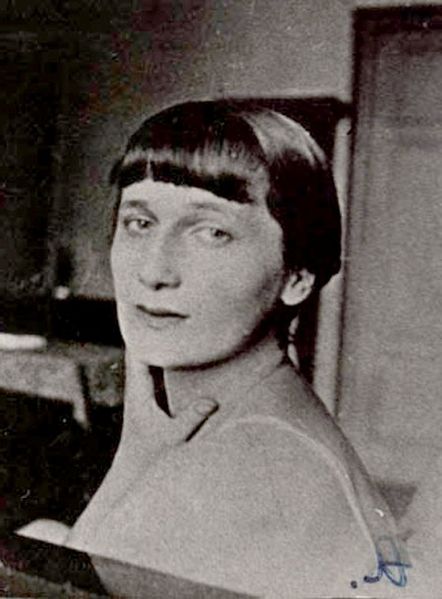
Solomon Volkov: If in our time two such poetry collections appeared as Khlebnikovsky and the one about which I now want a conversation - these are Akhmatova’s “Roads”, it would be necessary to consider an unusually happy year in the history of literature, not only the Russian, but the world. Two precious stones appeared to the people. I must say that I read the responses of contemporaries to Akhmatova’s poems, they were met with enthusiasm, and the press was almost one voice restrained: “Yes, they say, a talented poetess.”
This directly reminds me of the judgments of the secretary of the party bureau at the conservatory when my comrades asked whether it was worth going with Volkov in Komarovo to Akhmatova, whether she was really as good as Volkov speaks. To this, the secretary of the party committee said: "Yes, a good poet, but she made a lot of mistakes." The tone of the press of 1914 is exactly the same: yes, a talented poet, but is closed in narrow, chamber love experiences. She needs to go on a wide road, she needs to affect large social topics.
Alexander Genis: I must say, not everyone understood Akhmatov so much. Zhirmunsky was one of the first connoisseurs and interpreters.
Solomon Volkov: She really appreciated the review unknown.
Alexander Genis: I didn’t write about her as follows: “Cold of moonlight and delicate, soft femininity blows from Akhmatova’s poems. There is no sunnyness in her poems, there is no brightness, but they are strangely attracted to themselves, they are beckoning some incomprehensible misunderstanding and timid anxiety. ” Let us leave all this “timid lack of aging”, which was inherent in the criticism of that time, but what is subtly noticed is the moonlight. The moonlight goes Akhmatova. I would say that Tsvetaeva is a solar poet, and Akhmatova is lunar.
Solomon Volkov: I’ll say this: the appearance of this college of “Roalhing” produced, as it seems to me, a revolution in the concept of Russian female poetry. It is not accepted at all, I know, now it is considered to be unscrupulous to talk about a certain female poetry, but then the reviews were called - a review of female verses. Now they don’t do that.
Alexander Genis: But today in Russia a review of “ladies' vodka” is published. I found out that now there are two hundred species of ladies' vodka.
Solomon Volkov: This is called progress. The revolution that Akhmatova committed in this genre of female poetry can be appreciated only in comparison with what the female poetesses wrote before her. I want to show not how, probably, our listeners, Zinaida Hippius, are probably thinking now, because the gippius poetry is generally Androgyn, I think when you read the poems of Hippius, if you do not know exactly what the woman wrote, then it is not clear whether it is a woman or a man.
Alexander Genis: Our colleague Boris Mikhailovich Paramonov wrote a lot about this.
Solomon Volkov: In this case, I completely agree with him. But I want to show and tell about the poetry of the poetess, which is now not remembered and which was a very fashionable and influential representative of women's poetry - this is Mirra Lokhvitskaya.
You mentioned Bunin, who so negatively spoke about the state of Russian literature of that time, he belongs, in my opinion, the best description of Lokhvitskaya as a woman, as a living person I have ever met, and therefore I want to read it. He said that during his lifetime Lokhvitskaya “enjoyed fame, it was known“ Russian Safo ”(as, however, many Russian poets). “She chanted Love,” Bunin wrote, “passion, and that’s all that I imagined it almost a bacchana, not at all suspecting that she, for all her youth, was already married for a long time ... The mother of several children, a large homebody, is lazy in the same way: often she even receives guests by lying down, in the hood, and never speaks with poetic languor, and just talls very sensibly, with them, with just sensibly, with it. Great wit, observation and wonderful mockery. ” Lovely excerpt. But her poems, I have to tell you, at the moment are perceived with great difficulty, and this despite the fact that it was fashionable. She died, unfortunately, from tuberculosis, she was 35 years old. But at the same time, she managed to publish five volumes of her works, she was printed with enthusiasm. And she was a truly famous and very influential representative of female poetry. Look what she wrote.
Why your look, and velvet and burning,
My blood excites
And wakes up in the heart powerful
Locked love.
Meeting with him, I break to you involuntarily,
But I give passion in my chest ...
You want to know how sweet it hurts me -
How do I love you? ..
Close your eyes with a curtain double
Your thick eyelashes, -
You will not read under the mask of ice
Neither thoughts, nor my feelings.
Alexander Genis: This, of course, is a provincial romance.
Solomon Volkov: Notice - an ice mask is already present. You talked about Akhmatova as a poet of moonlight. There is already an ice mask. But then it’s absolutely comic that she is crushing passion in her chest. Immediately imagine how she presses her breasts. I am surprised how a talented person, as it was Lokhvitskaya, how she did not notice the comic nonsense of the pressure of her chest.
Alexander Genis: Author's deafness. Remember Lermontov "with a lead in his chest and a thirst for revenge." Many imagined “wine in the chest”.
Соломон Волков: Представляете, какой контраст этим стихам составила Ахматова. Вот какая была женская поэзия, а вот какой она предстала читателям «Четок»:
Звенела музыка в саду
So inexpressible grief.
Свежо и остро пахли морем
На блюде устрицы во льду.
Он мне сказал: "Я верный друг!"
И моего коснулся платья.
Как не похожи на объятья
Прикосновенья этих рук.
Так гладят кошек или птиц,
Так на наездниц смотрят стройных…
Лишь смех в глазах его спокойных
Под легким золотом ресниц.
Соломон Волков: Заметьте: “золото ресниц” как и у Лохвицкой фигурирует, но насколько по-другому, в другом контексте воспринимается.
Александр Генис: В акмеистском контексте все воспринимается предельно конкретно.
Соломон Волков: А кончает она так:
А скорбных скрипок голоса
Поют за стелющимся дымом:
"Благослови же небеса -
Ты первый раз одна с любимым".
Соломон Волков: Вы знаете, кому посвящено это стихотворение, по моему глубокому убеждению? Ахматова была великой мастерицей запутывать следы. Лохвицкая - тоже, когда она публиковала свое стихотворение, то понимала, что люди будут отгадывать, кому эти любовные стихотворения посвящены. Это условия игры и не нужно притворяться, что поэты об этом не знали, они невинно писали любовные стихи, отдавали в печать. Они понимали, что не только близкие знакомые будут гадать, кто адресат любовных стихов, но и широкий круг читателей. Есть замечательные воспоминания Лившица в «Полутороглазом стрельце» о том, как Ахматова ходила в «Бродячую собаку», записывала свое новое стихотворение в гостевую книгу, и тут же гости «Бродячей собаки» кидались читать и догадываться о том, кому очередное любовное стихотворение Ахматовой посвящено.
Александр Генис: Вы знаете, я вас перебью, но не могу не сказать, что несколько лет назад я был в Петербурге и мы с Татьяной Толстой выступали в той самой «Бродячей собаке». Вдруг я увидал все те рисунки, все эти силуэты, вырезанные из черной бумаги. Я представил себе, что сто лет назад на той же самой сцене была Ахматова, которая читала эти стихи. Жизнь продолжается, «Бродячая собака» существует. Вся эта русская культура, что бы ни было, что бы ни происходило со страной, она не прервалась, эта ниточка тянется. Вы сам свидетель, к чему эта ниточкаведет: ведь вы же знали Ахматову, вам повезло ее видеть.
Соломон Волков: Да, но вернемся к посвящению. Вы знаете, тут вопрос еще более сложный и запутанный, чем это может показаться на первый взгляд. Скажем, это стихотворение, которое я прочел, «Звенела музыка в саду», кому оно посвящено? Поставлена дата Ахматовой 1913 год, вышло оно в «Четках», которые появились в нашем 1914 году. Ахматовские даты — это особая история, она очень любила мистифицировать людей, своих друзей, поэтому судить по ею проставленными датами, когда точно стихотворение было написано, невозможно. Она хотела в тот период что-то рассказать о своем романе с Модильяни, не могла это сделать по очень многим причинам. Запутывала картину отношений с Модильяни до конца своей жизни, никогда в открытую так и не сказала, что там был настоящий полноценный роман. Скрывала существование ныне известных его рисунков, изображавших ее обнаженной.
Кстати, не могу не сказать: первым человеком, который увидев рисунок Модильяни, который тогда еще носил название «Ню» и никакой Ахматовой, сказал, что это Ахматова, была моя жена Марианна. Это была подготовка к знаменитой выставке в Венеции, репродукция этого рисунка была воспроизведена в журнале. У Марианны глаз фотографа очень наметанный, она, увидев этот рисунок, сказала: «Это Ахматова». Я пришел с этим открытием Марианны на радиостанцию Свобода. И, увы, тогдашнее руководство, побледневши, сказало: «Нет, этого мы не можем делать , мы не можем этого сказать». К честью Татьяны Толстой и Иосифа Бродского, которым я тогда же рассказал об открытии Марианны, они оба, взглянув на этот рисунок, сказали: “конечно же, это Ахматова”. А спустя некоторое время выставка, на которой эти рисунки Модильяни были представлены, открылась в Венеции, тогда уже одна итальянская славистика сделала публичную атрибуцию. Но я должен закрепить это первенство за Марианной.
Александр Генис: Я помню, как эта выставка рисунков Модильяни приехала в Еврейский музей Нью-Йорка, я впервые увидал воочию этот рисунок и уже никаких сомнений у меня не было, потому что этот горбоносый профиль трудно не узнать. Поскольку мы все знали цитату из Эренбурга, где он описывал очень скромно роман Ахматовой с Мадильяни, то увидав ее нагой, я понял, что роман был, да еще какой.
Соломон Волков: Так вот, я хочу сказать, что это стихотворение, конечно же, на мой взгляд, посвящено Модильяни. У нее всегда с адресатами путаница — это всегда будет открытый вопрос, но это стихотворение посвящено Модильяни.
Мы с вами говорили о «Бродячей собаке». Есть знаменитое ее стихотворение «Все мы бражники здесь, блудницы», у нее существовал вариант «Все мы вышли из небылицы», она не хотела в какой-то момент себя называть блудницей, что тоже понятно.
Александр Генис: Потому что блудницей ее называл Жданов. Still!
Соломон Волков: Считается, что это стихотворение о «Бродячей собаке», а ведь это тоже не так. Это стихотворение вовсе не о «Бродячей собаке», и она тоже запутывает здесь следы. В оригинале стихотворение назвалось «Кафе «Артистик», а - это Монпарнас, это “Ротонда”, она там именно с Модильяни. Все стихотворение о том, как в Ротонде находится Модильяни — это мое глубочайшее убеждение.
Предоставляю на суд наших слушателей. Прочту сейчас это стихотворение, чтобы слушатели наши, как мне кажется, в этом убедились.
Все мы бражники здесь, блудницы,
Как невесело вместе нам!
На стенах цветы и птицы
Томятся по облакам.
Ты куришь черную трубку,
Так странен дымок над ней.
Я надела узкую юбку,
Чтоб казаться еще стройней.
Навсегда забиты окошки:
Что там, изморозь или гроза?
На глаза осторожной кошки
Похожи твои глаза.
О, как сердце мое тоскует!
Не смертного ль часа жду?
And the one that is dancing now
Will certainly be in hell.
Александр Генис: Соломон, скажите, как Ахматова относилась к своим ранним стихам?
Соломон Волков: Ахматова выстраивала свой жизненный путь и свой поэтический путь, ей не хотелось замыкаться в клетке своих ранних стихов. Мне кажется, что в тот момент, когда я уже с ней встретился, на ней висело ждановское клеймо монахини и блудницы. При том, что она сама позиционировала себя в ранних стихах как таковую. Она о себе же сказала, что мы все здесь блудницы. Она себя позиционировала как некую монахиню перед алтарем Эроса. И это было колоссальное новаторство. Почему мне кажется, что Ахматова так актуальна сегодня? Потому что это сочетание светской религиозности, если угодно, или эротической религиозности — это очень тонкая вещь, но она свойственна современной женщине, интеллектуальной, ищущей, думающей современной женщине. Современная женщина себя вновь после огромного перерыва ощутила в микрокосмосе ранней Ахматовой, я считаю так. И поэтому стихи, опубликованные Ахматовой в 1914 году, так сегодня актуальны. Я хочу показать, как эти замечательные стихи распел современник Ахматовой великий композитор Прокофьев, стихотворение, которое тоже было опубликовано в «Четках» в 1914 году. Я прочту его:
Hello! Легкий шелест слышишь
Справа от стола?
Этих строчек не допишешь -
Я к тебе пришла.
Неужели ты обидишь
Так, как в прошлый раз, -
Говоришь, что рук не видишь,
Рук моих и глаз.
У тебя светло и просто.
Не гони меня туда,
Где под душным сводом моста
Стынет грязная вода.
(Music)