
Translated material
Migrants and stars
Why not died communism yet?
“Chefura - won” - these are inscriptions on the walls of Ljubljana, the capital of Slovenia. The approximate analogue is “Russia for Russians”.
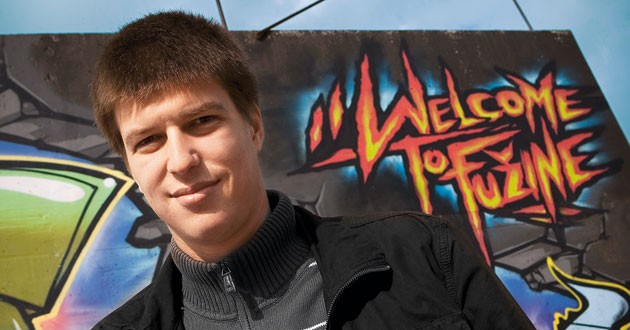
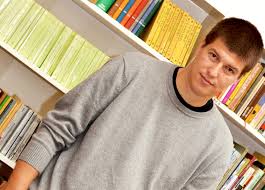
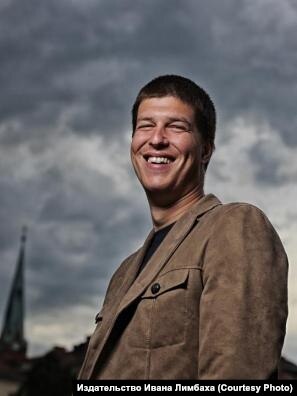
In the St. Petersburg publishing house of Ivan Lumbach, the book of the leader of the Balkan “Generation of thirty -year -olds”, film director, writer and former basketball player Goran Voinovich , by which he shot the film with the same name, was published. The novel was written in the jargon of young inhabitants of the Lyubvyansky district of Fuzhina, where "who came up" - immigrants from the southern republics of the former Yugoslavia live. At the end of 2011, the second novel of Voinovich was released - "My Country of Yugoslavia." Voinovich came to the presentation of the Russian edition of the Chefurov at the Non Fiction Fair. Interview with him is recorded in Ljubljana. Translation - Baben Sollik.
Why not died communism yet?
- The heroes of your novel and the film are immigrants from the former southern regions of Yugoslavia to Ljubljana, they are similar to any refugees, migrant workers in Russia. Tell us about the main character: is he your peer, acquaintance, neighbor? In what period his parents arrived in the capital of Slovenia-was it during the Yugoslav wars of the 90s or was it long before the war? How did these stories appear?
- Chefura in Ljubljana are similar to all Chefurs of the world, that is, migrants. Here we can talk about economic emigration and on the other hand - about everyone who was here during the Balkan wars. What is important to me is about people who are not here of their own free will, but thanks to fate, existing circumstances. They had no choice, and this forced need to live in another country determined their attitude to Slovenia.
That is what my hero Marco differs from me. I spent my childhood and raised in the ghetto in terms of Ljubljana, where first of all people from the former Yugoslav republics live, but still my parents came here because they themselves decided so. They had other opportunities. They arrived because here the standard of living was better compared to other Yugoslav republics. Marko's parents did not have such a choice. Here we are talking about the difference in education. If I was brought up, I repeat, with the consciousness that I have a choice where to live, then my parents treated Marco differently: he was brought up in such a way that he lives in Slovenia, but this is not his real homeland, that there is some conditional Bosnia, where, perhaps, he will ever leave.
The main problem of Marco in the novel is a sense of loss of his parents, who live in Slovenia, but do not belong to this space. And they transfer their loss to their son.
The first generation of migrants does not adapt to this environment, they transfer their sense of loss of their homeland to the next generation. I think that it’s interesting, and what often happens: the second generation radicalizes the fears and problems of parents. If parents tried to live imperceptibly and secretly, then the second generation expresses its inability to the environment with the help of aggression and hatred.
- Is it possible to say that in the new generation of migrants, nationalist views are radicalized? Or do you need to talk about it differently, because these people have lost their identity? If they are looking for it, then what can this be expressed, except for aggressive protest?
-I think that we all really want to belong to something and be part of something. A turn, another attitude arises when society does not accept us (or others). Such an example: Marco and his parents do not think about their identity, they want to understand it only when society is negative about them. At first, Marco and his comrades manifest itself in a special style of clothing, they want to differ in their behavior, their clothes, and only then in search of national identity.
- their playing sports is also a search for themselves? This is almost a cliche for young people from the outskirts: if you want to find yourself, you go to sports. Sports all over the world, and the nationalist demonstrations are also associated with the Fan Movement. Immediately the question of your sports experience: have you seen this?
- Yes, sport can be a refuge for nationalists, but my experience speaks of something else. In sports, I saw only good. Thanks to basketball - and sports in general - I learned to look for other forms of self -determination, not only national, or to feel like a child from a former Yugoslav family. I was a good basketball player, and then I was not a chefur, a stranger, or some kind of nationally fixed guy. I believe that sport can be a way out of national barriers.
I think that today in European sports it is the Chefuras, migrants in national teams destroy the myth of exceptional nationalism. Let's see what is happening in Germany: it is quite difficult for the German skinheads to root for the German team where the Turkish football player plays. Or it is difficult for French nationalists to root for their football team, where the majority make up African Americans. Therefore, in my opinion, today in Europe the role of Chefurs is quite positive if we are talking about understanding the state. We are more or less aware that the state exists as a society of citizens, and not as a society of representatives of the indigenous population.
- Goran, at what age did you deal with basketball, in which teams and who are your sports idols?
- I began to engage in basketball when I was 10 or 12 years old. And then he played for 10 years in basketball. When I began to study at higher education, I did not have enough time to deal with both. The hero of my generation, I think, is the hero of all who followed different sports, was primarily the American basketball player Michael Jordan . In addition to him, I still remember well and consider the last generation of basketball players who played for a single team of Yugoslavia with my idols. I mean the deceased dragen Petrovich or Croatian basketball player Tony Kukoch . If I met Tony Kukoch on the street today, I would feel like a small child who asks for his autograph.

- Where did you study?
- I studied at a film director at the Academy in Ljubljana (Academy of Theater, Radio, Cinema and Television AGRFT). For some of my friends and relatives, this was a surprise, since I have never been a lover or a movie expert. I believe that cinema is an excellent form of creativity. Only in the last year of the Academy did I began to understand what a film is and how it affects people. I work as a director, but I constantly continue to study, open and understand what a movie is.
- Let's talk about your film “Piran, Pirano” . He is about how the Primorsky city with this name passes after the Second World War from Italian subordination to Yugoslavskoye. This story for Europe of that time is very characteristic when people literally wake up in another country and the population, national minorities, finds themselves in the position of refugees, in the position of people who break fate. Often these are more than cruel stories. Was the script based on real events? Why did this topic excited you, were there any documentary sources?
- The film “Piran, Pirano” is associated with my family history. In Piran, I really began to open stories that were very similar to the stories that my mother told me. My mother was born in the city of Pula, her parents came there from Bosnia at the end of World War II, to the empty city from which all the Italians left. I wanted to show my love for the beautiful city of Pirano, but I wanted to unite it, as you said correctly, with the history of the end of the Second World War, with cruel times, when there were many refugees forced immigrants, when people woke up and were forced to leave their home, homeland. Of course, here we are talking about the history of Europe, but this story can be considered even wider. Interestingly, this film was for the first time at the box office in Egypt. When he was shown there, people came to me and talked about their experience of Palestinian refugees. So, I think, the personal history of my ancestors with the universal metaphor of Europe and wider - the world is combined here.
- I asked you about my favorite athletes, but are there any favorite directors?
- Here it will be harder for me to answer, because in the cinema I do not have such children's idols as in basketball. I respect (and even adore) different directors, the most famous, here we can mention Otar Ioseliani , the Georgian director, Italian Wittorio de Sick , and from modern - Turkish director Fatikha Akin . In fact, I do not know if they affect my work right. For example, when I was small and played basketball, I wanted to imitate Michael Jordan, and when I work on the cinema, I try to forget about my movie heroes and not imitate them. I try to make a movie differently from how great names did it, such as Scorsese, whom I really love as a spectator.
- Emir Kusturitsa is not in the list of favorite directors, right?
- Kusturika shot several excellent, good films. He was once an excellent director who, unfortunately, ceased to be a creator. His current positions, his political ideas represent a greater loss for all of us who once watched his films with respect. We are all actually disappointed, we are critical of his political projects, to his political statements. It is painful for us all to watch as a person whom we perceived as a very subtle and creative in the 1980s-early 1990s, today turns to society with such cheap and insensitive work and ideas.
-Do you mean his architectural and political projects such as Andrich-Grad or his movie too?
- I think that Kusturitsa has been experiencing an internal crisis that is reflected in his work for many years. All his projects have become cheap tourist actions. It seems to me that everyone already shows that he devotes little time and that he, unfortunately, is no longer devoted to his work. So, for example, with regard to his architectural projects, his village or Andrich-Grad, they symbolize the inner emptiness in which the bureau turned out to be. The project of Andrich-Grad is negatively included by almost all specialists. It seems to me that Kusturika has lost his soul to the Creator, today he is engaged in other things, without devoting a lot of cinema.
- I want to ask about Stuyugoslavsky Kitche. It seems to me that Andrich-Grad is one of these projects that has a pop cultural character, but not in some curious for the researcher or a sense living for a citizen. Such a retrograde kitsch that refers us to the old national myths. What do you think of a certain tendency of the Balkan space to existence in kitsch forms? The Russian space is also prone to this, to bring glazunes, Shilov, ceremonies with their gigantomania and with a very bad taste that officials like.
-If you look at Kusturitsa in a wide context, this is only one example of the superiority of the turbofolk culture that was during the Yugoslav socialism on the periphery, it was censored. When I'm talking about a turbofol, I'm talking about cheap forms without any content. The very concept of a turbofol does not mean that it has any relation to a deep tradition of folklore, there are only cheap images of a popular idea of folklore. It is interesting that the early Kusturitsa had a game with these forms, but then he loses a duel with a popular culture and becomes a victim - or an empty manufacturer - a turbofol. His example indicates the dominance of a turbofolk culture, where there is no correct attitude to folklore, but there are only empty forms.
- Then I will ask about such a hero of the Stuyugoslav cultural scene as Magnfico, from a quote from whose song you begin your novel “Chefura, Won” .
"Who is the Chefur? Chefur is a person living in a particular state, but not belonging to the national majority. In our case, he is from lands located south or east of the Kolps river. We usually call it descendants. The following external signs are distinguished from representatives of the main part of the population: low foreheads, outstanding cheekbones and heavy lower jaw. Features of behavior. Features of behavior. Features of behavior. Features Chefurov: they are in progress of obscenities, adore alcohol, delicate gender and football.
From the entry to the song “Chefur”
Robert Peshut Magnfico
Is it possible to say that this person is deconstructed by a turbofol? With whom would you compare yourself in the book about Chefura - with a person who sings them or who criticizes them?
- I try to maintain two types of attitudes towards my heroes. On the one hand, this is identification, but on the other, a distance, I try to distance myself to understand and be critical. My novel is not only a collection of stereotypes, I ask myself the question: why they behave the way they do. Why do they enjoy when they sit behind the wheel and twist the music very loudly to show everyone who they are. I am asking myself a question - why and why.
“Is it clear why they do it?”
- I tried to give several answers in my novel. I hope that the Russian reader will try to understand why. I hope that using this approach, I went to the truth.
- The question concerns the generation of people you describe. Now a lot is said about southernostalgia, and this is a process that exists not only in the countries of the former Yugoslavia, it also exists in Eastern Europe. What, in your opinion, are the roots of nostalgia for a socialist past?
- The problem is that many people after socialism did not quite find their place in the new system and new society. People were in a very unpredictable and unsafe world. Due to the sense of unpredictability, loss, a new mythologization of the past arises. Moreover, it is especially manifested when the current system is in crisis. I think that if West European capitalism used to be sold as the best system, some now dream of the past, forgetting all the problems that are characteristic of this time.
- The last question is about Abdul Sidran. This outstanding writer, poet, screenwriter is known to the Russian viewer and reader precisely because he was the scriptwriter of the first Kusturitsa films ( “Dad on a business trip” and “ Do you remember Dolly Bell?” ). Then they parted for artistic and political reasons. Belgrade chose Kusturitsa, Sidran held the entire siege of Saraev in the city. You worked with Sidrin. What can you say about him?
- Sidran is one of the best scriptwriters in Europe and, of course, a great poet. He worked with me on the script of the film “Chefura, Won”. He agreed to take part in this work, because he learned in the script some of his topics, for example, the topic of his son’s attitude to his father, the problem of responsibility and the defeat of his father. When I made the film, he helped me restore the distance in relation to my own story and the book written then, because the book is a different way of creativity, another art. Our meetings were very precious, I consider him the greatest person.