
Translated material
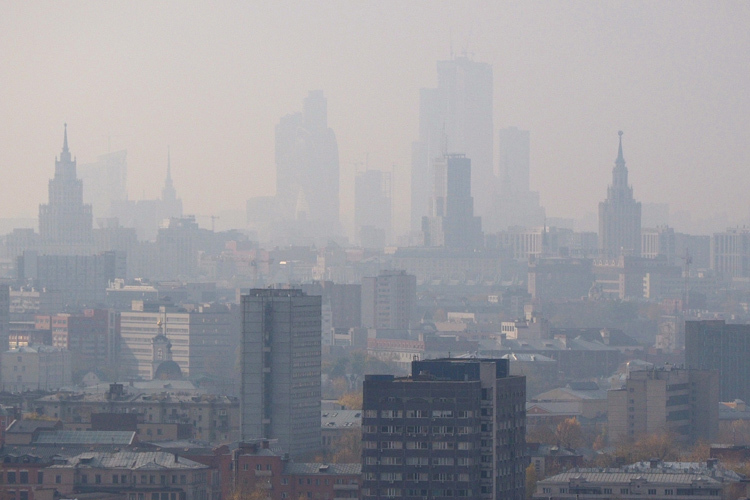
What happened to the air in Moscow?
Colta.ru continues to cooperate with the The Question portal , on which you can get an answer to any question.
All of November, residents of Moscow discussed where a strange smell came from and what is happening with the air in the city, while it, according to Mosecomonitoring , did not cleanse the December snowfall. A variety of versions arose, one another is worse: from the spill of mercury to fires in the “Chernobyl trace” zone. The Question checked each of them for truth.
Version: Burn the vapor residues
Warring remnants are wood waste, that is, bark, stumps, trunks, roots, sawdust and branches that accumulate after work in the forests. The smell of Gary in Moscow and the Moscow Region can be associated with the burning of wood during sanitary cutters in a forest park in Balashikha. They burned wood and in Istra, Zvenigorod, Noginsk and Lukhovitsy: over the past few years, the forestry near Moscow suffered from an epidemic of a corthy-aircraft. On November 21, the Regional Forestry Committee ordered to completely stop the burning of the bandage balances before the special order.
Version: Oil waste smells of
Another probable source of smell is the Moscow oil refinery in Kapotne. Oil waste, in particular, isopropylbenzene, which throws out the refinery, can smell hydrogen sulfide. On November 10, the Investigative Committee opened a criminal case against the MNPZ, and on the same day the Rosprirodnadzor appealed to the Simonovsky District Court with a request to initiate an administrative case. Although representatives of Gazprom-Neft, which belongs to the plant, claim that the deadline for obtaining permission for emissions for the MNPZ is extended until November 2015, it is known that the plant should already be 1.39 billion rubles of a fine for the environmental environment in 2011-2012.
Version: Torfyaniki burning in the Bryansk region
The most unlikely, but also popular version is fires on peat bogs in the Chernobyl trail zone in the Bryansk region. Hundreds of hectares of peat bogs began to burn in September. The fears of Muscovites regarding peat fires are understandable, especially after Moscow dragged on in the summer of 2010. However, this time the smell could hardly reach Moscow.
What is the Chernobyl trail?
The “Chernobyl trail” is a territory that suffered from an accident at the Chernobyl nuclear power plant in 1986 and underwent severe radioactive pollution. A fire on peat bogs and in the forests in the “Chernobyl trace” zone is especially dangerous because it can become an open source of ionizing radiation, which causes radioactive infection. In general, although fires in Bryansk are unlikely to affect Moscow, the problem is more than serious.
Version: Pour mercury in the south of the city
Mercury spills occurred during a fire at a lowland of vacuum equipment on Nagornaya Street in the evening of November 24. Part of the mercury evaporated and ended up in the air, but the Ministry of Emergencies quickly eliminated its source. Those who live next to the Research Institute have probably experienced malaise, but in general the mercury was not so much that all Muscovites became bad.
Version: an accident on a mosvodokanal
The wastewater ejection, sewage breakthroughs and problems with treatment facilities in Moscow are not uncommon, but it is not necessary to seriously consider this version, although on November 28 to Kapotne and flooded the road due to a water accident. In the Moscow Region, it is argued that the smell that spread in Moscow is not at all characteristic of sewage.
How can the state of Moscow air be assessed?
Mosecomonitoring is engaged in the study of air and measuring the amount of harmful substances. On November 20, the experts of the institution recorded the excess of pollution standards and came to the conclusion that the probable reason was in burning wood residues, as well as in gasket due to automobile emissions. The situation is aggravated by almost calm weather due to anticyclone. However, on November 22, Mosecomonitoring announced the normalization of the situation. Alternative measurements are carried out by Alexander Nikolaev, who several years ago created the Moscow Air website. Nikolaev raised the money and bought the necessary equipment - the rain sensor and dust sensor. According to him , in Moscow, the amount of harmful substances in the air is always increased, but in November even ordinary indicators were exceeded by 5, and sometimes 10 times.
Is air pollution in Moscow dangerous?
Depends on what it was still smelled of. If the wood was burning, there is most likely hazard of health: although Gary’s inhalation leads to inflammation of the nose and throat, rubbing in the eyes, pollution of the lungs and even poisoning, serious consequences occur with inhalation of a much larger amount of carbon monoxide. If the cause of the smell is emissions of hydrogen sulfide from the Moscow refineries, you should also not panic ahead of time: it is unlikely that it is contained in too large in the air. Nevertheless, you need to know that among the consequences of inhalation of hydrogen sulfide - dizziness, loss of smell and conjunctivitis, and also - fatigue, restless state and even depression. To worry that there is styrene in the air - a poison that can cause dizziness, headaches and vomiting - is not worth it; It was not found in large quantities during air monitoring.
What precautions to Muscovites should be taken?
Although there are no real grounds for excitement yet, caution will never hurt. It is best to try to open the windows more often and not spend too much time on the street. Respirators will also not be superfluous, although there is no special need for them. The Ministry of Emergencies reminds of a deterioration in visibility on the roads and asks to drive carefully and observe the speed limit. Much more attentive should be people with diseases of the lung and cardiovascular system.