
Translated material
The prisoner of the tangerine war
Peter Bologov - about why the CIS mission is completed
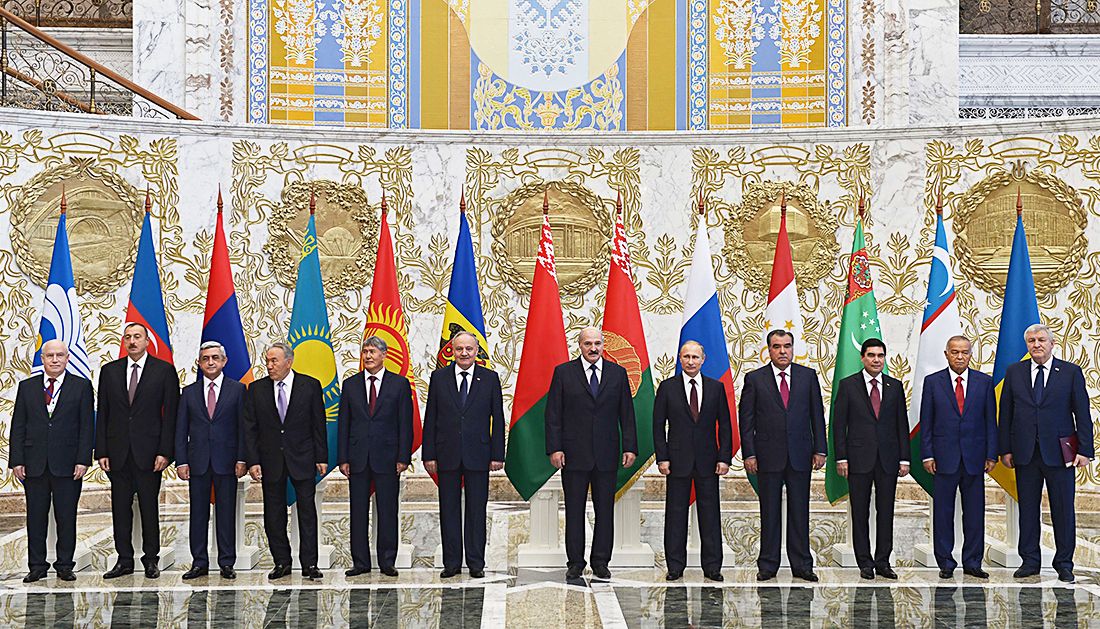
The Verkhovna Rada on December 8 at the level of faction leaders discussed Ukraine's exit from the CIS. The corresponding law was registered in parliament at the end of November - it is expected that it will be considered in the near future. The plans to leave the CIS are not the first to arise in Kyiv - President Viktor Yushchenko still refused to visit the Summites of the Commonwealth; The Ukrainian authorities used to participate in the CIS, as a rule, as an argument in gas negotiations with Russia. Due to the Ukrainian crisis, talking about Kyiv’s exit from the Commonwealth resumed-besides, Ukraine did not sign the CIS Charter, and in 2014 abandoned the chairmanship of the organization. At the request of Medusa, journalist Petr Bologov explains why the CIS mission is actually completed.
Civilized divorce
The Commonwealth was created in the format of Russia -Ukraine - Belarusia in the signing of Belovezhsky agreements in December 1991, which laid an end to the existence of the USSR. It is still believed that the CIS (the name of the SSG, the Commonwealth of the Sovereign States) was considered to be born for the “civilized divorce” of the former union republics and the deterrent of centrifugal forces in the post -Soviet space. After a decade and a half, on the example of the Baltic countries, which immediately refused to participate in the CIS and headed for Europe, it became clear that there was still an alternative to such an association.

In the same December 1991, Azerbaijan, Armenia, Kyrgyzstan, Moldavia, Tajikistan, Turkmenistan and Uzbekistan joined the agreement on the creation of the CIS. Georgia was accepted into the Commonwealth two years later. According to one of the authors of Belovezhsky agreements, Stanislav Shushkevich, who held the post of chairman of the Supreme Council of Belarus in 1991, "the CIS was doomed from the very beginning." Bialowieza agreements, for example, provided for the preservation of a single economic space, a common emission center, armed forces and a single foreign policy. However, there was no real integration within the framework of the Commonwealth, even transport corridors, cultural and scientific relations were violated-largely due to complex relations between the participants in the block.
War with friends
Azerbaijan and Armenia replenished the ranks of the CIS, fighting with each other - the Karabakh conflict was in full swing. Membership in the Commonwealth did not affect the course of hostilities-the ceasefire came only in 1994. Georgia entered the CIS, having already survived two wars - in Abkhazia and South Ossetia - and actually lost these territories. In 2004 and 2008, relations with broken autonomies were aggravated to hostilities, and in the second case, Russia openly entered the war against Georgia, which at that time was still in the Commonwealth.
In the Transnistrian conflict of 1992, Russian troops from the 14th Army acted against the Moldovan troops. Moldova President Mirce Snegur then officially announced that his country was at war with Russia and that he officially informed the UN. Russian troops still remain in Abkhazia, South Ossetia and Transnistria, although the authorities of Georgia and Moldova, referring to international law, consider these territories occupied.
The ineffectiveness of the CIS, like the rest of the post -Soviet structures (CSTO, SCO), demonstrated the events of 2010 in Kyrgyzstan, where a coup d'etat occurred and dozens of people died. Instead of providing assistance, Kazakhstan and Uzbekistan simply closed the boundaries with Kyrgyzstan, and Russia sent its paratroopers there, but only to protect the families of Kant's military personnel.
Perhaps only during the civil war in Tajikistan (1992–1997) the Russian military, acting as part of the mandate of the United Armed Forces of the CIS, were able to prove that there is some meaning in the existence of the Commonwealth. However, the decision of the territorial disputes between Kyrgyzstan, Tajikistan and Uzbekistan, which often lead to shootings and victims, did not contribute to the CIS mechanisms.
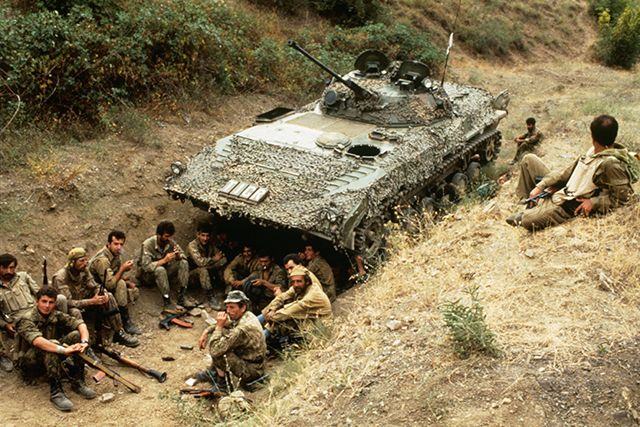
The same can be said about the dispute around the island of Kos Tuzl, which occurred between Russia and Ukraine at the end of 2003 and almost grew into an armed clash. However, the culmination of “Cooperation within the CIS” was the accession of Crimea to Russia and the war in the east of Ukraine, the victims of which were thousands of people. Russian officials do not confirm the participation in the conflict of personnel of the military of the Russian Federation, but they do not deny that among the separatists there are volunteers with Russian passports.
Trade wars
Not a single region of the world, united by the same unified socio-economic space, has survived over the past two decades as many trade wars as the CIS. In almost all cases, the initiator of the conflict or at least one of the participants was Moscow. Russia managed to enter into trade conflicts, for example, with Belarus even in those days when the idea of a union state was actively discussed by Moscow and Minsk.
Of the most significant conflicts of this kind, one can recall the “gas wars” with Ukraine, which continuously went around the prices of Russian gas from 2006 to 2010. They ended with the signing of Kharkov agreements, according to which the Black Sea Fleet of the Russian Federation received the right to stay in Crimea until 2042. With Georgia, Russia waged a “wine war”, abandoning local wine and mineral water. The losses of the Georgian side in the first year of the embargo were estimated at $ 70 million; The supply of wine and Borjomi to Russia resumed only in early 2013. A similar embargo for the supply of Moldavian wine in the Russian Federation operated from 2006 to 2009 and brought $ 180 million to the republic. In 2013, supplies were again banned, and in the summer of 2014 restrictions on Moldavian fruits and canned vegetables appeared.
Russia conflict with Belarus due to gas prices and transit duties in 2004, 2007 and 2010; due to sugar re-export-in 2006-2007; Due to the supply of dairy products-in 2009. Having limited the supply of citruses in 2004 to put pressure on local politicians, Russia unleashed the “tangerine war” even against the self -proclaimed Republic of Abkhazia, which, of course, is not a member of the CIS, but is completely in the field of influence of the Commonwealth.
In 2014, Russia and Ukraine introduced several embargoes against each other at once. Kyiv forbade the supply of arms, military equipment and components to Russia, including already paid. Moscow, in turn, introduced the embargo for the import of Ukrainian vegetables, fruits and dairy products, as well as for the supply of nuclear fuel to Ukraine. In addition, in Russia there are restrictions on imports from Ukraine potatoes, pork and confectionery products.
Leave in a tour
The only country that officially left the CIS for the entire period of its existence was Georgia - it finally designed its exit from the Commonwealth in 2009. The decision on this was made in August 2008, when the war was still in South Ossetia. The republic lost little from the exit from the CIS, because, starting in 2006, she gradually translated all its economic contacts within the Commonwealth to a bilateral basis with specific countries.
After the coalition, headed by billionaire Bidzina Ivanishvili, came to power in Georgia in Georgia, President of Belarus Alexander Lukashenko suggested that the Transcaucasian Republic return to the CIS, but in Tbilisi, no one seriously considered this issue.
In addition to Georgia, attempts to distance themselves from the Commonwealth were made by other countries. In 2009, Moldova left the contract on the economic tribunal of the CIS. Then the Minister of Foreign Affairs and European Integration of the Republic Yuri Link said that Chisinau refuses political and military interaction within the framework of the Commonwealth. In 2011, Azerbaijan made claims to the Cooperation of the CIS Cooperation Program in counteracting illegal migration. Baku reported that they did not recognize international legal personality and their relations with international structures for the CIS and its executive bodies - and intend to make a separate decision on their participation in each of the program events.
There are many similar examples. Do not forget about the organization of GUAM (Georgia, Ukraine, Azerbaijan, Moldova; from 1999 to 2005-also Uzbekistan), which was very active in the mid-zero and positioned itself as an alternative to the CIS.
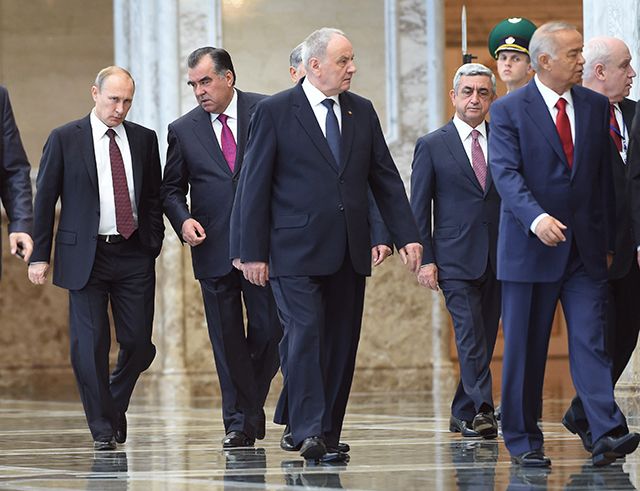
The most interesting position in relation to the CIS is in Turkmenistan, which, like Ukraine, has not yet ratified the CIS Charter. Now the republic is involved in the organization only as an “associated member” (left the actual members in 2005). Despite the fact that the Commonwealth summits are regularly held in Turkmenistan, Ashgabat has established a visa regime with all its countries and ignores most joint programs.
Having come to power at the beginning of 2007, the President of Turkmenistan Gurbanguly Berdimuhamedov determined his attitude to the CIS as follows: “I think that now no one has the illusions of the extremely low level of the effectiveness of the CIS as an international political and economic structure. In Turkmenistan, this was understood for a long time and therefore limited the degree of participation in meetings and consultations that did not bring any practical results. ”
Even Russia in 2007 decided to get out of a whole package of contracts within the framework of the CIS (on the general principles of tax policy, on the principles of customs policy, on the regulation of social and labor relations in transnational corporations), focusing on creating a customs union and a single economic space with Kazakhstan and Belarus. Given these circumstances, as well as the fact that the majority of structures and decisions within the CIS have not been working for a long time or will not work in connection with the signing of Kiev Agreement on the Free Trade zone with the EU, the release of Ukraine can lead to the final death of the Commonwealth due to its uselessness. Especially taking into account the upcoming accession to the Customs Union of Armenia and Kyrgyzstan, which in this case will be able to claim the role of the successor of the CIS and the “grandson of the USSR”.
Peter Bologov
Moscow