
Translated material
The Federal Penitentiary Service of the FSIN reacted to the riot of prisoners in the Chelyabinsk pre -trial detention center.
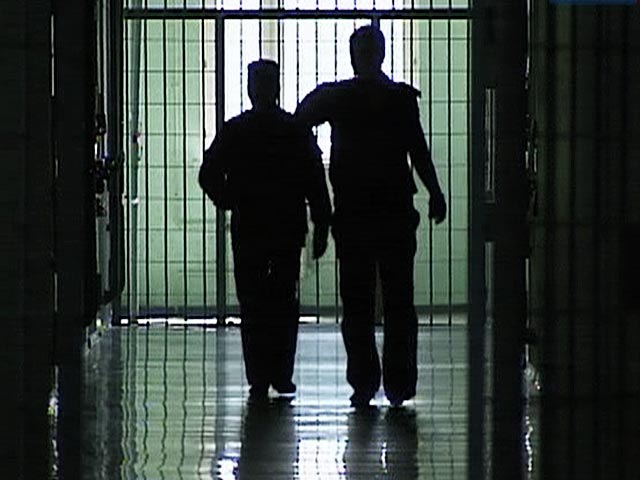
The Federal Penitentiary Service notified that it organized a large -scale check in the Chelyabinsk region in connection with the riots that occurred in one of the investigative insulators of the capital of the region on the night of December 9.
"The commission of the Federal Penitentiary Service of Russia began to work in the GU FSIN in the Chelyabinsk region. The group of the central apparatus of the FSIN began a check on the situation that developed in the SIZO -1," the FSIN website reports on December 10.
The Commission from the Center will check the work of the regional head of the Federal Penitentiary Service "in all areas of official activities, including the state of law enforcement in the institutions of the criminal executive system of the region, compliance with the legality and human rights in places of deprivation of liberty, organization of security, regime and supervision, on economic, rear and medical support of the under investigation and convicts," the report said.
In addition, the employees of the Central Office of the Federal Penitentiary Service intend to visit a number of units of the regional headquarters of the service, the press release notes.
FSIN told how the rebellion began
Later on the same day, the first deputy director of the Federal Penitentiary Service of the Russian Federation Anatoly Rudy announced that the conflict in the pre-trial detention center of Chelyabinsk arose "in a certain way due to the fact that one of the convicts did not want to go to court", where he was supposed to act as a witness in the criminal case, TASS reports.
The most important thing, according to him, was that a potentially dangerous conflict managed to quickly localize "without the use of force, but simply in the usual human language," and prevent it from spreading throughout the pre -trial detention center. “The situation was immediately blocked, not allowing it to develop, since there were 1,200 people under investigation in the investigative isolator, and only about 100 people were drawn into the conflict,” said the deputy head of the Federal Penitentiary Service.
He clarified that the employees of the Chelyabinsk State Unitary Enterprise FSIN quickly responded to the situation, and experts from Moscow were also connected to the conflict resolution. “Now the check has begun, during which it turns out why events developed in the way as they developed. It is necessary to draw conclusions from this situation and check the correctness of the actions of our employees in such a freelance situation,” Rudy said.
At the same time, he added that he did not have a documentary confirmation that the conflict was provoked from outside, as previously stated in the regional GU FSIN.
Information about the instigator and circumstances of the rebellion vary
As reported, in the pre-trial detention center-1 in Chelyabinsk on the night of December 9, a rebellion occurred, whose participants were about 100 prisoners. According to the regional State Unitary Enterprise, the FSIN was provoked by a convict who had a cell phone, which is prohibited by the rules of the pre -trial detention center. He refused to get out of the camera at the request of the overseers and “called on other prisoners to membership”, and they began to “knock on the camera’s doors, pour water into the corridor, arrange smoke by finging the cloaks of cotton wool from mattresses and calling for other convicts to support the share of disobedience of the institution’s administration,” said the State Flood FSIN.
“As a result, about 100 people (30 cameras) supported them. Eight people in different cameras inflicted minor forearms in themselves,” they said in the regional headquarters, emphasizing that all the acquaintances were immediately provided with medical care, and special equipment and physical strength were not applied to prisoners.
Meanwhile, local media reported that on the night of December 9, the employees of the GU FSIN staged a massive beating in several SIZO-1 cameras, and in protest against this three or four prisoners cut their hands.
At the same time, the GU FSIN said that the riots were planned "in advance, from the outside." After the start of the rebellion, the territory of the insulator was cordoned off, the forces were pulled off from all over the garrison of the Chelyabinsk police, it was reported that in the center of Chelyabinsk, in some places, the traffic was even blocked. The leaders of all power structures of the region, including the FSB, as well as members of the public observation commission, went to the scene.
By noon on December 9, the GU FSIN said that the procedure in the institution was restored, "the situation is managed and controlled." On the fact of the emergency, a criminal case was opened under Part 1 and 2 of Article 212 ("Organization and participation in the riots") of the Criminal Code of the Russian Federation. For his investigation, the head of the Investigative Department of the Investigative Committee of the Russian Federation for the Chelyabinsk Region, notified the TFR.
The regional prosecutor's office, in turn, began a verification of the legality of the actions of employees of the pre -trial detention center, TASS reports. Local media and human rights activists reported that the excitement in the pre-trial detention center began on the afternoon of December 8 due to the fact that prisoners stopped giving food, medicines and disconnected heating in the cells. The GU FSIN confirmed that heating in the premises of the pre-trial detention center was really temporarily absent due to the accident, but they refuted everything else.
According to local media, the riot of the rebellion was a serving sentence in the Verkhneuralsky prison, a prisoner convicted of a series of murders by the North Ossetia by a 12 -year colony of strict regime and delivered to the Chelyabinsk pre -trial detention in a witness in another criminal case, which is considered in the Central Court of Chelyabinsk.
Meanwhile, a member of the regional public supervisory commission Valery Prikhodkina informed reporters in Chelyabinsk that the unrest in SIZO-1 began on December 4, when criminal authority nicknamed Yakub or Yako was delivered there.
“At one time, he sat in the Kopeysk IK -6 and, according to my information, has a direct attitude to the organization of unrest in the“ six ”, after the situation was resolved there - he diligently“ handed over ”all the convicts. He was transferred somewhere to the middle lane, and now he was returned - and he immediately began to stir up the water in a pre -trial detention center -1,” said the member of the ONK.
In her opinion, "there can be only one reason: someone needed to change in the insulator of the watchman, there is a war for the establishment of thieves' power."