
Translated material
The end of democracy?
How globalization allows you to create new forms of democratic structure and society of society
Sarah Vegova is the only schoolgirl in the Czech Republic who does not cram the date by heart and does not solve chemical equations. She studies what she wants and likes. When an ordinary schoolboy has a mathematics lesson, Sarah may be in the Gallery of Contemporary Art in a discussion dedicated to the future political organization of society. Such freedom of choice became possible thanks to the so -called democratic education. Today it is available only to a limited number of schoolchildren, since there is a standard training program in high school and it is believed that only one who will master all the subjects recorded there can receive a certificate.
- How did you decide to abandon classical secondary education and begin alternative training?
- At the end of last year, I was already so bored at school that I stopped going there, and at the end of the year I was appointed additional exams, because I did not follow the school curriculum. I learned everything that was needed for exams, and I could continue my studies, but two days before the date of delivery of additional tests, I decided that I would not go to them. I did not like the system of school education, it seemed to me with a clumsy, and, in addition, I knew that there were other possibilities. By that time, I read several books by John Holt and Alexander Saserland Neil , the founder of the Summerhill school. I decided to look for information about democratic education and found an alternative school.
- Tell us what a democratic education is?
- A person who receives a democratic education can be considered anyone who does not study at a regular school and, therefore, is not connected with the classical educational system. At the Summerhill school, for example, students themselves can choose what lectures to go to, what course to listen to, although, of course, they choose from the class schedule that teachers send them. But students pass exams in those subjects that are most interesting to them. Students themselves can ask the teacher to arrange an exam on a particular subject.
- The Czech Republic, like many other countries of the world, has not yet recognized the certificates that issue schools of democratic education. You are trying to achieve this, and therefore you are conducting a dialogue with the Ministry of Education. How did your negotiations with the ministry end?
In gymnasiums, teachers do what they want without asking the opinions of those who receive knowledge from them
-When I stopped going to a regular school last year-due to the fact that I felt bored there, my parents tried to find out if I had the opportunity to get a classic and alternative education simultaneously, but provided that I will do it remotely. To do this, it was necessary to obtain permission from the Ministry of Education, but it refused to give such permission. During one of the meetings, an employee of the ministry told me that training in a gymnasium is rather gymnastics for the mind and that its goal is to choose an object, write a text and forget everything. After this conversation, I thought: it turns out that in gymnasiums, teachers do what they want without asking the opinions of those who receive knowledge from them. I realized that this is not quite what I am expecting from education. But my dialogue with the ministry is not over yet.
- Will your certificate received in the framework of a democratic education be recognized in this case?
- I chose a school that is in the USA, and its benefit is that the knowledge that I receive gives me the opportunity to pass exams for the certificate. And since I am making maximum efforts to my formation, I will receive a final document. This will be a certificate of secondary education issued by a private school. When I want to enter the institute or university, I do not have to explain that I received home or individual education, we are talking about the standard certificate of maturity issued by a private secondary school.
The case of Sarah Vegorova is just one of the few examples of how to look at the usual things, such as secondary education, in a new way. Only then can we find that the usual schemes can change. The same approach is demonstrated today by many of those who have joined the discussion, as democracy could develop in the future, because the form of a political organization does not have to stand still.
The tone in this discussion is set by sociologists who pay attention to the fact that globalization has largely weakened the position of the national state and it has lost the opportunity to control important aspects of life, ranging from environmental issues and ending with financial policy. These processes are called democracy of cosmopolitanism. And the Internet played a significant role in its appearance, which makes it possible to create communities, regardless of the boundaries of a city or state. In other words, the new forms of the democratic structure are told by life itself, and the curator Yaroslav Andel decided to collect them in one place, calling their exhibition project "images of democracy. The stories of five continents." At the exhibition that opened in Prague, examples of how democracy develops in different parts of the world are really presented. Several stories are also represented by the European continent.
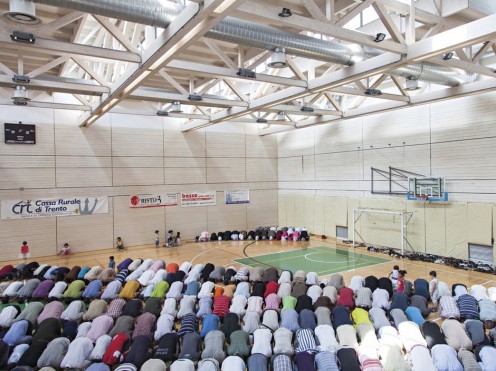
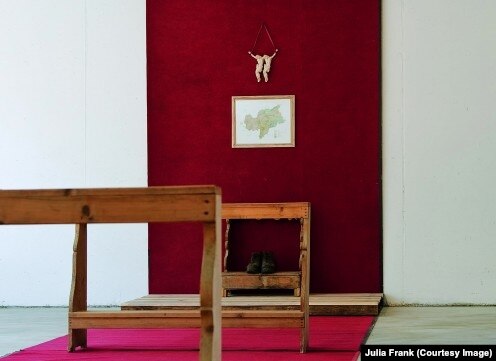
A new form of democracy is offered, for example, in Iceland: it was born by itself due to the economic crisis, after which the political crisis has come. Then Icelandic society had the need to rewrite the Constitution, and this process took place with the participation of a wide range of citizens of the country: people sent their ideas through the Internet and some comments and proposals were adopted for consideration and included in the text of the Basic Law. Thus, the constitution relating to the lives of all citizens was written not by politicians, but by the Icelanders themselves. Another example is the autonomous region in Italy South Tyrole, where the Muslim and Christian community are looking for ways to coexist peacefully in this territory.
But the exhibition presents not only positive examples, but also negative examples. One of them is the tragic history of the Sudeten region of Czechoslovakia, which, after the Second World War, was forced to leave the German population. Until now, here, in the north of modern Czech Republic, the highest level of unemployment and a very low percentage of citizens' participation in the life of the region.
Loss of citizens' interest in participation in public life gives more space to undemocratic practices and trends
“In the name of the exhibition, a plural was chosen for a reason, that is,“ images ”, because we are talking about how people in reality understand democracy and how they put it into life,” says Yaroslav Andel. -This is the main topic of the exhibition, but since it is very common, we decided to show that democracy is not only an abstract concept, but a tool that works at different levels in different ways-completely different rules apply to the problems of one area than on a country's scale or at a global level. Few people talk about this. The exhibition was invented after the question was asked, can it be said that democracy is losing ground? In my opinion, this is exactly what happens. One of the main reasons is the loss of citizens' interest in participation in public life, which gives more space to undemocratic practices and trends. The artist is also a citizen, and it is not surprising that the number of those who think about the topic of the connection of artistic practice and civil position is growing. For this, by the way, there are many techniques, means and techniques. Therefore, the artists became a mirror that people around the world ceased to actively participate in affairs concerning them directly.
It is the lack of interest in affairs of the public that the organizers of the insertion are considered the most serious obstacle to the development of democracy in the future. But there is no answer to the question of how to make people become interested in participating in the political organization of their lives. There are only a few positive examples that may inspire those who want to change anything in the future.