
Translated material
"After the first war, we lost the world"
Interview with Ahmed Zakayev specialist "Medusa" Ilya Azar
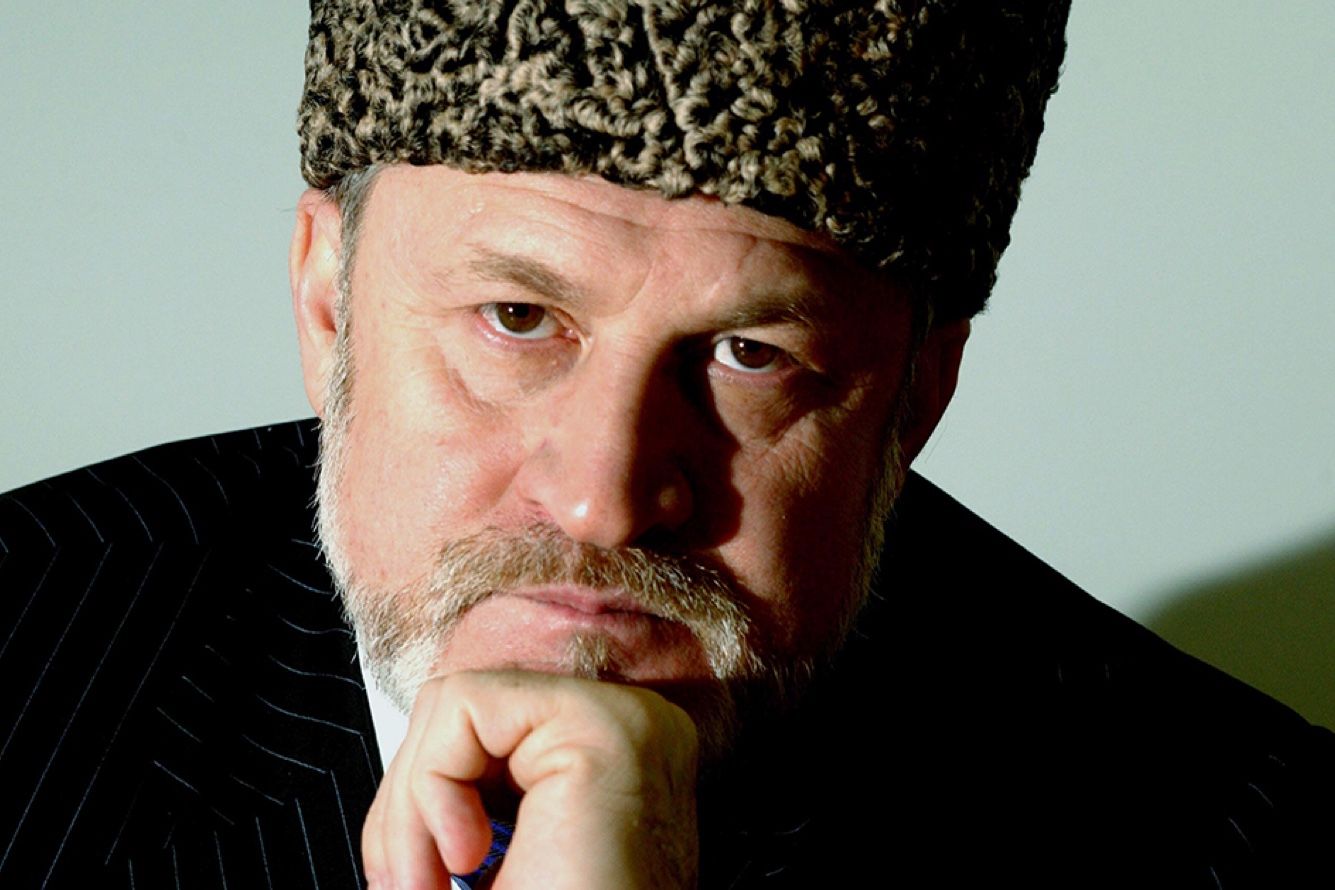
Medusa continues a series of materials dedicated to the 20th anniversary of the beginning of the first Chechen. The brigade general, the Minister of Foreign Affairs and Prime Minister Ahmed Zakaev is a self -proclaimed and long -existing Republic of Ichkeri, one of the few living Chechen figures of the first war. In Russia, Zakaev is accused of organizing illegal armed groups and attempts on the murder of security forces; Attempts of his extraction from London, where he lives from the beginning of the zero, was unsuccessful. The special correspondent of Medusa Ilya Azar talked with Ahmed Zakaev about the first Chechen, prohibited in Russia organization Imrat Caucasus and the situation in Ukraine.
-Was Chechnya to Independence, selected in the early 1990s, was true?
- You need to consider the situation that has developed then. The path to independence did not come from the Chechens. The position of the Supreme Soviet of the USSR was clearly declared, which in 1990 equalized the allied and autonomous republics in rights. The Chechen-Ingush Republic was the very last that realized this right-the leadership liked to take the same level with Russia, Ukraine and Belarus.
Then the Chechens and the Ingush were imposed this format, and in the future they began to kill and destroy them, because they did not refuse what they had already accepted.
-Do you still think that Dudaev acted correctly?
- Yes, absolutely. On November 18, 1994, I went to work by the Minister of Culture [Chechnya], and still continue to occupy the positions of that government, absolutely legitimate even to date. Dudaev did everything that was possible and impossible to prevent war. After all, the war began back in 1992 before signing a federal agreement, when Russian saboteurs captured the television building, and there were the first victims.
- For several years there was a war with the opposition inside the republic.
- No, everything was far -fetched! There was no war, there was no opposition. It became obvious when Russian tanks entered Chechnya. It was a performance that they played, writing off huge resources. It is stated that money was going to our republic, but they did not go to us, but to the Nadereychnaya district (the stronghold of the anti -Dudaevsky opposition - approx. "Medusa" ).
As soon as the war began, the entire militia fled, [the head of the Armed Forces of the opposition] Bislan Gantamirov left, and there were no military-power structures. Because they were not there. It was the same opposition as today in Donetsk and in Lugansk.
-If, in your opinion, the war began back in 1992, then what happened next?
- All this time there were negotiations between Dudaev and Russia. The agreement on the withdrawal of Russian troops was signed in 1992. Nobody drove anyone away, did not take anything away, and the Chechen Republic was one of the first, from where the troops were withdrawn. An agreement was signed on the division of property of the Soviet Union, and to this day it exists in nature. There was an economic blockade: banks did not work, there was no funding from Russia. Even the then Minister of Finance of the Russian Federation, Boris Fedorov, assured that there were no revenues from the budget to Chechnya all these years.
Why was there such a denouement in 1994? The fact is that by this time a lot of funds had been spent, and the Federal Counterintelligence Service (the executive body that existed in Russia in 1993-1995- approx. Medusa ) assured the Kremlin that Dudaeva was about to take off in Chechnya. In addition, military equipment, which was exported from Eastern Europe at that time, was sold without leading to Russia. During the Russo-Chechen war, three or four aircraft were shot down, and 200 “drying” was written off on it.
The most important thing is that certain forces in Russia had to turn all those democratic processes that began then. This can be done by starting some kind of war, during which it is impossible to talk about reforms in principle. If you notice, Russia has constantly waged wars since that time.
-With interruptions, after all.
- Small. When the war is going on, society is mobilized, the enemy is determined, and all as one must declare that we will not tolerate something. Although in the first war it was difficult. Russian journalists and human rights activists worked more with us on our side.
But I will return to Dudaev. When I got a job as Minister of Culture, I told him: "There is a war, and to occupy some positions is wrong." He replied that he would not allow war, that he would do everything so that it would not be. And when, after the well -known meeting of Dudaev and Pavel Grachev, Russia began to bomb us, in December a telegram came from Yeltsin: “A citizen of Russia Dudaev to urgently come to Vladikavkaz and discuss the procedure for disarmament of illegal armed groups located on the territory of Chechnya.” Our government was already in the bunker of the Presidential Palace, and almost everyone spoke out against the trip, because they perceived the telegram as humiliation of not only the president, but the whole nation.
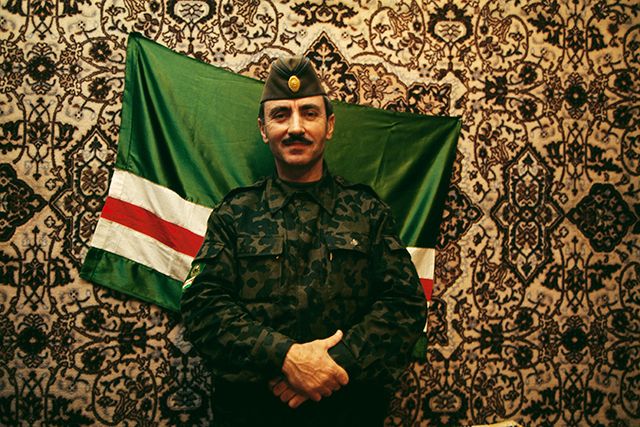
But Johar said: “I will go there because I answer both to God and to the people. I will do everything that depends on me to stop this war. You do not know what war is, but I know. ” He gave the answer that he was ready to leave and meet, but in Moscow they changed his mind. They hoped that he would be scored, and then they would say that they made the last attempt to agree, but Dudaev refused.
- Was there a chance to prevent the war?
- I assure you: if then Yeltsin and Dudaev met, they would have agreed. But then this was not allowed [the head of the Yeltsin administration] Sergey Filatov, [the deputy chairman of the government] Sergey Shakhrai and Ruslan Khasbulatov. The war began, which continues to this day. The Chechens lost 250 thousand people, another 300 thousand are abroad, and 26-27 thousand in places of imprisonment. The settlements, infrastructure were destroyed to the ground. And today the war is being waged against the people already at the level of spirituality, the Chechen mentality, Chechenity are destroyed. This is a spiritual genocide.
But this is our common tragedy. The Chechens lost sovereignty, but statehood, even in a distorted, perverted form, retained. But Russia missed the opportunity to build a legal democratic state. I am absolutely sure that power in Russia will not change through the elections. Russian society decomposes, and fascists are torn to power. For all 20 years, while the war was going on, the authorities played on the lowest instincts of the crowd. Chechnya is a cheat, and now the crowd requires new victims. Ukraine turned out to be Putin not on the teeth, the Novorossiya project should be folded, and the crowd will not forgive him for this. There will be a rebellion that will entail a sea of blood.
-Do you think Dudaev could abandon some part of the sovereignty in negotiations with Yeltsin?
- Absolutely! The fact is that both Dudaev and the President of Ichkeria from 1997 to 2005] Aslan Maskhadov always said that independence is not an end in itself for Chechens. Independence is only a form of guaranteeing the security of the people so that the fate of the people does not depend on the mood, one person who sits in the Kremlin. From drunk or unfinished by them.
In the memory there was a deportation of [Chechens] of 1944, but Dudaev was ready to consider other options, in addition to which Chechnya became the subject of international law. Then it was absolutely possible, and Dudaev, with his authority, would have taken this step, and there would be no war.
- But what is this form, for example?
- The Eurasian Union, for which today Putin began the war with the whole world. Or what is today signed with Abkhazia is an agreement on a single defense and economic space, a single citizenship agreement. All these are the formulations that, another 20 years [back] Chechnya offered Russia, and then she used them in South Ossetia, Abkhazia and in Crimea.
- Russia in Crimea explained its actions with the protection of the Russian population. They say a lot that in Chechnya in those years there was genocide of the Russian people. Was?
- There was no reason for the war at all. The same Oil Chechen is a minuscule by Russian standards.
[Chairman of the Human Rights Commission under Yeltsin] Sergey Kovalev reported that the Russian speakers were destroyed precisely during the assault in Grozny, because tens of thousands that remained in their homes and apartments were mainly Russian -speaking (in 1995, the Kovalev group interviewed refugees from Chechnya and, on the basis of these data, suggested that 25–29 thousand peaceful residents died in Grozny; Of these, it is not known later ; For example, a certain number of Russian people from the Ministry of Culture agreed to leave with my family to the village, and they survived, and those who remained in Grozny mainly died.
All these three years that we existed, a special program was implemented to provide precisely Russian -speaking pensioners and poorly free bread and other social benefits. Of course, there was no Russians genocide in Chechnya in those years, and everyone knows that.
- Maybe at the state level this was not said, but ordinary Chechens, for example, threw Russians from their apartments, killed.
- I'm not saying that everything was 100% excellent. There were an absolutely criminal nature of the crime. But they concerned not only Russians, but also Chechens. There were cases, but this is not a reason to start a large -scale war with the use of all forces and means. You know, the Russians have a proverb: throw a child with water. The same thing is to bomb Grozny in order to protect the Russian -speaking population, while destroying tens of thousands of Russians.
- You were an actor, a theater figure. How did it turn out that you became a field commander, and is this transformation hard?
- I graduated from the acting faculty, worked for more than ten years, then headed the Union of Theater Workers (STD) at the republic’s level, I had very good relations with the head of the STD of Russia Mikhail Ulyanov.
But, being members of the government, when the war begins, decent people do not run away. They continue to fulfill their duty. Although the first Russian bomb strokes were purposefully inflicted on cultural institutions. Theaters, the largest art gallery in the North Caucasus, the local history museum and other objects of culture were destroyed.
I wanted to become a military man? No, never. I did not even serve in the Soviet Army, and was happy with this. It so happened: they did not take away from higher educational institutions, and then I got married, got two children.
- I just slightly imagine that, for example, Oleg Efremov become a field commander. It is necessary to have another talent.
- By the beginning of the Great Patriotic War, the USSR would be as small as Chechnya would become - he would have no other choice like a decent person.
With the outbreak of war in Chechnya, medicine, culture, and all-all-all have ceased to function. In this situation, not only singers and actors went to war, but also doctors, teachers, and tractor drivers. It was actually a folk war.
- You often talk about war crimes that were committed in Chechnya by the Russian military. Do you think that Chechen commanders did not commit them?
- When I am talking about war crimes, I do not exclude any of the parties to the conflict. I believe that both must be called to the answer. They must bear a well -deserved punishment, regardless of nationality.
Yes, I believe that [on our part] there were moments that can be qualified today as war crimes. I mean the capture of the school in Beslan. After all, even if the end of the world can be prevented by destroying so many children, it is still impossible to do this. I consider this a crime. True, those who captured school are equally guilty of it, and those who shot it, although they could not have done it.
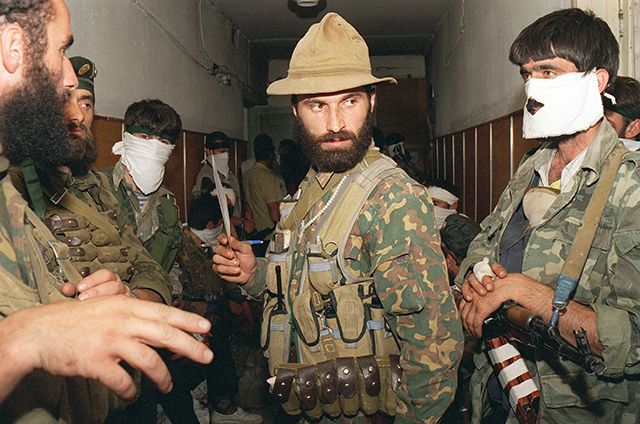
- But you can recall the attack of Basayev on Budennovsk in the first Chechen.
- Yes, and Budennovsk. Although no one in the world recognized him for a terrorist attack (the attack of Basayev on Budennovsk was called by Russian officials; however, some world media were considered - for example, Chicago Tribune and New York Times - approx. Medusa ). I believed that this was wrong, and I had disagreements with those who organized this because I believed that in this way it was impossible to achieve peace or freedom. So we did not achieve this then. As a method of achieving the goal, I cannot recognize such actions and do not recognize.
-If the first war was still perceived by some part of Russian society as a war for the independence of Chechnya, and someone even supported it, then the Second War was already perceived in another way.
-Due to the fact that between these two wars took place in Chechnya. The work that was done with the Chechens, even with those who were for independence, are the highest professionalism. Our mistake was that, after the end of the first war and signing an agreement on the world, we considered the Russian side as allies, and the Russian special services considered us enemies. They longed for revenge.
As a member of the government, I admit that after the first war we lost the world. We did not manage to contrast anything with the special operations that the Russian special services conducted in Chechnya. They set against us and the ideas of independence not only the Russian and international community, but also the Chechens themselves. The Chechens were at that time before the choice between less or greater evil. And many Chechens at that time saw in Russia less evil.
But when Putin began the war, and soldiers entered Chechnya, who said that all terrorists, including children, women and old people, then the Chechens realized that they had to be defended. When the second campaign began, they sang in Russia “get up, a huge country” - and everyone, starting from journalists and ending with human rights activists, said: “Soak them in the toilet.” Everyone thought then that it would stop in the Chechens, but no. They continued to wet everyone in Moscow and throughout Russia.
- In the 1997 elections, you were an opponent of Maskhadov. If you became president, not Maskhadov, would something turn out differently?
- No no! The people chose Aslan Maskhadov. I entered his government as a deputy prime minister and headed the humanitarian block, and until the end of Maskhadov was in his team.
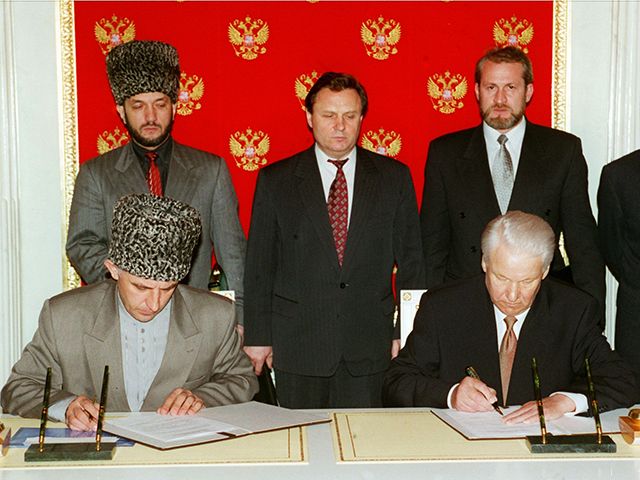
We were doomed to the second war. Yeltsin directly during the signing of the World Treaty delayed the words “in the development of the Khasavyurt agreements”. He said to Maskhadov: “We are the presidents and we start with a clean sheet,” which found Maskhadov by surprise, and he signed. A future war was laid in this trick, because the Khasavyurt agreements recorded that the status of Chechnya would be determined until 2000 and it is said that Russia and Chechnya are building its relations on the principles of international law.
We were allowed to hold elections, I think, because the Russian side was sure that Maskhadov would go to treason. But Maskhadov by this time could no longer come to the yota sovereignty. What Johar could do before this war, Aslan could no longer. That's what the Maskhadov tragedy was: it was precisely those concessions that he could not go to him.
But I do not blame Maskhadov and I think that this was one of the most worthy national leaders who honestly fulfilled his duty.
“But at some point he missed control in Basayev's favor?”
- No, he did not miss. Maskhadov did not allow the start of the civil war. There were two scenarios for the input of [Russian] troops - the internal confrontation or resignation of the legally elected President Maskhadov. Therefore, he could neither leave nor begin open military operations against the lawlessness that was in Chechnya.
Between the two wars in Chechnya there was just a very powerful armed opposition. Against the government were Vakha Arsanov, Shamil Basayev and Zelimkhan Yandarbiev. All those who stood at the origins of the national liberation movement, and behind which there were huge military forces. The beginning of some campaign against them, of course, would lead to a full-scale civil war. Maskhadov could not allow us to be between two lights.
- You are the head of the government of Ichkeria in exile. Do you not support the proclamation of Dokarov Umarov “Imrat Caucasus” (the organization is prohibited in Russia - approx. “Medusa” )?
- “The Imrat Caucasus” is initially an Antichen project, and it remains so to this day. Of course, their ideology and what they do since 2007 (then Umarov announced the abolition of Ichkeria and its transformation into one of the regions of the Imrat of the Caucasus - approx. Medusa ), has nothing to do with the aspirations of the Chechen people. Therefore, Doku Umarov and Ramzan Kadyrov are equally opponents of Chechen independence. One on the one hand, the other on the other. Even before the war, Chechens were divided into two camps on a religious basis: Wahhabi ideology led by Basayev and Udugov and the traditional Islam of Kadyrov Sr.. But both of these areas have nothing to do with what Chechens fought and continue to fight.
“Maybe you had to somehow deal with Wahhabism?”
- Russia was behind the Wahhabis, Russian special services. Как только Аслан принял указ о запрете ваххабистской идеологии на территории республики, в Кремле через несколько дней провели заседание и заявили, что ваххабизм не противоречит российской Конституции и что это абсолютно правильное религиозное течение (22 июля 1998 года министр юстиции Павел Крашенинников после заседания комиссии по противодействию политическому экстремизму заявил: «Комиссия пришла к выводу, что течение ваххабизм не является экстремистским. Следует отличать религиозное течение от экстремистских направлений, которые существуют в нем» — прим. «Медузы» ). Когда мы начали активную войну против пропаганды ваххабизма, премьер России Сергей Степашин поехал в Карамахи и Чабанмахи, подарил им подарки и сказал Ельцину: «Это никакие это не ваххабиты, там даже пьянство прекратили и установили шариат». Ельцин ответил: «У нас демократическая страна, и если они хотят жить по шариату, нехай живут». И тут же пошел всплеск ваххабизма внутри республики!
То есть мы были обложены! За этой идеологией не Саудовская Аравия стояла, которая является центром ваххабистской идеологии, я вас уверяю, а именно Россия и российские спецслужбы. В Саудовской Аравии не лежат на дорогах отрезанные головы, хотя это и прародина ваххабизма. У нас в Чечне не ваххабизм, а бандитизм! Если мы начнем вести борьбу с ними как с бандитами и с преступниками, то это одно дело, а если воевать с позиций религии, чего требовал тогда Кадыров-старший, то это гражданская война.
— А какое количество людей в Чечне, выступающих против Кадырова, поддерживают Ичкерию, а не «Имарат Кавказ»?
— Людей, которые считают, что единственная платформа для будущего вообще — это религиозная база и шариат — очень много, потому что люди потеряли веру вообще во что-либо. Они оставлены один на один с этим монстром, который их уничтожает. И физически, и духовно. Есть очень четкие религиозные догмы, на которых можно двигаться дальше.
Cейчас вопрос не в том, за Ичкерию они или за «Имарат Кавказ», ведь тех, кто против того, что сегодня происходит в Чечне, — 99,9%.
— Не слишком ли много?
— «За» сейчас только те, что кормятся, те, кому Путин выделяет миллиарды и говорит: «Делайте все, что хотите». А учителя, врачи, которые должны платить дань [в фонд Кадырова], не имеют вообще права ни на что! Естественно, для чеченца это унизительно, оскорбительно и давит психологически. Сколько будет находиться Путин в Кремле, столько эта ситуация будет продолжаться в Чечне.
— Представим, что уходит Путин, уходит Кадыров. В Чечне начинается война между ваххабитами и сторонниками Ичкерии?
- No no. Чеченцы сейчас не должны допустить еще одну революцию или войну, это будет национальная катастрофа.
Этого не будет, я вас уверяю. Если бы идеологи этой войны были уверены в обратном, то, я вас уверяю, российские войска из Чечни сразу бы ушли, чтобы мы там сами покончили друг с другом. Они ведь знают, что этого не произойдет, что это противостояние искусственно создано.
— Тем не менее, активные действия предпринимает именно религиозное подполье. Если есть подпольная, не религиозная Ичкерия, то почему она себя не проявляет?
— Подполье, которое сегодня представляет «Имарат Кавказ», проявляет себя во взрывах и терактах. Они ни народу, ни мусульманам ничего нового не предлагают. Они предлагают только войну до смерти, хотя этого нет в исламе!
Это именно то, что нужно тем, кто развязал эту войну. С момента провозглашения «Имарата Кавказ» каждый день кавказцы убивают друг друга. Дагестанцы убивают дагестанцев, ингуши — ингушей, чеченцы — чеченцев. Военные базы России, которые сосредоточены везде, от этого не страдают. Вот для чего этот проект и был создан.
Кавказские пассионарии стравлены между собой, и ни те, ни другие не разделяют ценности чеченцев: свободу, демократию, развитие и так далее. Пока существует это противостояние, оккупанты могут чувствовать себя абсолютно спокойно.
— Сейчас 90% ваших интервью — для украинских СМИ. Вы, видимо, поддерживаете действия украинской армии против сепаратистов ДНР и ЛНР. А это не то же самое установление порядка на своей территории, что Россия делала в Чечне?
- No, of course, no. ДНР и ЛНР — это то же самое, что было [у оппозиции перед Первой чеченской] в Надтеречном и Наурском районах. Там находится диверсионная группа, которая создала эту ситуацию, и все это от начала до конца поддерживается российским руководством. Параллель можно провести только одну: почему международное сообщество признает за украинцами право защищать свою территорию, а чеченцы его были лишены?
— Идут артиллерийские обстрелы, и обычные люди, которые живут в городах Луганской и Донецкой области, погибают.
— Я не все поддерживаю, что там происходит. Но это абсолютно разные методы. Если там погибают люди, конечно, это очень плохо, и я противник того, чтобы применять артиллерию и авиацию в жилых массивах. Это преступление, кто бы за этим ни стоял. Но вопрос в том, как и кто спровоцировал эту ситуацию и кто продолжает провоцировать. Я говорю не о жертвах, а о политической мотивации. Она в Чечне была абсолютно другая, чем в Украине.
— А что-то позитивное в правлении Кадырова вы вообще видите? Если сравнить Чечню с другими российскими регионами, то есть впечатление, что там как раз есть развитие — строятся дома новые, мечети.
— Он делает то, что ему говорят делать. Воровать можно год, два. Один человек не способен проглотить весь бюджет, который формирует Россия. Миллиард евро при всем желании не съесть. Тем более с ограниченными возможностями Кадырова куда-то переводить деньги и где-то прятать их. Все, что можно отстроить для себя, для своих родственников, друзей, помощников, охранников — он отстроил.
Не забывайте и то, что юридическими владельцами всего, что построено в Чечне, является Фонд Кадырова (местные правозащитники считают, что этот фонд наполняется, в том числе, за счет денег, удержанных из зарплат бюджетников; Рамзан Кадыров это опровергает — прим. «Медузы» ). Это они для себя строят. К тому же тут, конечно, совпали интересы.
Но что они строят-то! Грозный был главным промышленным центром на Кавказе, а сегодня его превратили в торгово-развлекательный центр. Ни одной фабрики, ни одного завода не строится — рабочих мест нет.
— У вас же был какой-то период ренессанса в общении с властями Чечни. [Спикер чеченского парламента] Дукуваха Абдурахманов к вам приезжал, с Кадыровым вы общались.
— Нет, с Кадыровым я не общался. Дукухава приезжал, но не просто так. Тогда был Дмитрий Медведев президентом, и все эти вопросы были согласованы с его администрацией, о чем Дукуваха и сказал на пресс-конференции в Осло.
Я с ними вел разговор о том, чтобы они поспособствовали тому, чтобы освободили 26 тысяч заключенных, которые принимали участие в военных действиях. Они ведь заточили в тюрьмы людей, которые просто хлеб подвезли или на машине боевика подбросили. За это им влепили 15-20 лет. Во-вторых, я хотел, чтобы выдали тела погибших и дали похоронить Аслана Масхадова и других чеченских командиров. Чтобы они отказались преследовать родственников бойцов сопротивления, которые в горах находятся.
После разрешения этих трех-четырех моментов мы должны были провести совместный конгресс и выработать общую политическую [платформу]. Но я изначально знал, что эти вопросы они не решат.
— А от вас-то они что хотели?
— От меня они хотели, чтобы я приехал домой. Я сказал, что для этого мы проведем общее мероприятие, выработаем общую позицию и предложим Кремлю разрешить чеченский вопрос по аналогии с Абхазией и Южной Осетией. Естественно, они почему-то считали, что из-за должности или из-за предложенных ими денег я побегу домой. Не знаю, почему они вообще это затеяли.
— Считаете ли вы, что Кадырова и всех его помощников надо будет судить в случае изменения ситуации?
— Преступников всех надо будет судить, ну а кто преступник, кто нет — это должен решить суд. Если преступление совершил я, то и я должен предстать перед судом и понести за это наказание.
— Вас, по-моему, как раз в России ждут с судом.
— К большому сожалению, не с судом ждут, а с расправой. На трех судах [в Европе об экстрадиции], когда они были независимые и не принимали решения по звонку, они проиграли.
Читайте также: Непоправимо чужие . Юрий Сапрыкин — о Первой чеченской войне
Смотрите также: Самое опасное место на Земле . Фоторепортаж Кристофера Морриса из Грозного 1995–1996 годов
Ilya Azar