
Translated material
Do not bend, do not break ...
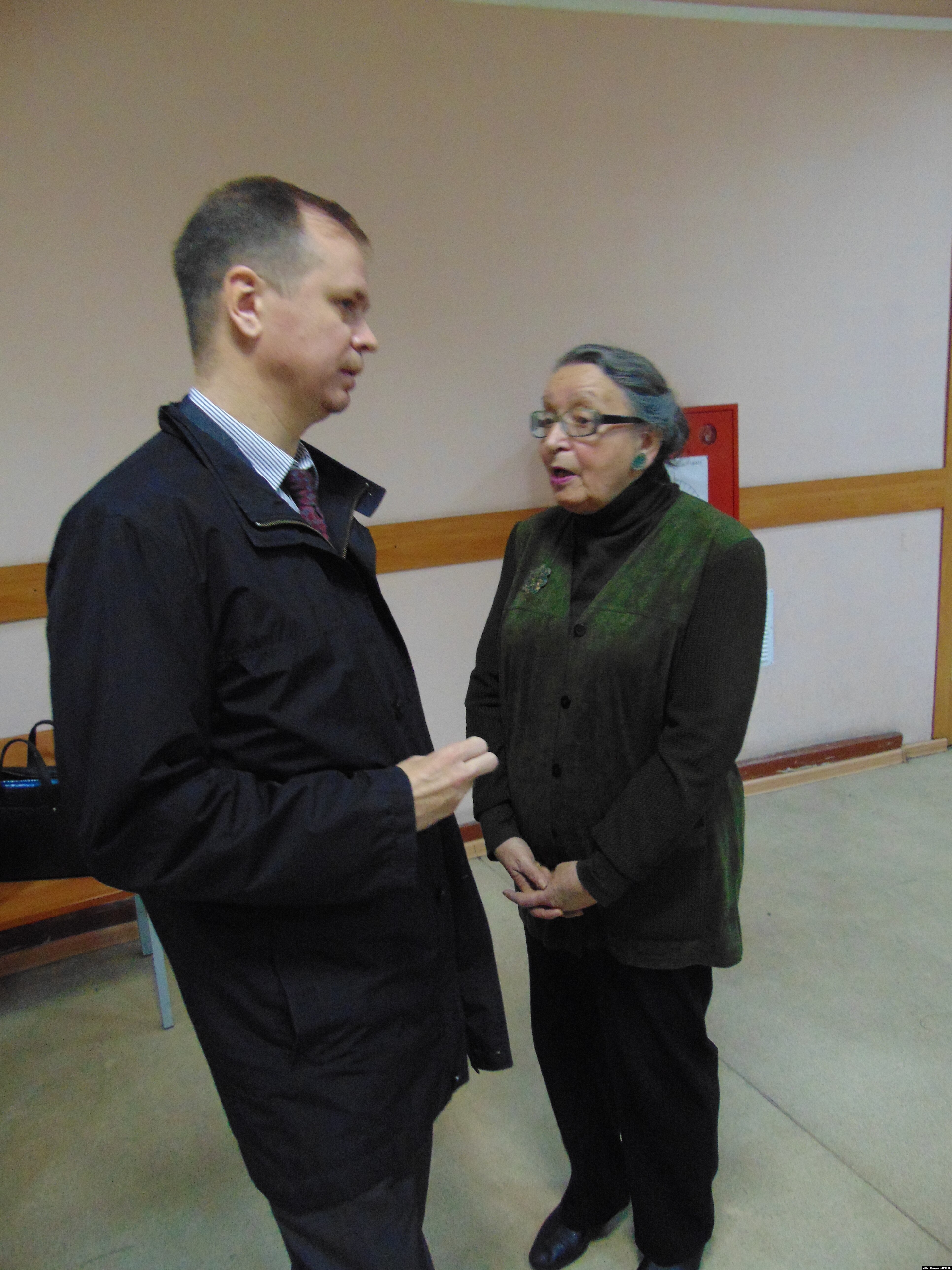
NPOs in the past year. Why is it honored to get the title of "foreign agent"? Anna Sharogradskaya and Ivan Pavlov summarize the results of the year.
At the Institute of Regional Press, his permanent director Anna Sharogradskaya, together with a lawyer, the head of the Freedom Fibrait, Ivan Pavlov M, summarize the results of the year.
Victor Rezunkov: Ivan, how do you perceive what happened this year with your fund and you?
The activities of non -profit organizations this year were practically suspended, since they were forced to defend themselves
Ivan Pavlov: The Freedom Freedom Freedom this year, like many other NPOs, primarily human rights, faced monstrous pressure from the verbal bodies - prosecutors, the Ministry of Justice. This pressure concerned, first of all, the new legislation on “foreign agents”. This year, the so -called register of NPOs began to be actively replenished, performing the functions of a “foreign agent”, which is maintained by the Ministry of Justice. Let me remind you that until the summer of 2014, there was only one organization on this list, which independently joined this register, asked to register it. This organization had nothing to do with human rights activities. She was engaged in export-import inside the CIS countries. But not a single human rights NPO submitted applications to the Ministry of Justice in order to be registered in this register of “foreign agents”. And the Ministry of Justice did not like this so much that it came out with the initiative to amend the legislation on NPOs and receive the right to introduce organization independently, without their knowledge, only at the initiative of the Ministry of Justice itself. Such a right among the ministry appeared in the summer of 2014. Since then, this register of “foreign agents” began to be replenished: first of all, at the expense of human rights NPOs. In early autumn, our organization, the Freedom of Information Freedom, was also included in this register. This was on the eve of the trial, when we disputed the performance of the prosecutor’s office, issued according to the results of the last audit, according to which we were ordered to register in this registry. In general, the activities of non -profit organizations this year were practically suspended, since they were forced to protect themselves during inspections and trials to challenge the results of these checks. 2014 turned out to be the most difficult for the development of civil society in Russia, since the direct, target, current activities of the NGO were, in fact, suspended.
Viktor Rezunkov: Anna Arkadyevna, the Institute of Regional Press on December 9 received an order to pay a fine of 400 thousand rubles, which is a completely fantastic amount for your organization. What happened to the institute and with you this year?
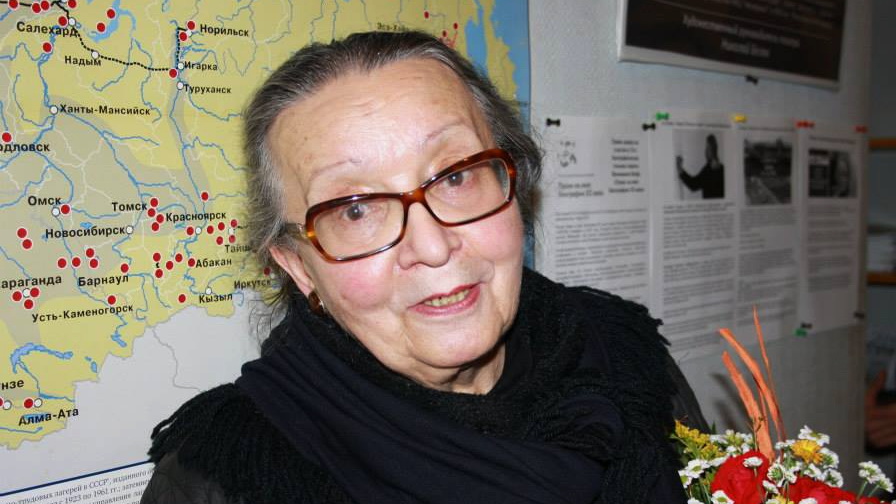
This is the pressure on the organization and pressure on the personality
Anna Sharogradskaya: This year the absurd theater took place. I still can’t understand: is this pressure on the organization - the institution of the regional press - or is it the pressure on me as a person who founded this organization and is 21 years old is its permanent director? Or are it-some such trends that generally concern any dissent, and not even so active: sometimes I get the impression that people are pursuing for the image of unspoken thoughts. In some messages to us (sometimes it looks like a warning, sometimes a warning) there is such an implication: "Here, if you dare to do something, then you will be severely punished." That is, it is assumed that we are fundamentally hostile, by definition, and we may want to want what you want. I call this (and these are not my words) "the way of unspoken thoughts." That is, we are already suspects, and the presumption of innocence, which I like so much as something that gives hope, in my opinion, is not even present here.
This is the pressure on the organization and pressure on the personality. Ivan Pavlov modestly said about the overall picture, completely not protruding himself and his organization. I want to say for him because they beat in a sick place. The wife of Ivan, Jennifer Gaspar, was expelled , although she allegedly left the country on her own, because she was not given Russian citizenship, which she wanted to get, and this suggested that she wanted to live in this country, wanted to live with her husband, with her child and found that Russia was her country. Here, it would seem, we had to be happy - we rejoice when they are coming to us from the Crimea, from Eastern Ukraine, and here - from America. So no! This is a person non grata! I know this woman from the moment she came to Russia, I find her man amazingly soft, surprisingly thin, amazingly kind. And her very desire to be here was the desire to help us all here, while remaining in the shade. She helped us calmly, inconspicuously, without some high-profile statements. Why did they do this? This is a blow not only to Jennifer, who, of course, is the mother of her child, the wife of her husband. This is, first of all, a blow to Ivan Pavlov himself.
If you remember, when more serious blows to me began to be delivered ... I also had a very difficult situation in the family, my husband was very hard, it became clear that he would pass away in the very near future. Without any look at what happened to me, already immediately after his death, between cremation and burial, I was called and interrogated, and there was a court. And I came to this trial when people should usually be alone with their grief. But I do not want to pity anyone. I just want to say that they are hit pointwise according to the leaders of organizations, by managers, and thereby trying to discredit organizations. And it sometimes turns out.
Victor Rezunkov : Ivan, how do you explain such a cruel pressure of the authorities? After all, such a blurry concept, from a legal point of view, is especially used, as “political activity”. On December 9, the Institute of Regional Press was just accused of engaged in such a “political activity” ...
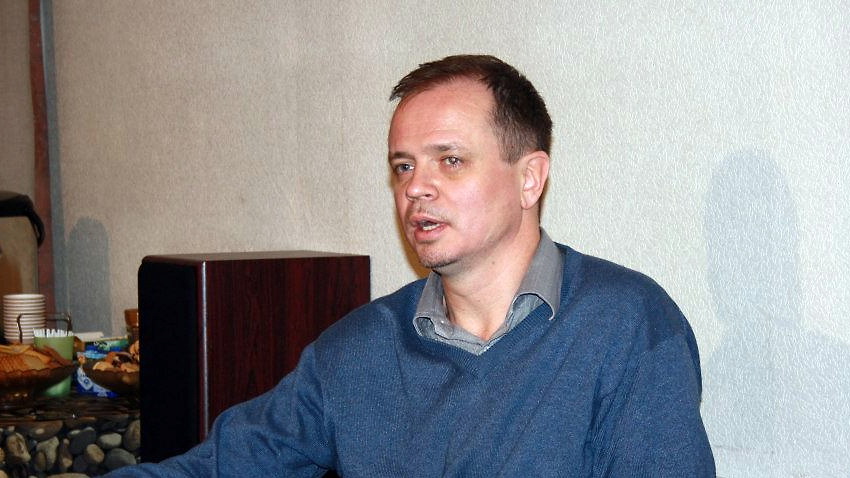
Ivan Pavlov: Of course, the root cause must be seen in the events that took place in late 2011 - early 2012, when the power was frightened by such mass protests, and as “enemy number one” she chose civil activists. And who are civilian activists? They, one way or another, are associated with NGOs. And if these NPOs are also independent of the state, they receive independent funding, perhaps from foreign sources, then the authorities recognize such organizations as a culprit of all its failures. So they began to come up with various reasons in order to complicate the life of such organizations. As one of such reasons, the law on "foreign agents" was invented.
Power was frightened by mass protests, and as “enemy number one” she chose civil activists
You can recall how quickly it was adopted, without any discussion: in three weeks, the law was written and accepted. This law assigns a label to this or that organization. We understand what a “foreign agent” is. This term is akin to another term - the "enemy of the people." It is clear that in society such people and organizations will be perceived in this way: as traitors of the Motherland, as the enemies of the people. And it was with the aim of discrediting, compromising NPOs and this federal law was adopted.
Viktor Rezunkov: Anna Arkadyevna, the last conversation of Vladimir Putin with Russian human rights activists was marked by the performance of the plenipotentiary representative of human rights in St. Petersburg Alexander Shishchev , which discussed the issue of the institution of the regional press. The president promised him to deal with your organization, and with the information mediums taken from you at the Pulkovo Airport on June 5. Do you think it will figure it out?
We still, ultimately, win. I sincerely believe in it, because the truth is on our side
Anna Sharogradskaya: I think this statement suggests that there will be an interference in the trial, or something else. I would not welcome this kind of act by the president. The president could figure out how legal it is, etc., and draw a picture for himself. At least he should not say that there should be no trial. And the trial in the presence of such a lawyer as Ivan Pavlov is quite happy with me. They tell me that on December 9, for example, we lost in court, and I reply: “We still have not lost a single process! We morally won in all cases, because the absurdity, meaninglessness and absence in all cases of justice to the extent that it should be in a democratic country is obvious. ” More than once tired journalists and other those present laughed so loudly that it was like a performance in the theater, albeit an absurdity. So I think that we still, ultimately, win. At what stage? In which court? I sincerely believe in this, because the truth, indeed, on our side, and on the other side there was not just misunderstanding, but an aggressive desire, and what it was dictated, I am not even trying to predict. Perhaps the desire to fit into the overall picture of suppression of such non -people like us? Definitely, there was a desire to either destroy us with huge financial fines, or psychologically crush us. But none of this happened. Therefore, despite the fact that on December 9 we spent more than 6 hours in court, I still had a feeling of inner freedom and victory, and it was precisely due to the completely impeccable logic of the lawyer Ivan Pavlov, who, in general, spoke about the things of the well -known and the violations that took place in court. So do not think that we feel depressed. There is, of course, some disappointment, sorry for the time spent, as always. It’s especially embarrassed for me that they are protected for free, and we do not pay anything for it. I understand that the organization of Ivan Pavlov could earn money for herself, but at that time he is still engaged in charity. And I still believe, ultimately, in a good outcome.
Victor Rezunkov: Ivan, if we started talking about the president, I would like to remind you that many expected some liberal reforms from his message. The same was expected in relation to the creation of the mechanism of the legislative withdrawal of NPOs from the register of "foreign agents". However, it turned out the other way around: amendments to the legislation prohibiting the NGO included in the register of “foreign agents” were adopted to participate in the elections (and as an observer, including). What can be expected in the future?
Petersburg has turned into a training ground, on which a new arsenal of funds related to the application of the legislation on "foreign agents" is being run by
Ivan Pavlov: Indeed, already adopted laws exist and apply, which limit, one way or another, the activities of organizations included in the register of “foreign agents”. Indeed, the restrictions relate to election campaigns when organizations lose the status of observers. There are also projects of the Federal Law developed by the Ministry of Justice, which provide for the procedure for withdrawing from the register of "foreign agents". Today there is no such procedure. One organization, “Soldiers' Mothers of St. Petersburg”, contacting the Ministry of Justice, asked to exclude its registry, since it does not receive foreign financing, but was refused, indicating that there is no such procedure for today. Here, it seems, now this procedure appears. But to be honest, I think that this procedure will not help remove the foreign agent from organizations. We can even see in the register of “foreign agents”, which is posted in the public domain on the website of the Ministry of Justice, that there are two columns. The first column should indicate the date of withdrawal from the registry, and the second should indicate the basis for the exit from the register of "foreign agents". You can imagine that the organization will remain in it. We will see when the organization was included in the register, on what basis, and then it will be necessary to scroll through this table in order to find the last two columns, where it will be indicated when and on what basis this NPO was removed from the registry. But the organization will remain in the registry! Any visitor to the site will see her there. So I think that this procedure will not help to solve the problem of discrediting NGOs that have fallen into this register.
Viktor Rezunkov: Ivan, when I look at what is happening to you, with your organization, with the regional press and its director Anna Arkadyevna Sharogradskaya, I get the impression that here, in St. Petersburg, the authorities are running in the method of suppressing dissenters. Do you have such a feeling?
Ivan Pavlov: Petersburg has turned into a landfill, on which a new arsenal of funds is being run by a legislation on “foreign agents”. Not only prosecutorial inspections directed against non -profit organizations are used, but also other forces are connected, which are aimed at NPO employees, primarily to the management composition. And the case of detention at the airport, withdrawal from the flight Anna Arkadyevna , withdrawal of her personal property this summer is a vivid confirmation. We simply see that the authorities apply to NPOs the entire power arsenal of funds that they have, which is aimed, first of all, to destroy the activities of non -profit organizations.
Victor Rezunkov: Anna Arkadyevna, you show the miracles of optimism. Maybe give a forecast of the near future in Russia, which will delight our listeners?
Anna Sharogradskaya: You know, “miracles of optimism” can be interpreted otherwise, because, having such a life experience, I should be more cynical. But not to believe that the situation will change for the better is to admit that all years of work were in vain. And they were not in vain. I am dealing mainly with journalists. These are American graduate students, professionals, people who know a lot about Russia, but want to know even more. For some reason, recently such knowledge of my American listeners is considered shameful and suspicious. But there was a time when there was a fact of communication of people who want to know about our country, with its inhabitants, with culture, the interpenetration of some trends in the development of society, on society control, critics (which was not allowed in Soviet times) - all this mainly went from there. And in this regard, maybe in some ways those who believe that there is a certain influence from there. Although now this influence is less and less, because we have already formed, we know something and can. And this is not only young people, because youth are cynical, and there are many of them. But there are young people, already to some extent capable of self-sacrifice. I do not call for this, but the altruistic side is also visible very well. And do not believe that positive changes will happen (question: when?) I just can’t. I can not afford to be a pessimist.
Victor Rezunkov: Ivan, your forecast?
People should live here in their country, and try to change it so that it is comfortable to live in it
Ivan Pavlov: In general, all human rights activists are optimists. And I am also an optimist. I also think that everything will be fine. The question is only in time. How much time will we still need to spend on empty checks, on empty trials in which they are trying to recognize us with “foreign agents”, finalize, destroy the organization's activities? It’s probably a pity to spend time on this time. But this is still a noble business-to protect human rights defenders. And we will do this as much as we need. I am a lawyer, and I understand that I need to look for some way out. When one door closes, another opens. It becomes simply impossible to work in the framework of the current law on NPOs, which contains the norms on “foreign agents”, therefore our organization and a number of other organizations are already thinking about how to reformat their activities in legal terms - so that the law on NGOs does not apply to us. A number of organizations have already decided to curtail or terminate the activities of the NPO in the jurisdiction of the Russian Federation and create, possibly, a number of commercial organizations in order to work here, perhaps without any profit, or leave, for example, to the jurisdiction of another country. Of course, the authorities will look for pressure paths to such structures. The goal is not NPOs, but civil activism. And civil activism is now the most important thing we need to think about. People should work here. People should live here in their country, and try to change it so that it is comfortable to live in it.
Victor Rezunkov: Anna Arkadyevna, do you believe in civil activism?
The fact that the shares in the squares have become less massive, does not mean at all that civil disobedience does not ripen
Anna Sharogradskaya: I still believe in the activism of the case. In educational and educational programs, when people exchange experience. I believe in freedom of speech and freedom of the press - it can convey ideas, can convey someone's experience that can be followed. There are different forms of civil activism. You can sit here and not go out to the square, write something, think about something, teach something, but you can go out to the square. Поэтому то, что акции на площадях стали менее массовыми, совсем не значит, что не зреет гражданское неповиновение.