
Translated material
A single expedition
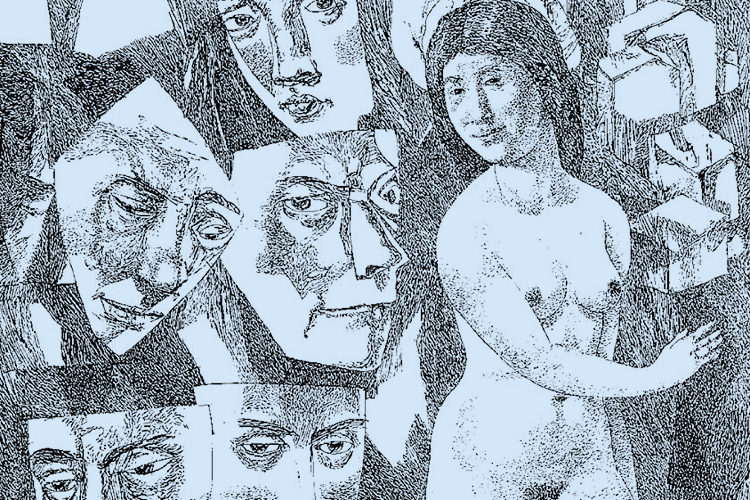
“Living Pictures” is the first book of Polina Barskova’s prose. And this seems to be the best Russian prose, written over the past many years.
Formally, the book contains more likely stories, rather the story (no matter what this word means) and even one play, but in fact it is a whole, carefully built long narrative: this would look like a Russian novel if it had been taken alive to the sky - however, I am afraid, its substance could not thicken in the substance of such a cutting transparency and such a glass transparency and such a burning transparency and such a burning outbreak clarity, like the substance of this book.
Formally, before us, as Mark Lipovetsky writes, “a kind of continuation of the poetic cycle of the Barskova“ reference book of the Leningrad writers-frants: 1941-1945 ””. In the same way as in this cycle (and in other poetic texts), the author works here with a blockade, with the history of the blockade and with the stories of the blockade. It is impossible, however, not to ask the question: why, in this case, Barskova needed prose? It is difficult to imagine that poetry has insufficient (generally less) tools, arsenal of funds intended To solve the tasks that the author sets himself, or, better to say, those who stand in front of him. But no, it’s not good: it’s not about the tasks that need to be solved, and not about the questions that need to be answered. Rather, something you need to cope with-or at least somehow deal. Poetry for this is adapted, in general, better - but “living paintings” have become a book of prose.
Formally, “living pictures” is a book about the past. But, peering into it, we find that the past here is not the main character and, moreover, the space is not a space for a more or less sophisticated scenography. The past in this text is an antagonist of the book itself, more precisely, letters trying to coincide with oneself, to find himself in the present completely, happen . But in the Russian language there is much less than it happens. A “It does” not that he refers the native speakers to the history that determines them (us), but simply accompanies without talking (stomp, come on, what got up!) - under an armed convoy.
The most striking thing is how in “living paintings” the coexistence of an autobiographical narrative with a historical one is arranged. They are not intertwined - instead, the author (wanted to write “sews”, but no) germinates one into the other. The most amazing thing is what it turns out, that in the end there is not a chimera, but a hybrid: an almost homogeneous narrative about itself in history and about the story in itself. There were seams, but for a long time thickets, dragged on. However, their intangibility (in combination with visibility, Visibleity ) just recalls that they - no, were not - there are. This book fixes - no, does not fix, testifies - the transformation of identity. She is about the appearance of a new, another person (and the author). But not only about : in a sense, it is this transformation, at the same time its (its own) object, subject and instrument.
It is natural to assume that such a design must be extremely tight. However, on the contrary, it is most open to the identity of the collective, into social memory, into anthropological in nature and meaning of practice. “Living paintings” go far beyond the limits of the individual experience of experiencing individual trauma or even individual experience of experiencing history, finding herself a utopian (on some of their own, human scale) project of work with general injury and common experience. The blockade for the author is the space of merciless uniqueness and merciless community, in fact, it is the place of the final meeting of the human and inhuman in man. The place where the human is infinitely painfully determined relative to the inhuman, that, as Barskova says in an interview with A. Tikhonova, “now <...> will make animals, and then kill” people who inhabit this book. It is determined through a gap with its own nature.
This is alone, the study undertaken by the author on the subject of whether the emergence of a new identity is possible after the experience of an exalted historical experience belonging to the local recent history.
This book is also the place of the meeting of her author with his heroes: with Dmitry Evgenievich Maksimov and Marina Malich, with Yakov and Mikhail Drukin, with Evgeny Schwartz and Vitaly Bianchi, Picasso and arshil Gorka . But among the great ones - no, not even great, but simply shadows - the characters of the author’s personal history go on the same rights. “Living paintings” turn out to be an instrument of remembrance - “the reader becomes an archive in order to produce new readers.” Its purpose is in gaining integrity, or lost, or not yet former: “Longing - languor is the charm of the archive: a feeling of puzzle, mosaics, as if all these voices can make a single voice, and then a single meaning will make, and it will be possible to emerge from the hassle, in which there is neither the past nor the future, no one is forgotten, but nothing is forgotten, but forgotten, but forgotten it, but forgotten it, but forgotten it. All". It seems that its own integrity requires not even Mimesis here, but almost apocatastasis: in order to free itself from the former world, it will have to be revived and restored. This is not entirely true - but rather even not so at all: Barskova speaks of charms, about the temptation.
Something similar happens as if with a personal history, where the place of “restoration” takes forgiveness: it is not without reason the “fareer” the book opens. But at the same time, “life turned into a suitcase enchanted by a hurry: in addition to the work of forgiveness, nothing was placed there. Forgiveness somehow awkwardly refracted, bending and became almost languishing for the past. ” And further: "The work of forgiveness was replaced by love of an enjoyment of an understanding of the disease, she replaced the language or rather, it consisted in the constant production of her own language of the only one / one who is busy with the work of forgiveness, is a monoglot." I quote this fragment as a poetic text because in it the author suddenly forgets about syntactic markings: a technique normalized by modern poetry, but in this prose, perhaps, that is perhaps a scream.
The remark about forgiveness refracting and becoming “almost languishing for the past” is especially important here - despite the fact that the usual psychological pragmatist of forgiveness is not in the formation of a new connection, but, on the contrary, in the outskirts of the old one. Forgiveness, in fact, was once a “release”, a gap (see English “let go” ). But here is a new dependence that arises when performing the “work of forgiveness”, the remission, is quite, at first glance, unexpected. However, it is here, it seems that it is necessary to look for, for example, the answer to the question of why the author is starting the game, in a sense rather risky, with intangibility (but not invisibility) of transitions from personal history to “large” and vice versa. This game is not self -focused, it is for the author a way to tell us something important about the similarity of experiencing personal injury and history, or rather, that these experiences are kind of isomorphic.
The term “experience of history” in the previous phrase requires clarification, for which I urge the reader to turn to the work of the theoretician of Franklin Anchlit Classmite “Until Historical Experience” . An anxmit distinguishes three varieties of historical experience: objective, subjective and exalted. He writes about the latter that, unlike the subjective, he “is not an experience of the distance between the past and the present and does not imply its mandatory availability. The situation here is rather the opposite, since the past acquires being only thanks to historical experience and through it. <...> The past is born from the traumatic experience of a historian who enters into a new world and recognizes the irrevocable loss of the former world. Then his consciousness turns out to be a scene on which the drama of world history is played. ” Further, the Anchorsmit writes that in the sublime historical experience there is only experience: “If this consistency of the past and us and our feelings was suddenly realized in historical experience and it through it, then everything that refers to us and the past will be immediately absorbed by the axis uniting the past (object) and the present (subject). At such a moment, everything outside this axis is our personal past or artistic-historical context <...>-for us no longer exists and does not make sense. "
 © Publishing House of Ivan Lumbach
In some way, the Barskova book is a testimony that the Ankersmit calls exalted historical experience - or at least an attempt to such evidence that is doomed, of course, in a cold higher sense to failure or uncertainly in luck, since the language here only “serves as a similarity of the tunnel, encouraging us to look inside and focus on what is at the end or more precisely, more precisely, more precisely, more precisely. Already outside it. ” Barskova in many places literally echoes the anchorsmit. Thus, its “languor is the beauty of the archive”, a refinement of the possibility of emerging from the trouble, “in which there is neither the past nor the future, but only a shame”, the Anchorsmit unfolds into a detailed reasoning about boredom, from which it makes sense to bring at least a small fragment: “Boredom and mesmerization first seem diametrically multidirectional. However, the paradox disappears, it is worth recognizing in the fascinity the languid premium of the upcoming merging of the subject and the object and the lack of passionate desire, so that it is fulfilled. Obviously, in a state of spellbound, such a desire can be unusually strong precisely because the promise laid down in it has not yet been fulfilled. And this provokes the consciousness of the inaccuracy of the object and, thus, boredom. We are never more susceptible to the desire to merge with reality (spaceship) and its ultimate inaccessibility (which generates boredom) than in those moments when this merger seems close, inevitable and natural. ”
The marginal proximity turns into the extreme inaccessibility.
The fire, blazing in the core of “living paintings”, is supported by the coexistence in one small space of the need to abandon the former world (and the previous “I”) for the sake of gaining a new one - and the need to keep in the new “I” memory that this refusal took place. The previous one can be forgotten, but the fact of the gap is impossible - and impossible, since it lies at the heart of a new identity. Returning to the conversation about the forgiveness, which we threw in a half -corner a few paragraphs above: forgive, let go , possibly - however, farewell to the released should stay with you to the end.
In the words of the Anchorsmith: "The exalted in many, although not in all, is a philosophical equivalent of the psychological concept of injury." However, “we should distinguish between two types of injuries: on the one hand, there is an injury <...>, which, for all its drama, leaves the identity of the sound, on the other hand, there is an injury <...>, which involves the transition from the former to the new identity. In the latter case, the traumatic loss is truly the loss (former) of itself. And what could be more of such a loss, as close as possible to us to death? " In the first case, “a true story about the traumatic past may ultimately lead to the reconciliation of traumatic experience and identity,” but in the second “reconciliation is unthinkable”, the previous identity does not go anywhere. Here, “a man became what he is no longer <...>. Who he was before, his previous identity - all this is now transformed into the identity of a person who knows about his previous identity (but no longer coincides with her). He excluded (part) of the past from his identity and in this sense forgot him. But he did not forget that he forgot him. "
In the words of Barskova: "The meaning of the whole venture is to prevent someone else's time to mix with the time that you carry yourself, in yourself." And further: “The love of the folly is the power that the past gaping, trouble, darkness have over him. In Russian there is no word survivor -the one who survived, who returned. So now I’m trying to come up with a word, create and change the creature, and most importantly, the process of combination with the memory of the experience. ” The survivor turns out to be a living only if he remembers where. It is precisely this spatial disposition-an important, which seems to imply moving across the border, you, you, -Survivor (from Latin Supervivere, i.e. to translate) is deprived of.
This is the mechanism of forgiveness - at least in the case of this particular personal story: the new one is possible only if it realizes and holds the memorial (i.e. an active, live memory) of the gap with the previous one. And it is precisely for this personal history that it coincides with the mechanism that underlies the Anchorsmith exalted historical experience, which “is the experience of isoating the past from the present”, the experience of continuous self -staining between recall and oblivion. That is why forgiveness-like being-in-historia-occupies a “whole life”, in which nothing is placed more. Soon I will forgive you , says the author. The author is telling the truth; And forgiveness from personal history, and oblivion of the gap from the “big” can only happen soon. Soon, when we re -run - it’s right away - it’s a stone's throw - to the horizon of events - like Mikhail to Liteiny. Soon, when we also stop to catch our breath , and in our mouths it will be dry and cold . The mechanism is not broken - it works like that.
(That's why prose needed. Poetry is too unreliable remedy when the caught fox has settled in your bosom forever.)
“Living Pictures” is not a book about the past, about blockade, about Marina Malich or about a hill arshil; And this is not a book about Polina, which, at the same time, is one of her main characters. This is alone, the study undertaken by the author on the subject of whether the emergence of a new identity is possible after the experience of an exalted historical experience belonging to the local recent history. Whether life exists at all where the gap with this story occurred, was caught, retained and tamed at least partly. The expedition in one person inevitably becomes a personal, but too personal, excessive, no longer placed in the close framework of personal history - and, going beyond them, becomes an event of the history of the general, like “Living Pictures”, the first book of Polina Barskova’s prose.
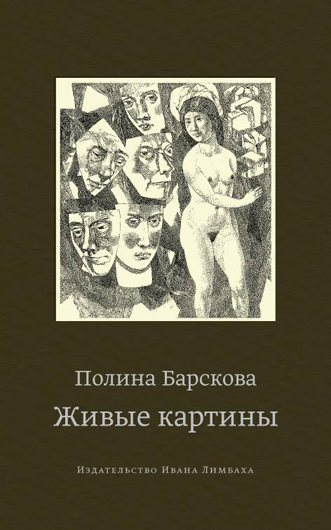
Polina Barskova. Living paintings. - St. Petersburg: Publishing House of Ivan Limbakha, 2014. 176 p.