
Translated material
Kiril Ass: "Review the Park model in the city in general"
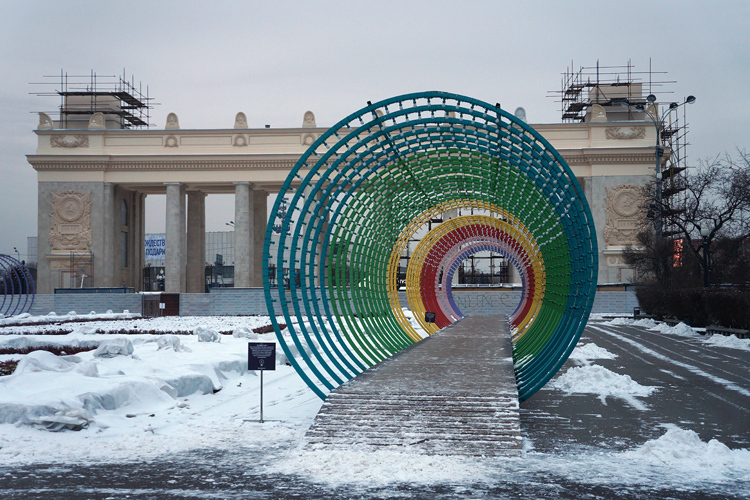
- Have you been the last time in Gorky Park for a long time?
- The last time I was here at the opening of the exhibition in the Garage, so in Gorky Park - this is relatively speaking, I only passed by. And before that - when we made an exhibition in the Garage last winter, spent a lot of time here at night and days, during the construction, running out of a bite to eat, walk, etc. So it cannot be said that I traced all the park novelties directly. But historically, I imagine how it has developed over the past 20 years.
- But what began to do conditionally since 2011. What is your opinion, how justified it was, is it necessary?
- It is difficult to say, because, in my opinion, a reorientation from one community to another occurred. Initially, the community on which the park was oriented in the 1990s was the working class: low income, simple entertainment. More folk, frankly, form. And after 2011, simple entertainment began to be replaced by “cultivated”, which was emphasized by the destruction of all adrenaline festivities of the old type and their replacement at the festivities of a new type, including adrenaline. Plus, a change in visual culture, which, of course, is quite strange integrated into the existing image of the park. This is interesting, because the park was a terrible confusion of different cultural influences that has developed over the past 70 years, during which it exists: layering, starting from some constructivist kunshtyuks through this carrier of classic things and ending with this carousel.- Ed. ) By the post-Soviet Chinese width, which remains in the corner, which remains in the corner, and is still in the corner. Slows for children. And he was replaced by this new harsh neo -motorist beauty performed by Shapiro and the company.
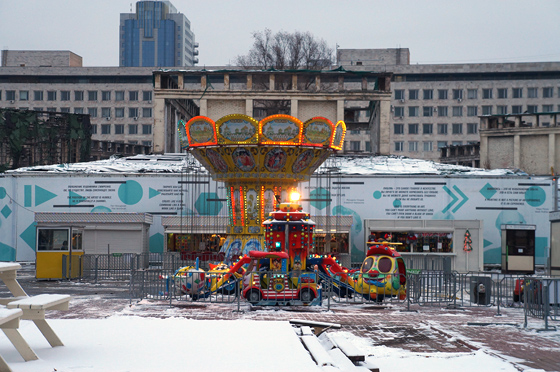 © colta.ru
-All this was tied to some kind of social changes or are these purely aesthetic preferences of the authorities?
-This is a fairly multilayer game: the park was conceived as a kind of representation of a new life and teaching this new cultural life-for the mass of the population, which flowed into the city in the 1920s, devoid of urban culture. A form of education like "Play and Learn" was proposed. Plus all sorts of things from the Social Nursery section and all that so. And this more or less fell on the fertile ground, because it was a simplified urban cultivation, which as a result turned into a kind of reserve. Decent behavior in the park does not led to decent behavior somewhere else. This is a model space in which the correct behavior was supposed to take place. And then, when shawarma, beer, skiing on the American hill and August 2 came here - and the culture park has already become a symbol on August 2 , cultural people ceased to go here. And when the new leadership came-Katya Kibovskaya and others-and this experience began to create a new cultural model, in fact, the technologically technologically reception was exactly the same as in the 1920s: again we have a huge number of people who love only adrenaline entertainment with beer-let's again teach them how to behave. As a result, as I understand it, there was a significant change in the public, which went here: from adrenalin to the near -cultural one.
-And here is the situation that you said about in connection with the 1920s, when people here learned to behave decently, which did not mean that they behave decently somewhere else-this is true for today? This is a place of consumption of culture and some kind of vaccination with culture, as, in principle, is declared, but it works only here, in the territory of the park - or not?
- I can’t say, because this requires more serious studies than my superficial look and general sensation. On the one hand, maybe yes, but on the other, maybe not, because in the current situation of the channels of the transmission of cultural information there is much more than it was in the 1920s. We have a TV, radio, advertising, print media, the Internet, after all; No wonder here they immediately made Wi-Fi everywhere. A person now perceives at times, orders of magnitude more information flows than in the 1920s. And part of the public who visited this place was prepared and wanted to do this, and the other part came here out of habit and found that everything was completely different, and perhaps she began to “convert”. Because by that moment the park already had a story, but at the time of creation he had no story, it was just a Public Space Per SE , created from nothing - to form the public. But I have the feeling that this visual and cultural language, which is now used here, goes back to completely different models than the language used in the 1920s, 1930s, 1940s, etc. That is, if he was a language projecting a behavior model, then this language suggests that it is a product of behavior models. Formally, they are focused on a request [public], and technologically they perform a projection. You understand what the thing happens.
In Gorky Park it says about the non -bonding of ducks, but this has absolutely nothing to do with any office of government agencies.
- And how much does the park understand this?
- Judging by what was in your interview with Olga Zakharova , I would not say that this understanding is directly obvious. It does not follow from what was said. I recently read about this-I forgot, however, how this girl-conflictologist was called, who wrote somewhere at home, that all this common, not only park, but generally Moscow story about the creation of a “public pass” is such a kind of cargo culture, because “public leads”, which he formally oriented in the visual and everyday terms, arises in the west as a result places. Here, this need - for the absence of society - cannot be realized simply because there is no one to request it. Therefore, this is a state institution, and not some kind of private project, likehi-line in New York, which was founded because part of the society wanted this. The engine is inside the society itself, and not vice versa.
- In this sense, in Russia there is a long tradition: many public institutions that, for example, arise from below in Europe, are established from above - science and so on.
- Now only entertainment is planted from above, though. With science, something is not very good, education is also not so hot.
 © colta.ru
For example, here such a Public Friendliness is implemented here (they pass by the signs “Do not offend our ducks.” - Ed. ), But it is completely not projected onto state bodies. In Gorky Park it says about the non -bonding of ducks, but this has absolutely nothing to do with any office of government agencies.
- When it all began in 2011, there was an idea that Gorky Park was only the first place in a row ...
- ... and will be rushed now. Yes, this is a model story.
- Was it in other places?
-In the "Sokolniki" something is being done , something is being done in Bauman’s garden. This is also a pyramidal system. This is the main park, the rest are being pulled up, they are trying to do something on this topic, but they are already not the same: the funds are not the same, the budgets are not the same, so they are not quite the case. It turns out a little weaker. As far as I know, in any case.
- When I talked with Zakharova, I understood from her words - not only those that were in an interview - that she very much defends the condition that I would call the autonomy of the park. That is, there should not be anything “superfluous”: there are no many monuments, for example, or buildings, the place should not be too burdened with cultural or historical content. We should simply create in a sense a hermetic space in which people are comfortable - that’s all.
- I'm afraid this is a very contradictory position and concept, because then it is completely incomprehensible what is the modeling. If some model does not apply to the environment, then there is no sense in this model. Or it turns into such a zoo of culture: we go out of the gate and there we immediately get in the face from a passerby, relatively speaking. In this sense, there is another small detail: this park, even in comparison with St. Petersburg parks, is monstrously high in the square meter density per square meter.
- Even now, when it was reduced, what do they believe?
-This reduction is immediately balanced by the appearance of some other things. Instead of skiing on the American hill, we ride bicycles. Every speck - here is such a game, here is a sitting a game, here is a cafe.
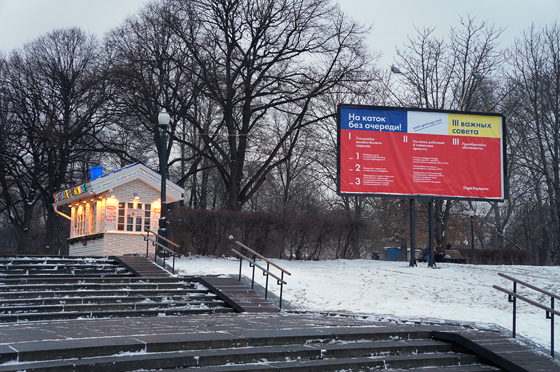 © colta.ru
-That is, it is more likely to follow a new fashion than any cardinal changes? In an interview, Zakharova says that the park should understand, "where is the market."
- I would say, and this, too, and this fashion is set here, but the focus is that there is no Parkovoye itself ... that is, the park is the same creation of pseudo -propriets in the urban environment, in theory. And this is essentially an entertaining park, not natural. There is a non -casual garden there, and already there it all turns into a natural park. See: the concentration of entertainment at this end, and in that direction there is a gradual decline to the complete savagery of the sparrow mountains.
There was a urban planning concept of "green wedges" , it is now gradually destroying. This is such a hallucination in a country that is occupied by forest a little more than completely, and in which any territory left unattended is overgrown with a damn mother, and the city is also half filled with a essentially wild forest. The park, in turn, is such a rare phenomenon: meaningfully planted plants. Here they usually grow themselves. In general, the problem of the park requires serious understanding, the problem of the place of nature in the urban environment. Because at present it is not very clear what is the subject of parking: on the other side of the river, for example, we see simply trees that have grown and grow. Even if they are planted, they still represent an absolutely uncontrolled green field. The same thing happens to a large extent. You understand what the conflict is.
-Then you can create some kind of park of rare plants, for example. This is clearly not done here.
- This is too. Just a park is a specific place. There are several models - a city park, which is a fragment of a meaningful manifestation of nature in the city. And there is a country park if you return to old models in which nature is somehow structured. In the city, it recalls the existence of nature, outside the city - is a projection of a person’s ability to organize a natural environment. And here, in Gorky Park, something average is constantly. This is an insufficiently organized project, and a natural thing is not enough-some kind of ideological porridge is obtained, some kind of inconsistency arises all the time.
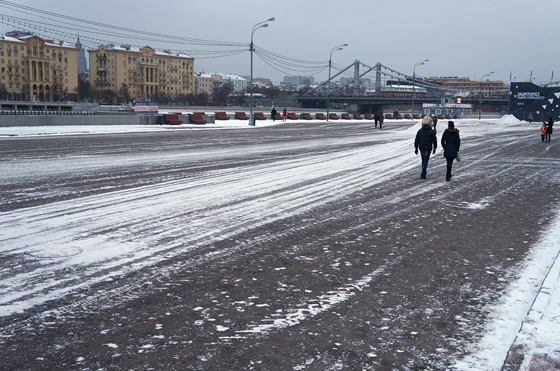 © colta.ru
Here we are standing, we are in the park. Please note that we are standing on a huge asphalt field. I have questions about this: whatever the asphalt field means and wherever it comes, it causes some doubts. Because this layering of many years of development led to a chaotic scheme, which also has legislative restrictions: each tree should be registered, so it does not touch it, but here we have asphalt, because in 1932 they said that there should be asphalt, etc., etc. Here you will not be especially unfolding in this sense.
- Park leadership - also hostages of the situation?
- Of course. I understand that it was a chaotic attempt to tell about vegetation. This is a question that really requires a much greater understanding than that which can afford the parking of the park, because it is not at all in its competence, by and large. This is the competence of general urban planning plans - to understand how the city should develop in general, what are the characteristics of a combination of development density with the density of houses, landscaping density, etc. And the park in this sense is some kind of piece of this territory where it should function on the grounds that were given to him. There are few complaints about him in this sense. I'm talking about greens, because it is, in general, a strange plot as such. It is quite strange to expect some understanding of this problem from the leadership of the park. Because they have this piece of land in their operational management, and they must be controlled in accordance with the given rules.
In this park, even compared to St. Petersburg parks, the density of entertainment per square meter is monstrously high.
- Is an alternative model of the park possible here?
- It is quite possible, but it requires a much larger number of degrees of freedom for those people who will do this. The planning structure of this park inherits the Soviet axial model, which was invented almost in the 1920s, then in the 1930s was supplemented and redone, and in the 1970s was clarified, etc. But still, this remains traditional, French history - since then nothing new has appeared in it. And, as it usually happens, formally it is all a monument: each path has some kind of security status. The pattern of paths, a statue, step-in some papers it is recorded that these are significant things. Naturally, as a result of this thing, it is very difficult to manipulate.
- That is, the circumstances are dictated?
- All these dictates of circumstances, in my opinion, are essentially a decision to make them in the form in which they are. Or not accept - and then there is no dictate. Because the circumstances are understanding people of a multi -layer pie of relationships, cultural and political conventions, etc. But in fact, there are no circumstances as such. There is heaven and earth - these are the circumstances I understand. And everything that happens between them is how people perceive the situation, what people have power at this moment, etc. In fact, these are all constructs of consciousness. A large state is an invented construct, a small state is also an invented construct, freedom - the invented construct, lack of freedom - too. They can be perceived by this and such.
We are talking about different layers all the time. You can discuss a layer of legislation that is currently in this state and to which we are attached, this marble or granite cladding is one plot. And when we are talking about the fact that we have relations between a person, society and space, this is generally a completely different plot, and they are poorly interconnected, because it is a very multi -stage, partly hierarchical, partly non -regional system.
Here we are standing, we are in the park. Please note that we are standing on a huge asphalt field.
That is, if you take this park seriously, you could reconsider not only a set of entertainment and the design of the pavilions, but in general the model of the park in the city, completely re -plan it, find new forms of implementation of nature into the city, new methods of its representation, bring new genres of life there, etc. This is a large project, including philosophical. But this project is not for the Directorate of the existing park, it is a project that requires completely different powers.
In fact, we must consider the park on several layers. There is a metaphysical layer, there is a practical layer, there is a design layer, there is an ideological layer. And all of them are interconnected, but, on the other hand, are at such distances that they are difficult to combine in one conversation.
- If you touch the ideological layer: this is the famous battle on the pages of the "posters" of Kapkov and Hesse . In short, Hessen reproached Kapkov that he created not a park of entertainment, but a beautiful facade in which everything is possible, but nothing around.
- As for “everything can,” I would also argue, by the way.
- Well, conditionally.
- This is the conditional "everything can." Well, what follows from this for us?
- Kapkov simply said that it was important for him to be safe and comfortable. Very often they say that they created such a window as you said-a cargo-cult. They are very proud that they fall into all tops . Last year it was a Facebook top, now - an instagram top. Gorky Park is held in the leaders as one of the most popular places in the number of geotags.
- There is a lot of terms again. In general, any concept of the rating seems to me completely irrelevant to the value of the subject, let's start with this. As a man of marginal tastes, I somehow are somewhat afraid of places that are very successful with geotaging lovers. On the other hand, I am not surprised, because this place is intended for the audience that is engaged in geotaging. If there was a same elegant park, but made for people who like to ride on an American hill and drink beer, then it would not have been in the first place in geotaging - not because it would be worse, but because these people do not use geothegining.
All these dictates of circumstances, in my opinion, are essentially a decision to make them in the form in which they are. Or not accept - and then there is no dictate.
- That is, roughly speaking, geotaging is laid down in the concept of this park? Does he suggest getting into such tops?
-I don’t think that this was directly meant, but, of course, this is a big bonus for an administrative conversation, in the end: “And give us more money, because we want to do this and that, because we are already what good ones.” Администрация парка, создавшая условия для референтной группы, выражающей себя через геотегинг, вполне может рассчитывать на поддержку высшей администрации, которой можно представить удовлетворение этой референтной группы как значимый успех в работе. Вполне разумная ситуация. В петровское время такой референтной группой был Петр Великий, который говорил: «Да, это хорошо, быть по сему. А это нехорошо, такого быть не должно». Вот и вся разница. Другой вопрос, является ли конкретно эта референтная группа заслуживающей того, чтобы именно для нее был создан парк, — не знаю. Во всяком случае, ею не исчерпывается население Москвы. Я к тому, что эти количественные измерения не являются сколько-нибудь гамбургским счетом. Это не окончательный расчет. Это вообще никак не значит, что этот парк станет памятником культуры первой величины через 200 лет. И должен ли — это следующий вопрос.
— Но какую-то объективную оценку можно дать только через некоторое время? Как все эти классические исследователи городов вроде Джейн Джекобс , говорившие уже по итогам некоторого развития...
— ...и наличия определенных социальных изменений, к которым приводит та или иная градостроительная политика. Потому что по сути все это упирается как раз в базовую идеологию, зачем все это делается.
 © colta.ru
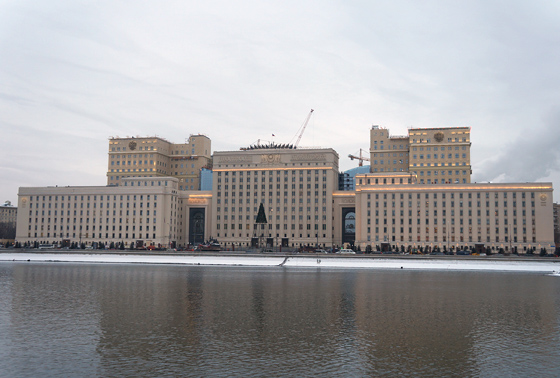
(Внезапно на набережной замечает строительство напротив парка. — Ред .) Мне кажется, что я там вижу два каких-то новых корпуса у Министерства обороны. Это новинка? Это они Руднева так незаметно изуродовали? Нарядно получилось. Я хочу сфотографировать, потому что это памятник чудовищного презрения. Мой дедушка участвовал в проектировании этой штуки, еще когда он в Ленинграде жил. Его делала мастерская Руднева. А теперь — два гигантских корпуса (видимо, для нужд новой организации под названием НЦУОГ . — Ред .), новая добавка, полностью уничтожившая торжественность этого здания. Удивительное преступление. Невероятно, как такое грандиозное сооружение можно было совершенно уничтожить двумя башнями, превратив его в какую-то сомнительную ширму. При том что это была немыслимой торжественности вещь.
Возвращаясь к нашему разговору: я, честно говоря, не уверен в существовании объективной оценки как таковой. С какой точки зрения мы можем вообще рассматривать что бы то ни было как хорошее или плохое? Это требует фундирования какой-то философской точки зрения для начала: общечеловеческое что-то нам там ценно, или высококультурное, или еще что-то? Можем ли мы вообще об этом говорить? В условиях настоящего этого государства, с имеющейся в распоряжении публикой, можем предполагать, что этот парк очень хороший в тех рамках, которые для него заданы. Он работает так, как должен работать, и все, собственно, хорошо. Остальные наши реакции вызваны, например, тем, что мне не хватает в Москве пейзажного парка высокого художественного качества. Извините, этот парк таковым, увы, не является. В Москве вообще таких парков нет, может быть, к ним можно отчасти отнести Архангельское. Поддержание проекции правильного поведения на некоторое количество людей при помощи парковой архитектуры — ну не знаю, мне кажется, это на другом уровне вообще происходит. Хотелось бы, чтобы у нас школьное образование было построено на других принципах, и тогда бы парк сам собой получился хорошим. И не надо было бы делать это через силу — знаете, как организация Роберта Лея задом наперед: не сила через радость , а радость через силу. Я все время ее вижу, эту радость через силу. Мы изо всех сил пытаемся изобразить счастливое бытование нынешнего момента, которое — стоит пересечь некую невидимую границу — заканчивается, и начинается какой-то чудовищный трэш. Я ходил рядом, тут есть небольшие бары с той стороны, за забором, и там прямо щель настоящего ада: какие-то стройки, гаражи, авторазборки, грузовики. Это происходит в 50 метрах отсюда. Чего мы добились этим суперпарком, если у нас в соседнем переулке только что не убивают каждого второго? Почему-то никто не озаботился этим вопросом.
Вообще любая концепция рейтинга мне кажется абсолютно нерелевантной к ценности предмета.
— А вот на все это новое парковое строительство была еще ресентиментная реакция. Люди вполне себе образованные, из той самой культурной целевой группы, говорили: были в Парке Горького, не понравилось, вот сходили в «Сокольники», где еще не было тогда никаких особых изменений...
— ...и отдохнули душой.
— Говорили, что хочется дикости, потому что организованности и в городе выше крыши.
— Вообще в представлениях публики организованность города явно преувеличена. Москва отличается немыслимой неорганизованностью во всех отношениях. То, что в ней организованно, в общем-то, работает так себе, с городской точки зрения. То, что эта часть города организованна, — скорее случайность. Есть такая странная привычка: большая часть московской публики любит этот лесопарковый стиль. Меня, честно говоря, это пугает, потому что лесопарк называется парком, только чтобы не признаваться, что это лес.
Все озеленение новых районов точно так же происходит. И в общем-то большинство тех районов, которые построены в конце 1960-х годов, тоже озеленено явочным порядком. Что выросло, то выросло. И вот эта страсть к зелени в городе. Москва — чудовищно зеленый город, если посмотреть на ее план: это просто лес с отдельно стоящими домами.
— При этом все время возникают жалобы, что у нас мало зеленых насаждений. Они оправданны или нет?
— Честно говоря, я затрудняюсь ответить. По-моему, неоправданны. Это, скорее, вопрос: откуда взялся этот культ зелени?
— Не только в России культ зелени. В Германии есть культ леса, но там все равно же нашли при этом способы создавать и парки, и городское пространство.
— Там есть культ леса, несомненно. Но там также есть четкое разграничение между лесом, парком и озеленением в городской среде. Там посадка дерева — это событие. Когда в Москве вырос какой-то тополь не пойми где — это не событие, он просто вырос. Он не обработан, на него не выделено внимание, он просто вырос, так получилось. Это вызывает некоторое сомнение в осмысленности этой страсти.
У меня большие сомнения, что в Москве не хватает зелени. Уж чего-чего, а зелени полно. Другой вопрос, что среда в целом чрезвычайно низкого качества. И в том числе потому, что она тотально неосмысленна. Предположение, что пусть растет лес, а в нем стоят красивые белые дома в духе Лучезарного города , вызывает сомнения. С одной стороны, оно уже немножечко démodé . А с другой, оно позволило вообще плюнуть на проблему городского зеленого ландшафта и оставить все зарастать, как оно зарастает.
(Подходим к границе Парка Горького и Нескучного сада. — Ред .) Тут был забор. Хорошо, что открыли отсюда дорогу дальше, это правильно. Исчезновение звука нам сигнализирует о том, что дальше кончается культурная программа и начинается программа лесная. Вот это занятно тоже. Звуковое сопровождение — не конкретное, а вообще — вызывает у меня отдельные вопросы. В городе мы и так перенасыщены звуковым сопровождением, и хотелось бы в парке тишины и покоя.
Лесопарк называется парком, только чтобы не признаваться, что это лес.
— В принципе, это действительно парк для широкой аудитории, а не для абсолютного монарха или чиновников?
— Это делание в обе стороны одновременно. Ходынка была устроена для народа и для чиновников одновременно. Получилось то, что получилось. Я беру сразу такой аргумент ad Hitlerum , чтобы было понятно, что имеется в виду. Это и для отчетности, и для публики: наличие публики формирует отчетность.
— Тут, может быть, и получается, что публика достойна своих чиновников?
— Это отдельный разговор. Трудно себе представить, чтобы парк был бойкотирован, потому что он не понравился публике. С трудом себе представляю такую картину. Хотя, по сути, так и происходит иногда в каких-то других местах. Я вполне себе представляю парки, которые не предоставляют такого количества развлечений и плотности обращения внимания на квадратный метр территории, как раз лесопаркового типа. Они в отчетности выглядят не очень — как минимум потому, что невозможно посчитать, сколько народу в них бывает. Вообще это, конечно, очень интересная история, какое вообще значение эта зеленая территория имеет в городе, какой за ней скрывается идеологический подтекст и как он многослойно нарастает и переплетается.
— А что с «Гаражом» в этом парке?
— Он просто есть. Он абсолютно независим, это действительно так. Единственно, есть какие-то вещи, которые «Гараж» согласовывает с парком, насколько мне известно, я уже не помню, какие точно.
 © colta.ru
— Я даже не организационно, а по факту попадания сюда. Они как-то влияют вообще друг на друга?
— Не знаю, по-моему, нет. «Гараж» просто есть.
— Довольно условное расположение получается.
— Мне кажется, это никогда не было осмыслено как жест, что именно это заведение находится здесь. Максимум — в том смысле, что и это культура, и это культура, давайте их вместе посадим. Это новая культура и это новая культура — о'кей, давайте они будут рядом и друг друга как-то поддерживать. Но фактически они просто сосуществуют на одной территории, в том числе потому, что «Гараж» — это совершенно частное предприятие, а парк — государственное.
— Говорить о государственном характере парка, мне кажется, тоже достаточно проблематично. Есть большое количество проектов, которые создаются на спонсорские деньги, и понятно, что это общая политика, чтобы привлекать внешние источники финансирования, не только бюджет. Мы видим сейчас огромное количество территорий, формально, юридически государственных, но по содержанию они абсолютно частные. Захарова сказала в интервью: «Мы даем им аудиторию, а они получают промо для своего продукта. И все счастливы».
— Тут есть, конечно, некая хитринка. Меня, честно говоря, это место в интервью задело, потому что я представляю себе как архитектор затраты на реализацию какого-то объекта в парке. Если людям дают аренду на год, в которую они вкладывается, они должны свои затраты, естественно, каким-то образом вернуть. И понятно, к чему это приводит. Это, мне кажется, какие-то слишком краткосрочные планы. Меня вообще очень беспокоит в целом эта имеющаяся в стране тенденция к краткосрочности всех мероприятий, потому что это наследие и продолжающееся отсутствие действительного священного права собственности. Сохранившаяся абсолютистская история. Парк наш, а вы там, ну ладно, так уж и быть, немножечко пошуршите в уголке.
— НЭП?
— Ну, вроде того. Знаете, в «Орландо» Салли Поттер есть такая сцена. Елизавета приплывает к отцу Орландо в гости, и он говорит: «All what is mine is here for your pleasure» . На что королева отвечает: «Everything you call yours is mine already» . В Англии это так и есть: человек просто поставлен управлять определенной территорией, она передается по наследству. Это территориальное управление остается его наследственным правом, но не более того. Люди обязаны следить за королевским лесом в течение 400 лет — они и следят, получают с него доходы, но все равно лес должен быть готов к приезду его или ее величества для охоты в любой момент в течение этих 400 лет. При том что короли могут и не воспользоваться своим правом для приезда на охоту — никогда. В общем, примерно такое же отношение просвечивает и у нас. Это понимание государства не как общности людей, а как некоей автономной единицы, которая позволяет людям на своей территории что-то делать. Мне очень не понравилось вот это место, потому что оно у меня вызывает сомнения в правильности выбранного курса в целом. Не конкретно в парке, а вообще. Не правильности выбранного курса, а правильности осознания и восприятия вещей в целом.