
Translated material
"Victory Day"
Documentary cinema is different. There are films affects that capture those fragments of reality that we do not have time in life, do not want or cannot see-and returning them to us from the screen in the form that we are not able to emotionally ignore. Such are the majority. There are stories, in their center are heroes and events: stories that we are interested in listening and observing. There are films-screens that generate clear meanings using installation, rigid clashes and comparisons. And there are documentary films that provoke a thought, but avoiding an unambiguous articulated conclusion that all selected material submits.
Of course, this division is quite conditional, and not one of these forms of documentary cinema exists in its purest form, however, substantial, but not didactic paintings are desperately not enough in Russian documentary. On the one hand, they require some kind of author’s position, the primary analysis of the reality and the directorial interpretation, from which the movie is often fleeing, striving for the illusion of the objectivity of a silent film eye. On the other hand, it is necessary to also a sensitive attitude to the document, leaving the viewer the freedom to independently reveal his semantic faces. Such a balance is very rare. Of the films shown this year on Artdokfest, it was demonstrated by Alina Rudnitskaya in her new work “Victory Day”.
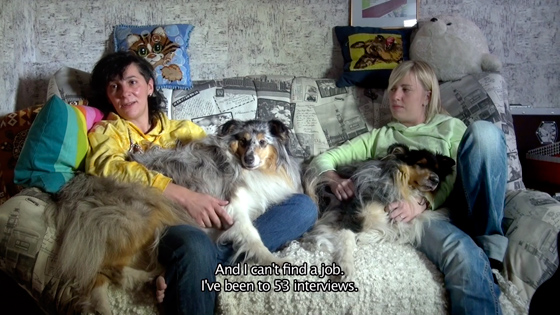
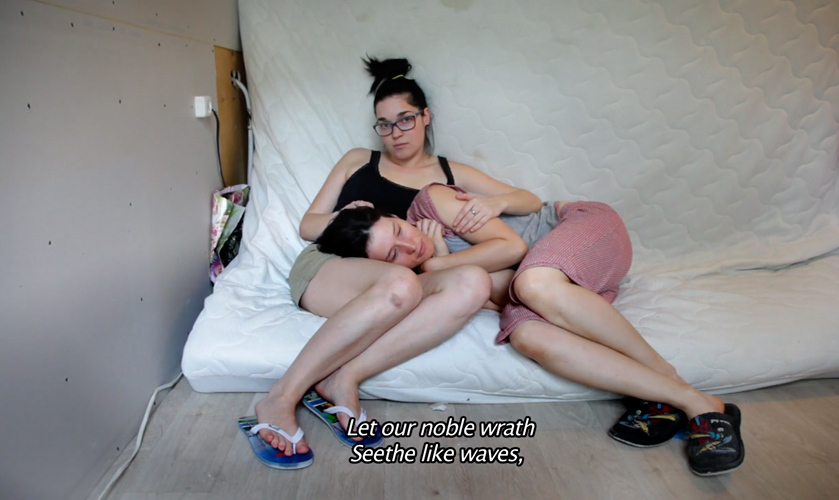
Tanks stand next to Palace. They will move only at the very end-the film is actually not about the military parade and not about the veterans of the Great Patriotic War, as one might think. He is about homosexual couples reflecting their place in modern Russia, men and women living in a civil marriage for a year, three, four, six years. Unlike last year’s “blood” (documentary vampire film about the mobile donor station, the Grand Prix of Artdoxfest-2013) and most of the previous Rudnitskaya films, “Victory Day” was shot in color-apparently to emphasize the color contrasts of the philistine life and colorful national militarized celebrations. Most of the film is the interviews and scenes from marital life in interiors, stylistically (but not ethically) resembling the documentary works of Ulrich Zaydel; The parade and tanks are only a conceptual frame.
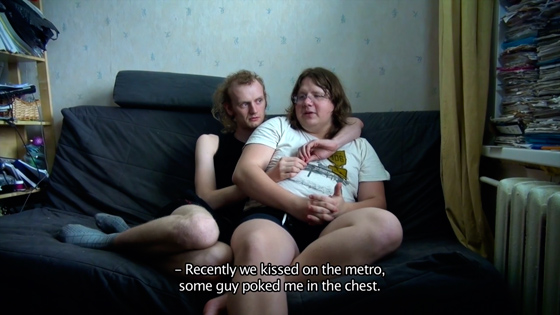
The first, short, version of the Victory Day was presented at the St. Petersburg LGBT Festival “BOK ON BOK”, but we must immediately make a reservation that this picture is quite different from those documentaries about the LGBT that we have used to in recent years. With the direct and affective representation of the problems, suffering and difficult life of homosexuals in Russia, the emphasis is shifted here in the direction of their social self -determination, albeit unconsciously pronounced in an interview. Do not bend drama, without paying additional attention to the details of humiliation and aggression regarding the gay community, Alina Rudnitskaya with a cold head gives the word material. Not a director, but the heroes themselves speak, talking about how society and law awaken, on the one hand, an artificial homophobic consolidation in the face of a common internal enemy, and on the other, a collective opposition self -awareness even in those who, in general, would like to remain loyal and apolitical. The only emotional triggers that Rudnitskaya allows himself to use are fragments of television chronicle: the performances of Milonov and Mizulina, the “sacramental” call of Dmitry Kiselev burn the hearts of gays and the terrible frames of the beating of LGBT-activists on the Marse Field, which the heroes of the film look with anxiety on the screens of their laptops. There is an explanation for this: the world premiere of the film took place at the festival in Leipzig, and it is rather oriented towards a foreign viewer, who, without context, probably could not feel the scale of local social transformations.
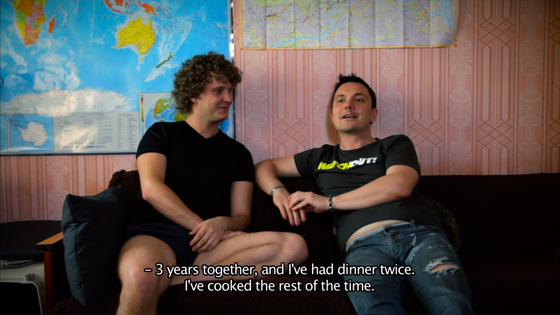
Most of those who find themselves in front of the Rudnitskaya camera do not belong to the hardened ideological activists of the LGBT move. One couple even met at a rally in Seliger, the other guy talks about familiar gay-patriots who support Putin’s strong hand and believe that the opportunity to publicly hug his partner is not so important. He suggests that authoritarian or even totalitarian power is an organic form of government in giant Russia - without it, for example, a victory in World War II would not be possible.
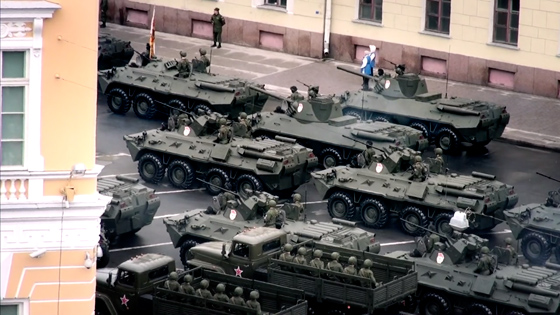
The characters are quite calmly sharing their thoughts and experiences, sitting on cozy sofas, and inserts with family life reprisals give a comic and tract coloring to their relationships. But military equipment is touching. Tanks travel along the central streets and squares - a demonstration of military power, delight and glee. The solemn performance, which the heroes observe from the windows of their apartments, automatically transfers their personal life into a political dimension: in an aggressively phallic world trying to impose the only legalized configuration of family relations, homosexual tenderness becomes the form of urban gerilla. Behind the scenes sounds the military anthem “Get up, the country is huge!”. But the "sacred war" that goes in the country is civilian; homosexuals were included in it in addition to their own will. This pushes them to realize themselves as a community and “get out of the closet” by a united front. The “Victory Day” not only reveals the simple mechanism of stitching heterogeneous society with spiritual scrapers, but, more importantly, shows how more natural and strong ties are formed beyond their borders. As a real documentary, Rudnitskaya invites the viewer to this anatomical theater.