
Translated material
Monk according to the canon
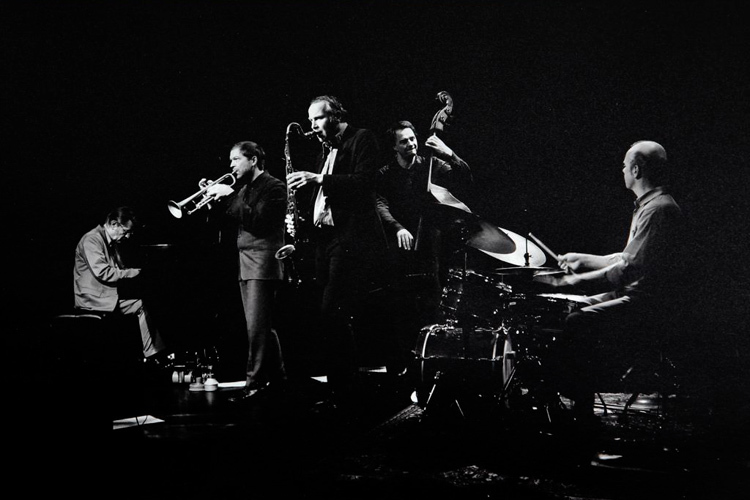
On December 18, a concert of the project “Monk's Casino” was scheduled in the Moscow “House”, in which pianist Alexander von Schlippenbach with a quartet recorded all the author’s music of one of the fathers of Bibop Moninka (and this is 69 compositions on three discs) and has been fulfilling it for almost ten years. This concert is interesting not only by the fact that it goes more than three hours and the synopsis is like a record -aping from Guinness Book.
Firstly, this is just a very good jazz concert. Alexander von Shlippenbach at the piano began to play at the eight of the age, the next year after the military marches were silent in his native Berlin in his native Berlin. And he “landed” along with the permanent guests of the “house”, the saxophonist Peter Bratsman and smuggler Peter Kovald (alas, deceased), to the generation of young German musicians, as if in an effort to leave the same marches that created the music that they began to call “new jazz” or “European jazz”, but in the last years, in the last years, in the view of the complete The meaninglessness of this definition is called "new improvisational music." But, being rebels-resistors, they still remained carriers of the highest musical culture with centenary traditions. “European avant -garde, meaningful and merciful” - as described by the editor -in -chief of Jazz magazine . RU Kirill Moshkov is already a performance in the “House” of other European free jazzmen generation Schlippenbach, the Dutch Mengelberg and Benninka (also in their own way to give proper Monca at that concert).
Before our eyes, jazz is rethinking as classical music.
Secondly, and the main ones, the Monk's Casino program is much more than just a good concert of an outstanding musician. And something more than just another tribe of the great jazzman, whose angular, explosive textures, paradoxical rhythm and unexpected phrasing really bring him closer to the “academic” vanguard.
Before our eyes, jazz is rethinking as classical music. Not in the sense that she “withstood the test of time” (albeit in this too), but in the fact that it can and should not be performed as a tribute, but as the works of a sheet and Paganini are performed - which were also fantastic virtuosos and disciplishers of new consonant, also composed “behind the instrument”, for themselves and “for themselves”. No one will say that the violinist, who records or execution in the same program, all 24 caprice of Paganini (which, as we understand, requires a huge preparation), makes Paganini tribes. That is, does, of course, but somewhat in a different way.
Note that in the rock music, in which the factor of external attractiveness (i.e., simply put, youth and beauty) of the performer, due to the theatricality of the genre, plays no less role than the internal charisma, the practice of such a classic type of classical type has already been known since the beginning of the 21st century, if not earlier. David Gilmore will never be a beautiful golden -haired young man, but to those who found his youth, you can not only endlessly review Live A T Pompei " , but also go to a successfully tours Pink Floyd Show .
This, however, is not about theatrical shows and not even about tribe groups, whose glory is rarely global (we note, however, that it is in the tribe-group t he DOORS found the vocalist for their last tour of the real Manzarek and Krieger), and, say, about conceptual gestures that have been quite successfully existing since 1983 of the Oklahkh Psychedelic Group The Flaming Lips , completely, from beginning to end and from a note to a note that outplayed “ In the Court of the Crimson King” , “ Dark Side of the Moon” and, just “ S GT. Pepper's Lonely Hearts Club Band. " The degree of accuracy of following the initial sound was different - but the sequence of numbers and their duration accurately corresponded to the original.
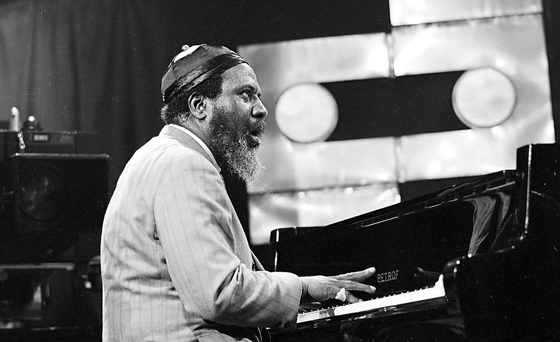 © bbc.co.uk Teleonius Monk
Another American Bek Hansen, known just like Beck, founded Record Club in the 2010s, In the framework of which, together with other worthy gentlemen, such as Nigel Godric, Devendra Banghart and many others, outplayed the classic albums of The Velvet Underground, Inxs, Leonard Cohen and Yanni. Moreover, one of the conditions of the club was that it was necessary to record the album within one day, in fact live. Moreover: at Christmas 2012, Beck made an even more conceptual gesture - he released a new album of twenty songs not in the form of a familiar link to iTunes Or, conversely, the vinyl record, and in the form of a songwriter - scores with notes and words, thus challenge not to their contemporaries and competitors in the charts (rightly believing most of them with one -day), but Scott Joplin, French Schubert and so on, up to John Dowland.
However, rockers are characterized by sharp extravagant gestures. But such phenomena began to arise in jazz - where, it would seem, nothing extravagant had long been arising. No further than this October, the New York Jazz Quartet with even more elaborate than The Flaming Lips (“Burning Lips”), the name of the Mostly Other People Do the Killing (“The killers are someone else”) fucked up the quiet backwater of traditional jazz, releasing the Blue album. The monochrome name hides a bright conceptual gesture: the exact note in the note, the rewriting of one of the most famous albums in the history of jazz - “Kind of Blue” (1959) Milesa Davis. Moreover, in this case, the words “note in the note” must be understood literally: the musicians learned the whole phrasing of the oven (including Koltrane), syncopes of the double bass player and all the brees of the drummer Jimmy Kobba. This latter - really the last surviving participant in that record - listened to Blue with mixed feelings. “Guys are well done. At first I thought that they were us, but I did not hear the human component, individual sound, the feeling that I lived during those sessions, said 85-year-old Cobb The Wall Street Journal . -But, listen, the classics have been doing it for centuries-they play notes written by someone else. Since the guys spent time on this, it means that this music means something for them. ”
For Shlippenbach and his “guys” music, Monk, obviously, also means something. But not only: now, from a distance, it becomes clear that the creators of the new, unheard of music - Bibop, who sharply broke with the entertainment of swing and chic of luxurious gangstones for the sake of small basements and free jams until the morning, completely understood their position of “classics”, that is, serious musicians who are looking for, and not entertainers.
By the way, the book of Hannah Rothschild “Baroness”, dedicated to the cousin of Hannah, the Pannik Rothschild, in the marriage of von Königsvarter, better known as “jazz baroness”, came out in Russian. In the early fifties, Nick heard the plate Monk "'' Round Midnight ” and after that left her husband and five children in order to hang out in New York clubs, where she often was the only white, only owner of Bentley and certainly the only baroness. Not being an example of high literature, this book clearly shows: the relationship between Teleonius Monka and Nicky very resemble the relationship between Tchaikovsky and von Mecc.
Of course, there is a significant difference: these relations quickly became far from epistolary, but in recent years, his health has surrendered it, Monk, leaving his family, simply lived in the house of Nicky, but more importantly: in order for the pair to “an enthusiastic philanthropist” work, not only a rich lady, but also a musician who realizes himself in a similar way, and awareness - otherwise the effort and money is, otherwise The philanthropists will be wasted. Monk, like Parker, Gillespi, Coltrain, Davis, probably realized himself - although he could hardly formulate it himself.
For him, other, more literary sophisticated people did it. “We specially began to gather in order to listen to Koltrane, Monk and Lewis,” Vladimir Martynov recalls his sixtieth youth, “and on these auditions I came to the final conviction that the composers monopolies came to an end and that great music is not necessarily composer music.”
Now, half a century later, the pendulum swayed in the opposite direction and the time of the antithesis has come: not only non -evidence can be great - but also great non -evidence can be a classic. And to demand the appropriate relationship, which will demonstrate in the "house" Alexander von Shlippenbach and his quartet.