
Translated material
Dissatisfaction with the friends of the Kremlin
Pro -Russian politicians of Central Europe feel less and less confident
Anxiety - probably, this word is best described by public sentiments that prevailed in the past year in Central and Eastern Europe. This was due to both domestic political causes and with the Ukrainian crisis, which was literally erupted at the threshold of the Eastern European countries - EU members.
The position occupied by the states of the region in relation to the events in Ukraine and the Russian aggression against this country turned out to be unequal. Poland and the Baltic countries sharply criticized the Kremlin , urging the European Union to show solidarity with Ukraine, and NATO - to take measures to strengthen the defense capacity of the alliance members bordering Russia. But in Hungary, Slovakia and the Czech Republic , neither society nor politicians came to a consensus . A certain part of them, headed by the President of the Czech Republic, Milos Zeman and the Prime Ministers of Hungary and Slovakia, Viktor Orban and Robert Fitzo, either took an openly pro-Russian position, or showed emphasized restraint in the conflict in Ukraine, calling for negotiations with Moscow and criticizing the sanctions against Russia. (True, at the EU and NATO summites, all three countries ultimately voted for the decisions proposed by other participants in these organizations aimed at restraining the expansion of the Kremlin). All three politicians - Zeman, Orban and Fito - nevertheless, acquired the reputation of "friends of Vladimir Putin." And all of them at the end of the year had to face public discontent, which makes their position much less strong than a year ago.
Andrey Kuska starts and wins
The elections of the President of Slovakia, held at the end of March this year, introduced a long -observed revitalization into the political life of the country. Until now, the positions of the many-year-old prime minister, the leader of the ruling Social Democratic Party of Robert Fitzo seemed unshakable: the fragmented liberal and legal opposition lost some elections for others and was unable to nominate a single candidate for the post of head of state. As a result, the success was waiting for the millionaire Andrei Kisk, who gained fame thanks to his charitable projects and ran for the presidency as an independent candidate. Says the leading researcher at the Institute of Political Science of the Slovak Academy of Sciences Yurai Marushak :
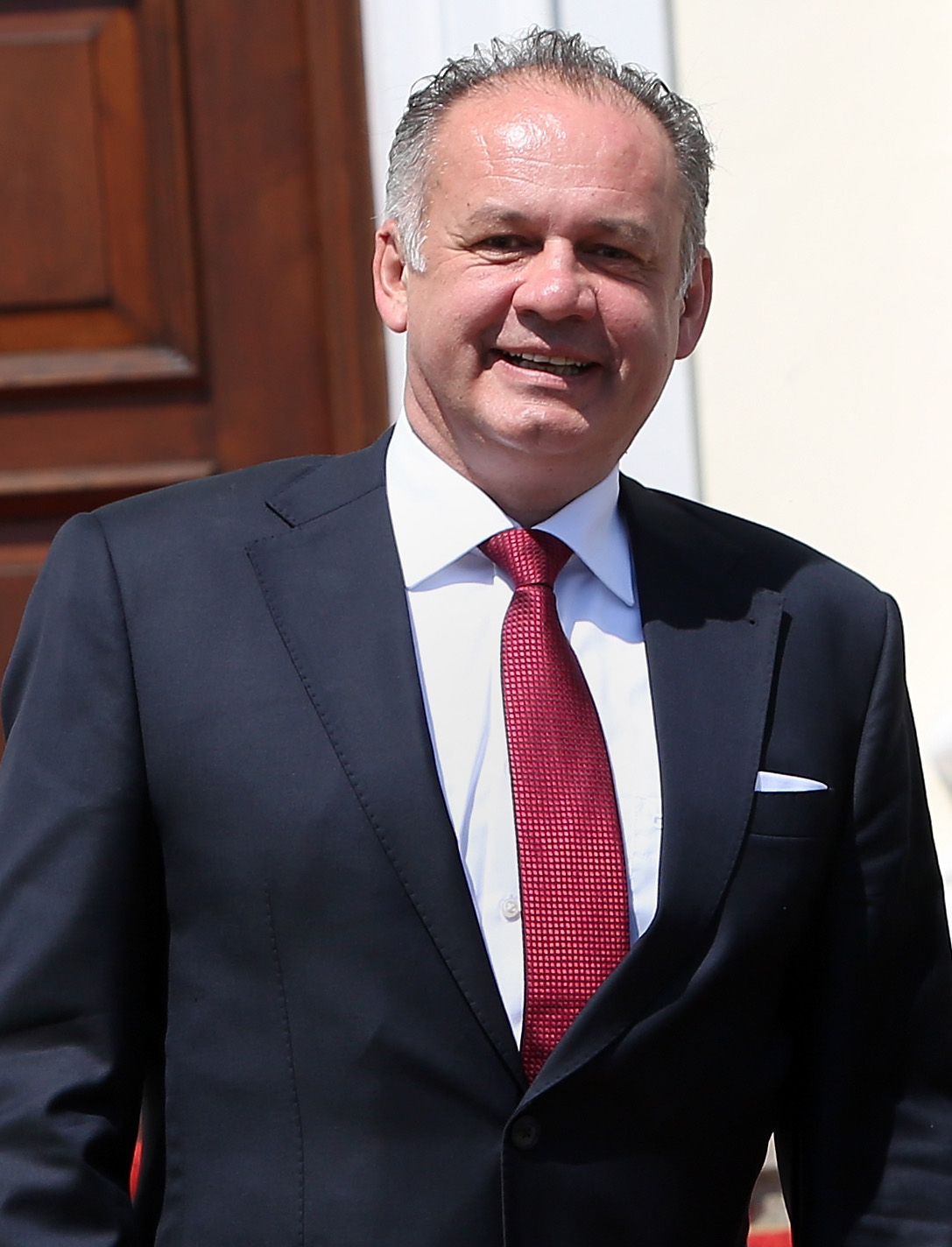
- P , Obert Fitzo lost to a large entrepreneur and philanthropist Andrei Kisk . In principle, it is surprising that Fitzo decided to run for these elections, but his defeat seemed even more unexpected. This changed the political situation in Slovakia: a new player appeared on the stage, the president who enjoys the support of the parliamentary opposition and all Robert Fitzo opponents in society.
Another political surprise of this year was the departure from his post in November by another representative of the ruling party, chairman of the Pavol Pashka parliament - in connection with accusations of opaque financial transactions ...
- But, despite this, in the autumn elections to the local authorities of the “death”, the prime minister Fito again performed well. In what condition is this party now: Robert Fitzo manages to give her a new impulse or can we talk about the beginning of the sunset "Smet"?
In Slovak politics, one can expect the rise of some "third force"
- “Smorn” not only won the local elections, but can maintain leadership in future parliamentary elections. Oddly enough, this is not so much connected with the power of this party itself as with the weakness and disunity of its traditional opponents. In this regard, one can expect the rise of some "third force." Say, recent demonstrations against corruption, which sounded the demand for the resignation of the Prime Minister, organized political forces, which until recently were considered marginal. This, in particular, is the movement "ordinary people and independent personalities" Igor Matovich, which is not organized as a standard party: there are only four permanent members. The same can be said about the new party "Citizens" Politics and entrepreneur Alois clay. On the other hand, in Slovak politics, Euroskeptic and pro -Russian notes are heard. The right -wing radicals, frank racists, like the People’s Party "Our Slovakia", whose leader Marian Kotleba last year won the election for the post of governor of the Bancobstitsky Territory . Such forces, of course, cause fear. There are certain authoritarian moods in the country.
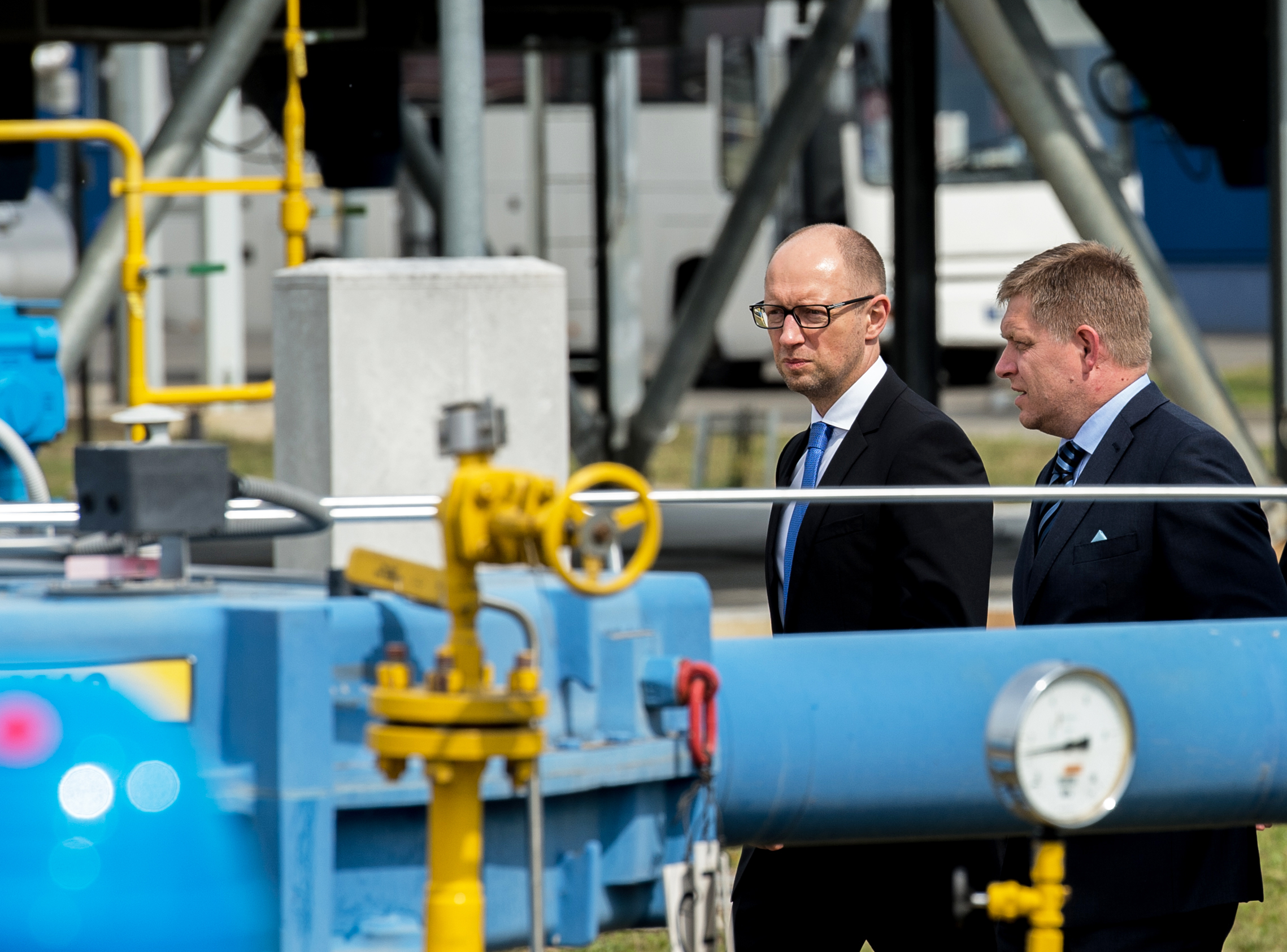
- How did the conflict in neighboring Ukraine affect the situation in Slovakia? The position of the prime minister Fitz on this issue is considered very restrained, and its opponents even call it Prochrevskaya. How much does it correspond to the mood of most Slovak society?
- Publishing polls on this score was not enough, so it is difficult to judge. But we can say that events in Ukraine are not a particularly sick topic for discussions with us - if we compare, for example, with Poland. There are no Slovaks in the collective memory of the Slovaks. Of course, there are pro -Russian sentiments in Slovakia. As for the policy of the Prime Minister, it is focused primarily on voters of his own party. But at the level of the European Union and NATO, Slovakia supports the position of its allies, although it does not advocate the escalation of the conflict with Russia, ”said Slovak political scientist Yurai Marushak.
The current system of power gives nothing and only takes, even where people fight for the most expensive - life and health
It is characteristic that President Andrei Kiska supported the participants in the anti -corruption protests, saying in parliament that their votes were "must be heard." The position of the head of state on the Ukrainian issue is also tougher (in relation to the Kremlin) and closer to the western than the views of the prime minister Fito. As a result, the president, despite the fact that, under the constitution, he does not have significant powers, can become a unifying symbol for all Robert Fitzo opponents and his paternalistic policy. The latter is increasingly associated in citizens with corruption transactions and the decline of the social sphere - contrary to the election promises of the ruling party. Many, in particular, indicate a disappointing state of healthcare. As noted in the resolution of the protest rally in Bratislava, "the current system of power gives nothing and only takes, even where people fight for the most expensive - life and health."
Milos Zeman: red cards, eggs and three with minus
- It is necessary to cancel sanctions against Russia, they are redundant. They bring the effect, the reverse of the one that their authors counted on. Between civilized states we need a dialogue, ”said Czech President Milos Zeman, speaking in early September at the International Forum“ Dialogue of Civilizations ” . This meeting, where Zeman was the most high -ranking guest, was organized by the head of the Russian Railways corporation, one of the close Russian president Vladimir Yakunin. Zeman's words made many be embarrassed by the Czech government and the Foreign Ministry, because at the official level, Prague is in solidarity with Western sanctions against Moscow. The participation of the Czech president in the event organized by Yakunin, which fell under the effect of these sanctions, from a diplomatic point of view looked scandalous.
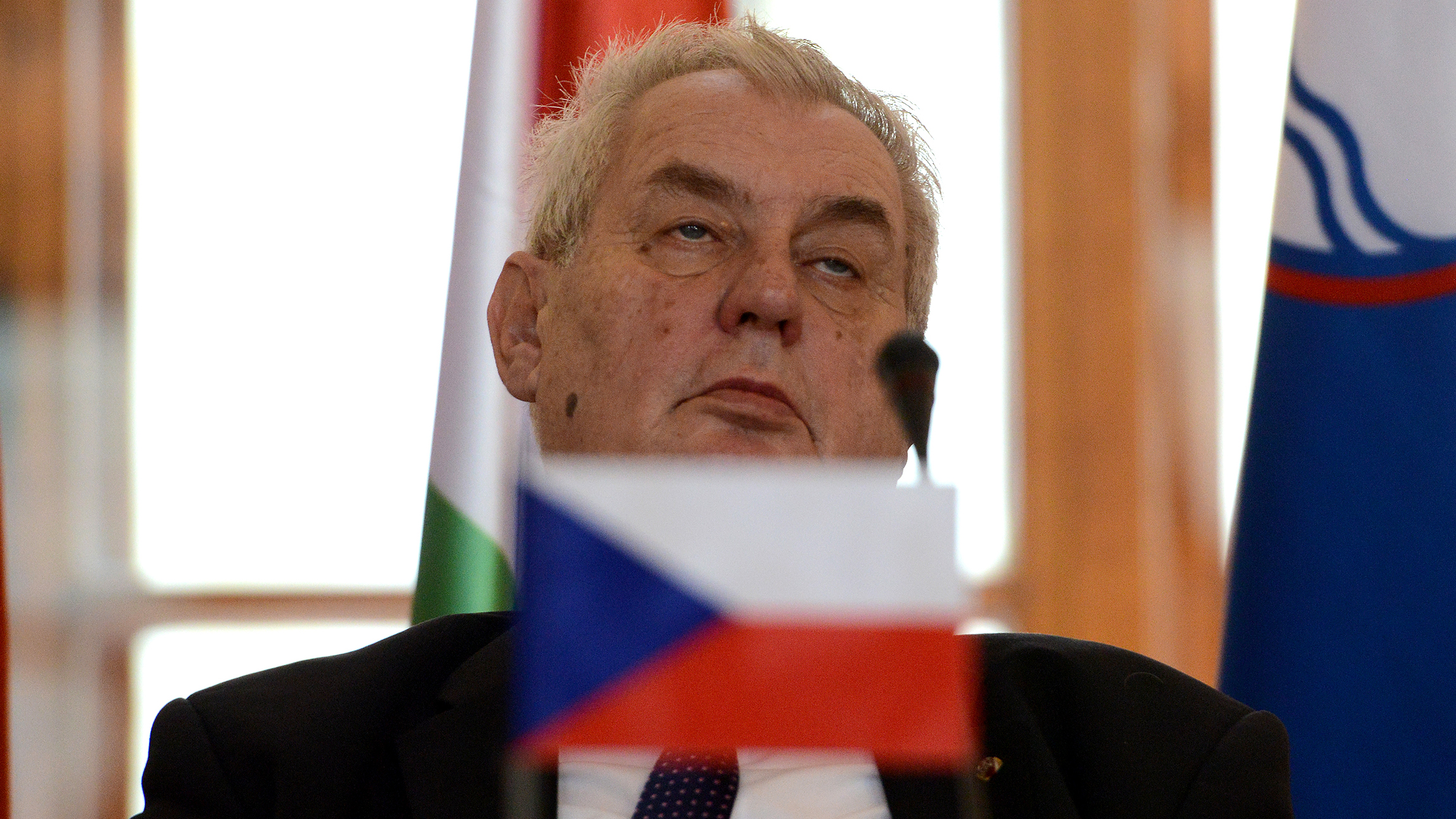
Milos Zeman has repeatedly spoke out this year on Ukrainian problems. At the very beginning of the conflict, he even called to send NATO troops to this country, but then sharply changed the line. According to Zeman, there is a civil war in Ukraine, and there is no evidence of Russia's intervention in the conflict in the Donbass. In early November, in an interview with Czech radio, the president, among other things, doubted the presence of political prisoners in Russia, and the Pussy Riot group described in non -parliamentary expressions. In the same interview, he used vulgar words several more times - already in a different connection.
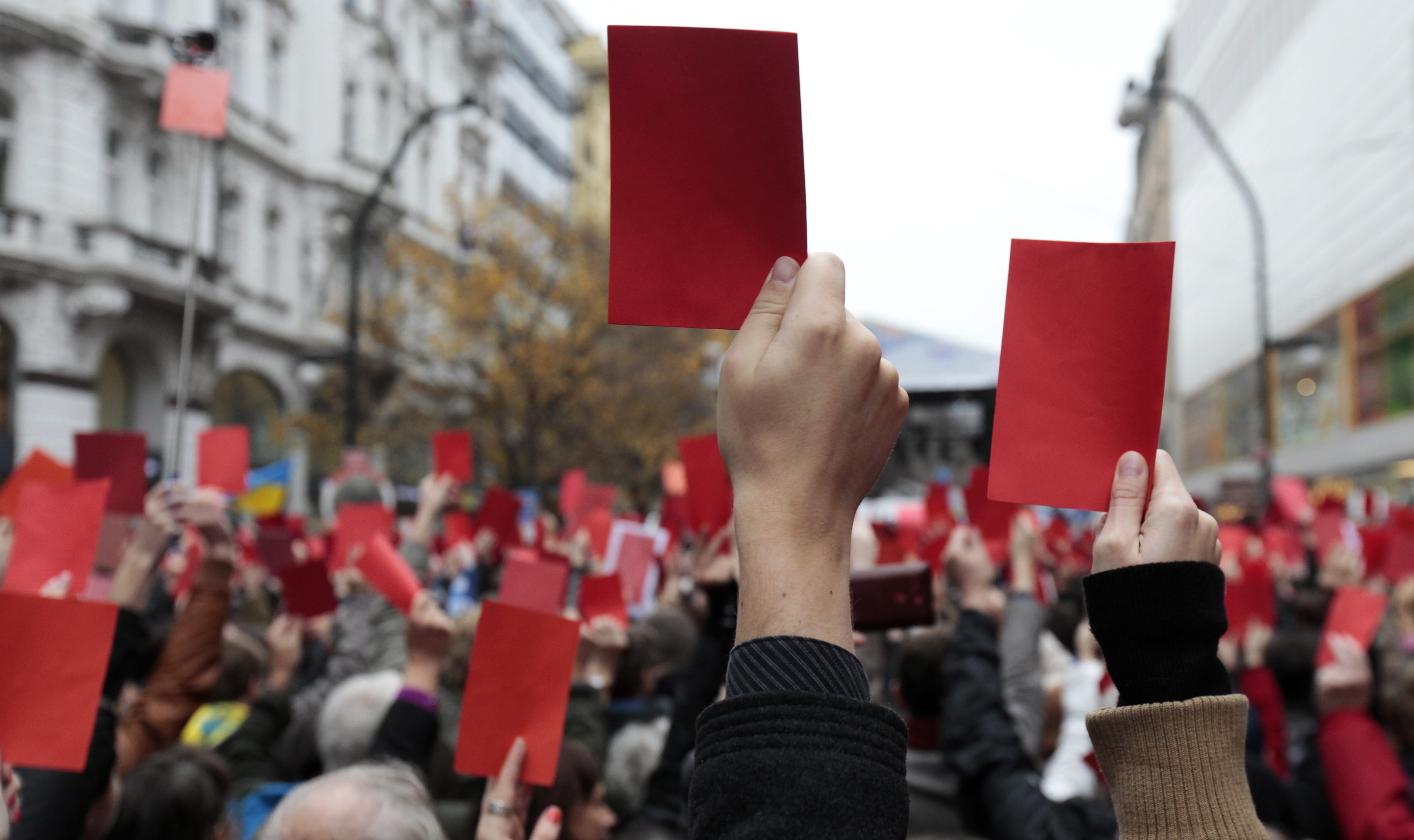
The answer was a thousands of protest against the president’s behavior and policy, held in the center of Prague and in several cities by his opponents. Its participants brought with them symbolic red cards that demonstrated, demanding the removal of Zeman from the political field. Then, on November 17, on the day of the 25th anniversary of the 1989 velvet revolution, Prague students, before whom Zeman was going to speak, threw him eggs and tomatoes. The rating of the head of state in a month collapsed from 58 to 37 percent. And according to the results of another survey, the participants of which evaluated the work of politicians in the past year according to a five -point system, Zeman received a three with a minus .
These and other Czech socio-political events of 2014 Radio Liberty asked to evaluate the observer of the Prague newspaper "Law" Alexander Mitrofanov :
Andrei Babish is alarming by the fact that for him, as he himself somehow put it, parliamentary democracy is a "spoke"
- I would rather talk about events, but about the relationship between the three key figures of today's Czech policy, which determined its character in the past year. This is the president of the country Milos Zeman, Prime Minister Boguslav Sobotka and Deputy Prime Minister, Minister of Finance, businessman-millionaire Andrei Babish. The year was held in their rivalry, although the coat and Babish-the leaders of the social democrats and the ANO moves, respectively, are part of the ruling coalition.
This year, Milos Zeman still tried to achieve the actual expansion of his powers, that is, to make them correspond to not what is recorded in the Constitution, but to the fact that it is “written down” in his head. Sometimes he succeeded, sometimes not. As for Boguslav Sobotka, he tried to realize the promises that his party made his voters as the head of the government, and it turned out to be relatively good for him. Andrei Babish is alarming by the fact that for him, as he himself somehow expressed himself, parliamentary democracy is a "speaking". He would love to control the state as his own company. Babish does not hide that in the future he would like to become a prime minister, and then he can get the opportunity to try out such an approach.
- Did the Ukrainian crisis have a significant impact on Czech policy?
- He did not provide - in the sense that the Czech political forces or citizens of the country are practically not involved in it. But at the same time, this conflict became a litmus piece of paper: the worldview of politicians and their voters can be determined by their attitude to the Ukrainian crisis and Russia. The positions of the main political persons are also significant here. The most brightly “lit up”, of course, Zeman with his benevolent statements to the Kremlin and his politics. Babish, it seems to me, intentionally did not apply to this topic-he simply does not want to spoil the relationship either with Putin or with any other possible future ruler of Russia. He only somehow left, that, in principle, as Russia did in the Crimean question, of course, is not worth it ...
Well, the prime minister of the co -sabotage manes between the political poles - and so that sometimes it hurts to look at him. Based on the experience of personal communication with him, I can say that, as a politician, he rather shares a western point of view into a Ukrainian problem. But he is also the leader of the Social Democratic Party. And in this party, as well as among voters, there is a rather large group of those who, in their psychology and mentality, are closer to Russia than to the West. And the premiere has to take this into account, ”said Alexander Mitrofanov, political observer of the Czech newspaper Law .
"Cross the Khorty and Kadar, get Orban"
In November (December data is not yet), Hungarian sociologists noted the unprecedented: in just a month the rating of the ruling party "Fides" Prime Minister Viktor Orban fell by 12%-from 38 to 26%. According to the Median agency, most of all this helped radical nationalists from the Yobbik party (“Movement for Best Hungary”) - their rating rose to 15%. In third place are socialists with 12 percent. But the party “against all” dominates the Hungarian political stage - voters who have not decided on the choice: there are 36%of them. At the same time, more than two -thirds of the respondents (68%) believe that Hungary is moving in the right direction, and only 31% positively evaluate the work of the government.
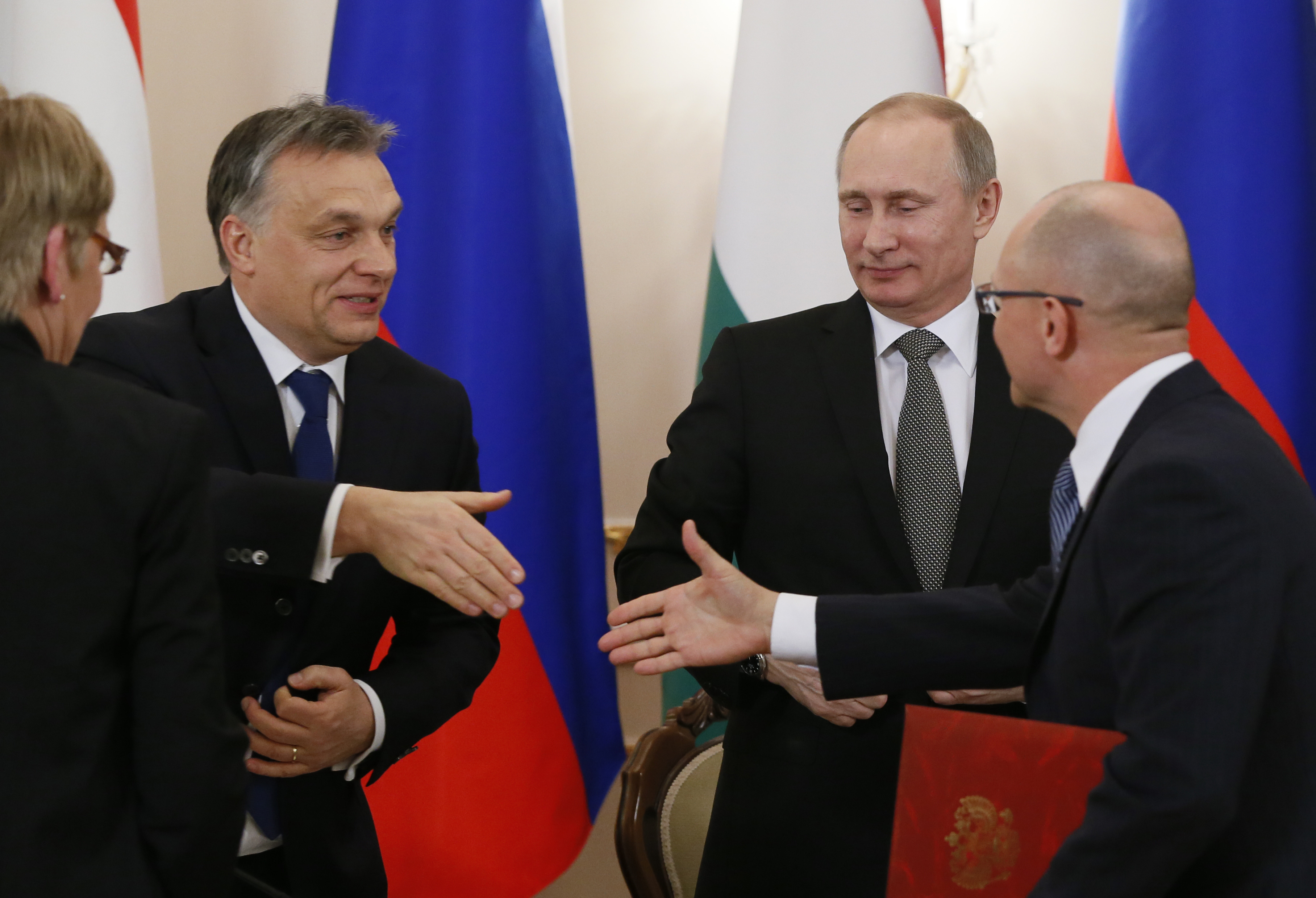
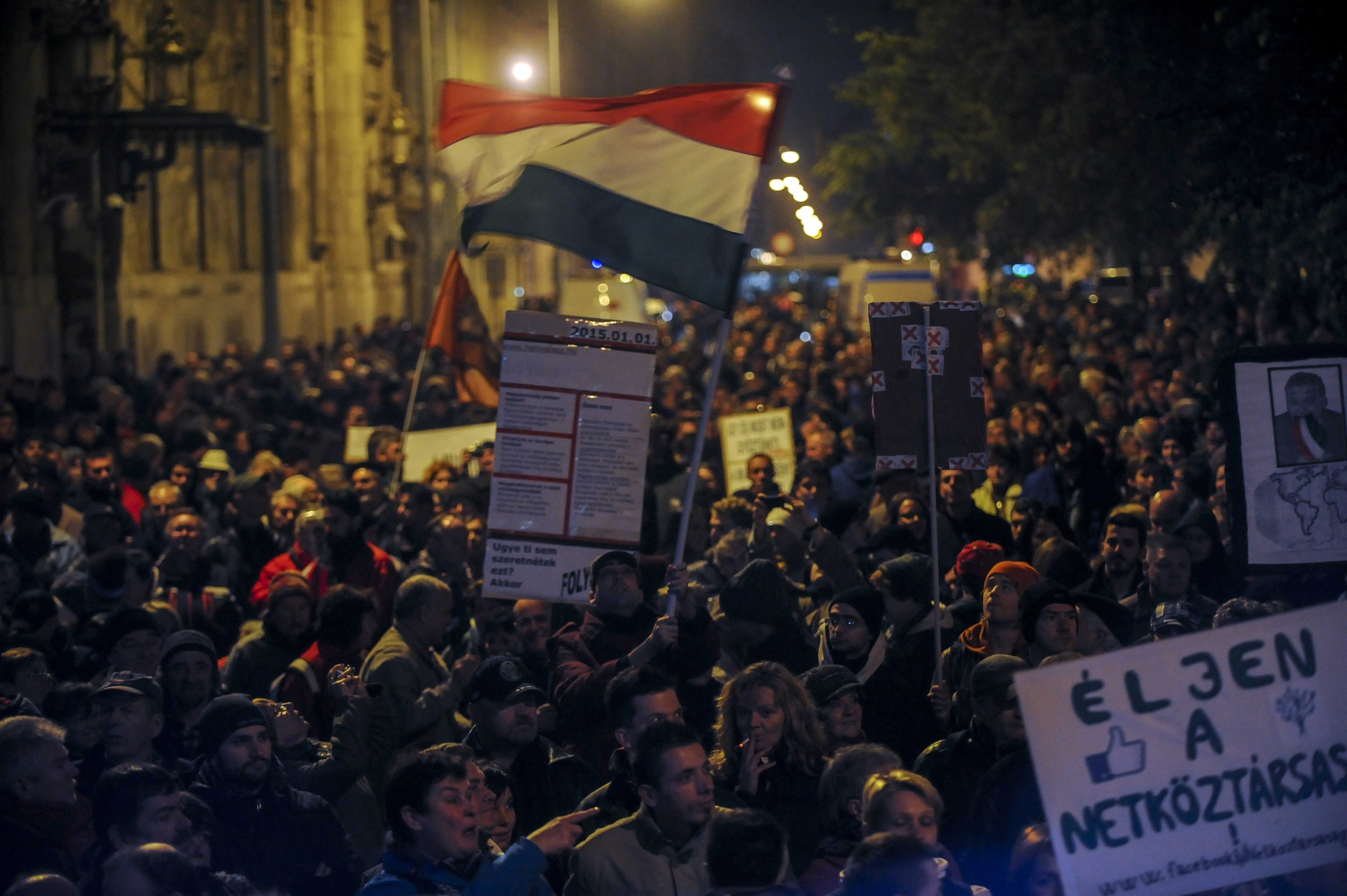
This is not very pleasant news for Victor Orban, although they can hardly be called unexpected. It seems that Hungary began to get a little tired of the hyperactive prime minister with authoritarian manners. In the past year, Orban managed to make a lot: he entered into a contract with Russia for the construction of new power units of Paksh NPP, tried to introduce a tax on the use of the Internet (as a result, thousands of people went to protest on the streets of Budapest), scared the civilian initiatives that had not liked him and, finally, seriously quarreled with the United States , which prohibited the entry of several highly highly high -profile Hungarian officials. The track record, quite sufficient for the popularity of even a very talented policy, which, of course, is Orban, fall.
The reasons for what is happening is discussed by the Hungarian political scientist Chab that :
- The current crisis of trust has several reasons. Firstly, these are the last unpopular decisions of the Fides party like the introduction of Internet tax or tobacco tax. Secondly, these are loud corruption scandals associated with high-ranking officials. And thirdly, the brewing conflict inside the right wing. Voters, who back in April voted for the Fides party, see that competent, in their opinion, experts actively criticize the policy of the prime minister and the ruling party. The political picture to which they are used to collapse before our eyes. Moreover, all these conflicts, coupled with the strengthening of the power policy of Viktor Orban, were rushed recently. At the beginning of the year, before the election, everything was still calm.
- In parallel with the fall of the popularity of the ruling party, the support provided by voters of opposition parties is growing. Who wins in this situation?
- So far, the camp of the "doubts", those who do not believe any of the parties, is mainly growing. However, in the municipal elections, we saw examples of the fact that opposition leaders suddenly win in certain regions: somewhere right radicals, somewhere socialists. It is clear that in this situation, the party that will make more provocative statements will be able to lure more doubting voters. In the meantime, both the right -wing “Yobbik” and the socialists selected from Fides, according to various estimates, about 4 percent of popularity.
Politicians from the ruling party criticize their American colleagues, while relations with Russia carefully line up at all levels
- This year, the Russian Question was especially popular in Hungarian politics. At the beginning of the year - a major agreement on atomic energy, then protests, then sanctions against Russia and the confrontation of Hungary to these sanctions ... After numerous warnings from the American side and from the European Union, will Budapest’s close ties with Moscow?
- I believe that the “Opening to the East” will continue in parallel with Washington’s criticism. Almost every day of politicians from the ruling party criticized their American colleagues, while relations with Russia and other oriental partners are carefully built at all levels.
- What is the reason for the growth of protest movement in recent months in the country? Does the demonstrators have a specific goal?
- These protest movements have no concrete goal. In connection with the unpopular policy of the Fides party, the general discontent of people is growing. However, those who go outside have no clear ideas regarding what needs to be done. In the current situation, the most interesting thing is how quickly the political situation in the country can change. Three months ago, Fides was still confident in the ratings of popularity, now we see how this party is rapidly losing its voter. And this speed, unprecedented in Hungarian history, suggests that in the next political season we definitely will not have to miss.
The Austrian historian of Hungarian descent Paul Landva believes , however, that Viktor Orban has already managed to create such a system of control of civil society and political institutions, which will be extremely difficult to overcome to its opponents:
Hungary is on the way to the authoritarian regime
- All important positions, the Constitutional Court, the post of president are occupied by representatives of Fides. Outwardly, the country looks normal: full restaurants, new cars, different television channels ... Nevertheless, Hungary is on the way to the authoritarian regime. All significant social groups are either connected to the system, or their mouths shut up. Если скрестить Хорти (правитель Венгрии в 1920–1944 годах. – РС ) и Кадара (лидер социалистической Венгрии в 1957–1988 годах. – РС ) , получите Орбана, – утверждает историк Пауль Лендваи.
Правящей партии приходится лавировать между поддерживающими ее жителями небольших городов и оппозиционно настроенным Будапештом. А также с опаской посматривать на праворадикальный "Йоббик", лидер которого Габор Вона в последнее время делает все возможное , чтобы придать своей партии более респектабельный облик. Тем самым партия Воны стремится отобрать часть потенциальных избирателей у партии Орбана. С другой стороны, оживилась увядшая было парламентская оппозиция в лице социалистов и либералов. Недавно ее представители потребовали провести тщательный правовой анализ атомных контрактов с Россией, которые, по мнению оппозиционеров, не только не соответствуют венгерскому законодательству, но и "ставят Венгрию в зависимость от России".