
Translated material
Political pressure: media digest (December 11-17, 2014)
"Bolotnaya Case"
Artem Savelov should be released before the New Year
“Novaya Gazeta”, December 17 :
“Prisoner of Bolotnaya” Artem Savelov will be released on the eve of the New Year. Savelov’s father, Viktor Ivanovich, told Novaya about this. Artem is serving his sentence in correctional colony No. 6 in the village of Stenkino, Ryazan region, where he was transferred in August of this year. The court sentenced him to 2 years and 7 months in prison. His prison term ends on January 10, 2015, but since Savelov had no violations in the colony, the management decided to release him before the New Year holidays - December 30 or 31. Savelov’s lawyer Farit Murtazin does not yet know whether his client intends to appeal the verdict.”
Navalny
The court in the “Yves Rocher Case” interrogated Alexei and Oleg Navalny
“Yesterday, in the Zamoskvoretsky District Court of Moscow, Alexey and Oleg Navalny were interrogated, accused of theft and legalization of funds received from the Yves Rocher company for the provision of transport services. Alexei Navalny , in particular, drew the court's attention to the fact that this case was opened three days after he called on his supporters to go to an unsanctioned rally on Lubyanka Square. “It is obvious that the case was opened to intimidate those who are calling to rallies, and also put pressure on my relatives,” the oppositionist said. He cited the second reason for the appearance of the case as the desire to limit his anti-corruption activities - during the process, Navalny’s shares were arrested, thanks to which he could monitor the corruption component in the work of large Russian companies. Oleg Navalny spoke about the creation of the Glavpodpiska company and its cooperation with Yves Rocher and the Multidisciplinary Processing Company, which allegedly suffered damage. According to him, there were no complaints from Yves Rocher: “If it weren’t for the investigation, I’m sure we would still be working together.” Prosecutors were interested in how Alexei Navalny transferred Glavpodpiska to his brother and whether any other relatives worked there. The judge was more interested in questions about the Kobyakovsky wicker weaving factory, through which Navalny allegedly legalized the stolen money - this is a family enterprise where Navalny’s father and mother work. Alexei Navalny said that in 2010, upon learning that he had entered Yale University, he asked his parents to pay office rent, but in reality this was “presented as money laundering.” From the judge’s questions it follows that she intends to impose a guilty verdict, says Navalny’s lawyer Vadim Kobzev : “For example, she asks whether Glavpodpiska had an office, but there was no office in the sense of “desk and secretary” - she notes this to herself, and then refer to this in the verdict.” The judge and the prosecution asked questions that are clarified for the indictment, agrees another Navalny lawyer, Olga Mikhailova : “But in the current realities, it is difficult to imagine another verdict - although, according to the case materials and witness testimony, there is no evidence of fraud and the prosecutor’s office should drop the charges, but this will not be done.”
And the “Kirovles Case” will not be reviewed
“The Supreme Court of the Russian Federation did not initiate cassation proceedings on the complaint of the lawyer of oppositionist Alexei Navalny against the verdict in the Kirovles criminal case ; the relevant information is posted on the court’s website. “We asked for the verdict to be overturned, of course. At the moment, the ECHR has communicated our complaint in this case, so we will not take any action yet,” lawyer Olga Mikhailova, who sent the complaint to the Russian Armed Forces, told RAPSI. In July last year, the Leninsky District Court of Kirov sentenced Navalny to five years in a general regime colony, finding him guilty of organizing the embezzlement of someone else's property on an especially large scale. The court sentenced the second person involved in the case, Pyotr Ofitserov, to imprisonment for a period of four years. In addition, the court jointly and severally recovered one million rubles from both to compensate for the damage caused. In October of the same year, the Kirov Regional Court, having considered the complaint of the convicts, changed the previously assigned punishment from real to conditional.”
prosecution
Mikhail Savva about political persecution in the Krasnodar region
“I will not talk mainly about myself. But I have personal experience in this area: 8 months in pre-trial detention center No. 5 (the former “internal prison of the KGB Directorate for the Krasnodar Territory”), then 4 months under house arrest - in a criminal case fabricated by the FSB Directorate. I ended up on the lists of political prisoners: Memorial and Human Rights Watch. My case was not just fabricated; during the investigation and trial, a huge number of procedural violations were committed. For example: the same investigator conducted interrogations at the same time in Krasnodar and Maykop, while the distance between the cities was 130 kilometers. Or: the investigator was obliged to immediately report my detention to the Public Monitoring Commission of the region and the secretary of the Public Chamber of Russia, since I was a member of the Public Monitoring Commission, due to the requirements of the Criminal Procedure Code. I was detained on April 12 last year. The notification was received by the Public Chamber by fax only on June 19. The date on the notice is April 13.
Why Krasnodar region? This is an indicative territory where representatives of the so-called “law enforcement agencies” are practicing new methods of political repression for use throughout Russia. It is in the region that this is possible due to the fact that here prosecutorial supervision over the implementation of laws by the “security forces” is extremely ineffective, there is virtually no justice and a “food chain” has been built with the FSB Directorate at the top. It is necessary to make an important caveat - in most of the republics of the North Caucasus the human rights situation is worse than in the Krasnodar Territory. Extrajudicial killings, that is, kidnappings and murders, are practiced in the republics. The latest clear example is the August murder of Timur Kuashev in Nalchik (Kabardino-Balkaria). Lethal injection was used, that is, this is the visual handwriting of the “death squads”. But the methods used against human rights defenders in the republics of the North Caucasus cannot be transferred to the whole of Russia in the coming months. But what is being done in the Krasnodar Territory is being done with the expectation of wide replication. It was the glaring problem of human rights violations by the “federals” that led to the fact that on December 16 of this year a visiting meeting of the Human Rights Council under the President of the Russian Federation will be held in Krasnodar.
A few examples. Currently, activist of the Ecological Watch for the North Caucasus Yevgeny Vitishko is serving a sentence in the colony, activist Daria Polyudova is in a pre-trial detention center under investigation under a new “separatist” article, Sergei Titarenko is accused of extremism and is in custody, many activists were forced to leave their city or country . At the end of November 2014, the environmental public organization "Ecological Watch for the North Caucasus" appealed the decision of the Supreme Court of the Republic of Adygea to liquidate the organization. Currently, activist of the Ecological Watch for the North Caucasus Yevgeny Vitishko is serving a sentence in the colony, activist Daria Polyudova is in a pre-trial detention center under investigation under a new “separatist” article, Sergei Titarenko is accused of extremism and is in custody, many activists were forced to leave their city or country . At the end of November 2014, the environmental public organization "Ecological Watch for the North Caucasus" appealed the decision of the Supreme Court of the Republic of Adygea to liquidate the organization. Currently, activist of the Ecological Watch for the North Caucasus Yevgeny Vitishko is serving a sentence in the colony, activist Daria Polyudova is in a pre-trial detention center under investigation under a new “separatist” article, Sergei Titarenko is accused of extremism and is in custody, many activists were forced to leave their city or country . At the end of November 2014, the environmental public organization "Ecological Watch for the North Caucasus" appealed the decision of the Supreme Court of the Republic of Adygea to liquidate the organization. Currently, activist of the Ecological Watch for the North Caucasus Yevgeny Vitishko is serving a sentence in the colony, activist Daria Polyudova is in a pre-trial detention center under investigation under a new “separatist” article, Sergei Titarenko is accused of extremism and is in custody, many activists were forced to leave their city or country . At the end of November 2014, the environmental public organization "Ecological Watch for the North Caucasus" appealed the decision of the Supreme Court of the Republic of Adygea to liquidate the organization. An activist of the Ecological Watch for the North Caucasus, Tuapse ecologist Evgeniy Vitishko, is serving a sentence in a colony-settlement in the Tambov region. Foreign Policy magazine included Evgeniy in the annual list of “100 World Thinkers”, section “Lawyers”. On September 24, the Presidium of the Krasnodar Regional Court refused the prosecutor’s office and lawyer’s request to cancel the transfer of Vitishko’s suspended sentence to a real one. Why is Evgeniy imprisoned? Article 167.2 – “damage to property for hooligan reasons.” In fact, for writing on an illegally built fence in a conservation area on the Black Sea coast. It has not been proven that he made this inscription. To give scale to this, so to speak, “crime,” the entire fence was declared unusable. As a result, he was given a suspended sentence by a court decision in the summer of 2012. However, before the Olympics, Evgeniy was recognized as a systematic violator of the requirements of the Criminal Executive Inspectorate. Plus, in February 2014, an administrative case was fabricated. He allegedly violated public order at a public transport stop. However, Evgeniy was not at this stop at all. As a result, the conditional three-year term was turned into a real one.
Suren Ghazaryan, who was involved in the same case with Vitishko, was forced to leave for Europe (received refugee status in Estonia, currently lives and works in Germany). Ghazaryan in April of this year became a laureate of the prestigious Goldman environmental prize. Before the criminal case, both Vitishko and Ghazaryan served “administrative sentences” more than once. They ended up in special detention centers directly from protest actions. Not political – environmental. As a member of the Public Monitoring Commission, I inspected the special detention center in Tuapse when our environmentalists were there, and then, together with Gazaryan, participated in an attempt to close this special detention center through the court.
Daria Polyudova and Sergei Titarenko are currently in the well-known pre-trial detention center No. 5 of Krasnodar, they are under investigation in the case of the Krasnodar “federalization march,” which was scheduled for August 17 and did not take place.
A huge number of facts of falsification of administrative cases. On February 4, Environmental Watch activist Igor Kharchenko was detained after he called the police - a group of “titushki” crashed his car, punctured the tires and spilled ammonia in the car. The result is 5 days of arrest for “failure to comply with legal requirements.”
On August 23, Leonid Martynyuk, Boris Nemtsov’s co-author on the report “Winter Olympics in the Subtropics,” was detained at the station in Krasnodar using “Belarusian technology”: a provocateur attacked him, and a police squad called in detained Leonid. The result is 10 days of administrative arrest for hooliganism.
On October 2, 2014, Tatyana Borisova, who was prevented from leaving the hostel by hostel security at night, was detained by police. She called this outfit herself. As a result, they threw me to the floor, handcuffed me, drew up a standard report on disobedience to the legal demands of police officers (Article 19.3 of the Administrative Code), and took me to the police station for the night. The next day, the court rejected the request to postpone the case due to the lack of a lawyer and sentenced Borisova to 8 days of administrative arrest.
Before and during the Winter Olympics, intimidating arrests without charges were practiced. On February 3, Igor Kharchenko and 5 other activists of the Ecological Watch and Yabloko were detained and then released a few hours later. The official reason is that they look like people from “orientations”. <…>
Everything I said above is recognized by the regional prosecutor’s office as legal. Of course, there were appeals, and they turned out to be useless. A couple more touches to the portrait of the prosecutor's office - in pre-trial detention center-5, cells with an area of 9-9.5 meters, as a rule, contain 3 people. With a standard of 4 square meters per person. The supervising prosecutor comes once a month and sees all this. Knows about the rules for pre-trial detention centers. And - nothing happens! <…>
To summarize, I come to the following conclusions: in the Krasnodar Territory, representatives of the so-called law enforcement agencies, during political repressions, allow themselves to violate the law with complete impunity. Political provocations and intimidation are used, including in the form of administrative arrests on fabricated grounds. Criminal cases are now falsified in the absence of both the corpus delicti and the event of the crime - this is especially clearly seen in the example of my case. And this is regional know how, since usually in Russia during falsifications there was not one thing previously - either a composition, or an event. The main thing that made all this possible was the confidence in impunity. A good illustration of the complete impunity of FSB officers is the Krasnodar “Khurtin case,” which was talked about a lot even on central Russian television channels. Khurtin himself is now in a pre-trial detention center, a criminal case is ongoing. But none of his accomplices in uniform have been brought to justice. I am sure - and will not be attracted. Another important factor is the dependence of the courts and all so-called law enforcement agencies on the FSB Directorate, that is, a rigid repressive vertical.
What methods of violation are used:
– falsification of administrative and criminal cases against participants in mass protests and other persons who displease representatives of the ruling bureaucracy. In Krasnodar, this technique, based on the use of allegedly counterfeit programs, was tested about 5 years ago in the case of Stasia Denisova, and we managed to stop this case at the investigation stage. Currently, the same technique is used in St. Petersburg;
– punishments that are inadequate in severity for persons who actually committed offenses during protests, using articles of the Criminal Code that are not applicable to them;
– falsification of criminal cases against leaders of opposition organizations and civil activists on grounds not related to protests;
– “preventive” detentions of civil activists and falsification of administrative cases against them in order to prevent their participation in protest events;
– inclusion of civil activists in lists of persons “prone to extremist activities” and application to them of sanctions not based on the law (ban on leaving a populated area, etc.). <…>
Why can I call these persecutions political repressions? Strictly according to the law. Law of the Russian Federation dated October 18, 1991 No. 1761-1 “On the rehabilitation of victims of political repression” gives the following definition of political repression: “various coercive measures applied by the state for political reasons, in the form of deprivation of life or liberty, placement for compulsory treatment in psychiatric medical institutions, expulsion from the country and deprivation of citizenship, eviction of population groups from places of residence, sending into exile, deportation and special settlements, involvement in forced labor under conditions of restriction of freedom, as well as other deprivation or restriction of the rights and freedoms of persons recognized as socially dangerous for state or political system on class, social, national, religious or other grounds, carried out by decisions of courts and other bodies vested with judicial functions, or administratively by executive authorities and officials and public organizations or their bodies vested with administrative powers.” It is obvious that the first part of this definition, starting with the words “various coercive measures” and ending with the words “as well as other things”, applies to modern times. This is indicated by the use of the present tense in the first part of the definition. The preamble testifies to the same thing, defining as the goal of the law the rehabilitation of all those subjected to political repression since October 25 (November 7), 1917 on the territory of the Russian Federation. The upper time limit of repression was not established by law. Consequently, this law acts not only for the purpose of rehabilitating those previously repressed, but also recognizes as political repression actions that can occur today. This norm definitely highlights the only criterion for political repression - coercion applied by the state for political reasons. The reason in this case is not important. A person can be accused of a crime that he did not commit under any of the overly broadly interpreted articles of the Criminal Code of the Russian Federation: fraud, hooliganism, organizing mass riots, etc. The political sphere includes all social relations related to power. The ruling group’s desire to retain power is certainly a political motive.”
The prosecutor's office of the Krasnodar region intends to challenge the court decision by which Evgeniy Vitishko was left in prison
“Ecological Watch in the North Caucasus”, December 14 :
“The Environmental Watch for the North Caucasus received a response to its request to the Prosecutor’s Office of the Krasnodar Territory about the need to challenge the unjust decision of the appeal court of the Krasnodar Regional Court dated September 24, 2014 in the case of a member of the Council of the Environmental Watch, Evgeniy Vitishko. The regional court then decided to uphold the decision of the Tuapse City Court, by which Evgeniy Vitishko’s suspended sentence was replaced by three years of imprisonment in a colony. The head of the department of the regional prosecutor's office for ensuring the participation of prosecutors in the cassation and supervisory instances of criminal proceedings, Lyudmila Matyushko, in a letter signed by her, said that “the regional prosecutor's office has sent a draft cassation presentation for consideration by the General Prosecutor's Office of the Russian Federation of the possibility of submitting a cassation presentation to the judicial collegium for criminal cases of the Supreme Court of the Russian Federation Federation on the cancellation of the decision of the Presidium of the Krasnodar Regional Court dated September 24, 2014 in relation to the convicted Vitishko E.G." . The letter from the prosecutor's office is dated November 24, 2014. The regional court's decision was made two months earlier on September 24 and was finalized only in mid-November. What is the reaction of the General Prosecutor’s Office to the draft cassation presentation prepared by the prosecutor’s office of the Krasnodar Territory, and whether this presentation has been sent to the Supreme Court of Russia is still unknown.”
The fence of the illegally built “Tkachev’s dacha”, missing from the documents, was discovered, for the inscriptions on which Evgeny Vitishko and Suren Ghazaryan were convicted
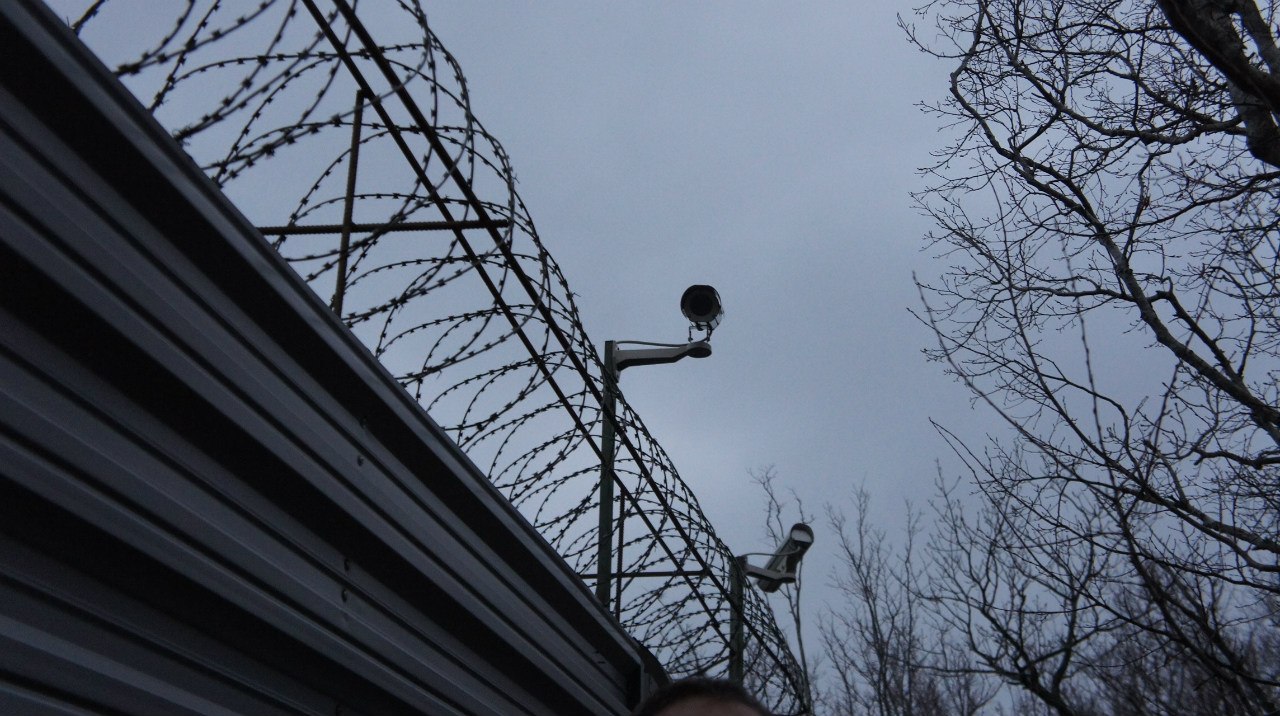
“A group of ecologists, which included employees of the Bellona EPC, together with the Deputy Minister of Natural Resources of the Krasnodar Territory Svyatoslav Udintsev, conducted an inspection of the so-called. "Tkachev's fence" The event took place on the eve of a visiting meeting of the Council under the President of the Russian Federation for the development of civil society and human rights in the Krasnodar Territory, taking place from December 15 to 17. <...> As has already been said more than once, the fence around the property belonging to the governor of the Krasnodar Territory Alexander Tkachev not only encloses the site itself, but also captures part of the forest fund and a twenty-meter protective zone around the Black Sea coast. Since according to official documents there is no fence in this place, it was decided to check whether this is true. The absurdity of the situation lies in the fact that, despite the fact that there is no paperwork protection, environmentalist Evgeniy Vitishko is forced to serve a three-year prison sentence for damaging it, and his Ecowatch colleague Suren Ghazaryan, in order to avoid undue persecution, had to obtain political asylum in Estonia. In addition, the fence itself is clearly visible on satellite images . During the inspection, as expected, it was found that the fence is in place and, at a minimum, violates the Water Code of the Russian Federation, since it completely blocks the passage to the shore. In addition, around the part of the fence adjacent to the sea, meters of wire are laid directly on the ground, preventing anyone from approaching the fence. When environmentalists tried to enter the territory through the main entrance, the security refused to let them through, citing the fact that behind the fence there was a “sanatorium for agricultural workers”, which can only be entered with a special voucher. However, during the entire time that activists walked around the site along the perimeter, no traces of vacationers were noticed, but several signs were found with the inscription “Attention! wild animals" . Apparently, this is the reason why agricultural workers are in no hurry to come here on vacation. Also, numerous video cameras are installed along the entire perimeter of the fenced area, and barbed wire is installed along the top of the fence along its entire length. The inspection results were announced on December 16 at a meeting of the Russian Presidential Council for the Development of Civil Society and Human Rights, held in Krasnodar. In addition, at the meeting, Bellona director Nikolai Rybakov, who also took part in the inspection, told the audience about numerous cases of persecution of environmentalists in the Krasnodar Territory for their professional activities. Environmentalists demand the release of their illegally convicted colleague Yevgeny Vitishko, an end to the prosecution of Suren Ghazaryan, the elimination of all violations and the punishment of those responsible.”



The sentence of Alexey Sutuga was upheld
“The Moscow City Court on Wednesday upheld the sentence of one of the leaders of the youth anti-fascist movement of the Russian Federation, Alexei Sutuga, convicted of hooliganism, a RIA Novosti correspondent reports from the court. The Zamoskvoretsky Court of Moscow in September sentenced an antifa movement activist to three years and one month in prison on charges of hooliganism. The defendant's defense attorney, Vladimir Samokhin, insisted in his appeal that the court incorrectly assessed the testimony of victims and witnesses. As the lawyer emphasized, his client’s actions did not have serious consequences, which is confirmed by the results of the medical examination of the victims. Samokhin asked to cancel the conviction and send the case for a new trial, since, in his assessment, a number of procedural violations were committed during the preliminary investigation. Sutuga fully supported the lawyer’s arguments via video link from the pre-trial detention center. The prosecutor expressed disagreement with the applicants' arguments and emphasized that all evidence was obtained in compliance with the law and confirms Sutuga's guilt. The anti-fascist was detained in Moscow in April for participating in a fight that occurred on January 2. He claimed that he intervened in a conflict that involved six members of far-right youth groups and three other unknown people. Sutuga did not admit guilt in the crime charged to him.”
The sentence of members of the Jehovah's Witnesses community in Taganrog has been overturned
“The Rostov Regional Court overturned the decision of the court of first instance in the case of 16 Jehovah’s Witnesses from Taganrog and sent the case for a new trial. On December 12, 2014, the Rostov Regional Court overturned the decision of the Taganrog City Court in the “case of 16” Jehovah’s Witnesses from Taganrog and sent the case for a new trial. The decision of the court of first instance was challenged by both parties: Jehovah's Witnesses, found guilty under Part. 1 and 2 tbsp. 282.2 of the Criminal Code (organizing the activities of an extremist organization and participation in an extremist organization, respectively), demanded full acquittal, and the prosecutor’s office filed a complaint with a higher authority demanding that the sentence be canceled, which, in the prosecution’s opinion, was too lenient, and that the case be sent for a new trial. The text of the regional court's decision is still unknown, therefore, it is unclear whose complaint was satisfied. Let us remember that seven defendants were convicted and nine were acquitted. Four convicts were sentenced to suspended imprisonment for periods ranging from 5 to 5.5 years and fines in the amount of 100 thousand rubles with exemption from payment due to the expiration of the statute of limitations. Three more were sentenced to fines in the amount of 50 to 60 thousand rubles with exemption from payment due to the expiration of the statute of limitations. According to the investigation, the accused, “knowingly knowing” about the ban on the Taganrog community and “acting from extremist motives,” resumed and continued the activities of the LRO of Jehovah’s Witnesses “Taganrog,” which on September 11, 2009 was recognized as extremist by the Rostov Regional Court and liquidated, namely, they carried out prayer meetings and studied religious texts. In addition, they were accused of acts, many of which cannot in any way be attributed to “extremism” (for example, refusal of blood transfusions or service in the armed forces).”
Sergei Mokhnatkin’s defense appealed the verdict
“The lawyer of oppositionist Sergei Mokhnatkin, found guilty of beating two policemen, appealed the verdict, the press service of the Tverskoy Court of Moscow reported this to RAPSI on Friday. “Today Mokhnatkin’s lawyer filed a short complaint,” said the agency’s interlocutor. This week, the Tverskoy court sentenced Mokhnatkin to 4.5 years in a maximum security colony.”
extrajudicial prosecution
Kadyrov's supporters threw eggs at the head of the Committee against Torture, Igor Kalyapin.
“During the press conference “Collective punishment as a method of fighting the armed underground in Chechnya,” held at the Independent Press Center on Thursday, several supporters of Ramzan Kadyrov burst into the hall and threw eggs at the chairman of the “Committee against Torture” Igor Kalyapin. This was reported by a Mediazona correspondent. “How dare you say such words when police officers died,” the attackers shouted. The attack itself was captured on a Radio Liberty video. The press conference had to be interrupted. Police officers came to the building and drew up a report of their inspection of the scene. The attackers allegedly left in an Infinity car, police said. An employee of the Committee against Torture, Sergei Babinets, suggests that he identified one of the attackers; he could be Rustam Tapaev, head of the Union of Chechen Youth in Moscow. After the militant attack on Grozny last week, Chechen leader Ramzan Kadyrov announced on his Instagram page that “the time has come when they said that parents are not responsible for the actions of their sons and daughters.” Kadyrov promised that “if a militant in Chechnya commits the murder of a police officer or another person, the militant’s family will be immediately expelled from Chechnya without the right of return, and the house will be demolished along with the foundation.” After this, the chairman of the “Committee against Torture” Igor Kalyapin wrote statements to the Prosecutor General’s Office and the Investigative Committee with a request to take prosecutorial response measures and initiate a criminal case against the head of Kadyrov in connection with these statements. The case against Kadyrov should be initiated under Art. 286 of the Criminal Code of the Russian Federation (exceeding official powers), the human rights activist believes. In response, Ramzan Kadyrov stated that money for organizing an attack on Grozny was allegedly given to the militants by a man named Kalyapin, and also that “a certain Kalyapin stood up to defend the bandits and their relatives.”
“On Thursday, unknown persons threw eggs at human rights activists who participated in a press conference on the situation in Chechnya, which took place in Moscow. “Among the victims are Tanya Lokshina, Igor Kalyapin and Alexander Cherkasov,” Svetlana Gannushkina, board member of the Memorial human rights center, told Interfax. According to her, the incident occurred at the Independent Press Center on Prechistenka Street, human rights activists called the police. Tatyana Lokshina is the program director for Russia at Human Rights Watch, Igor Kalyapin heads the Nizhny Novgorod Committee against Torture and is a member of the Presidential Council for Human Rights, Alexander Cherkasov is the head of the Russian human rights center Memorial. "We were sitting on the podium. Two young men began to argue with us and ask questions without waiting for our speeches to end. They were told that they could ask all questions after the opening statement. They started screaming and began throwing eggs at us. Elena Milashina and I (Novaya Gazeta correspondent - IF) sat further than the others and we didn’t get it,” Gannushkina said. According to her, the press conference could not be disrupted, and none of its participants received serious injuries. “We called the police. There are photographs of these guys’ car. We saw them when the press conference began, I was even afraid of something worse,” said the Memorial representative.”
Members of the Joint Mobile Group of Human Rights Defenders are being persecuted in Grozny; their office is set on fire.
“In Grozny, an apartment was set on fire in which the office of the Combined Mobile Group, headed by human rights activist Igor Kalyapin, was located, Novaya Gazeta journalist Elena Milashina reports on Facebook. “Smoke is coming from the office window, which faces Rosa Luxemburg Street. There are armed people standing in a cordon around the house. Firefighters have arrived and are trying to put out the fire,” she wrote on Saturday evening. JMG employees are at the Grozny City Hotel, where they came to meet with journalists from the Al-Jazeera TV channel. First Deputy Head of the Ministry of Internal Affairs of Chechnya Apti Alaudinov arrived at the hotel. He told human rights activists that he could not guarantee their safety on the territory of Chechnya, Ekho Moskvy reports, citing one of the JMG coordinators, Sergei Babinets. Babinets also told Ekho Moskvy that he and his colleague were being followed by armed masked men. “At two o’clock in the afternoon, we were able to notice from the video that three people came to our office, one of whom was armed with a pistol. They tried to enter our apartment, but they failed. follow the Lada Priora. When we tried to stop, we noticed that there were masked and armed people there. They started following us at the red light, in general, they did not let us go. Currently we are in the Grozny City hotel. “We fear for our lives and health. We will try to make sure nothing happens to us and try to leave here,” the human rights activist said.”
About persecution in Crimea on Human Rights Day
“Crimea.Realities”, December 10 :
“...participants in the press conference [of representatives of the Committee for the Protection of the Rights of the Crimean Tatar People] drew attention to the fact that the day before, employees of the prosecutor’s office, the FSB and the Ministry of Internal Affairs came to one of the Simferopol cafes, where the committee’s coordinators were at that moment. The coordinators were read a warning about the ban on holding rallies on December 10. Representatives of the organization came to the conclusion that they were being monitored and their phones were being tapped - this, in their opinion, explains the sudden appearance of law enforcement officers in the establishment. Representatives of the committee assured that they will continue their work to ensure that “not only Crimean Tatars, but all residents can freely hold one or another action or event where they could report the violations that are occurring in Crimea. <...> one of the young people who were behind the participants in the press conference came up to the table and doused those sitting there with brilliant green. After this, the unknown person hurriedly left the room. Another person present wanted to do the same, but his attempt was stopped by a man standing nearby. The potential offender was later released. According to Bariev, the unknown people who staged the provocation “are directly related to the Deputy Prime Minister of Crimea Ruslan Balbek,” and Eyvaz Umerov, according to the coordinator, is applying for the post of vice-mayor of Sudak.”