
Translated material
Film Film and Copyright
The other day, the results of the examination were published The catalog of full -length films of the Museum of Cinema, held by the State Film Fund of the Russian Federation. The conclusion signed by the chief engineer of Bannikova insists on counterfeitations of about a third of the collection. The founder of the Kino Museum Num Kleiman has already called this conclusion “complete nonsense” . The concept of counterfeiting the concept of counterfeit and how Russian legislation criminalizes the screening of Kozintsev and Flyingov’s films, says Maxim Pavlov, the ex-deputy of the director of the Museum of Cinema, about what the rights of the filmmakes of cinema is in principle.
The situation that has developed around the film Film of the Museum of Cinema is associated with all changes in our legislation, which have occurred over the past 25 years. Even the validity of copyright has changed. In the 60s, he was 15 years old, then-25, then-50 years. Now, according to the 4th part of the Civil Code, it is 70 years. This is the first circumstance.
The second circumstance is a significant change in the legal status of our state. The Museum of Cinema arose in the Soviet Union, when the state had a monopoly right to production and printing of movie concords, and it is clear that all the movie scopes made in the USSR completely satisfied the legislation that existed at that time.
We did not see a list of specific films that was transferred for examination to the State Film Fund; Apparently, we are talking about a film of full -length films. By 80%, this part of the collection consists of films gathered by the propaganda bureau of the Soviet cinema of the Union of Cinematographers of the USSR, which was one of the co -founders of the Museum of Cinema and transferred this collection to the museum. The museum has an old Grossbukh, I myself saw it, where the number of parts of the films was recorded. Based on this book, the collection was transferred, and then on its basis, an electronic catalog was created in the mid-90s. Apparently, it was with this directory that the new directorate of the museum worked.
In addition, those of the Film Film Films of the Cinema Museum, which occurred before 1995, were entered into this catalog. These are films specially printed by the State Film Fund for the Museum of Cinema, the Indian collection, transferred by the museum after a large retrospective, this is a collection of Godard’s films with Russian subtitles, which the Godar and the Swiss Confederation were specially made for the Museum of the Cinema and transferred after a large retrospective in the early 90s, these are just some films obtained from rolling offices in the period "Cooperative Cinema", many of which were transferred to the State Film Fund. Everyone knows that in the early 90s the State Film Fund lost the right to receive a mandatory copy, and many films made in our country were not presented in the State Film Fund. And then now the deceased Vladimir Yuryevich Dmitriev turned to all rolling organizations, asking to transfer films to the State Film Fund. We conveyed a number of paintings that were not of interest to the cinema museum, since these were not masterpieces, but rather commercial cinema, but everything that was produced in the country should be presented at the State Film Fund.
Most of the collection at one time was transferred to the Krasnogorsk archive - we are talking about a collection of non -game films made in Russia. Also without any special acts. It was a revolutionary time, in revolutionary times, by the way, many museum collections and many archives are being formed. The famous Bastille archive, which is the property of not only Russia, but throughout Europe, is now stored in the library of Saltykov-Shchedrin in St. Petersburg, was taken out of revolutionary France in Dubrovsky's wooden boxes. And if Dubrovsky had not performed this action - without any acts of techniques and programs - now all of humanity would not have a valuable source.
Our collections were formed in no less revolutionary time. In the 90s, many organizations were closed. So, the archive of the advertisement had to be exported only because it was necessary to free the room.
In fact, all museums in the world keep things in their collections that entered there in a variety of ways. For example, three or four years ago I saw the album of the works of Vladimir Evgenievich Egorov at a very funny price - 30 thousand rubles on a book collapse. I did not believe my eyes, asked to postpone the album and returned with our chief specialist in cinema decoration art - Christina Yuryeva. We look: style, hand - in front of us are the drawings of Egorov, all the more decorated in the studio album. It was not possible to conduct an album through a state examination, since the sellers wanted to make a profit now. And the question was faced with us: either the state will be or will not.
But let's see from the point of view of law: 70 years since the death of Egorov have not passed. Are I his heir? No. Am I a bona fide buyer? The question is also controversial. But I was interested in the treasures of national culture to be in the national collection. And I acquired an album and gave it to the state. There are many such episodes in the history of any museum. Therefore, it is impossible to declare museum collections by counterfeit and take it out with loud headlines in the press, but it is necessary to solve these problems within the framework of the Ministry and the museum community.
If the Bastille archive had not been taken out of revolutionary France in wooden boxes without any acts of techniques and transmissions, now all of humanity would not have a valuable source.
As for the collection of films, you need to distinguish between two things: storage and demonstration. But again, the formulation of “counterfeit copies” is absolutely incorrect. There are no 35-million counterfeit copies in the Museum of Cinema. They can be recognized as counterfeit only if the copies from which they were made are recognized as counterfeit, which means - copies of the State Film Fund.
As for the counterfeit film, there should be an understanding of different functions that bizarrely joined in the Museum of Cinema, but not allowed in the legal field. The Museum of Cinema is not an archive, but a museum. According to the law on museum activities, the museum does not only have the right, but also obliged to publish and publish objects stored by him. This is nothing more than the implementation of the constitutional law of citizens of the Russian Federation for admission to works of art.
We all perfectly understand that the form of exhibiting in the Museum of Cinema is not only artifacts (sketches, photographs, posters, cameras and everything else), but also a demonstration of films. Show films in rolls or boxes? I believe that none of the visitors will want to look at it. Therefore, the museum in the framework of educational activities conducts film screenings. We repeatedly raised the question before the Ministry of Culture, and at one time even before the federal agency: is it possible to recognize the rights of the Museum of Cinema to this collection? And we were told that copyright, of course, cannot be recognized, since the right - the author, producer - remains with the authors, with the studios, the distributors, etc. But there is copyright and property, and, of course, these are not unambiguous concepts. Possible law, of course, remains behind the museum. By the way, this applies not only to films: this is the general position for all objects stored in any museums, if the copyright period has not expired or it was not transferred to the museum under a contract of sale or gift. It is important to distinguish between the author’s right, copyright and property law, not to mix them in the regulation of museum and archival activities.
As for the movie cinema stored in the Museum, we never considered the possibilities of the commercial use of these films. If someone in some programs asked us to provide a copy, as well as the State Film Fund, we provided it after the corresponding organization received permission from the copyright holder. This is a normal practice, moreover, this is a practice adopted in all movie musicians and archives of the world. In the majority of movie music and the archives of the world, the law for 90% of the films belong not to archives and museums.
There are several exceptions, and basically they belong to the archives of the former countries of the socialist community and the former republics of the Soviet Union. For example, in Hungary and the Czech Republic, a full package of rights to all films made in the Hungarian People’s Republic and in the Czech Socialist Republic during the Czechoslovakia was assigned to the national cinema archives. It seems to me that it would be very logical if something similar had been produced in our country. But the rights to Soviet film aircraft are now torn between the two organizations that have proven their right: it is Mosfilm and Soyuzmultfilm.
At one time, a Goskino-collection was created to manage the rights of all other studios, but after the visit of the multipliers to Putin, the Goskino-collection de facto ceased to exist. It was necessary to convene a meeting on the fate of the collection. The situation would be ideal in which commercial rights would be assigned, for example, for the State Film Fund, and all state and municipal institutions of culture and education would receive the right to free films from this collection if it is carried out for educational activities. It is important to divide the rights of commercial use and non -profit. Even if we sell the cheapest ticket - for 20, 50, 100 rubles, from the point of view of the legislation, this is commercial use, although the show of an archive copy does not pay off with this cost of a ticket even with a full hall.
There is copyright and property, and these are not unambiguous concepts. It is important to separate the rights of commercial use and non -profit.
In addition, many movie archives and museums of cinema, even in Japan, which is a very commercialized country, is assigned the right of non -profit display, but for a small fee, films that make up a collection of these museums. The fact that this is issued and that this is a question that needs to be resolved, the cinema museum has been talking in recent years.
But this is not the competence of either the State Film Fund, the Museum of Cinema, or even the Ministry of Culture, although the ministry could initiate this issue. However, unfortunately, this does not happen. Moreover, we are moving to the ban on the spread of our heritage.
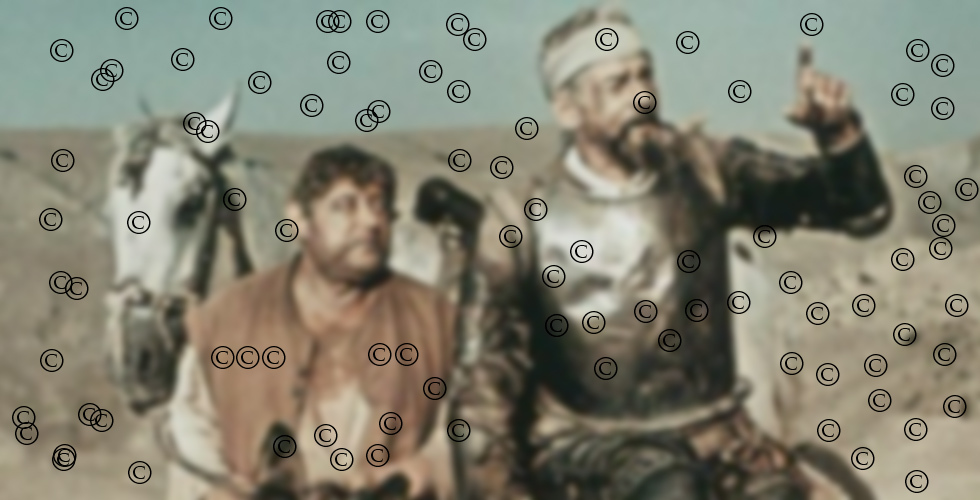
Take, for example, Kozintsev’s famous Don Quixote. According to the state register of films, the state permits (namely, this was issued to this film at the moment when it was produced and without limiting the validity of) - rolling, as it is now called - there is no actually certificate for the show of this picture, because it, according to the register, was issued by the Federal State Unitary Enterprise of the FSUE Film Film Film Studio “Lenfilm”, which has long been reorganized. This is easy to check on the Ministry of Culture. That is, there is no one to request rights, and any show of this film in our country by law will be counterfeit. And on the "nanuk from the north", for example, there is not even such a rolling! That is, from July 1, 2014, after the introduction of the relevant amendments to the legislation, such a show is simply prohibited in our country. But you and I know that this is an absolute cinematic classics, which is shown to everyone who receives cinematic or anthropological education. As you know, this is not a question at all to the collections of the Museum of Cinema.
This difficulty arose after the adoption of Law No. 101-FZ, popularly known as the "Law on Mata." And now we cannot show films that have passed into public use. There is a unique wording on the Ministry of Culture in the State Register of Films: “The rental certificate has lost force due to the transfer of the film to a public treasure.” And from the point of view of modern copyright legislation, this film can be shown, since the film has passed into a public treasure, but it is impossible, since its rental certificate in connection with the same seemingly joyful fact has lost strength. That is, it will be necessary to issue rental certificates for thousands of films shot until 1943. The question is - who and why is it necessary?
The problem of copyright in the collections of the synemacs of everyone excites until it turns out that the synemate copy is the only preserved. And then each such find already causes joy. Some time ago it was found that the State Film Fund does not have a film copy of one very famous film shot in the Soviet Union, although not in the territory of the modern Russian Federation. And the only copy was in the Museum of Cinema. And what? Now it is proposed to recognize this film by counterfeit and destroy? Since after recognition of copies by counterfeit, their destruction follows the law.
In the majority of movie music and the archives of the world, the law for 90% of the films belong not to archives and museums.
Returning to the topic of the fate of the film collection of the Museum of Cinema, we must understand that we can fall into a complex legal collision, which will follow the destruction of not only museum copies, but also copies of the State Film Fund. In addition, the Filmo of the Museum of the Cinema has a number of films, copies of which are not presented either in the State Film Fund or in the archive in Krasnogorsk; First of all, we are talking about documentary, medium and short films made in the republics. The same applies to foreign films. Moreover, according to the conclusion of the State Film Fund, which we personally did not see, 104 foreign films of the museum collection were not presented in the State Film Fund. If these copies are destroyed, there will be no more positive copies of these films in our country.
Of course, this does not mean that there will be no copies of these films at all. Films of Godra, for example, are in Lausanne, is in the Parisian synemeete. But I do not believe that in the near future, the Museum of Cinema or the State Film Fund will spend state funds to order these copies on 35 mm media. While these copies are suitable for storage and show, they must be preserved. In addition, the circumstances were so that some foreign films from the collection of the State Film Fund are stored there not in original, but in duplicated or translated copies. And the original copies that the film propaganda bureau took are now stored in the Museum of Cinema. This applies to Fellini, Antonioni films. The destruction of these films will not be a crime in terms of legislation, but will be a crime from the point of view of culture.
In Japan, many films manufacturers and distributors are also not enthusiastic about the fact that the film branches of the municipal museums of some Japanese prefectures show “their” films, but such shows are protected by the state. That is, the state understands the difference between the commercial rental of the cinema and its display in the framework of educational activities.
In Finland, interesting decisions were made regarding the possibilities of showing films in the educational process. There, I know (this is in other Scandinavian countries), such an association as “school cinema” has been formed. It was agreed that each school pays about eight euros per year to the Union of copyright holders, after which it receives the right to use in the educational and educational process any Finnish film from the DVD -Diva released on the territory of Finland. Five more euros - and in general any film from a disk produced in the EU.
In different countries, a different validity of copyright. Very often, when the film is found in the movie archive and the validity of copyright has already expired, the rights to restored copies are resumed by the archives themselves. For example, the French synemate has the rights to films of the famous "Russian" film studio "Albatros".
But according to our legislation, there is a certain procedure for drawing up rights to film screenings. In our country, this design is associated with receiving a rental certificate. If there is a decision that the State Film Fund becomes the copyright holder of the entire Soviet film film (or its significant part), he will have to issue his rights in the near future and receive rental certificates for all films whose rights he will manage. “Mosfilm”, if I am not mistaken, took about four years. And if the State Film Fund receives rights, the cinema museum may well, if necessary, contact the State Film Fund with a request to allow a single screening of a copy from its collection, or conclude a long -term agreement on film screenings in its programs, or order a copy of the film from the State Film Fund.
However, you need to understand that Mosfilm and the State Film Fund are two different organizations, and how they will resolve relations between themselves - the question is not so simple. For example, today the State Film Fund is trying to challenge the rights from the Soyuzmultfilm, and Lenfilm, in turn, is the rights of the State Film Fund, which, by the way, as I showed above with the Don Quixote, did not go through all the procedures in the design. For example, I believe that Mosfilm is very qualitatively controlled by the rights to its film collection. Во-первых, он оформил их, во-вторых, он производит отчисления авторам, в-третьих, эти права помогли ему восстановить свою производственную мощь, наконец, что особенно важно для кинопросветительской деятельности, я не знаю от коллег ни одного случая отказа со стороны «Мосфильма» в предоставлении прав на однократный показ в просветительских целях учреждениям культуры и образования.
Что касается возможной утраты киноколлекции Музеем кино, надо понимать, что заказ одной копии из Госфильмофонда обходится в среднем в 6 тысяч рублей плюс доставка. То есть средний показ госфильмофондовской копии обойдется в 10 тысяч рублей. И это без стоимости прав! В прошлом году Музей кино провел 469 киносеансов, порядка 2/3 фильмов, показанных на них, были из собственной фильмотеки. Представьте, каким бременем ляжет на бюджет показ в Музее кино копий из Госфильмофонда в случае, если музейная фильмотека будет уничтожена. А ведь в прошлом году весь бюджет развития Музея кино составил всего около 3 млн руб., а это и закупки, и выставки, и кинопоказы, и переводы, и издательская деятельность, и договоры подряда на выполнение тех или иных видов работ, связанных с основной деятельностью музея.
В других странах тоже бывают случаи, когда Музей кино и киноархив разделены. Это не означает, что музей не может иметь свои копии. Бывает, что в стране существует несколько музеев кино. В Германии и Японии, например, несколько музеев кино. И каждый из них имеет пленочную коллекцию фильмов — вплоть до киноотделов муниципальных и префектурных музеев в Японии.
Мне кажется, что лучшим выходом из сложившейся ситуации было бы совместное заявление Госфильмофонда и Музея кино о том, что при проведении «экспертизы» были допущены определенные ошибки и в настоящее время все фильмы из киноколлекции Музея кино находятся там на законных основаниях. А вопрос с авторскими правами будет решаться по мере подготовки кинопрограмм, как это и было все предыдущие годы.
Записал Максим Семенов