
Translated material
Who is good to live in the Donbass
The new year owners of illegal coal mines in the unrecognized Donetsk People’s Republic will meet law -abiding businessmen - the separatists' authorities allowed the registration of Kopanki. The main beneficiary in the region cut off from a normal banking system is naked offices. The losers are old people and children.
The bus, the following route Dnepropetrovsk - Donetsk, makes the last stop before entering the combat zone. The cold interior is filled with two -thirds, the driver turns on the stove, but it does not become warmer from this. Someone is sleeping, someone looks tiredly out the window. The checkpoint near Krasnoarmeysk, 68 km from the capital of Donbass, is considered the most calm. It has not been shot here for a long time, and passport control is not as strict as in other places.
While we are going, an elderly respectable lady in a fur coat of painted fur in the back seat instructs someone on the phone: “The main thing is to find friends who will be registered at home,” she speaks without the usual southern accent. Before the war, Natalia worked in “responsible positions” (in her ears gold earrings, on the fingers of the same metal metal), now she is an ordinary pensioner. Like many, I have not seen money since July. After the capture of the Donetsk Treasury and the State Bank by militias, on June 16, Ukraine stopped payments in the territory of the self -proclaimed DPR. But until December 1, the Donetsk residents could legally transfer the pension account to the bank branch in Ukrainian territory to withdraw money there. Now, “pension tourists” from Donbass need to get the status of a migrant in the territory that Kyiv controls: “First you will go with the owner of the apartment with a statement to the housing office, from there to the Department of Social Revolution, then to the Bank and only then to the Pension Fund. Every month on the 15th, you need to come to confirm accommodation, ”says Natalya.
A strongly drunk man of about forty years old is sniffing next to her. After half an hour on country roads, there will be a Ukrainian post. After another ten minutes - the post of militias. There, the poor man is planted: "There are no documents, and even drunk ... Our client!" - A fighter with a machine gun gloatingly sparkles with his eyes. "What will happen to him?" “The trenches will dig until the war ends.” The rest of the men are built along the bus, with addiction they are checked by passports and allowed to move on.
When Donetsk sleeping quarters appear outside the windows, I ask the woman why, instead of issuing fictitious certificates, she will not move away from the war. Natalia smiles and shrugs. As soon as the bus stops, in front, someone after the grave silence sighs tiredly: “Finally the homeland!”
Money is paper
The next day, along the central street, occupied by Ukrainian troops of the city of Volnovakha, 70 km south of Donetsk, with a lost view of one ATM to another, a flock of women wanders. Fill out an account - hollowing, a separate problem - withdraw money from the card. Since December 1, Ukraine has blocked all banking transactions on the territory of the DPR and cash have become the main deficit in an unrecognized republic. By hour in the afternoon, ATMs are already empty in Volnovakha. You can cash out only in a modest store of household appliances in the city center, but semi -legally and 5 % of the amount. You do not need to buy anything: just draw a card according to the portable terminal, the seller will get the money from the cash desk and count how much interest is deductible. Similar services are popular in Donetsk.
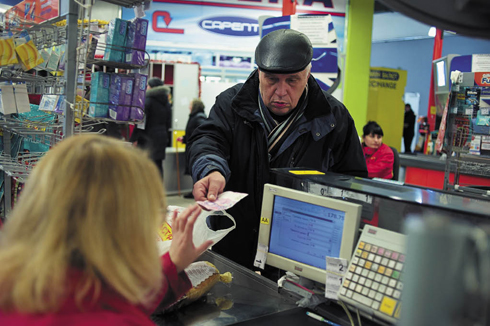
In the capital of the DPR, by mid -December, ordinary grocery stores established cards. In the conditions of the blockade, businessmen register standing companies outside the region and already from their accounts, “by bank transfer”, and make goods for sale in the city. The entire “cache” in this case remains in Donetsk. With these paper money, the owners pay salaries to employees, are calculated for electricity and other services and cash out money from cards, but already 20 % of the amount. Most products come from Ukraine, checkpoints pass the goods, but the revenue through them are rarely transported by merchants “to large land”.
A marvelous new world
The capital of Donbass does not make the impressions of the front -line city, a significant part of the inhabitants who left Donetsk during the August bombing returned. Gradually, cafes, shops, shops, people with machine guns in the center are gradually opened, and the words: “peaceful time” or simply “peace” are increasingly sounding in conversations. Now in large retail chains of the city, prices are not very different from Kyiv, in small shops they are 50 %higher. For example, in Mariupol, a loaf of bread costs 3 hryvnias, and in Donetsk - 5 hryvnias, a kilogram of buckwheat 15 and 19 hryvnias, respectively, a pack of good cigarettes - 17 and 22 hryvnias*.
“The middle class turned its business and left the region, only large enterprises that cannot be transferred and retail trade remained in the city,” says Enrique Menendes, a former entrepreneur, an indigenous Donetan of Spanish descent. After most of his employees left, and a bomb got into the office, he had to tie with his own business.
But gradually in the DPR, the new authorities put things in order, Enrique is sure. “Even in the summer, in order to become“ power ”, it was enough to find a spotted shape and buy machines. One criminal authority from Makeevka did so, then his gang rode around the city and terrorized the inhabitants, says the entrepreneur. -Or: “Orthodox Russian Army”, at one time it had a very bad reputation, anything could happen to you at their block. But at some stage, it was subordinated to the “stronghold”, the most large of the battalions, before they were commanded by the head of the republic, Alexander Zakharchenko, removed the most ragged idiots from there, and now this is the same unit as everyone else. ”
Gold of Donbass
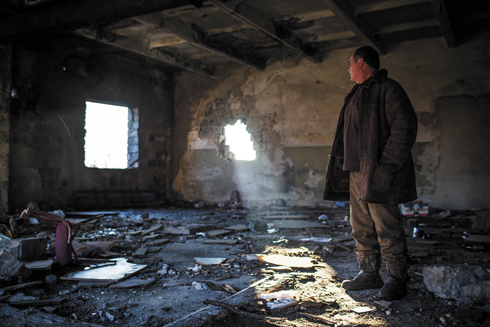
Almost all enterprises either stopped or pay salaries by a maximum of a third from the pre -war amount. One hundred percent is obtained only on unofficial mines, or “cops” **. This is a profitable business. More recently, under the Ukrainian authorities, they were considered outside the law, but to open their own, it was enough to pay about 30 thousand hryvnias per month (about 120 thousand rubles in old prices) and find workers.
Today, the DPR government decided to legalize illegal mines, obliging their owners, most of which remained the same, to draw up the necessary documents until December 25. A day, one digger brings about 30 tons of coal, if you work without days off - this is about 900 tons per month. Enrichment factories pay an average of 700 hryvnia per ton. Total, in a month more than half a million revenue.
“While Yanukovych was in power, we took the coal 400 per ton, and many worked on the verge of self -sufficiency,” says Alexander, who is managing on one of the cops an hour from Donetsk. In a warmth, he treats us with soluble coffee: black and brown heaps are visible outside the window in the middle of a snowy field: it is coal and a worked out breed. “They say that all processing plants were previously tied to Yanukovych’s son, but now we breathed a sigh of relief,”-Alexander proudly shows his “mine”: a rusty structure pulling a dirty metal cable pulling from under the ground, rests on a hill and a black failure of the mine. Nearby - several hangars, a loader and an old “groove”. There is no fence, no passage.
Self -help
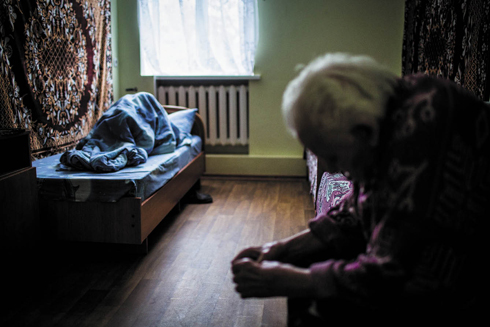
In the neighboring village with a typical name for the region, the name of Kommunar out of two thousand inhabitants about one and a half - pensioners. However, many of them are younger than 55: theoretically, the miner can rest at 37, but now their pensions, once the highest in the region (6 thousand hryvnias against the average in the country of 1.5 thousand), remained on the front line. Some work on diggers. The money is received once a week and immediately in the hands.
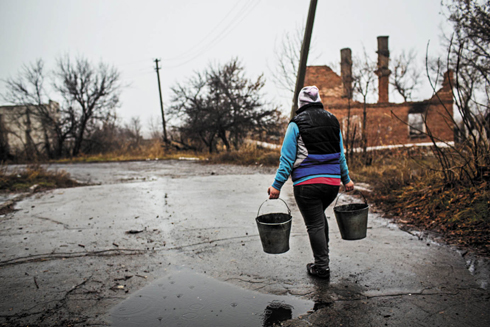
Needing old people in the village are about 800 people. In the former rural club to the left of the empty bar rack (once there were discos) tables are shifted. Behind them are a dozen elderly women. The intelligent short lady of about sixty years old, her name is Valentine, holds out a plate of borscht: “I found the last jar of pasta at home, a little beetroot, potatoes,” there was no humanitarian aid since October, so the fellow villagers are gathering products on their homes and preparing for everyone.
Twice a week, Krishnaites come to feed the old people: “In general, they have such a faith, Indian, and they themselves are our Donetsk,” Tatyana laughs loudly in defiantly pink jeans. She promises not without anger, “if the women of Donbass give weapons,” be sure to “reach Lviv”. Tatyana works at the mine, she has two children, she helps in the dining room for free.
Children of the dungeon
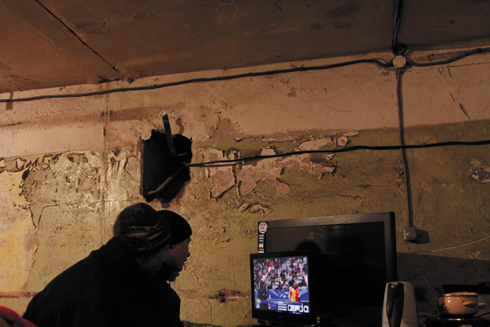
Together with the volunteers on the western outskirts of Donetsk, we examine two bomb shelters in the territory of the Chelyuskin Minks. In total, 20 children live here with parents. Older children are cut into “play-stitching”, connected to a large LCD monitor. The plaster falls off from the walls from humidity, the kids frolic on the bed made up of wooden benches. Lighting is dried right there. The father of the family sits at the computer in the next room. Many have almost unharmed housing, it is enough to insert the frames - and you can live, but they are in no hurry to return home: "What if it starts again?"
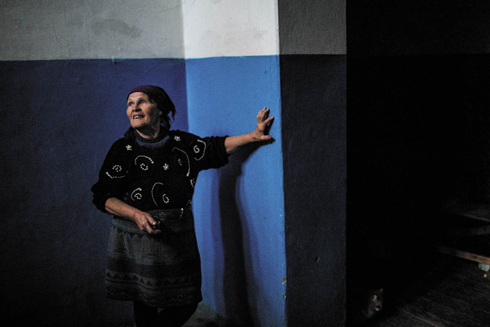
“Many simply dropped their hands and are demoralized, for many months they are used to surviving in poverty,” one of the volunteers complains. “It seems to them to go home in the order of things, take the winter jacket and return to the basement again.”
During the truce, expensive cars reappeared on the streets again, they say that oysters were even served in one of the restaurants. At the entrance to one of the best beer bars of the city, a militia with a salary black beard tells two companions why he is not going to return home: "Four hundred people were arrested in Kharkov from ours, which awaits me there except the prison?" - "What were they arrested for?" - “For the fact that we broke ATMs and“ right -wingers ”,” - the action movie is hardly more than twenty -five. He smiles and carefully extinguishes a cigarette in an ashtray.
In the conditions of the blockade, businessmen register standing companies outside the region and already from their accounts, “by bank transfer”, and make goods for sale in the city. The entire “cache” in this case remains in Donetsk