
Translated material
Communication in one gate
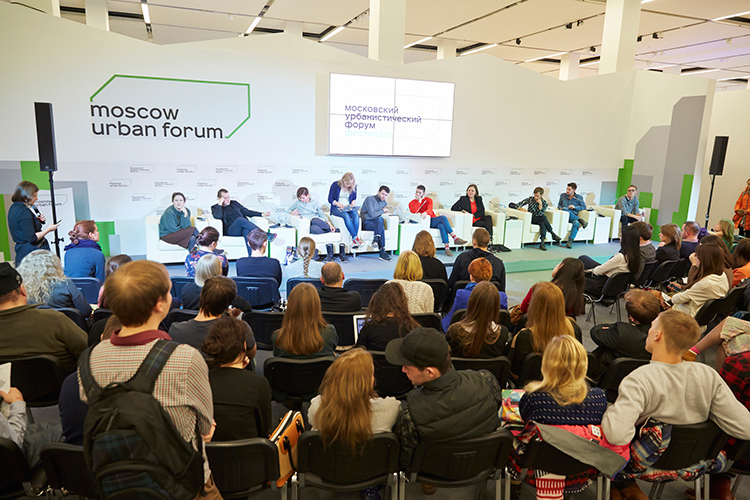
In mid -December passed IV Moscow Urbanist Forum - the main event in the field of Russian urbanism. An annual event with the participation of the Moscow government, international and Russian experts, of course, is a resonant project - both for the professional community and for the general public.
From the good: regions appeared on the map of the Moscow forum. The first day was dedicated to the regional agenda, the mayors of Russian cities were invited, regional studies ordered by VSU were conducted. And the very fact that the Moscow government has the need to report to their work publicly, distinguishes the “Sobyanin” era from the “Luzhkovskaya” era, when such events were completely absent for unnecessary. We left in the past those “dense times” and live in a “progressive era”, where the “struggle for a townspeople” (in a terminology, borrowed from the dictionary of popular urbanists like Richard Florida and Charles Landry) has gained particular importance. We went a long and fruitful path regarding the training of officials to the correct words, and from now on stories about the achievements of the Moscow government are generously flavored with foreign terms . Nevertheless, it is impossible to resist a number of questions.
It is unclear where the Asian trend came from and why we should catch up with Beijing, which was bombarded and overloaded with vehicles.
The prepared speeches of representatives of the city authorities are full of comparisons with Asian countries: Sergey Sobyanin reports that Moscow almost caught up with Beijing, Igor Shuvalov calls on to equal to Singapore, and Hong Kong, according to Alexander Plunik, is completely superior to: after all, the Russian standards for the economy-class housing is much more generous. It is unclear where the Asian trend came from and why we should catch up with Beijing, which was bombarded and overloaded with vehicles. The pride of the fact that in terms of housing construction, we can only compare with Chinese cities is also doubtful. In the field of the formation of a comfortable urban environment, according to the head of the capital's construction complex Marat Khusnullin, priority is given to increase the mobility of the population, in particular, an increase in pedestrian and bicycle accessibility. At the same time, the budget data analyzed by bloggers suggest that the lion's share of expenses goes to the construction of speed roads that clearly do not add the coherence of the territory; The second place is occupied by the development of the subway, and a very small amount remains for the ground city passenger transport (NGPT). Some passages - such as “Moscow has already got rid of the long image of a super -expensive city for business and tourism” - is generally difficult to take seriously.
If we talk about the format of the event, then there are different modality of social interaction - representation and communication. With the first on the forum, everything is fine, but in terms of the second there was a failure. To build communication, it is necessary at least minimal interaction with professionals or the public. This dialogue in the forum format can be carried out both using questions from the hall provided at the end of each session, and as part of the speeches of invited experts and subsequent discussion. Questions from the audience are the most problematic part, since the plenaries saturated with officials, as a rule, do not leave for this time. Moreover, asking a question is a difficult task not only for an ordinary citizen, but, say, for a representative of an independent “city publication”. As a result, everything that remains for a more or less free thought is the gaps inside the sessions that, on occasion, can fill the speakers of the radicals, as Filanthropic, the founder of “Architecture for Humanity” Cameron Sinclair and former mayor of Bogota Enrke Penyalos , can be filled last year . Despite the fact that nothing particularly sunk was expressed, the very opportunity to comment on the current Moscow projects and to bring foreign analogues added sharpness: the statements followed directly after the report of the Moscow mayor and did not differ in excessive curtains towards the Moscow government. Here, of course, the role was played not only by the distinct position of the speakers, but also by the work of curators, who predetermined the order of performances. And this is an important part of building a dialogue process: in this way, the space for conversation is formed and the monologue of the statements of representatives of the authorities and its focus on self -replacement is confused. This year, there was no conversation, but there were plenty of curtsy: at the plenaries, the speakers scattered in gratitude and praise to the mayor, and some bright moments became possible at more chamber sessions.
This year did not work out, but there were plenty of curtsies.
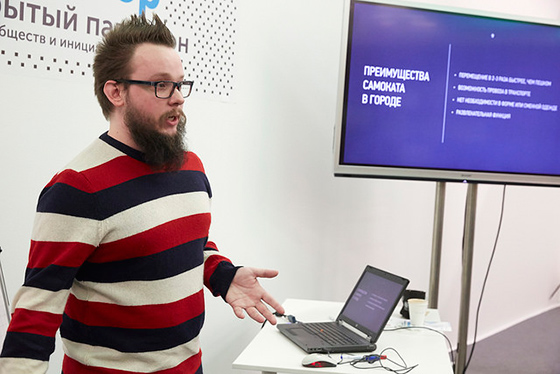
But here, units took advantage of the chance to speak out without regard to power. The independence of judgments this time was distinguished by individual Russian professionals: the performances criticizing the current state of affairs were remembered, the former chief architect of Samara Vitaly Stadnikov, invited to the session “Development of the urban environment: changing quantitative indicators to qualitatives”, and architectural critic Grigory Revzin, who read the report on “Environmental quality: the role of architecture and architect”. Stadnikov fell on the current housing policy policy, in particular, a program of affordable housing, within the framework of which developers strive to minimize efforts with a disregard for the environment: “Samara is a city that introduces almost a million square meters annually with a decreasing population, with a deterioration in the quality of the proposal, which leads to the emergence of areas that immediately turn into a Getto”. Revzin, in turn, criticized the Russian competitive system, which turned out to be incapable of leading to the physical embodiment of conceived ambitious projects: “I repent and I think that we need to cancel architectural competitions in general. It is like forcing cannibals to teach a declaration of human rights and freedoms. ” He suggests “finding some strong man, an oligarch and an official, and urgently make him the leader of the architects <...> So our country saved football, figure skating, biathlon, parks, contemporary art and a sixth generation fighter.” Already the format of the report, stylized under the repentance of the professional of the 1930s, became the most strong commentary on what was happening and surprisingly organically fit into the context, even if we distract from its content with references to Machiavelli and the belief that only the complete opacity of decision-making will help Moscow architecture.
 © IV Moscow Urbanist Forum
Of course, a couple of vivid performances cannot save the situation as a whole. In order for the event to maintain significance, and not only to be the object of jokes within the professional community, it is necessary to live a lively reaction introducing a different point of view to the non -stop monologue of power. It is hard to imagine that in such a huge and complex metropolis as Moscow, "everything goes according to plan." The abandonment of dialogue illustrated the unexpectedly sharp reaction of Sergei Kapkov to the journalist of food in the city. In particular, the head of the Department of Culture said that the city is not an interview and there can be nothing free here, but finally scared the prospect of pickling the dog (later he apologized for what was said ).
All this negates the efforts of the organizers and does not help increase confidence in the event. It is no coincidence that the most democratic festival day of the forum, where activists and the general public are invited, are shifted to the very end that, as it were, hints at the visitor: first representation, then communication, however, already in the absence of the officials of the major league.
***
Alexey Kovalev, chief editor of the site Yod.yopolis.ru
Moscow officials understand openness quite peculiarly. A lot of words were said on the forum about how the city government turned to face the residents, but if you wanted to check this thesis in practice, without a personal acquaintance with the head of a department or vice-mayor, you would hardly have managed anything. It is also useful to be a correspondent of one of the publications, on which the city hall spends 12 billion rubles a year. Then, even if you come to the press conference last, you will definitely be provided with a place in the front row. Others will promptly push vigor guards or press service from VIP.