
Translated material
Note from Kolchak
She went to the addressee, his beloved woman, half a century
She went to the addressee, his beloved woman, half a century
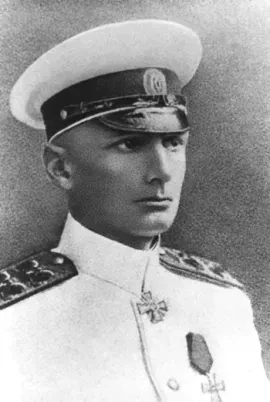
The middle of the day, on August 12, 1967, Mikeshkin descends the Bykovsky channel. We trample on the left side, already feeling the proximity of drifting ice. Matisen and Kolchak, participants in the Russian polar expedition of 1901-1902, once walked this channel.
Taking with him the boatswain from the “dawn” and two sailors, Kolchak from the sloop-four in these places, where we now stalled the move, took measurements of the depths. The maps drawn up by Kolchak were printed by the main hydrographic department of Russia. Most likely, they were also used in the Laws, revealed on our table: “The pilot map of the Lena River from Yakutsk to the port of Tiksi. Scale 1:50. Farvater 1964. Yakutsk, 1963. "
Then it could not occur to it that in Moscow, on Plyushchiya, on this very day and hour, when we are talking about the admiral, the name of Alexander Vasilievich Kolchak is repeated by Anna Vasilievna Timireva, the lover of the admiral, who returned from exile. _ “How strange-here is an impassable forest, / here, in ten steps, sites, cottages, people are walking, somewhere the children cry, / But here, in the forest, that world seemed to disappear ...” _Et diarrhea of Anna Vasilievna are also dated on August 12, 1967, when we, unfamiliar with her, were divided by 5 thousand kilometers, but thought about one person, but about the mystical. I find out the coincidence of the dates after fate will like me to reduce me with Anna Vasilievna.
In the early 1970s, collecting materials for the book “Siberia: Where did it come from and where it goes. Facts. Reflections. Forecasts ”, without any hope of success, I will turn to the Irkutsk department of the KGB with a request to request from Moscow the case of Kolchak and Timirva. They were arrested on January 15, 1920 at the Irkutsk railway station, the arrest was led by 23-year-old captain A.G. Nesterov, Deputy Commander of the Political Center.
Three to four months later, 19 volumes “Cases on charges of Kolchak Alexander Vasilievich and others” will come from the general investigative of the Central Archive of the KGB in Irkutsk. ” Among the protocols, receipts, certificates, repulsed at Underwood, the 1900s, but often by hand, sometimes impossible to read, a stamp of gray paper was found, hastily painted with a chemical pencil, many times rolled up, until it became convenient for hiring.
I unfolded and darkened in my eyes. This was the last note by Kolchak Anna Vasilievna Timirva, who did not reach her; She was apparently selected during a night search before the execution.
In the publication and reprints of the book, censorship washed out the text of the note unconditionally; I hardly managed to defend only a fragment. The whole note glowed with such a love of 46-year-old Kolchak for the 26-year-old Anna Timirva (Safonova), such a triumph of their defenseless mutual tenderness over the lands that covered the earth that there was no trace from the image of the admiral, which it was represented in those times.
In the village of Zabitui near Irkutsk, I found the headquarters captain Nesterov, a dry old man, an employee of the local communal economy; He spent 40 years in camps and links for communication with the SSER political center. From him I heard the details of Kolchak's arrest.
The train stood without a steam locomotive, surrounded by two battalions of the 53rd Infantry Regiment, ready to blow up the railway, but not to allow advancement to the east with an admiral and a gold reserve. There were 39 people in Kolchak's car; A telegraph mechanic, clerk, officials for special assignments crowded in the vestibule and in the aisle, not understanding why they were pushed into the frost. In a separate compartment, Kolchak and Timirev sat nearby. The arrest of Anna Vasilievna was not provided. The headquarters captain did not even know about its existence. But she held the hands of Alexander Vasilyevich in her, insisting that they would go to prison together. They walked under the ice on the ice of the hangar, slipping and supporting each other.
Sitting over archival folders, I could not imagine that a year later I met Plyushchiya in Moscow under a different name Anna Vasilievna Timirev and, like a postman from non -being, I will transmit the text of a letter that has been rewritten to my notebook for half a century.
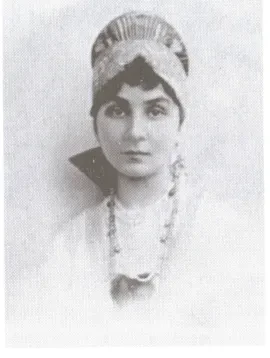
But before the other papers from the “case on charges ...” on the second day of the arrest, languishing in a separate cell, not knowing that with Alexander Vasilievich even without understanding who to petition for the Admiral, Anna Vasilievna writes with a pencil: “Please let me allow me a date with Admiral Kolchak. Anna Timireva. January 16, 1920. "
They were allowed short joint walks around the prison yard. She was horrified by the situation in which Alexander Vasilievich found himself, she did not think about herself, her heart was torn from powerlessness to help him not so cold in the cell.
She writes free rein with the hope that good people will pass a note to the car where their things remained. The overseer, apparently, promised to help her, but, without resolving it, gave the letter to the investigative commission:
“I ask you to transfer my note to the carriage of Admiral Kolchak. I ask you to send the admiral-1) boots, 2) shifts 2 linen, 3) a mug for tea, 4) a hand and a basin, 5) cologne, 6) cigarette, 7) tea and sugar, 8) some food, 9) the second blanket, 10) a pillow, 11) papers and envelopes, 12) a pencil.
To me: 1) tea and sugar, 2) food, 3) a pair of sheets, 4) a gray dress, 5) cards, 6) paper and envelopes, 7) candles and matches.
Hello all of you, my dear friends. Maybe there will be a free person, a cat [ori] will bring me all this, from brave women.
Anna Timireva. We are sitting in prison. ”
She emphasized the request for candles: she was afraid of darkness.
She was not worried for the time being, only the admiral was driven along the corridor for interrogations. For the Extraordinary Investigative Commission, it was unexpected with what dignity Kolchak held, how calmly re -read the protocols, corrected inaccuracies before putting the signature. It was not given to investigators to know that he was far from these papers, all his alarm was about Anna, this was now occupied by him, and he had to answer questions to people about his expeditions in the Arctic, the search for Baron Toll, a plan for the revival of the Russian Navy, defeated in the Russo-Japanese War.
He had nothing to renounce. The investigation of K. Popov, in the preface to the publication of the stenographic report “Kolchak interrogation” in 1925, found an explanation of his strange -sided testimony: “He gave them not so much for the power that interrogated him as for the bourgeois world ...”
On the back of the leaflet with the stamp “The Adjutant of the Supreme Ruler and the Supreme Commander” (apparently, the document used to be arrested and used to lack other paper) is still a document: “Extraordinary investigative commission, having considered the further detention of Anna Vasilievna Timirva, who voluntarily followed in prison, who voluntarily followed Admiral Kolchak, decided: In the interests of the investigation in the case of Kolchak and in order to avoid the possibility of the influence of third parties on Timirev, A.V. Timirev is in custody. Chairman S. Chudnovsky, comrade of the chairman of the Investigative Commission K. Popov ... "
On a fateful night, when Kolchak read the resolution of the Revolutionary Committee on execution, when the hole was already smoking on the Angarsk ice, to which they dragged the executed, Anna Vasilievna heard the clatter of boots in the corridor, saw his gray papachi among black people in the gap.
She was not immediately informed about the execution, they did not dare for a long time, but, having learned about it and not suspecting that the Red Army pushed the murdered under the water, Anna demanded a body for burial from the commandant of the prison.
The Irkutsk Provincial Revolutionary Committee sends a resolution to the Extraordinary Investigative Commission:
“To the petition of Anna Timirva to give her the body of the admm [Irala] Kolchak Revolution [Ionian] Kom [itet] reports that the body is buried and will not be given to anyone.
Manager (signature).
A copy of this message to declare Timirva. "
The authorities did not know what to do with a woman, guilty only in the fact that she loved a person by the name of Kolchak.
With her husband Timirev, his second cousin, a naval officer, the hero of Port Arthur, she broke up in 1918, his traces were lost in Russian emigration, poured from the Far East into Manchuria.
In 1922, being temporarily at large, she met with V.K. Kniper, got married, took his last name. This did not save from new arrests. When taken for the fifth time, she asked the investigator of what she was accused of. The investigator was surprised: “But the Soviet government has already caused you so many grievances ...” That is, you should already potentially be an enemy.
In the wild, she was looking for Volodya, a son from her first marriage; He was arrested and shot in the 38th, when he, a talented artist, was 23 years old. Engineer Kniper patiently waited for the next liberation of Anna Vasilievna; He died in 1942.
Anna Vasilievna passed the prisons of Irkutsk, Yaroslavl, the camp of Transbaikalia and Karaganda, links to cities and villages of Russia; She began tuberculosis. In the late 50s, completely exhausted, forced herself to write herself to the general prosecutor of the USSR:
“On January 15, 1920, I was arrested in Irkutsk on the Kolchak train. I was then 26 years old. I loved this man and could not leave him in the last days of his life. In essence, all my fault ... At present, I’m 67th, I am a very sick person, this work is beyond my power, it requires great physical endurance, but I can’t leave it, since I have nothing to live otherwise. Since the 22nd, I have been working, but because of continuous arrests and links, a total of 25 years I have no work experience. I am again asking for my complete rehabilitation, without which it is impossible to exist in the future. ”
... We will meet in April 1972 in Plyushchiya, in her old apartment, where his sister and nephew now lived.
A small gray -haired woman will wrap up in a knitted scarf, thrown on a white blouse with a lace collar.
They talked about Siberia, sorted out the places of friends in my memory, and for a long time I did not have the spirit to tell you what I came with.
She brought a letter from the next room addressed to the Minister of Culture of the USSR, signed by Shostakovich, Sveshnikov, Gnesina, Khachaturian, Oistrakh, Kozlovsky ...
“We convincingly ask you to assist in receiving a personal pension A.V. Kniper, nee Safonova, daughter of an outstanding Russian musician V.I. Safonov, who died in February 1918 in Kislovodsk. Anna Vasilievna is 67 years old, she has a poor state of health. Having no means of existence, she is forced to work as a fake in the Rybinsk Drama Theater, which is beyond its power. Currently, Anna Vasilievna, who was undeservedly located for many years in camps and administrative links, is completely rehabilitated and registered in Moscow. But she has nothing to live ... ”and the answer: Citizens A.V. Timirva has a personal pension in the amount of 45 rubles.
"How do you live?!" - I could not resist. Mosfilm registered: when “noble old women” are needed in mass scenes, they call me, I sit on a tram and rush. She starred in the "Diamond Hand", in the "War and the World." Remember the ball Natasha Rostova? Close -up Princess with Lornet is me! ” - "And all income?" - "For a shooting day 3 rubles ... enough for Taganka, on a volume of Okudzhava, sometimes at the conservatory."
Time to talk about a note.
And I, stammering, telling how I was looking for documents on the history of Siberia, how the “case on charges ...” came to Irkutsk, and among the papers was the last note by Alexander Vasilyevich, who was selected, who did not come to her then. Here is my notebook ...
Anna Vasilievna rose, went to another room. Where did the glasses be sore? Without finding them, she sank into a chair and in a weakened voice, with a pause unusual for her, asked me to read aloud. Such a expectation tensed in her pupils that I felt uneasy from confusion.
I opened a notebook and began to read a note that I remembered by heart, but intercepted my throat, as it was when I saw a note for the first time.
I managed to own myself with difficulty.
“Continue,” said Anna Vasilievna.
(General G. Gaid in the spring of 1919 commanded the Siberian Army, which was part of the Russian army, Admiral A.V. Kolchak, was deprived of the general rank and awards for failure to comply with the order; in Vladivostok he headed the Socialist Revolutionary rebellion against the Kolchak government, was arrested and left Russia.)
Anna Vasilievna sat, not moving, under her shoulders, with a handkerchief, thoughts in a distant terrible time, when the state collapsed, peoples were destroyed, anger and hatred stood on scorched land. A train walked through the violent Siberia, snowdrifts and pines circled in a frosty window, and two people sat nearby, drawn into formidable events and doomed to become their victims; Both preserved in their souls a feeling of love, the only value, forgotten by many, otherwise trampled, and, despite everything experienced, preserved.
Then Anna Vasilievna told me: “I don’t think that in my century they will write the truth about Alexander Vasilievich, fewer people who knew him, who experienced the charm of his peculiar mind and a high spiritual mood. The diary records that I keep in tires are tired, after work, I feel dry, are not able to convey the greatness of this loving and loved one. He entered - and everything around was done like a holiday. In all my years lived, wake me up and ask what I want more than anything, I would answer: to see him. I try to write about him in verses, but my pen is weak. ”
Yevtushenko asked me to help meet Anna Vasilievna. I sent Anna Vasilievna from Irkutsk a postcard. I give the answer completely:
“Dear Leonid Iosifovich, I received your postcard in the hospital where they are trying to do it. Now I'm at home. I regret that they did not visit Moscow as they wanted. As for your friend, then if he really wants to see me - let him call.
Although now summer and him, of course, are not in Moscow. What I will do in the future, I myself do not know yet. At 80, everything becomes difficult. So, goodbye, problematic. Anna Kniper. 27.V.73 ".
Evgeny Aleksandrovich was not able to get out to Plyushchiu for a long time. And in January 1978, Anna Vasilievna died. At her grave on Vagankovsky, I recall a half -empty room, a gray, leaning woman with piercing eyes in a scarf, I hear her calm voice tearing through stunned times - the lover of Alexander Vasilyevich Kolchak. Above him was not imperious, raging behind the fence, which seemed to be the meaning of the life of the vanity:
“I can’t accept half a century, you can’t help with anything, and you all leave again that fatal night. And I was convicted to go until the term is blowing a blowjob, and the paths of the external roads are confused. But if I am still alive against fate, then only as your love and memory of you. ”
In 2008, Yevtushenko will include Anna Timirva’s poems in the anthology of “Ten centuries of Russian poetry”. It is a pity that Anna Vasilievna did not hear the poet’s poems, dedicated to her during her lifetime. She would look for glasses again and, embarrassed, would ask them to read.
Evgeny Aleksandrovich was in the circle of “exquisite old women”, past wars and camps, famous “that they were loved by those who are famous,” and, hearing their high syllable, he seemed to himself “ridiculous, like the Mytishchi Kagor in the company Klimko and Montelado.
(From the book "Old Rynda". See New Gazeta, No. 127 of November 12, No. 131 of November 21, No. 140 of December 12)
Leonid Shinkarev