
Translated material
The irrevocable losses of Moscow
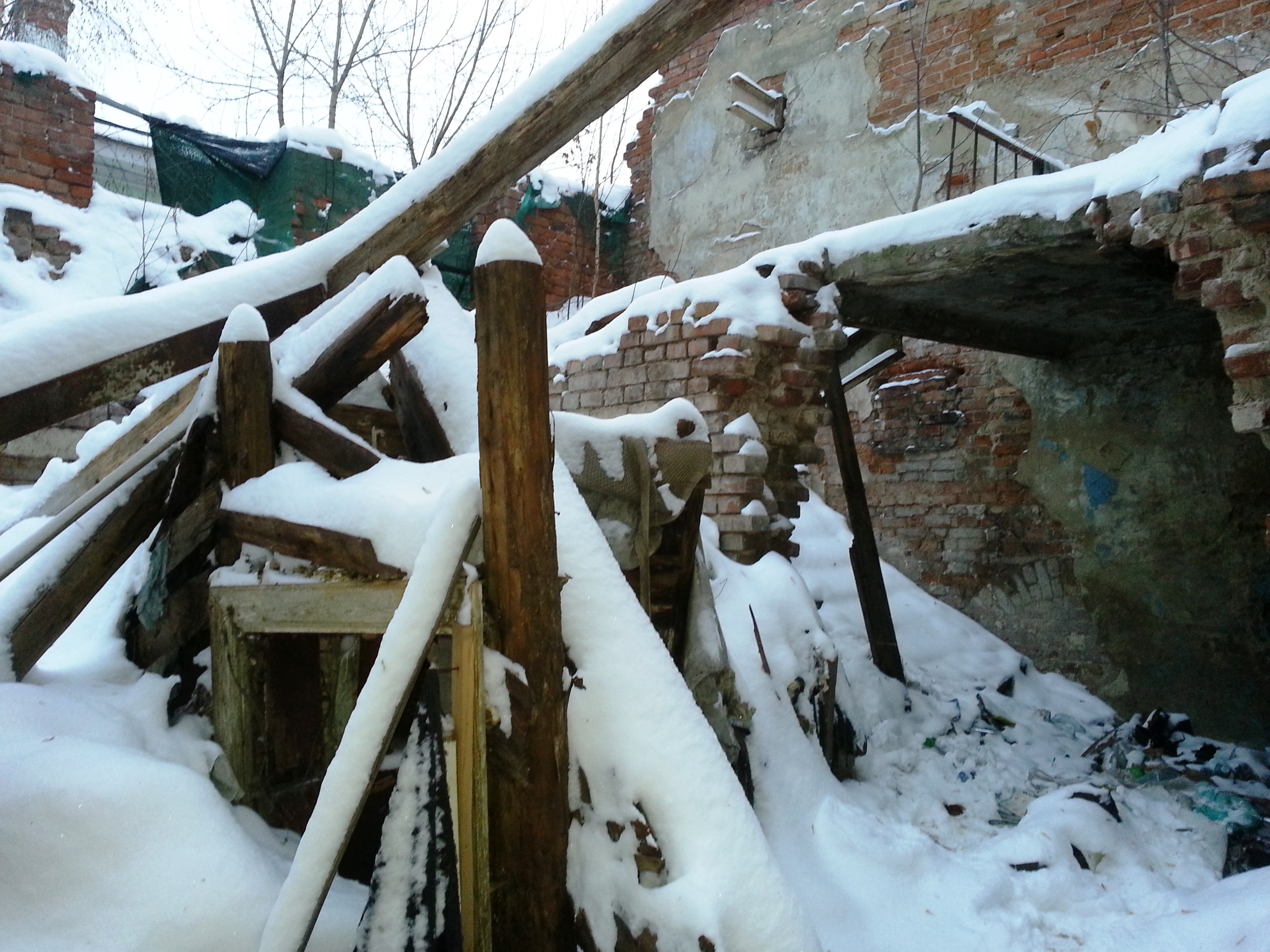
Neither the protective status nor the protests of public activists in the year of culture saved the old houses of the capital
In the public coalition "In Defense of Old Moscow", the results of 2014 were summed up. According to the estimates of the city defenders, over the past 12 months, 15 architectural monuments were destroyed in the capital. Either under the guise of major repairs, then under the guise of restoration, and sometimes even without plausible prepositions, solid profitable houses of the 19th century, rare samples of wooden architecture, ancient trading shops on Arbat, and from the Soviet heritage-the Luzhniki pool, went into oblivion.
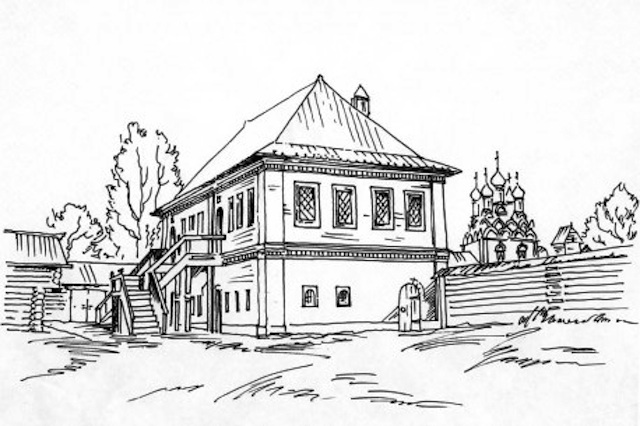
The most famous case is the demolition of the so -called "chambers of Kireevsky" near the walls of the Streetevsky Monastery on Ostozhenka Street. According to the writer, Moscow activist Rustam Rakhmatullin , this house was erected in the 17th century, and subsequently the construction, on the first floor of which the ancient vaulted ceilings were preserved, was repeatedly built up and surrounded the extensions, which is typical of the history of Moscow:
It was noted that Kireevsky lives in a clearly old house, more precisely, the memoirists could not determine this, but they had the impression that they entered the house as in a certain old chest, in some ancient treasury
-The chambers of the 17th century, that is, civilian, and not church buildings of that time, in Moscow there are quite a lot. The capital leads in this nomination. Among the provincial cities, Pskov leads, among the district cities - Gorokhovets, for example, there are seven chambers. In Moscow, the account is a hundred. But this does not mean that each specific chambers are less valuable. This is still a rarest nomination, the oldest civil buildings in Moscow of the 17th, and sometimes, and the 16th century. Kireevsky’s wards were included in this number. Such monuments are all the more remarkable that they usually open, that is, they are not known in advance. Say, by 1917, there were monuments of this kind on the fingers of two hands, and they were very cultivated. These were a few not rebuilt chambers or rebuilt inconsistencies, that is, which they definitely remembered that they were ancient. Most of these buildings were rebuilt, including the Kireevsky Chamber. Perestroika, as a rule, was reduced to the elimination of voluminous brick decor, the creation of a flat wall or a new facade decoration. To find this old wall behind the later layers is always a great discovery. They learned to do this by the 20s of the last century. And the method of modern restoration is to restore lost elements by the remnants of brick decor. But there are completely ascetic chambers, such as Kireevsky’s chambers. They were almost not decorated. And they are among those who were discovered by restorers and archivists. That is, before the revolution of their antiquity, of course, there was no exact information. Of course, this is a monument of federal significance. Most of the chambers of the 16-17th centuries, of course, are monuments of such a rank.
-Is there anything known about the past inhabitants of this house?
-We do not know who built this house, we only had a version that it was Peter the General of Peter the Great Andrei Leontyevich Rimsky-Korsakov , who financed the construction of the nearest church-the gate church of the Streetevsky Monastery on the Ostozhenka. But this is not yet evidence. A reliable owner appears, according to documents, in the 18th century. Nevertheless, full-scale studies show that the house of the 17th century. And the participation of the “Kireevsky Chamber” is a little paradoxical, since we are talking about the owner of the 19th century, but this is the most famous owner of the chambers for more and more than 300 years of the house. This isPyotr Vasilievich Kireevsky , the famous folklorist and Slavophile, a man who can be called the savior of Russian epics, friend of Pushkin, Gogol. It was his address for about 10 years. It was noted that he lives in an obviously old house, more precisely, the memoirists could not determine this, but they had the impression that they entered the house as in a certain old chest, into some ancient treasury. The house stood behind the fence, in the depths of the garden. That is, Kireevsky lived in an old manner. This, probably, was very suitable for him as a Slavophile. And we lost such a monument, that is, both an architectural work and a house of exceptional memorial value, ”says Rustam Rakhmatullin .
Neither the protective status nor the protests of public activists in the year of culture saved the old houses of the capital
The coordinator of the Coalition "In Defense of the Old Moscow" Andrei Novichkov reports that now there are very few from the Kireevsky chambers:
-Only the foundation and some fragments of the first floor. In the course of the work that was carried out this summer, by order of the Priselevsky Monastery , a significant part of the building was lost by the contracting organization of the Capitol LLC , in fact, everything was dismantled. The entire masonry of the first floor was destroyed, and the builders began to build a new building from the new brick, which, of course, did not apply to the monument in any way, which at one time was put on state protection as the House of the 17th century.
- But now the construction is prohibited by court decision. How did this happen?
- This did not happen right away. When we found that the chambers were no longer there, the first thing was to be sent to the corresponding authorities: to the Department of Cultural Heritage and to the Prosecutor's Office. Unfortunately, then they did not immediately give us an answer. At first we were told that to some extent the restoration project involved the dismantling of this building, but to some extent not. Nevertheless, a few days later followed the reaction of the Moscow City Council. They stated that the building was really dismantled illegally, because there was a project for the restoration of this facility, but the designer and contracting organization did not follow this project, made full demolition and actually began new construction.
Neither the protective status nor the protests of public activists in the year of culture saved the old houses of the capital
We tried to find out why there was no supervision of this object, it should have been carried out at Ryzhov and K LLC . After all, usually, when the monument is restored, and even more so, with such a status as a federal monument, inspectors are fixed behind it, who should go to the facility at least once a week and look on the spot, whether the work corresponds to the project. But the inspectors do not do their direct work, as a result of which this monument was lost not without their passive attitude.
-In addition to correspondence, did your coalition and other city-protection organizations take any measures?
A fine of 450 thousand rubles is not enough for the demolition of a federal monument. And for a construction company, this is certainly ridiculous money
- The fact that the building was demolished became known absolutely by accident, during a pedestrian tour, which was conducted by Archnadzor . We walked around the Khamovniki and went to show the chambers of Kireevsky. And then, through the false feas, they saw that the chambers were not there! It was a weekend, the next day we came there to catch everyone at a working moment, and saw that in one part the building was broken, a new structure was being built in the other with might and main. Then we called the police, the inspection of the Department of Cultural Heritage and the Technical Inspectorate (OATI).
The police refused to stop the work. The sanctions did not apply to them either. The inspection of the Department and Oati we did not wait either. Then we went to negotiations with the leadership of the Zakotyevsky Monastery, which is the customer of the work. This is a convent, we personally talked with the abbess of Juliania. She said that they allegedly had a collapse of part of the building during the work. Which is very sorry, but I had to start a new construction. But even if we assume that the collapse had occurred, it was all to be described, it should have been recorded, they should have called the Department of Cultural Heritage and record the fact of the collapse. But neither the department, nor other instances, nor in the passport of the facility and in the passport of architectural supervision, which is maintained by the chief architect of this project, was not a word about the collapse. From which both the prosecutor’s office and the court that recently passed, concluded that there was no collapse. And that's right.
Decent restorers and decent contracting organizations immediately notify the authorities that fix: yes, the collapse happened. Photo -fixation is performed and so on. Nothing was done. And there was no collapse either. This is a specific demolition to build something new. In addition, this abbess mentioned that the monastery wants to build a hotel there. They have not been arranged in size for a long time. And they had long wanted to attach something in order to at least somehow increase the volume. But then I would have to break through the walls. For example, make doorways from the windows and so on. However, no one would allow this to do this on the monument of federal significance. If all this is folded, we get a picture that the customers simply did not want to maintain this monument and deliberately made demolition.
- What court are you talking about?
On December 15, the Zamoskvoretsky court was considering the case about this demolition. This was an administrative case against Kapitel LLC. I emphasize that this is the contractor just to preserve the chambers of Kireevsky. The court received a fine of 450 thousand rubles. All! We believe that this is not enough for the demolition of the monument of federal significance. And for a construction company, this is certainly ridiculous money. Such a court decision, in fact, gives a go -ahead for other investors: please demolish! I have no doubt, there should be the most stringent sanctions. The Russian legislation provides for criminal liability for the demolition of the monument of history and architecture, and, not necessarily federal significance, but even regional or only identified, ”says Andrey Novichkov .