
Translated material
Fair trade
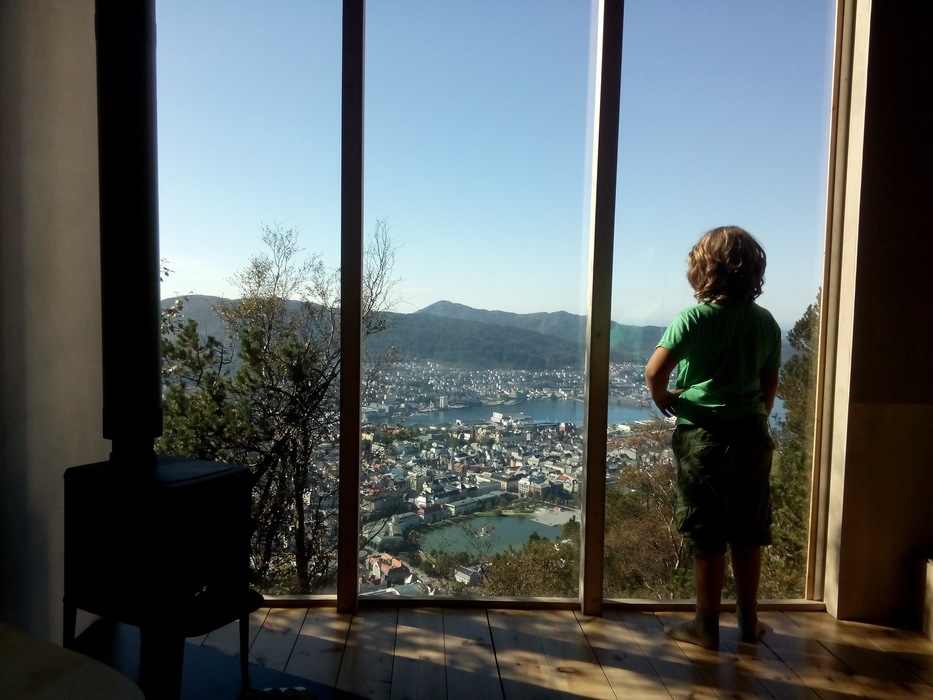
Students-architects built a small house of Tubakub, in which every citizen can spend the night for free and enjoy a beautiful view of Bergen. People live in a tubacub who, for some reason, cannot go camping with the tent: large mothers, single mothers, families awaiting addition. Typically, designer houses with a good view of the window are available only for the rich or are so far that they can’t get to them. This house is located in the very center of the city, in a pine forest next to a popular observation deck. Tubakuba is a suitable place for reflection on the right of a person to housing and a decent life, about social justice, that the salary of a citizen is a basic income paid to everyone is an ambulance in all developed countries, and that there are no useless or more valuable citizens.
A large Facebook group of supporters of the citizen’s salary- Borgerliancen Bien Norge -has more than 2 thousand people. Activists of the basic income conduct educational work: they arrange meetings, write articles, collect signatures. Many groups of human rights activists - fighters for peaceful tax and refugee rights, trade union figures, supporters of equal wages, ecologists, and anti -advertisers indicate serious problems with the distribution of public income.
Frigans say the loudest of the crisis of consumerism, arranging the distribution of free food: “In Norway, we simply throw out 30% of the entire food. Meanwhile, a billion people on our planet suffer from chronic hunger ... There are problems that require us to revise relations to products, we must throw less food ... According to the UN food and agricultural departments in 2050 in 2050 in 2050 A year, in order to feed 9 billion people, it is necessary to produce food 60% more. ”
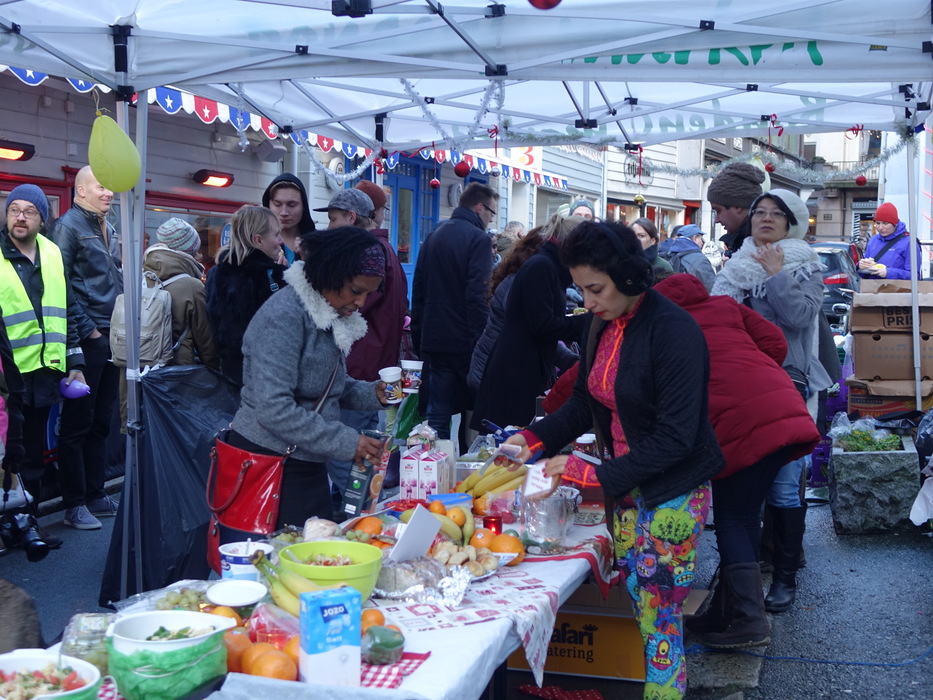
On December 6, 2014, before Christmas, at the same time when the inequality of Norwegian society is especially felt - some families acquire mountains of delicacies and gifts, and there is nothing to buy food for others, the Pir against Hunger invited citizens to the Frigigan holiday. As treats, absolutely normal products were used by stores for free. It was possible to pick up bread, asparagus, tangerines, tomatoes, turnips, potatoes, bananas, chocolate, berries. Many goods were environmentally friendly. The formal reasons why the products could not be sold according to the law - the expired shelf life, incorrect packaging or shape. One of the organizers, Julia Gene, said: "We should not be passive while people around us are starving."
“Food instead of bombs” used to operate in Bergen, now “food” activists work as “folk cuisine” and prepare mainly for the “Robin Hood”, where low -income people come. "Food" can be found on DIY concerts . The "Food instead of bombs" opens against the militarization and for the fulfillment of its social functions by the state.
Responsible consumption is not only rational use and disposal. Many Norwegian buyers prefer to buy goods with the Fartrade brand, which opposes slave work in the countries of the so -called third world. The “Fair Trade” initiative has not been considered radical in the Western world for a long time. In 2008, Bergen was recognized as Fairtrade-city, in 2013 in Norway there were 34 Fairtrade-communities.The World Fairtrade-Gorodes list is very extensive.
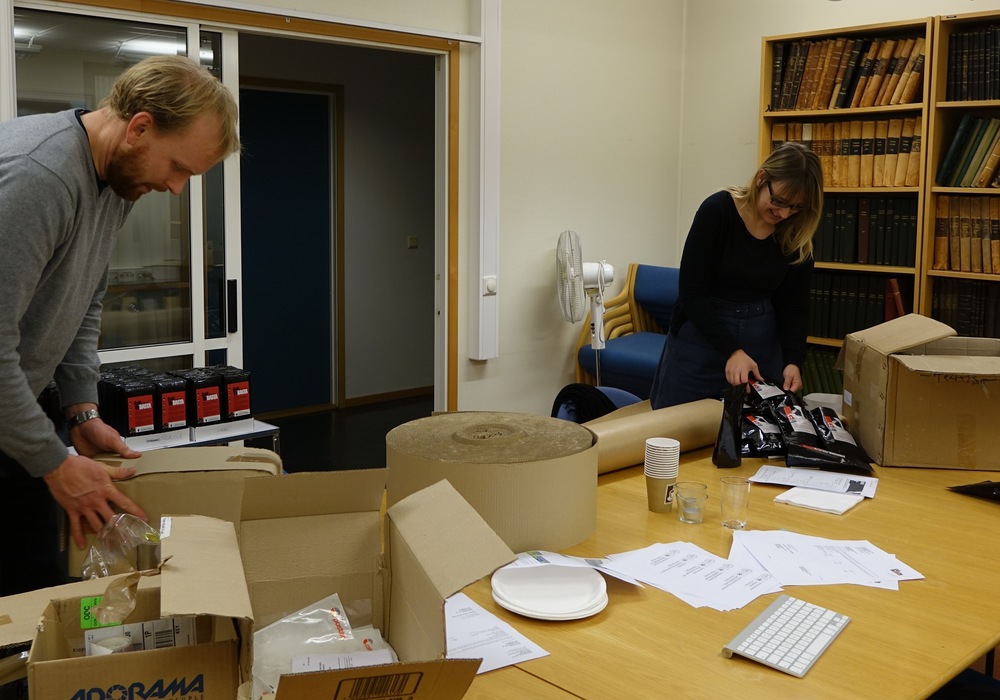
In Bergen, you can find many goods produced without slave labor and in accordance with environmental standards: sugar, coffee, cocoa, chocolate, nuts, bananas, mangoes, rice, orange juice, clothing. Despite the fact that the purchase of "fair goods" for shops and state institutions is carried out through wholesalers and on an industrial scale, there are small groups that work with farmers directly. The Sapatist group consists of five people , operates as part of an international network that sells a Fartrade from the Mexican state of Chejas . The essence of the initiative is that farmers receive a fair price for their goods and can establish the life of the community. First of all, this helps to free people from slavery, but also affects working conditions, improving the level of medical care, education, a situation with women, children and the environment. This year, the Indians lost their crop of coffee, and therefore, friends of the Sapatists are discussing financial support schemes.
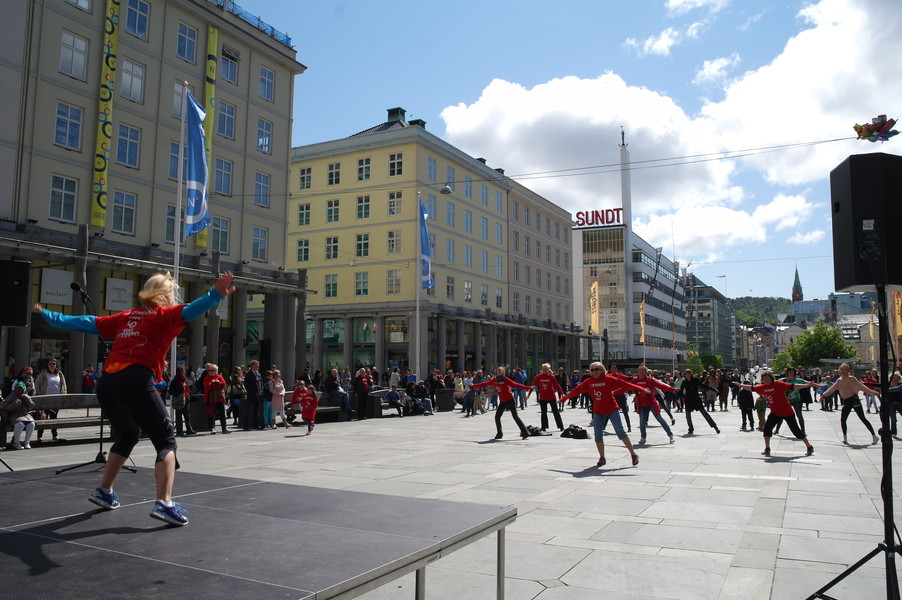
And what about the rights of workers in Norway itself? In the largest Norwegian trade union LO - about 900 thousand people, this is a powerful political resource. In addition to the fact that trade unions defend the rights of workers in a planned manner, such an extreme measure as the strike of the industry or a universal strik is a common occurrence in Norway. During the strike, people can sit at the workplace with a cup of coffee or go ... dance to the main square. Someone is dancing, someone arranges demonstrations , someone walks in a yellow vest and distributes leaflets about the inequality of workers, about gender inequality, about full employment, about the level of salaries.
Remember: freedom disappears immediately, as soon as it ceases to protect it
Major workers, teachers, social employees and in Norway receive not the highest salaries. Trade unions necessarily arrange several events during the annual feminist festival in March, since women rights are more often violated in the labor environment. The Day of International Solidarity of Workers is celebrated as a big holiday, it does not look at all like Soviet May Day. One of the activists, Sarah Bell, says that for her family, May Day is more important than Christmas. In some houses there was a tradition of collective May Day breakfast. In the morning, the laying of wreaths at the monuments to the pioneers of the Norwegian labor movement and trade union activists.
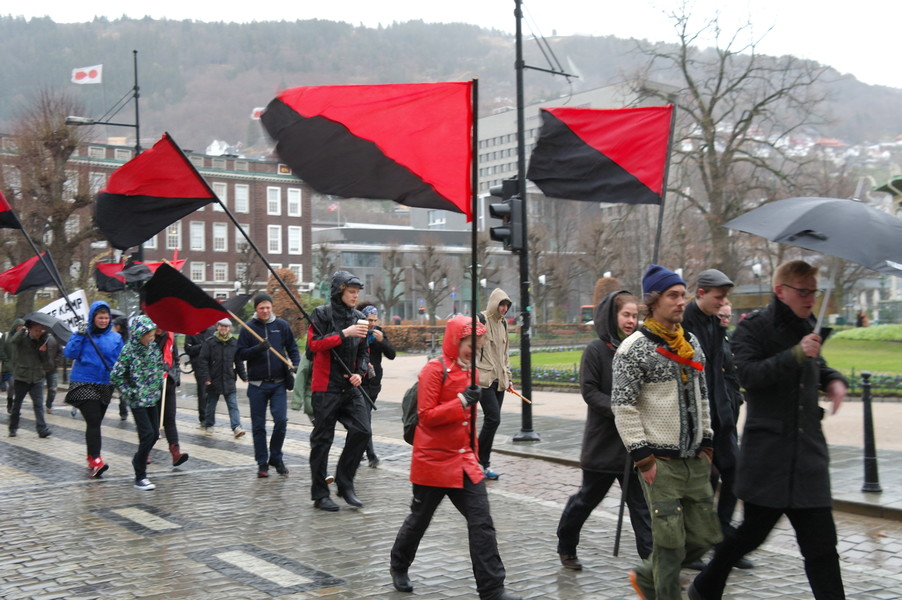
The “Alliance of May 1” arranges a demonstration without party symbols, in which the associations “for the rights of migrants”, “no EU”, “International Women's League for Peace and Freedom”, “Ship in Gas”, “Palestinian Committee”, “Folk Action Against the Blaging of Oil Sides”, “Front against the Sales of the Body”, “Nature and Youth”, Sapatista, participate. Group ", Kvinneaktivistene (radical feminists)," Dunmarkplass clean air ", Latin American group, Kurdish activists, Hardanger aksjon (members of the group protect the Norwegian nature, dressed up in national costumes with slogans embroidered on them), the group" For Nyunoshk! " (Novonorvezhsky language), anarchists, syndicalists, Bergen-Diy and many other independent activists-only 200-300 people. The unifying slogan sounds like this: “For freedom, well -being and democracy, against imperialism, racism, war and terrorism.”
The demonstration takes place in the city center and ends with the court building. Here the trade union march begins. The column of each trade union carries its standard and performs with its requirements. The second demonstration collects thousands of people. The participants of the columns move to the central square of the city - there is a rally. At the rally, significant political persons are usually performed-Prime Minister, Ministers, trade union leaders. The main slogans of Pervomaev over the past 4 years: “Full time”, “Remove the blockade of the Gaza, boycott Israel”, “The UN must provide the world in Syria”, “Equal payment of male and female labor”, “Against the EU”, “Against the EU postal”, “Against social dumping”, “For preserving the society of universal well -being”, “There is no right to refuse to refuse to the direction of abortion ".
In 2012, 500 posters “three years were made enough to receive documents” (about refugee children). In a festive crowd in the square, activists distribute their magazines, newspapers and leaflets. After the demonstration, concerts and parties in a cafe are arranged, each organization is going separately. In the late evening, an action takes place against the sale of a body near the last strip club. The worst Mayor in my memory happened in 2013 - rain poured like a bucket of wind broke banners. However, in the rain, everyone listened with interest to the 36-year-old Berggen Audun Lisbacquen.
In the biography of Lisbakken, you can find a passion for Marxism, alternative military service, support for the feminist movement and environmental organizations, and left journalism. Audun considers the nickname "homo-minister" received by the support of the LGBT community . In 2009, Audun became the first man-minister of childhood and equality. Three years later, Lisbacken left this post due to the financial scandal and headed one of the most progressive Norwegian parties, SV. Between the ordinary members of the Norwegian parties and their leaders, by the way, there is no insurmountable abyss, it all depends on the personal potential and the presence of a desire to devote themselves to work for the good of the country. At 14-15, the Norwegians are already heading youth political organizations.
I finish the story of various forms of civil activism in Bergen and I hope that in my notes everyone was able to find something interesting for himself. I want to thank people who inspired me to create a Russian version of the book about Bergen - Natalia Gorbanevskaya and Dmitry Volchek, as well as all those who went to political protests with me, helped to make video shooting, photographs and translations. You can find additional materials about the shares of trade unions, strikes and fair trade in the Russian -speaking network newspaper Bergen hare . See the book “The city says: activism in Bergen”.
And remember: freedom disappears immediately as soon as they cease to protect it.
Lyubava Malysheva-a civil activist, a photographer-documentary, lives in the Norwegian city of Bergen
Read other texts from the cycle about civil activism in Bergen:“activism in Bergen” (feminist organizations), “ Rainbow Days ” (LGBT movement), “against garbage” (environmental movement), “ nowhere to run” (movement in defense of migrant rights), “ for peace-always” (anti-war movement) (anti-war movement) (anti-frying movement)