Translated material
Heroes and anti -heroes of the year
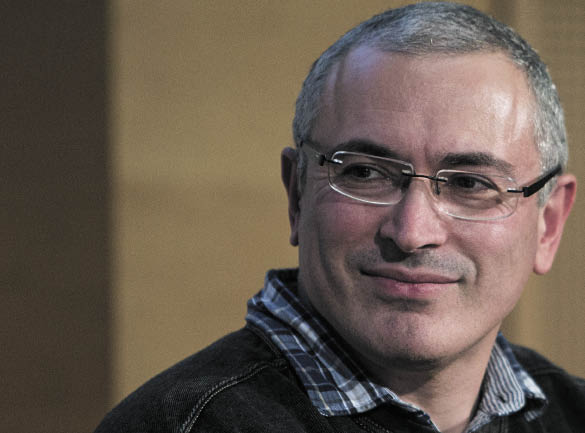
Mikhail Khodorkovsky
Over the year spent at large, Mikhail Khodorkovsky stopped being a hero for some and became for others. After the release on December 20, 2013, Khodorkovsky said that he was not going to engage in either business or politics. But in September 2014, when the war in the Donbass was in full swing, he announced that he was ready to fight for the chair of the Russian president and head the country for the transition period after the collapse of the Putin structure. One of his theses - Crimea can no longer be considered unconditionally Ukrainian - did not appeal to those who are convinced that Russia has annexed the peninsula illegally and he should immediately return to the power of Kyiv, but probably found understanding with the “reunion”. On the other hand, the former head of the Yukos promises to cope with corruption-to carry out partial lustration and clean the state apparatus from bribe takers in two to three years.
"Heavenly Hundred"
On February 20, 2014, Maidan self -defense participants moved to the Verkhovna Rada to demand the immediate displacement of the President of Ukraine Viktor Yanukovych. In the midst of the confrontation, both snipers opened fire on the advancing and police. 13 policemen and 75 members of self -defense were killed, who were soon called "heavenly hundreds." They did not manage to take Rada then, but their death put a cross on an agreement, which the next day, Yanukovych, in the presence of European guarantors and Russian observer, signed with the leaders of the opposition. The agreement was that the presidential early elections would be held before the end of 2014, that is, Yanukovych could spend only three months in his chair for which he was elected. The agreement is hopelessly outdated as soon as the number of victims during the assault on the parliament became known. Yanukovych disappeared from Kyiv, and then even from Ukraine, and a part of one of the streets where clashes took place was named after the “heavenly hundred”. The perpetrators in execution have not yet been officially named.
Sergey Belyakov
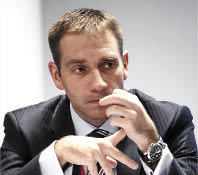
The deputy head of the Ministry of Economic Development Sergei Belyakov, a graduate of the FSB Academy, on his Facebook page apologized to the fellow citizens for the government that decided to extend the moratorium on deductions of the funded part of the pensions, contrary to his own promises: “I am ashamed of the decision to extend the moratorium on the investment of NPFs ... I apologize for all forgiveness for the stupidity that we are doing, and for it, and for The fact that we do not value our word. " The next day, Belyakov was dismissed for the "violation of the law on public service."
Belyakov was ready to reaction to his post. He was an experienced official, in the ministry he served six years. In all his hypostles - in the FSB, in business and in the government - Belyakov, he said, remained faithful to his beliefs that the "homeland" and "state" are not the same thing, and the strong state serves people, and does not use them. In the government, he saw the opportunity to reasonably influence the country's economy, and then he stopped believing it.
Andrey Zubov
In the case of a famous historian and publicist Andrei Zubov, another way to combat dissent was demonstrated. Professor MGIMO, who worked at the university for more than 10 years, was dismissed shortly after his article in Vedomosti, in which he called Crimea the accession to Russia with an adventure, compared it to the Hitler Austria Anschluss and called Russia it was unable to resist the West either economically or military terms. The basis for dismissal was the leadership of the university called a violation of labor discipline. Colleagues stood up for the dissident, and the court found that dismissal is illegal. However, in June, the term of the contract ended in its course, and the leadership of MGIMO did not renew him with Zubov. His many years of cooperation with the Moscow Patriarchate turned out to be insufficient mitigating circumstance when the question arose about the attitude to the "sacred" reunion.
Lev Schlosberg
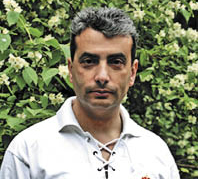
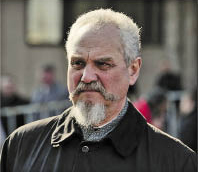
The Pskov journalist and politician Lev Schlosberg became a victim of aggressive patriotism, who was capable of reprisal without trial - on August 29 he was brutally beaten by three unknown people. Schlosberg is convinced that this was a response to his publication about the Pskov paratroopers who died under unclear circumstances and, possibly, fought for the separatists in the Donbass. In general, the Pskov paratroopers are a constant topic of Schlosberg: a series of articles about their death in Chechnya back in 2010, he earned the Golden Pen of Russia Award. Then, however, he wrote about the military officially fighting against the separatists in Russian territory. In the publications of the past summer, it was about the secret funeral of paratroopers, without declaring the causes of their death, against the backdrop of numerous evidence that Russian military personnel were sent to fight to the southeast of Ukraine, drawing up these business trips as a trip on vacation. Officially, Russia does not admit that the troops were sent to the conflict zone, so far human rights activists do not have documentary evidence of such business trips, and Schlosberg, who publicly turned to the main military prosecutor with a request for the causes of the death of the Pskov paratroopers during the counterattack of the Donbass separatists, could threaten the secrecy of Russian actions in Ukraine. How could the court and the court if the opponents of Schlosberg had filed a lawsuit against politics.
Victor Yanukovych
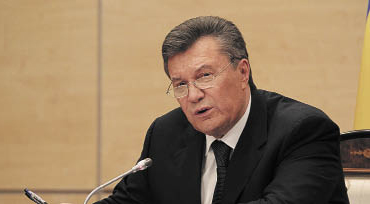
In 2005, Viktor Yanukovych almost became president, and nine years later - almost Putin. In both cases, the Maidan defeated him, but if in 2005, Yanukovych lost his presidential chair Viktor Yushchenko bloodlessly, then in 2014 he seems to have done everything to bring the protest to the extreme. By January 15, the Maidan had already lost his internal impulse and grinned, his activists said that now it would be a platform for any opposition requirements, and Yanukovych agreed with the Kremlin on a loan of $ 15 billion. The topic of European integration, the rejection of which has caused protests, won and attracted less and less people who wanted to stand in the cold in two months. And then Yanukovych breathed a new life into protests-his political technologists launched a rumor that the Maidan was about to disperse, most of the opposition deputies spent the night there in anticipation, after which the Verkhovna Rada adopted a package of laws, as in Russia, limiting the possibilities of public protests. This administrative grace led to the fact that the Maidan increased significantly, clashes with the police were tightened, victims appeared on both sides ... As a result, Ukraine lost the president and the civil world, and Russia acquired a refugee, which was not able to sympathize with even the ruler of Belarus Alexander Lukashenko.
Igor Strelkov
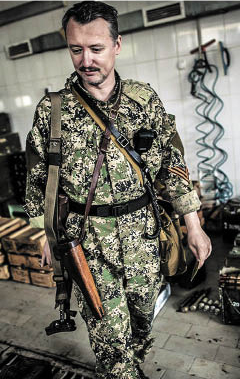
Igor Ivanovich Strelkov (also known as Igor Vsevolodovich Girkin - patronymics and surnames of him change depending on the circumstances), an enthusiast of historical reconstruction, himself went down in history in the spring of 2014. First, in March, the war veteran in Transnistria, Chechnya and Dagestan turned out to be an assistant to the head of Crimea Sergey Aksenov, which was not recognized by Ukraine, and in this capacity led local pro -Russian detachments. Then, according to him, he was still the current colonel of the FSB, but went to the peninsula without an order, at the call of the Russian world from European values, among which he most often mentions the legalization of same -sex marriages. Having participated in the almost bloodless seizure of units of the Ukrainian armed forces in the Crimea, the shooters heeded the calls of antiki delegates from Donbass, at the end of March he quit the service and with a fifty associates appeared in Slavyansk, who took control of several hundred local activists. “I still pressed the trigger of the war,” he said in a recent interview. When the Ukrainian army surrounded the city, there were less than 3,000 people under the command of Strelkov, most of whom managed to break into Donetsk. According to Strelkov himself, at the end of July, no longer hoping not only for the Crimean scenario of joining Russia, but also for military assistance on its part, he almost evacuated the defense of the Donetsk People’s Republic, but then the “vacationers” helped out (this is how, in quotation, this word of shooters) - Russian military personnel who allegedly took the deprivation and with the equipment to fight. For the "Russian World" in the Donbass. Two months later, Strelkov left the self -proclaimed republic, but still remains a symbol of the confrontation of the Ukrainian army, during which 4.7 thousand people have already died on both sides, including civilians, and hundreds of thousands of Ukrainian citizens became refugees.
"Islamic state"
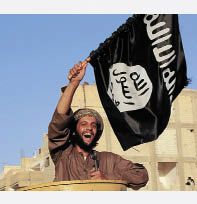
By the end of the summer, the Islamic State group, operating in Syria and Iraq, clearly replaced the Ukrainian crisis from first place in the world news. Videos of the execution of citizens (including journalists) of Western countries caused shock around the world. By August, IGU established control of approximately the third territory of Iraq, including over the oil region of Mosul, which gives the “caliphate” tens of millions of dollars a month. According to American and Russian estimates, the number of this Islamic army reached from 30 to 50 thousand people, including hundreds of Muslims from Europe, Australia, the USA, ready to execute Gentiles, and sometimes Muslims, in Iraq and all the Eastern Mediterranean-from Turkey and Cyprus to Israel and Egypt. Moreover, among the goals declared by representatives of the IG, Chechnya and the Caucasus arose, as well as numerous cities in the West, in which, according to the militants, their underground operates.
"Channel One" and Galina Pyshnyak
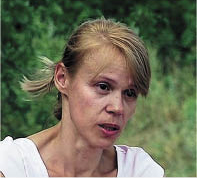
The atrocities of the “fascist punishers” tormenting the Russian -speaking population of Donbass, the “Channel One” was not the first to say about the Russian boy, who was supposedly crucified in the center of Slavyansk by the Ukrainian military, wrote the commander of the separatists, Igor Strelkov and the ideologist of the “Russian world” Alexander Dugin. But their audiences are not comparing with the audience of the main television channel of Russia, so the television version of monstrous history “worked”. A certain Galina Pyshnyak, who lived in Slavyansk before his assault by Ukrainian troops, told that part of the “Russian world” that the “Channel One” is watching, about a three -year -old boy who was nailed to the premise of the city’s central square, where he died in torment in front of his mother, and her tank itself was wrapped on a cable along the perimeter. None of the interlocutors of Ukrainian and Russian journalists in Slavyansk had heard about such an incident either before or after the story of a lush (who is in a quarrel with his parents because of the husband-captive). However, the story widespread by the “first channel” has become the most mentioned argument of volunteers going to fight for the separatists to the Donbass.