
Translated material
Foreign Ministry: Expansion of Magnitsky’s list will affect cooperation with the United States
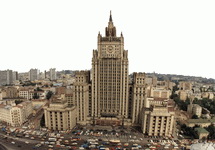
The expansion of the Magnitsky list will affect Russian-American cooperation. This is stated in the statement of the official representative of the Russian Foreign Ministry Alexander Lukashevich, published on the website of the department. “US actions,” the official noted, “calls into question the prospects of bilateral cooperation in resolving the situation around the Iranian nuclear program, the Syrian crisis and other acute international problems.”
“No pressure methods will pass with Russia,” Lukashevich assured. “As we could see in Washington, we did not leave and will not leave such unfriendly attacks unanswered.”
The official called "completely understandable" that the expansion of the Magnitsky list is not explained by human rights, but "purely political" motifs. “Washington again launches frank double standards, making us human rights claims and at the same time turning a blind eye to the far from exemplary situation with human rights in the United States itself, where special services were officially endowed with the right to apply medieval torture, and police officers still kill people with impunity only because they have a different skin color,” Lukashevich emphasized.
The Ministry of Foreign Affairs also criticized the “introduction of restrictions against Russian legal entities on the basis of the intra -American law on sanctions against Iran and Syria, including in violation of obligations to us, which the B. Obama administration took upon.”
“It seems that someone simply licks from the desire to tighten the frame of bilateral relations, for which new reasons are constantly being invented,” the official noted.
The day before, the US Treasury included four new defendants in the Magnitskiy list . This is the deputy prosecutor’s office Viktor Grin, the investigator of the Main Directorate of the Investigative Committee Andrei Strizhov, the deputy head of the Ministry of Internal Affairs of Chechnya Alaudinov and the head of the administration of the head of Chechnya, Magomed Daudov. They, like the rest of the 30 defendants in the list, are prohibited from entering the United States, and their assets in this country are frozen. In addition, citizens of the United States are prohibited from having business contacts with the person involved in the list.