
Translated material
Elena Chukovskaya died
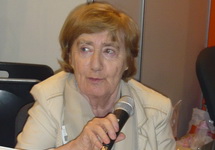
In Moscow, on January 3, at the age of 83, the philologist and memoirist Elena Chukovskaya died. This was announced on his Facebook page by a professor at the Higher School of Economics Oleg Lekmanov.
Chukovskaya was born on August 6, 1931 in Leningrad. She was the granddaughter of Korney Chukovsky and the daughter of the writer Lidia Chukovskaya and philologist Caesar Volpe. In 1954 she graduated from the chemical faculty of Moscow State University, until 1987 she worked at the Research Institute of Elemental-Organic formations. Candidate of Chemical Sciences (1962).
Chukovskaya provided assistance to Alexander Solzhenitsyn since the beginning of the 1960s and until his expulsion from the USSR in 1974. In August 1988, the journal "Book Review" published an article by Chukovskaya with a request to return Soviet citizenship to the writer. In 1998, a collection of articles by Chukovskaya and philologist Vladimir Glotser "The Word breaks through his way" dedicated to Solzhenitsyn was published.
In February 1990, the journal "Literature Questions" published Chukovskaya’s memoirs about Boris Pasternak, entitled the Nobel Prize.
Having inherited after the death of his grandfather the right to his archive and works, Chukovskaya for many years sought to publish the manuscript almanac "Chukokkala", which the writer led more than half a century. In 1979, Almanac was published in a reduction; In 1999, his full edition was published. Also, the efforts of Chukovskaya published the diary of her grandfather. She was the first guide in the house-museum of Korney Chukovsky in Peredelkino.
After the death of her mother, Chukovskaya took up the study of her archive. She prepared for the press the texts of Lydia Chukovskaya “Dash” and “The House of the Poet”.
In 2011, Chukovskaya was awarded the award of Alexander Solzhenitsyn. The writer’s foundation awarded her a reward with the wording "for the ascetic work of preserving and publishing the richest heritage of the Chukovsky family; for courageous assistance to domestic literature at the difficult and dangerous moments of its history."