
Translated material
Executions
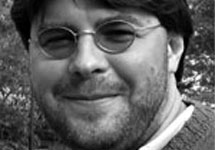
The demonstrativeexecution on January 1 of one of the most charismatic leaders of the pro -Russian militants in the Luhansk region - Alexander Bednov nicknamed Batman - marked not only the calendar, but also the real beginning of the new year for the territory of the Donbass, occupied by Russian troops.
Bednov was typical of the leaders of the militants to the former military "without biography." He talked a little about himself in numerous interviews - he was born in a military family, was a company commander in a police special forces (it is not known where), specializing in the release of hostages. He resigned (when?) Captain. For a 45 -year -old officer - a modest career to the offensive. What he did after the resignation, where he lived, what citizenship had - again, a riddle. Then - from April 2014 - participation in the militant detachment under the leadership of the fairly famous field commander Alexei Mozgovoy, the organization in his composition of his own group, which grew to the size of the "brigade". Now the “quick response group '' Batman '', sitting surrounded by the" people's police "of the LPR at its base in Lugansk, has, according to various sources, up to a hundred people. In total, at the time of the commander’s murder, up to 300 people consisted, according to some reports. The rest were on the basis in the city of Red Luch, where Batman supposedly tried to escape, learning about the planned arrest.
Bednov was known for the active support of the ideas of Russian imperial nationalism. The composition of his group included a well-known sabotage and hectic reconnaissance group (DShRG) "Rusich"-a small but active detachment of St. Petersburg neo-nazi neo-nuclear people, some of which fell into an ambush with Batman and died. The group was created and headed by a fan of Hitler Alexei Milchakov, which was notorily famous in 2011 on the Internet. The odion did not prevent the neo-Naziist from serving in 2011-2012 by service in the Pskov Airborne Forces, and then realize his ideas and acquired skills in the Donbass. There he changed his nickname "Fritz" to the call sign "Serb". “Rusich” (by the way, its participants prefer to write the name of the group with runic font) is fighting under the banner with a swastika stylized in the form of the Black Sun. In the war, Milchaks loves to take pictures with the bodies of the dead opponents and tell on the camera that the group does not take prisoners.
The main part of the Bednov group was also distinguished by sadistic inclinations. Immediately after his murder, one of his former friends, former journalist Alexander Chalenko, told the details of the allegations incurred in his blog. It was mainly about the departure of real estate from the Lugansk "peaceful citizens". The mistress of the house in which Batman settled, they “persuaded” to rewrite the property, threatening to put the detachment in prison (“basement”) and remove the skin there.
The fighter nicknamed Maniac was in charge of the prison. It had five cameras in the categories of prisoners, including female, as well as specialized torture. There is already a video on the network in which the detained member of the group named phobos gives evidence of how the maniac used the "field set of the surgeon". There are the first confessions of the maniac himself, made in the best traditions of horror films.
So it is not surprising that the fighters of the unit, even left without a commander, do not want to give up so simply to the Lugansk authorities. According to the Dragon laws established by the militants themselves, you can get into the torture cellars of one of the groups for much smaller crimes - drunkenness, a scandal with a wife or the appearance on the street at the commandant hour. Whether the victim of “wrestlers with fascism” will work out their fault a couple of weeks of slave labor, whether her relatives and friends will buy it, whether it will be raped, clogged at interrogation or shot without trial and investigation - God news.
Does the “shooting” of Batman and his close associates mean, some of whom were citizens of Russia, that the authorities (Luganski, Russian Li) took up the guidance of an elementary order in the territories controlled by him, pressing to the nail or destroying the most notorious “boundaries”? The vast majority of commentators, both from the pro -Russian and conditionally pro -Ukrainian side, do not believe in this. Most often, the execution is explained as a reaction to an attempt to conspiracy the field commanders of the Luhansk region, recently very dissatisfied with the activities of the official head of the LPR Igor Plotnitsky.
In the murder of Bednov, as a drop of water, all the inconsistency of the situation that has now developed in the occupied territory is reflected. The unspoken negotiations of Poroshenko and Putin, the result of which were the Minsk agreements, helped to record the current status quo. Both sides of the conflict temporarily abandoned the hostilities and tried to establish the economic relations of the transitional (but so far it is not clear much) the period in relation to the territories of Eastern Ukraine, occupied by Russia in late August - early September.
As a result of these agreements, Russia received the actual freedom of the hands for the quiet colonization of the territories controlled by it. She cannot legitimize the presence of her army and administration in the Donbass under the threat of new sanctions, however, to establish its orders under the cover of supposedly independent pseudo -state formations - the DPR and the LPR - it is possible. The Ukrainian authorities, having recalled from the occupied territory of all government officials and stopping all financing there, essentially completely shifted responsibility for the state of affairs to the Russian side. The supply of humanitarian goods, the formation of the official commission for humanitarian assistance that began, albeit irregular payments of salaries, pensions and compensations, all this shows that Russia, even reluctantly, but still took three or four million inhabitants of Donbass. Outwardly, it seems to look like the formation of another, only large, Transnistria. However, in fact, the occupied part of the Donbass in Transnistria is completely different.
In Transnistria, there was consent between the regional elite - primarily “red directors”, local officials and law enforcement officers who were able to ensure the functioning of state institutions - and a population, frightened (and intimidated) prospect of accelerated Romanization. Russian troops under the command of General Lebed and the "arrived" imperial nationalists became military force, covering the creation of a separatist quasi -state. But his foundation was still for him.
Similar processes took place in South Ossetia and Abkhazia - with the difference that they survived the outcome of the Georgian population (in any case, from cities) and did not have industry. Nevertheless, it was relatively single "countries" with bad, but functioning and internally legitimate mechanisms of power.
A completely different situation has developed in the Donbass. To manage the region with the population as in a small European country and even more so million -plus cities is completely not the same as to control the small Transnistria, Abkhazia, and even more so South Ossetia. We need a high level of competence of bureaucracy and politicians. The regional elite of Donbass (unlike the Dnepropetrovsk and Kharkov) takes a contradictory position. Neither supporters of Ukraine or its opponents received unequivocal support from her. Regional officials also adhered to neutrality in the conflict. Until July, “technical” regional and city administrations subordinate to Kyiv could well coexist with the “political power” represented by militants. But when, after the ultimatum of Igor Girkin, who escaped to Donetsk, to the local authorities, it came to the need to choose - to stay in the overwhelmed by armed groups, or even frank psychopaths with machine guns in the hands of Donetsk and Lugansk or move (so far) to Mariupol or Severodonetsk, most noticeable officials preferred the second option. Having gotten a big one under Yanukovych and seeing the orders in the DPR and LPR, they understood that for real and imaginary failures in work could fall into the torture basements. And those ordinary officials of the administrations, for whom personal circumstances or even pro -Russian beliefs were more important than potential threats, could not take on the functions of departments or deputies of mayors: this is needed for experience and qualifications.
As a result, in the occupied territories of Donbass there is a clear lack of competent performers (which aggravated after the decision of Poroshenko on the final output of state institutions). Excessive decentralization of the "political power" represented by various armed groups is noticeable.
In addition to the contradictions between the authorities of the Donetsk and Luhansk regions, which the Kremlin curators of the militants are in no way to glue into the Novorossia, the problem of these territories was the aggravating separatism of armed groups that control individual cities or areas.
The first militants' detachments, consisting of local small bandits, gopniks, police officers, war veterans in Afghanistan and Chechnya, as well as Russian nationalists of local and Russian origin, took the seizures of administrative buildings and became local rulers in the hope of Russia's ambulance according to the Crimean scenario. Since this did not happen, and there were no serious political pro -Russian movements in the region and did not appear, the created vacuum of power turned out to be filled with right of strength. Indeed, why does the former corporal or ordinary miner, who found himself in the chair of the head of the city administration, know him unknown to someone if every week of the ruble brings tens, or even hundreds of thousands of dollars to the pocket of the "people's mayor"? Revenues from the racketeering, from the resale to Russia, “squeezed” cars and weapons, from the sale of humanitarian aid received, from taxes that are paid by a few local enterprises and entrepreneurs, other opportunities to have fun and profitably - no one will give all this without a fight.
Therefore, the occupied territory from the very beginning to this day is a conglomerate of folklies, led by the princes, whose power is based either only on the support of their own squad, or also to help and protect Russian special forces. The situation is complicated by the fact that different princes have their own - and very diverse - relations with Russian sponsors. Who is “friends” with the FSB, some with the GRU, some with individual Russian persons such as the “oligarch-Light” Konstantin Malofeev. Thus, the jealousy and rivalry of the Russian departments and private partners of the state are also imposed on the Intranbass situation.
Having decided back in August to streamline the "public administration", the Russian curators of the Novorossiya project made a bet on not particularly creative and charismatic, but controlled characters. In the DPR, this is an “authoritative commander” Alexander Zakharchenko (former dancer, Moscow builder, warrant officer in the military enlistment office), in the LPR - former Russian officer Igor Plotnitsky, a previously small official in the Lugansk Regional Administration. They had to rely on the authority and means of the Russian side. By October, it became clear to everyone that this scheme just does not work. The Russian side was forced to supply the weapons, ammunition and money on advanced militants because Russian contractors, who are now in the rear, usually outside the zone of defeat of Ukrainian artillery, would have to hold the border of the people's republics. And the militants themselves retained the support bases already throughout the Donbass, putting it on the advanced replaceable units.
Therefore, since November, after the "elections" designed to legalize the "governors" chosen by Russia, the Russian authorities moved to the tactics of removing the most noticeable opponents of the nominal owners of the region from Donbass. The first victims of this tactics were the charismatic "master" of Donetsk Gorlovka Igor Bezler (Bes) and the leader of the Cossack groups that control the West and the East of the Luhansk region, Nikolai Kozitsyn. According to exciting information, they were disarmed and taken to Russia by the Russian military. At the same time, as the armed confrontation was faded, the most active Russian militants began to be expelled from Donbass: the need for their military knowledge fell off, and the problems with unauthorized shooting fans in the conditions of a truce, and simply with people who were configured for confrontation with any power remained. So, in the basements of the DPR, the Honored Anthiller Chervonets from the Arseniy Pavlov group (Motorols) was distinguished by sharp critical video features.
If in the Donetsk region such tactics as a whole was justified by Zakharchenko’s personal group “Oplot”, pumped up by Russian technology and resources, by the end of the year it really became the largest and most influential (but far from the only one) armed for the formation of militants, then in the Luhansk region the effect turned out to be the opposite. The removal from the game in early December Nikolai Kozitsyn, despite all the efforts of the Russian military, did not lead to the real retrieval of the Cossack chieftains standing behind him, the nominal head of the LPR, although officially its "army" created and various groups joined it as units. They, as well as the above Alexei Mozgova, the leader in general, the left-handed beliefs of the Mechanized Ghost, which controls the city of Alchevsk, and the Batman, not only did not see the legitimate leader of the People’s Republic, but also publicly accused him of falsifying the elections. Bednov, for example, told reporters that on October 8, three of his people were wounded by the protection of the Central Election Commission of the LPR while trying to register the socio-political movement of the group to participate in the elections.
In addition, Dissatisfaction with Plotnitsky’s opponents caused a large -scale extension of humanitarian aid coming from Russia, as well as the sale of coal to Ukraine by the leadership of the LPR by the leadership of the LPR. On December 29, the most famous after Kozitsyn Ataman is a former mason, a former bandit, a former novice of the monastery, a war veteran in Chechnya, the owner of the apartment in St. Petersburg, the commander of the Cossack regiment named after Platov Pavel Dremov, whose group is controlled by the city of Stakhanov, located east of Lugansk, and a significant section of the front line, - came up with popularity in social networks video message . Moving swearing abuse at Plotnitsky with anti -Semitic invectives, he, together with other Cossacks, demanded a report on the whole set of accusations. The appeal found its addressee - after a few days of the Dremov, as it became known from the intercepted and publicly publicity of the SBU of the phone call, met with Dmitry Medvedev. According to Dremov’s statements, the group was supposed to receive a large number of new heavy weapons after this meeting (including the hurricane system) and military specialists who were supposed to train militants to use it.
A similar meeting, if it took place in reality, and was not a bluff of Dremov, who specially used the unprotected communication channel, sharply changed the matter. She turned the Cossacks, known before as bad warriors and frankly weak managers, into a legitimate force from the point of view of the Russian authorities, worthy of the right to control the significant, if not most of the LPR. In the alliance with the Mozgov and poor, they (with the neutrality of the Russian army) could really lose Plotnitsky, who has not many “bayonets”, and divide power in Lugansk. Moreover, Bednov could be a key element of the conspiracy, since he had a large base inside the capital of the region. Therefore, perhaps the reprisal against the "hero of Novorossia" was so indicative and brutal.
Does this struggle of spiders in the bank have general political significance? Undoubtedly. It shows that the process of consolidation of power inside the occupied territories among pro -Russian militants is at least far from completion. So, before establishing a calm peaceful life, curbing gang groups that terrorize the population, is still very far away. And all this against the background of winter, daily melting stocks of money and products among ordinary citizens, the absence of a distribution system of not too generous humanitarian aid from Russia and the planned open armed conflict between groups for the control of mines that supply coal brands necessary for Ukraine and the routes of its transportation.
A significant part of the region’s population understands this very well. That is why Ukrainian departments are reporting weekly about the growing number of officially registered refugees and forced immigrants. If we draw historical analogies, then the occupied territories of Donbass today are not a new Transnistria and not the new South Ossetia. This is the eastern Germany of the 1950s, from where millions of people went to the West. They were driven not only and not so much the occupation administration as social experiments, repressions and requisitions of new rulers who came out of the support of Moscow friends from mud to the riches.