
Translated material
World oil prices continue to fall after anti -records the day before
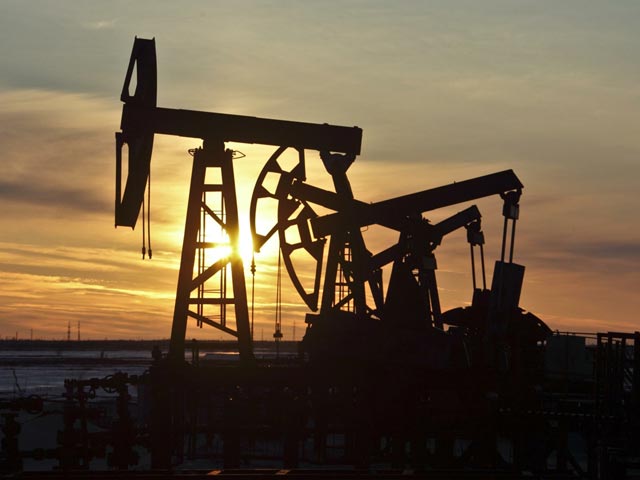
Prices in the global oil market do not demonstrate any growth trends against the background of the increasing anxiety of investors regarding the imbalance of the demand and demand of black gold in the world market.
The price of the February futures for light oil of the WTI brand on Tuesday fell to $ 49.01 per barrel, decreasing by 2.06%, according to 12:30 in Moscow. The cost of February Brent oil futures, as of 12:30 in Moscow, dropped to $ 51.77 per barrel, decreasing by 2.52%, RIA Novosti reports with reference to The Financial Times .
The drop in prices continues after record -based low indicators on the previous day of trading, when WTI oil fell below $ 50 per barrel for the first time since April 2009. Brent oil was traded at the level of $ 53 per barrel the day before, recalls the publication.
Anxiety about the oversaturation of the market has intensified against the background of data that Russia set the oil production record, and the export of oil by Iraq for the first time reached a level that it has not reached since 1980. At the same time, OPEC countries do not demonstrate the slightest signs that they will intervene in the prices with prices, FT notes.
Saudi Arabia increases its oil prices for consumers in Asia
Saudi Arabia raised its oil prices for consumers in Asia. This was reported on Tuesday by Bloomberg . The new price list begins to operate in February.
"The current step of Er -Riyada caused talk that the largest OPEC oil export is moving away from the policy of using discounts on his oil in order to maintain market segments," the agency notes.
According to the received data, the increase in the vacation price for the best oil varieties is 60 cents per barrel, TASS reports. “Saudi Arabia slightly presses the brakes,” said Leo Drolas, an analyst at the energy market. “This measure can be regarded as a signal that oil prices fell too much and too quickly.”
The stable and deep drop in world oil prices from last summer began with the fact that Saudi Arabia introduced large discounts on its oil for consumers in Asia. Now she took a step in the opposite direction, reducing the size of these discounts from $ 2 compared to the average price of a barrel in the Asian region to $ 1.40.
Obama believes that the construction of the oil pipeline between the United States and Canada will slightly affect the increase in oil prices
US President Barack Obama believes that the construction of the Keystone XL oil pipeline between the USA and Canada will slightly affect the growth of world oil prices. This was announced on Monday by the White House spokesman Josh Ernest, TASS reports.
At the same time, according to Ernest, "the White House monitors the drop in oil prices, but believes that cheap gasoline (in the USA) has a positive impact on the US economy."
The cost of the project, which should allow the transportation of more than 800 thousand barrels of oil per day for processing enterprises on the shores of the Gulf of Mexico, is estimated at $ 8 billion.
According to experts, the construction of this highway will allow the United States to significantly increase the production and export of oil products, as well as create thousands of new jobs. The project operator is TRANSCANADA, which, according to the text of the document, receives the right to build, connect, manage and maintain the operability of the oil pipeline crossing the US border.
Disputes around this object have been going on for several years. Many environmental organizations of the United States continue to claim that it will cause serious damage to the environment. Environmentalists draw attention to the fact that the pipeline is planned to transport dirty raw materials mined in the oil -bearing sands of the Canadian province of Albert. From there, the highway, the total length of which will be 1.9 thousand km, will go to the American states Montana, South Dakota and Nebraska, where it will be connected to the "pipe", already laid to Texas and Louisiana.
In November last year, the US Congress Senate could not adopt a bill providing for the construction of the oil pipeline. Previously, the text was supported by the Republicans, but the Democrats and the White House opposed.
Oil prices in 2015 will be determined by five factors, including the Chinese economy
One of the main issues for the global economy in 2015 is when and how much oil prices will increase, which now reach a record low indicators, writes one of the leading Internet publications in the energy of OilPrice.com . The price of black gold, the publication believes, will be determined in the near future for five key factors.
The economy of China, which is the second largest global oil consumer, has an extremely strong impact on the fluctuation of oil prices, and in 2013 overtook the United States in terms of the volume of imports of liquid fuel. Oil prices depend, including how actively, the need for China in fuel will increase.
According to the US Energy Information Office (EIA), it is expected that by 2020 the PRC will consume three billion barrels per day more than in 2012. However, in 2014, China showed far from the best results, so in the near future the world will carefully monitor whether the PRC will be able to influence the slow pace of economic development, the article says.
The second factor is the development of shelf oil in the United States. The oversaturation of the oil market and a sharp drop in prices on it were largely provoked by an 80 percent increase in the United States of oil production since 2007. By the end of 2014, the United States produced nine million barrels per day.
American oil companies "shot themselves", and in 2015 the whole world will observe whether the oil workers will be able to maintain such volumes of production, and this, in turn, will fundamentally affect the price of oil, the newspaper writes.
The third factor is the elasticity of demand, which demonstrates the consumer reaction to oil prices. Since “a cure for low prices is low prices”, it cannot be ruled out that in many countries they will cause growth in fuel consumption, and this, in turn, will entail an increase in the cost of black gold, OilPrice.com believes.
Much will also depend on what actions will take in the near future, since the current situation with the prices of the global oil market has developed largely precisely because of the organization’s policy, in particular, its participating in Saudi Arabia, which in November refused to reduce the volume of oil production. Despite all the criticism that is distributed to the OPEC, one cannot but admit that the influence of the organization on prices is currently huge.
Also, one cannot fail to take into account various sources of geopolitical tension. More recently, even a slight malfunction of black gold from one of the exporting countries could cause a sharp jump in oil prices. But if at the beginning of 2014, against the backdrop of riots in Libya, and later, against the backdrop of the destabilization of the situation in Iran, the Islamic State (IG) group (IG) oil prices increased markedly, then armed clashes in Libya at the end of 2014 did not affect the global oil market much. Nevertheless, as practice shows, geopolitical conflicts are one of the most powerful short -term factors affecting the cost of black gold, OilPrice.com notes.