Translated material
Prices attack
Food embargo and the fall of the ruble: what products and goods will rise the fastest in 2015
The growth of consumer prices in Russia in 2014 is more than half the initial forecasts of the Russian authorities. The two-digit rates of inflation are recognized in the government, and will remain in the year that the year, however, the rise in the rise in the cost of certain types of goods can exceed its overall level due to the embargo for the supply of imported food and the weakened ruble. What will rise the fastest in 2015 in 2015?
According to the Federal Statistics Service, inflation according to the results of last year amounted to 11.4 percent against 6.5 percent a year earlier. Thus, the growth rate of consumer prices in Russia became maximum after 2008, when they reached 13.3 percent. At the same time, the increase in prices for food products turned out to be higher than the inflation level, and for non -food - much lower. As the Minister of Economic Development of Russia Alexei Ulyukaev predicts, and in 2015 inflation will remain double -digit.
Based on the trend of the past year, when the effect of the ban on the supply of food from a number of Western countries and the fall of the ruble rate introduced by Russia has already appeared, food prices in 2015 can also be ahead of the overall level of inflation. First of all, there are fears of significant increase in prices for vegetables in the spring, when their reserves from Russian manufacturers end. The risk zone is also sunflower oil, eggs and individual types of pasta. Although, in general, bread, as the vice president of the Russian grain union, Alexander Korbut believes, should not rise in price above inflation:
Bread prices live their very special, separate life. And it is quite difficult to count on the fact that bread prices will somehow depend on grain prices
- There will be no radical change in the price of bread. It cannot be for the simple reason that in any case there is some elasticity of demand: trade will regulate this price based on the fact that it is interested in maintaining the turnover and the absence of any difficulties with consumers who will clearly be dissatisfied with the change in bread prices. Therefore, I do not think that increasing the price of bread prices will be higher than the inflation rate, that is, it will be two interconnected points. Please note that all previous years we have the prices of agricultural manufacturers for everything grew, we fell, and the prices for food, primarily for bread, only grew.
At the same time, Alexander Korbut admits that the increase in bread prices will occur despite the fact that the grain in Russia in the domestic market should be cheaper. The reason for this in the bore -barn duties introduced from February on February 1: grain exports from the country:
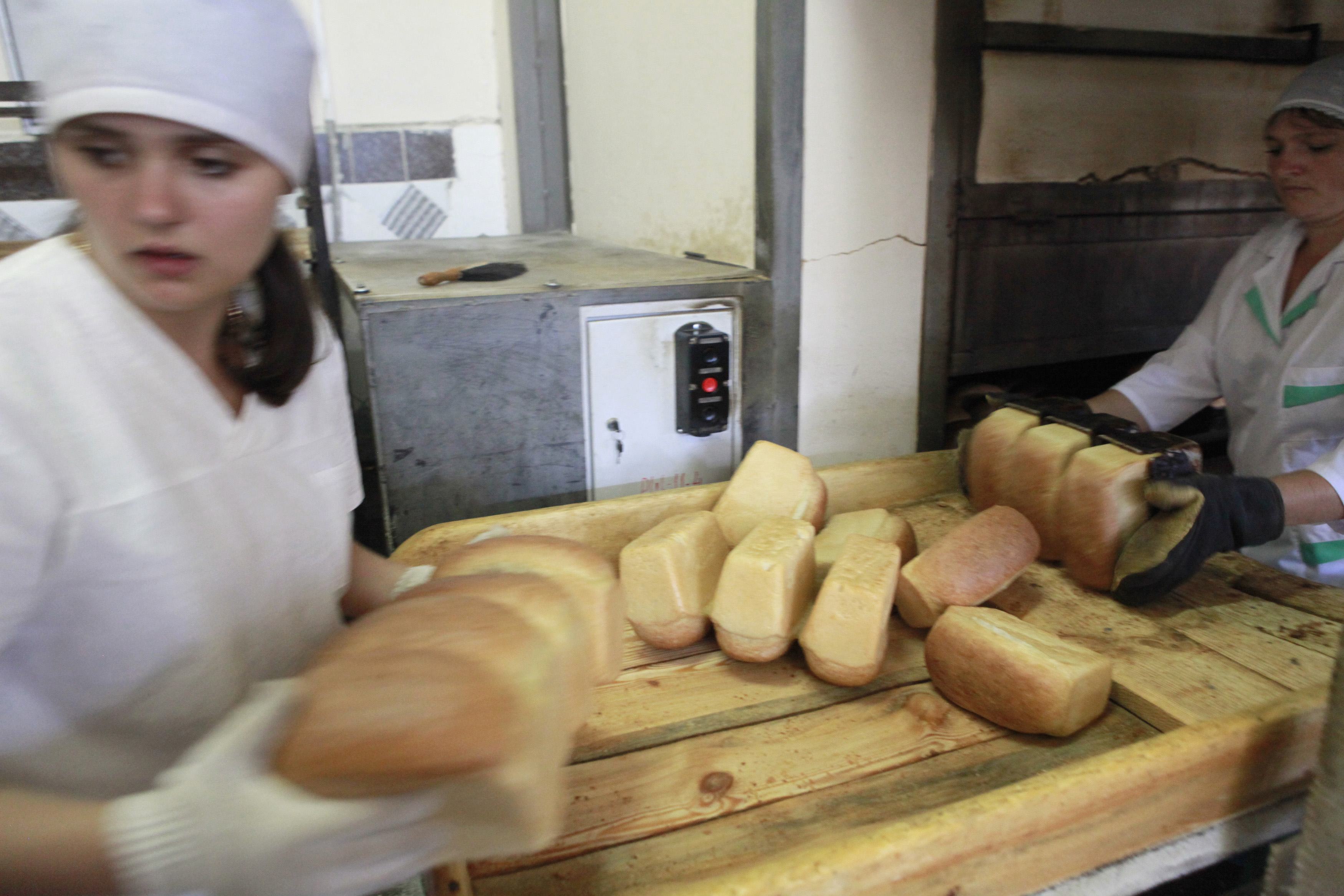
- Most likely, grain prices will pass, but this is an objective internal reality, you won’t get away from it. There will be no export - the market, respectively, will not have additional demand for grain goods. But bread prices live their very special, separate life. And it is quite difficult to count on the fact that bread prices will somehow depend on grain prices. A small dependence will be, but it will not be radical. In my opinion, in 2015 it is most likely (although any development scenarios are possible) that bread prices will increase. This is a completely natural phenomenon, it is not that some villains have started up and want to increase bread prices-inflation is going on,-recalls the vice president of the Russian grain union.
In the meat market, experts also do not expect strong shocks. Elena Tyurina, General Director of the Agrarian Marketing Institute, says this is due to an increase in the share of Russian manufacturers, as well as the fact that the main price increase has actually took place:
Prices will be about 10-15 percent, it will be higher than inflation. But this is also due to the fact that today we import components of compound feeds, especially protein
- We have an active process of import substitution, the share of imports to the pork and meat markets is reduced: the share of imports is already less than 10 percent of poultry and about 15 percent of pork. The retail market, but the industrial processing market, depends on imports to a greater extent today. That is, the retail market today is fully provided with Russian manufacturers, but as for industrial processing, it is more imported here. Based on this, we can say that there will be rising prices. Now we see a seasonal increase in prices, and the growth rate of prices is greater than traditionally: traditionally it was about 10 percent, and today we see an increase in prices by 20 percent. As for 2015, we expect some price stabilization during the post, that is, during the holidays of the New Year and until April the month.
Nevertheless, Elena Tyurina predicts that the growth rate of meat in Russia, following the results of the coming year, will drive the overall level of consumer price growth:

-Rising prices will be about 10-15 percent, it will be higher than inflation. But this is also due to the fact that today we import components of compound feeds, especially protein (these are soybean, and animal proteins, plant origin), which are used in feeding animals. And based on the fact that we have increased the dollar, the cost of animal feed will increase significantly, with this we associate an increase in prices. The restraining factor will be that competition between Russian manufacturers, and large, and another holding factor - consumer demand is growing. With active price increase, the consumption of all food products, including meat products, ”says Elena Tyurina .
Among the non -food products of mass folk application, the greatest potential for gas price in gasoline - experts suggest that it can reach 20 percent. Since the beginning of the year, the law on the so -called tax maneuver entered into force, which provides for a serious change in the taxation of the oil industry. Now, as the president of the Russian fuel union Eugene Arkush recalls, export fee for oil is reduced for the companies of this sector, but the tax on mining is increasing, and for high -quality gasoline, there is also excise tax, which even without taking into account inflation will lead to fuel rise:

- In addition to simplification, there is still a task to increase the tax burden on the industry to ensure additional revenues to the budget. After all, it was planned at first that NPI would increase, and excise taxes would decrease so that prices would not increase. But now, as it were, they forgot about it, and the excise taxes are increasing additionally. This still gives an increase. Therefore, now it is planned, according to the Ministry of Finance, that only an increase in tax burden will increase prices per liter by 3 rubles 10 kopecks in 2015.
Due to the sharp weakening of the ruble, many experts predict a significant rise in price of imported household appliances and electronics, the same, apparently, are expected by consumers who literally sweeping these goods at the old prices at the end of last year.


Complete buy cheaply
Approximately the same situation in the Russian automobile market-prices will rise, but in different ways, says Andrey Rozhkov, senior analyst at the Metropol investment company:
As for cars assembled in Russia at factories of foreign companies, I think that the increase in value will be less here
- The largest increase in the cost of new cars will be on the segment of the imported into Russia. The fact is that importers will be required to count the cost of cars in accordance with the dollar, and here, most likely, a complete increase in price in accordance with the increase in the course will occur. And this increase, I think, will be at least 30 percent at the beginning of the year. As for cars assembled in Russia at factories of foreign companies, I think that the cost of value will be less here. And this will be due to the fact that some of the auto components are already purchased in Russia, and the part still continues to be imported. And, in my opinion, the increase in value in this segment can be about 10-15 percent, depending on the depth of localization of the production of cars in Russia. As for the cost of Russian cars, primarily Lada, UAZ, GAZ, in my opinion, the cost of cost can be less than 5 percent at the beginning of the year, and this will be due to the fact that Russian cars have a high degree of localization. For example, at AvtoVAZ, only 20 percent of auto -complex are imported into Russia and produced abroad, while 80 percent are components purchased in Russia.
Therefore, inevitably, Andrei Rozhkov continues, the demand for cars in Russia in the coming year will fall:

- The volumes of sales of new cars will obviously will decline. And the decrease will be due to a sharp increase in the price of cars imported and assembled in Russia by foreign brands (this segment accounted for about 84 percent of sales in 2014, and obviously, this segment will be reduced in favor of Russian brands). In addition, the influence of the increase in the cost of car loans will affect the fall of demand. Given the fact that the refinancing rate was significantly increased by the Central Bank , the minimum cost of a car loan can grow up to 20 percent at the beginning of the year and hold out at this level for at least the first quarter. This means that the availability of car loans for the population will become significantly smaller. And given the fact that car loans account for about 40 percent of sales of new cars, this segment will be reduced and will become the second most important factor in the fall in demand for new cars, ” Andrei Rozhkov believes.
The Russian authorities are unlikely to be able to do any administrative decisions, if not stopped, then at least slow down the rise in price of non-food goods. In the market, they are already ready to act. The Minister of Industry and Trade of Russia Denis Manturov at the end of December stated that the government could use the existing mechanism for freezing prices for separate socially significant products in case of rise in price within a month by 30 percent or more. These, in particular, include bread, milk, kefir, sour cream, sunflower oil and eggs.
Results of 2014 in quotes and rubles