
Translated material
Dreams of irrevocable
How the crisis 2015 differs from the 2009 crisis and who will pay for the mistakes of the authorities
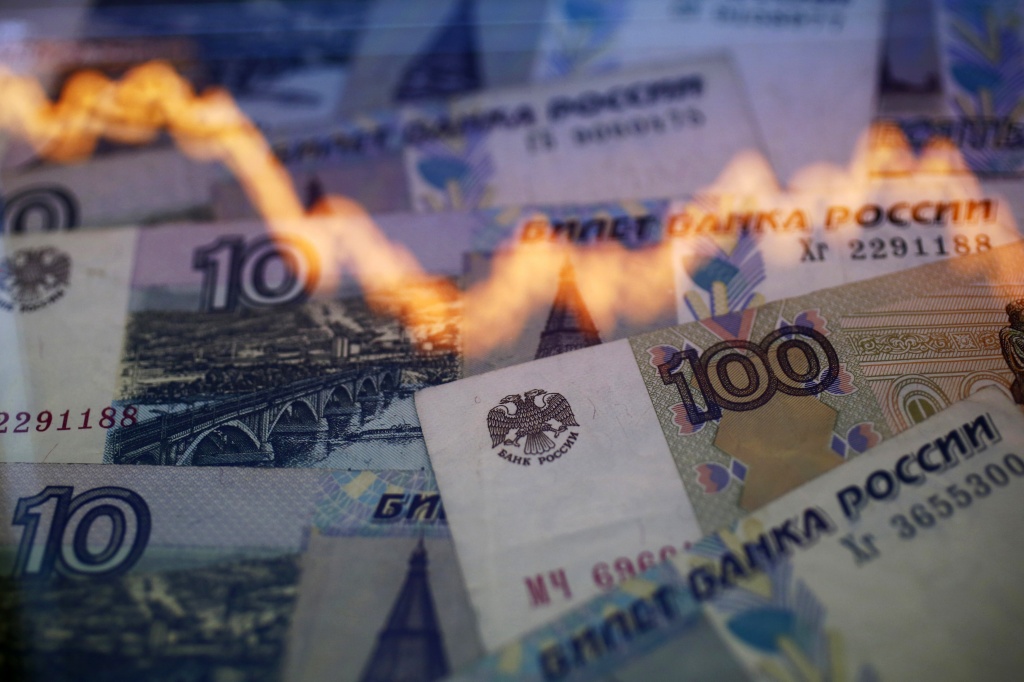
Reuters/Kacper PEMPEL
The only anti -crisis idea of Vladimir Putin is to repeat the events of 2008 - 2009 and wait for the termination of the decline. Moreover, the calendar parallel between the two crises is easily visible. In the fall of 2014, like in the fall of 2008, oil prices went down, the devaluation of the ruble began, and other familiar symptoms were discovered.
But by January 2015, even in the Kremlin, perhaps, they begin to guess that events are not at all along the trajectory of six years ago.
The crisis of 2009
He, the last crisis reached the lower point at the end of the winter of 2009. By February, the devaluation ended. The dollar rose 1.55 times (up to 36 rubles compared with 23.5 rubles in the summer of 2008) and stopped. The consumer inflation index, which in 2008 increased by one and a half percentage point compared to 2007 (up to 13.3%versus 11.9%), began to slow down in February, and in general for 2009 amounted to 8.8%. And in the same February 2009, Russia's international reserves reached a minimum (about $ 380 billion) and no longer decreased.
The most instructive thing is that to align the economy at that time at the very decline in oil prices. In December 2008 and January 2009, the Urals barrel was sold for only $ 40-$ 40 with a tail. Both before and after he was worth more.
Crisis of 2015
Now, in January 2015, oil is still noticeably more expensive than that time. Only a couple of times its price fell below $ 50. But the dollar at the official rate is already 1.7 times more expensive than it was in June 2014, and in the reward and in 1.8-1.9. The consumer price index for state-owned, obviously low estimates jumped in 2014 for 5 percentage points against 2013 (11.4% and 6.5%, respectively) and is gaining move . By the beginning of 2015, international reserves have already fallen to the worst levels of 2009 and continue to go down. It is not possible to align the economy, even if we assume that someone is doing this at all.
Flaps
To understand why, let's recall the triune task that Putin set 6 years ago to the then economic authorities: to help out the magnates close to him, to save from the bankruptcy of their corporations and holdings and at the same time keep the living standards of the people.
This was very expensive, but the money was first taken from the then currency reserves then, and after a half-year hitch caused by the global crisis, the western financial markets opened-since the spring of 2009 it became possible to be re-lended there, take money, etc. And then oil went up.
The fact that the then crisis was preserved by the authoritarian-feudal economic system is cast for us today. The same magnates, the same holdings and monopolies hang on the neck of the country, becoming six years more wasteful, not yet more competent and even deeper in foreign debts.
But this is only one trouble out of several.
Firstly, this time Russia entered the crisis, having reserves not $ 600 billion, but $ 470 billion.
Secondly, the sanctions made it almost impossible to change their money in the West. The accumulated debts have to be returned. In 2015, this will take about $ 100 billion. The last time, starting in the spring of 2009, there was no such problem, and the export of capital abroad was only $ 57 billion that year. And now Putinomics will have to get its hundred billion within Russia, push-ups from citizens, as well as scraining state currency reserves.
In total, in 2015, the export of capital may well rise to $ 150 billion (in the form of a return of the mentioned foreign debts, evacuating money abroad, buying up currency by citizens, etc.)
To these losses, you also need to add losses in export revenue on the occasion of the reduction in energy of energy. And here the comparison with the losses of 2009 is quite appropriate. In 2009, Russian commodity exports fell by $ 169 billion compared to 2008 (from $ 466 billion to $ 297 billion), and import decreased from $ 289 billion to $ 184 billion.
The commodity balance of the past 2014 (export of about $ 500 billion, import of about $ 310 billion) is very close to the balance of 2008, if you make an amendment for inflation of the dollar over 6 years. I think we will not be very mistaken and even show optimism if, by analogy, since 2009 we will evaluate the export revenue-2015 at about $ 300 billion.
Of these funds, it will be necessary to finance the export of capital (the very $ 150 billion, a deficiency of foreign trade, etc.). And then not $ 200 billion will remain for imports on imports, as in 2009, but something about $ 100 billion, three times less than in the last 2014. With the adjustment, again, for the inflation of the dollar, this corresponds to that $ 70 billion, which on average measured Russian commodity imports in the 1990s.
The fault is guilty
You can, of course, for the softening of the situation to launch the remnants of foreign exchange reserves, without understanding what part of them is subordinate to the Central Bank, and which lies in the national state -intended fund and reserve fund, but in this case, after a year, almost nothing will remain of state research.
One way or another, to pay for the systemic crisis of Putinomics, combined by our authorities with the economic war against the West and complicated by the strategic deterioration of the oil conjuncture, ordinary people will have to. And pay full, returning to the standards of life, at best, a ten -year -old, but rather fifteen years ago.
In 2009, the total expenses of federal and regional budgets were one seventh more than in 2008. By reducing the consolidated budget with a large shortage, the then financial authorities managed to prevent a major inflationary jump, and the real incomes of the Russians almost did not fall.
This time , inflation got out of control, and its scope in 2015 is unpredictable . But, in addition to a very harsh inflationary tax, the general reduction of budget expenses with a crazy increase in military policeman expenses will now also fall on ordinary people . In 2008, their share in the consolidated budget slightly exceeded 15%, and in the crisis of 2009 it also decreased slightly. In 2014, this share was already one and a half times higher, and its further sharp increase, designed for 2015, no one thought to cancel.
The more peculiar reproaches in panic throwings and recommendations look calmly until the problems are resolved by themselves, monotonously proclaimed by all officials in a row, from Patriarch Kirill to Prime Minister Medvedev.
There are good reasons for popular panic. The authorities still did not even try to come up with at least some meaningful anti-crisis policy.
Seeing how one of his illusions after another collapses, starting to vaguely guess that the 2009th is not repeated, it is looking for improvisation in the order of improvisation who to sacrifice. Average class? Easily. Common people? Easy to. Explain why everything goes awry? This is not a presidential thing. There are thirty thousand propagandists in the service of some propagandists. There is someone to look for conspirators and saboteurs.