
Translated material
The Russian Foreign Ministry saw a threat of freedom of speech in the European counter -propaganda television channel for Russians
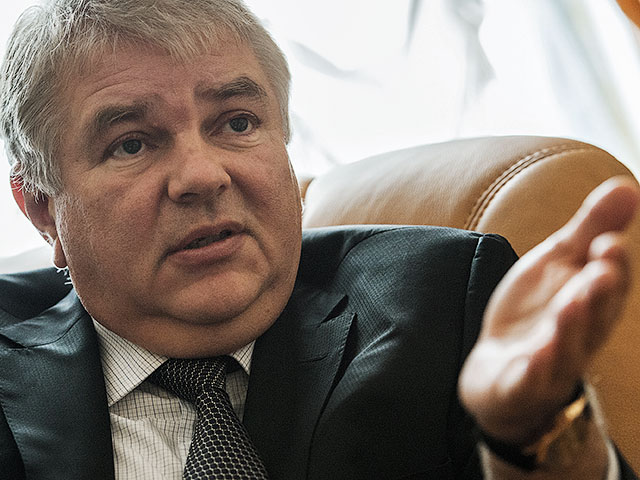
The plans to create a “counter -propaganda” television channel in Russian in the European Union are unlikely to correspond to the very concept of freedom of speech, ”said the deputy head of the Russian Ministry of Foreign Affairs Alexei Meshkov. Thus, he commented on to reporters in Moscow about the corresponding initiative of the heads of foreign policy departments of Great Britain, Denmark, Latvia and Estonia, TASS reports.
On January 9, it became known that the foreign ministers of the listed states sent a joint letter to the Supreme Representative of the European Union for Foreign Affairs and Security Policy Federica Mogherinini with a proposal to discuss on January 19 at a meeting of the EU Mids, the EU, the issue of strengthening the strategic communications of the Union both inside and beyond.
Among other things, the authors of the letter propose to establish a "Russian -speaking television channel that would distribute entertainment programs and news for the Russian minority within the EU and beyond."
"Russia is actively using the media to manipulate public opinion and for propaganda in connection, in particular, with the situation in Ukraine," said the head of the Danish Foreign Department, Martin Lidegora.
In his opinion, “propaganda is one of the most important components of the units of the hybrid war” and the European Union does not have a full answer to this challenge. “The only long -term answer is to create constant Russian -speaking media with a high degree of purity,” the head of Danish diplomacy said.
Recall that Russia on the one hand and Ukraine, the countries of the former USSR and West, are friendly to it, on the other, they regularly accuse each other of biased events in Ukraine and around it, as well as of frank anti -Russian and anti -Western propaganda, respectively.
A number of Russian television channels were faced with the ban or restriction of broadcasting abroad, in particular in Ukraine , Latvia , Lithuania , Moldova . In Estonia, some politicians also proposed introducing such measures, but the country's President Toomas Hendrick Ilves said that he considers the ban on broadcasting unacceptable.
In Russia, there were also claims to some Western media, in particular to CNN and Euronews television channels, but none of them have stopped broadcasting in the Russian Federation.