
Translated material
Internet: good deeds and threats
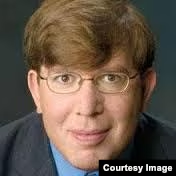
Guest Ach - Professor Charles safe
Alexander Genis: The Internet undoubtedly became the media of the 21st century. Especially in countries where there is no freedom of speech, and therefore all the other media. But the more influential the network becomes, the more important it is to understand how it functions. In the twentieth century, the Apostle of the mass means of communications was Marshall Mc-Luen. Now the science of the Internet is just developing. The more important the first studies of the entire network phenomenon.
One of them was the extremely popular book of a professor of New York University of Charles of the safe “Virtual Unrealism”. This is a kind of guide for dangerous nooks of the World Wide Web. “Specific characteristics of the Internet,” writes the author, “turned digital information into a virus that surpasses all the others that humanity has ever encountered. And there is no vaccine from him. ” At the same time, in an interview with our colleague, Evgeny Aronov, the safe stubbornly repeats that he is not Luddit, who wants to break the global information mechanism as the product of the devil, but only, so to speak, a trade union figure who seeks to do work on the Internet as safe and productive as possible.
Evgeny Aronov: In 2011, New York Times, Guardian, CNN, many other authoritative media reported about the Syrian-American blogger Amine Araf, who was abducted in Damascus and was tortured by state security workers for their seditious political beliefs for non-traditional sex orientation. It soon became clear that Amina Araf is a bluff, a fantasy invented by an online commentator in Scotland. Only in this way, he believed, through the political correct avatar of the authentic Syrian spill, he can convince the world community of the monstrous of crimes committed by the Assad regime. In the meantime, he was in his real role of the western blogger, almost no one heard him or listened to him.
According to our interlocutor Charles of the safe, “if earlier the creation of an alternative reality required the propaganda capacities of the whole totalitarian state, now it is possible for one person. The alternative world erected by him does not occupy a large physical space; It is easily transportable throughout the planet; The cost of duplication or transformation of such a world is the most minimal. Popying Archimedes, "give me access to Wikipedia, and I will change the presentation of millions." Fortunately, there are software tools that allow you to find out when the Wikipedia shove propagandists close to the Kremlin or other symbols of authoritarian power.
“Be vigilant, double -check all; The flip side of the currently existing unprecedented capabilities of the search and transmission of information is the obligation to avoid as much as possible to disseminate misinformation. ”
Unfortunately, Charles safe states, a completely different moral prevails on social networks. Her first commandment says: “Be proud of your bias; Communicate only with like -minded people and serve a megaphone of their views. ” The second commandment: “Do not stop and do not think. Checking any information requires appropriate motivation and mental effort. These are supervalued resources, do not waste them in vain. Do not compare different information. Take an example with the media whose main key to popularity is to be the first to report the information. Whatever it is. ” The third commandment is also parting to them: “To convince the frands that the vaccines from measles, pigs and whooping cough are deadly or lead to the development of autism in a child, more important than an increase in the scale of these diseases as a result of the baseless fear of vaccinations in social networks. Faced on the Internet with information obviously crazy, immediately press the “Share” button. And finally, the crown of network morality, the fourth commandment: “Repetition is the mother of teaching. The bare facts do not convince anyone and do not convince anything. Opinions and estimates are formed only under the influence of volley information fire. ”
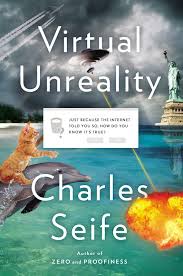
Charles safe: Do not understand me wrong: the Internet is not an absolute evil, it is a double -edged sword. On the one hand, thanks to the invention of Twitter, totalitarian regimes has become much more difficult to control the access of their citizens to alternative sources of information. Similarly, when a company such as 23ndme forms on the basis of hospital questionnaires a database of genetic markers of various diseases, it moves forward medical science. On the other hand, social networks with one degree or another invaded our personal life and gain the opportunity to influence our behavior and thoughts in the most direct way. I’m not sure that even in the era of the unprecedented openness in which we live, homosexuals outside the tolerant West is completely indifferent that Google is able, for example, it is easy to “calculate” their sexual orientation based on the list of sites that they visit.
Evgeny Aronov: To be sure that Google uses this information only to send targeted advertising to the electronic address of users - gays, then there is probably no big trouble, probably, there is still no, the safe believes. But this is “if”, as the Americans say, is a Very Big if. Companies owning network search engines naturally accumulate personal information about users. They may promise not to use this information for commercial purposes or do it in a strictly limited volume. In America, however, there were already enough lawsuits to make sure the opposite. “Google, as far as I know, does not erase a single search query that the user makes,” noted our guest, a professor of New York University. In communication with students, he noticed that this does not scare them very much; They are unusually, compared to adults, are open and ready to share even with unfamiliar people the most seemingly intimate details. “My students for the most part grew up in absolutely greenhouse conditions,” says the safe, “and so far they simply do not realize all the dangers of the loss of inviolability of the personal sphere in the big world into which they enter.”
Charles safe: The Internet is a weapon that shoots faster and hits further than the press, radio or TV. By the force of influence on the minds and the duration of the impact, digital information - both visual and textual - surpasses the information transmitted by traditional carriers, radio and television; The effect of the plots they translate is faded rapidly, and the digital information posted on its platform continues to work without any additional costs, and is easily accessible. I repeat once again: information is neutral, used both for the good and to the detriment of humanity. Due to its viral essence, the Internet allows, by the way, to fight more effectively with real epidemics, to quickly identify their foci and the dynamics of distribution. The case that I analyze in my book, with a Scottish blogger, pretended to be a Syrian dissident and lesbian, perfectly demonstrates all the duality of the Internet as a communication tool. On the one hand, he brings closer to an important event of any person, regardless of the physical distance that separates him from the event. But, on the other hand, it does this with the help of artistic fiction, completely inappropriate in a journalistic enterprise, to rely on real facts, presented clearly and without embellishment.
Evgeny Aronov: Charles safe brought to himself acute criticism from modern equalizers, levelers, scattering statements like the following: “The Internet is considered an instrument that pretty democratized the formation and dissemination of knowledge. The catch, however, is that knowledge is an anti -democratic thing in itself. The facts do not become less actual, being unpopular. Moreover, the facts that most refuse to recognize are often the most important are the most important. ”
Charles safe: Indeed, in the age of digital information to participate in the formation and dissemination of knowledge is much easier and much less costly than in the past. In this sense, the Internet acts as a great democratizer. But knowledge seems to me, in its very essence, anti -democratic, because it implies awareness of facts, connections between them and the likely consequences, which the ordinary individual does not have. Knowledge is a prerogative of an expert who does not look like inhabitants at least just because he spent a lot of time and effort on the accumulation of this knowledge. What the layman did not. The expert assessment, in other words, means more than the banal assessment of the non -expert. What is the direct opposite of the principle of equality affirmed by democracy.
Evgeny Aronov: The Internet can contribute to both the rapid establishment of consensus on some issue and a quick dismantle it, right? The Internet thus accelerates the pace of life. What is happening in these new conditions with an expression about “a rush that used to be needed only when fishing fleas?”.
Charles safe: The Internet is much more than traditional media stimulates the generation of marginal ideas. And also debunking them. Because that both are almost nothing. For the most part, these are ideas - one -day. In the rarest cases, they turn out to be truly innovative and turn over our idea of the world. In most cases, however, this is just nonsense. Both innocent and extremist, facilitating the creation of first virtual, and then physical communities of little sane individuals around this nonsense. On the Internet, the malicious consensus burns quickly, but often, before burning, manages to do its black deed.
Evgeny Aronov: “The Internet is not a revolution in the field of freedom of speech. This is a revolution in the field of free access to the audience, ”says Charles Seef, author of the bestseller of Virtual Unrelic, the university of New York University. “The Internet is vast, but it does not absorb the whole world. If you are interested in some opinion that you encountered on the network, check well whether it will circulate somewhere else besides the virtual environment. ”