
Translated material
PE for the ISS: the American segment of the ISS is isolated, the crew switched to the Russian module
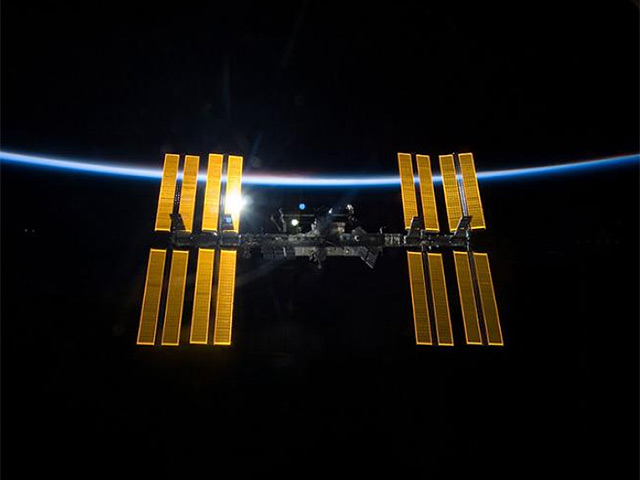
On the American segment of the International Space Station at 11:44 in Moscow, an emergency occurred on January 14. The Americans switched to the Russian segment, and wasolated their module. Houston (USA) and Korolev (Moscow Region) control centers have not yet been considering the urgent evacuation of astronauts and astronauts in connection with the release of ammonia on the American segment of the ISS.
The available information about the causes is very contradictory. "This is the release of harmful substances from the cooling system into the atmosphere of the station," said the Roscosmos information policy service.
The crew of the American ISS segment may remain on the Russian segment at night due to an emergency at the station, reported by the ISS Cosmonaut Alexander Samokutyaev, whose words are quoted by TASS.
Oxygen, water and products on the Russian segment will be enough even for a long stay in it of all six member members of the ISS, Interfax reports with reference to the Russian Tsup.
"Currently, the American ISS segment is isolated, the crew is safe and is located on the Russian segment. The concentration of impurities in the atmosphere of the Russian ISS segment is within the permissible values," the Roscosmos said.
Meanwhile, the USA has not yet confirmed information about the incident. "Information on the release of harmful substances on the American segment of the ISS has not yet been confirmed. It was noted a drop in the pressure in the contour of the cooling system, so it was assumed that there was an emission. The situation is currently being analyzed," NASA said .
It is clarified that American experts consider three versions of the alarm signal on the American segment of the station: pressure jump, sensor malfunction and computer failure.
The version of the leak of ammonia is not accidental. There were problems with him at the station earlier. For example, on October 7, 2014, American Gregory Waysman and his German colleague Alexander Gerst replaced the pump, which filed a liquid ammonia in the cooling system of the orbital complex. This operation lasted about six hours. Everything went regularly.
The Russian segment of the ISS will depend on American to the launch of additional modules
Currently, the energy supply of the Russian segment of the International Space Station depends on the American one. It will become possible to change the situation only after the laboratory laboratory (MLM) and the scientific and energy (NEM) modules will be changed, the source of Interfax said in the Russian missile and space industry.
"The Americans depend on us only in terms of the delivery of astronauts, and they will soon get rid of this dependence," the expert recalled. And the launch of MLM is scheduled only in 2017. Now he is stored in the GKNPC to them. Khrunicheva.
MLM in today's configuration was planned to launch the ISS in the spring of 2014, however, the specialists of the rocket and space corporation (RSC) "Energia" during work with the module discovered extraneous particles in its motor system, with the help of which it is planned to correct the orbit of the entire station in the future. To eliminate malfunctions at the end of December 2013, MLM was sent to the manufacturer.
MLM was conceived as an understudy of the Dawn functional and cargo unit. Its creation began in 1995 at the expense of its own funds of the Khrunichev Center. In 2004, it was decided to convert it into a full -fledged science -purpose flight module. Launching into orbit has been postponed since 2007. The starting weight of the MLM is 20.3 tons, on board is up to three tons of equipment. NEM exists only in the form of a sketch project.