
Translated material
Empress fish
The “Leviathan” drain into the torrents, which occurred simultaneously with the presentation of the “Golden Globe” film, shot an unspoken taboo on a pre -premiere discussion of the film by Russian criticism and sympathetic spectators (discussion, impossible without a spoiler, which actually destroys the entire dramatic mechanism of the picture). The nature of this polemic once again proves the importance of Leviathan as a cultural, and not just a political phenomenon. It turned out that the issues caused by the film Zvyagintsev relate to both Russian life and the Russian perception of cinema. For example, it turns out that some of the spectators who accepted the film, it seems, did not at all inspect it to the final (in particular, Dmitry Bykov , who did not understand what exactly is going to build an evil mayor on the Hero Earth - and it is the silhouette of this building, and not daily vodka, mat and longing, and is the main content of the whole film, for the sake of it, and everything is for it and all for it and everything Town!). Other reproaches to Zvyagintsev aroused suspicions that socialist realism was indistinctly and forever settled in the head of the Russian viewer of all generations: here the incredible history and the undead of dialogues (we hope that these critics also evaluate exclusively in the categories of “similar/unlike”), uncultured vulgarity of some directorial moves or, by the contrary, excessive, excessive. Decoration, the picturesquency of the misansen - and even the lack of hope of atonement (perhaps at least a fluent acquaintance with Brecht will help here). Well, the usual accusation of Zvyagintsev of manipulating biblical material (the director is responsible here ).
Such reproaches - of course, based on the objective properties of the film - it seems that they put the picture itself in the position of Colossus, too immense to see it entirely, and not as a discrete set of beauty and flaws, leather and joints, truths and metaphors. The history of the car mechanic, expelled from the family house with a pig -like mayor and cynical bishop, and after - devoted by his wife and on the occasion of a imprisonment, is often interpreted as a history of a personality clash with the Leviathan of the Russian state. But this obvious interpretation is conformist inversion. No, Zvyagintsev does not become a sea monster with a metaphor of Russian statehood. Everything is worse - here Russia becomes a metaphor of Leviathan. After all, it is not Job in a conversation with God that the confrontation between the Russian car mechanic with the governor is copied, but the drunken governor, declaring the slave, says practically the words of Jehovah, who answers the righteous who is asking too many questions. Here, in fact, is the answer to the eternal languor of the Slavophiles and the Minister of Medinsky regarding the world mission of Russia: according to Zvyagintsev, who shot the Bestiary film, it turns out that the Russian Federation, like any creature, was created as an obvious example of how it is all under the sky.
 © "Non-Stop Production"
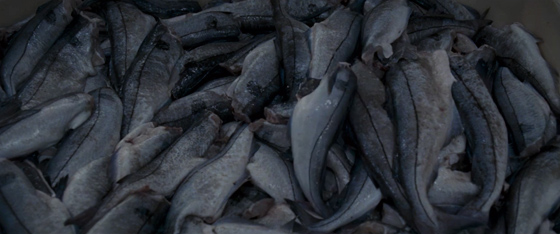
Zvyagintsev almost leads the viewer by the hand to this thought - and this persistent Guidance can be very annoyed. But the conditional “critic” is not the one to whom the director holds out his hand. Zvyagintsev does everything possible - and much unacceptable in “good cinema” - to convey this complex metaphorical structure to a conditional “simple viewer”, it goes to everything to make the film a prepared. He simultaneously tries to make the film a cast of the Russian texture - and abstract from it (from all Russian landscapes he chooses the most unearthly, sterile, devoid of any signs of Russianness). He is not shy about sentimental, predictable, taking the soul of passages - and at the same time in other cases shows extreme delicacy, leaving all the scenes of sex and violence behind the scenes (in this case, it does not matter at all than such caution - the desire to obtain a liberal rolling rating or an understanding of an excessive, often destructive for history, the visibility of kinematographer). He puts on the film a cadre, signaling the acquaintance with the conditional festival, international context (for example, a static scene of a working conveyor at a fish factory, simultaneously serving as a la Odzu and a curtsy towards production realism).
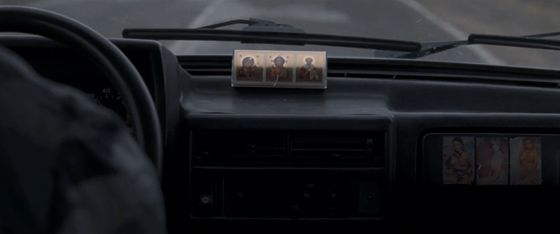
A gaze sees too closely in this combination of heterogeneous elements eclecticism, rude calculation and even well -known supernature. “Leviathan” really does not look like a film-organism, but as an artifact film. But this movie is a description of the mechanism - and therefore it itself turns out to be a scheme, a drawing. Mechanistic (stimulus - reaction, stimulus - reaction) The logic of the narrative here is just a naked Aristotelian drama scheme, in fact - the Sassensa scheme, in which long expectations of the audience are deceived by the final plot twist. It is this final turn, and not at all a naturalistic image of the horrors of Russian life, and is the main goal of this whole chain of misfortunes, unrequited issues and heavy metaphors; However, in some places “Leviathan” seems to be a brilliant satire - which, for example, is this frame, telling everything that you need to know about folk Russian spirituality in a couple of seconds:
 © "Non-Stop Production"
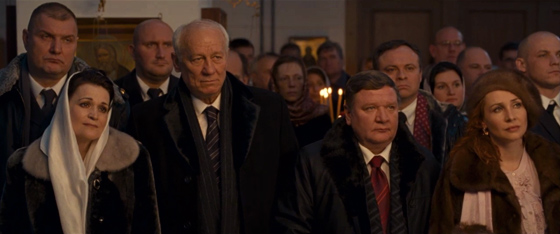
Supplinging the audience to another - the last, most important, changing all the logic of the narrative - the frame, Zvyagintsy and he himself follows the Jesuitic logic of the system that he describes. The end justifies the means - including artistic ones. Hence, in the film, all these high - insulting look-in-bribe of the executive sentimentality critics: say, the little boy running behind the investigators who takes his father, or the collapse of the camera for family photographs in the house (we, in principle, already know that this hut remembers three generations). Hence the reduction of the actors to the functions-plugs: the scale taken by the director and the chosen point of view do not imply too careful analysis of the motives and feelings of the victims. Zvyagintsev shows the operation of the system - and the discourse of the system is precisely well worked out in Leviathan. The Kafkian tongue twister of the judicial, monologues of the mayor, the final Pharisee sermon, finally. This system is opposed to another, civilized liberal, “American” ideology, which a lawyer, the hero of Vdovichenkov, was picked up in the capitals-and it is no coincidence that his words are heard as a broadcast, as a hastily learned role. In the dialogs of the film, one should not seek life -likeness: they are a pure dialectic of the tragedy.
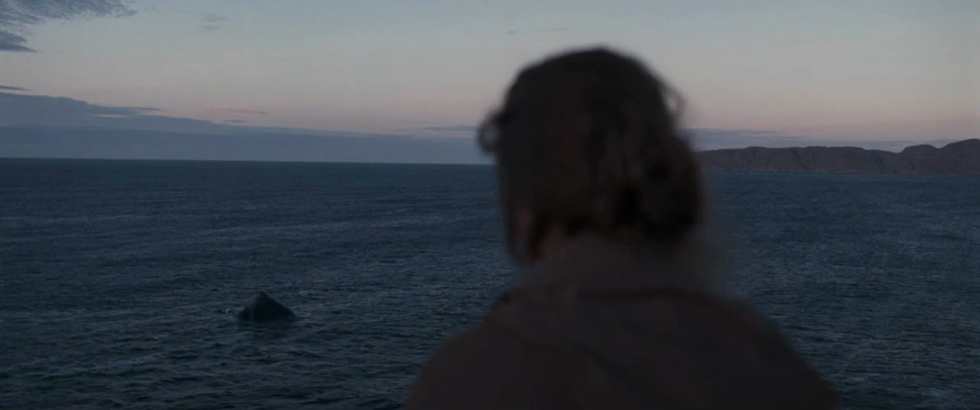
Zvyagintsy generally sequentially distant from topicality. He enters local injustice into an endless historical series. The lifeless and therefore conditional, as a stage space, the northern landscape in the film is marked, as if by hungerists, the remains of previous leviafans: the dilapidated building of the old church (Russian Empire), the half-rotten corps of boats (USSR), the contours of which are obviously riffs with the skeleton of the whale (apparently, this is a god, still dead from cursed Russian issues). About the same, moving away from local momentum, the social realist Jia Zhanka acted, turning the heroes of the “touch of sin” from the characters of the criminal chronicle into heroes of costume-historical drama, lasting centuries. To call “Leviathan” anti -Putin is to grind the statement of the director who swept, in the words of his characters, to a “long historical distance”. In the end, the main question of the film is the question of the admissibility of human sacrifices-perhaps did not stand for distant authors of the Old Testament, but in the new time-for Dostoevsky in 1879 or for Straub and Yuya a hundred years later-it is very relevant. And, as anti -utopias like “hungry games” prophesy, it will probably be relevant in the “near future”.
 © "Non-Stop Production"
The addressee of this sacrifice, that supreme authority, whose name is earthly injustice - this is the real hero of Leviathan. This is not a god, but rather his law - unwritten, not observed by anyone, actually absent. Nobody believes in it - but everyone acts as if it still exists. It seems that only this law - the reason that the life paths of the priest, the mayor, the car deleser - all the heroes of the film, which is essentially a Russian microcosm - crossed a piece of barren earth with a view of the cold river. It seems that only the violence created by this law is no longer sacred, but an ordinary criminalism - and holds these people together. Why "these"? Just people.