Translated material
Politicians and puppets
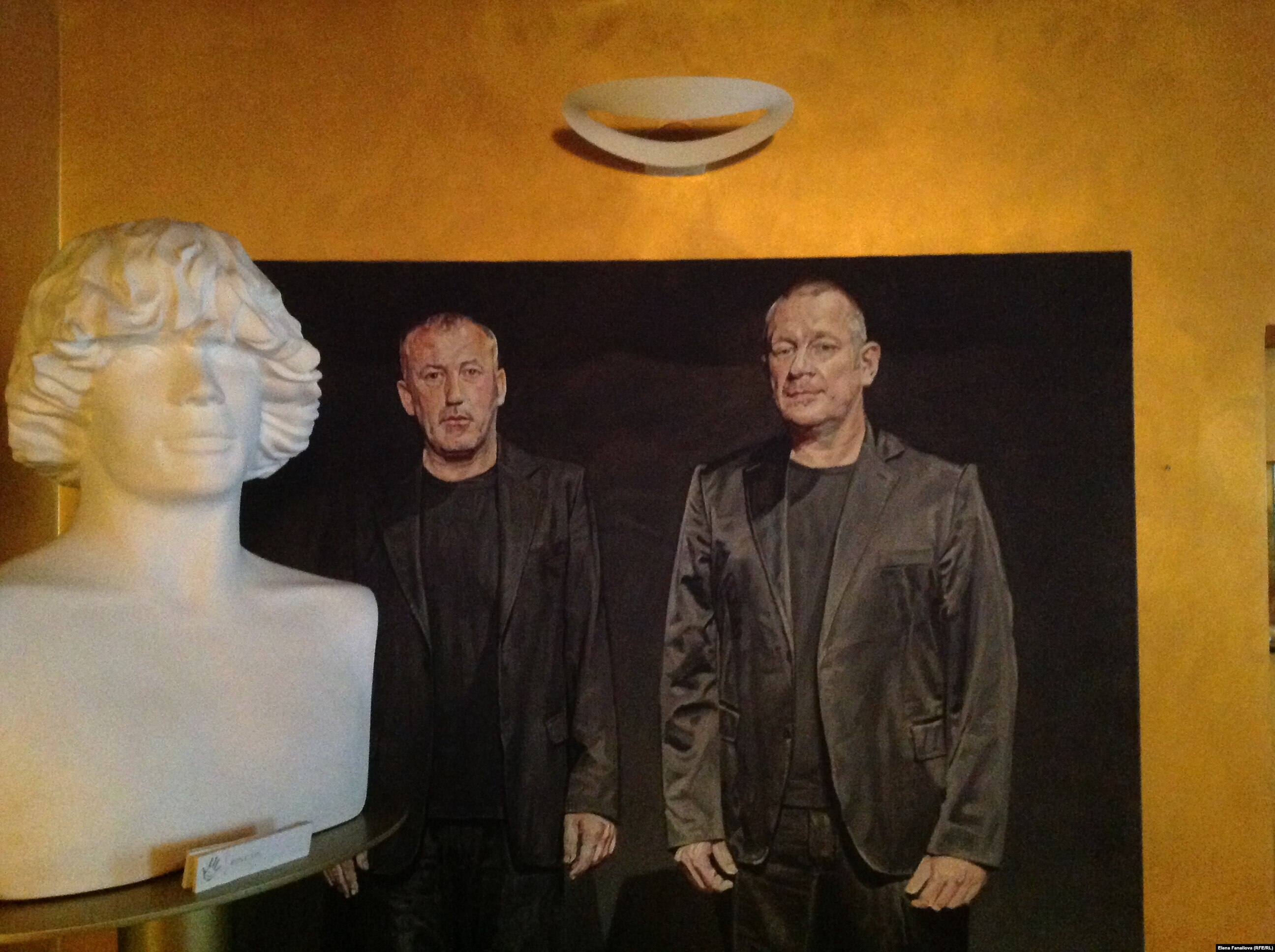
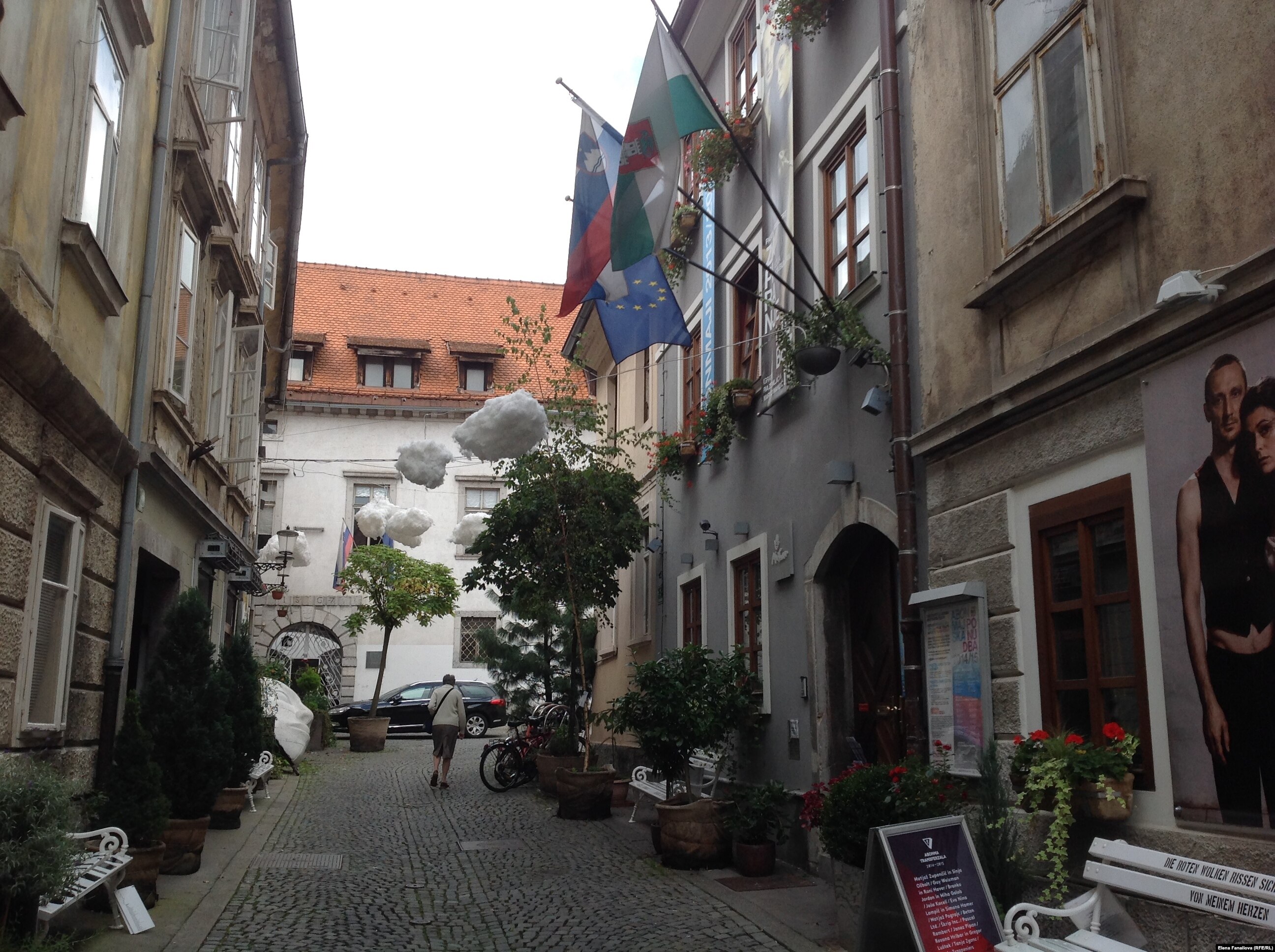
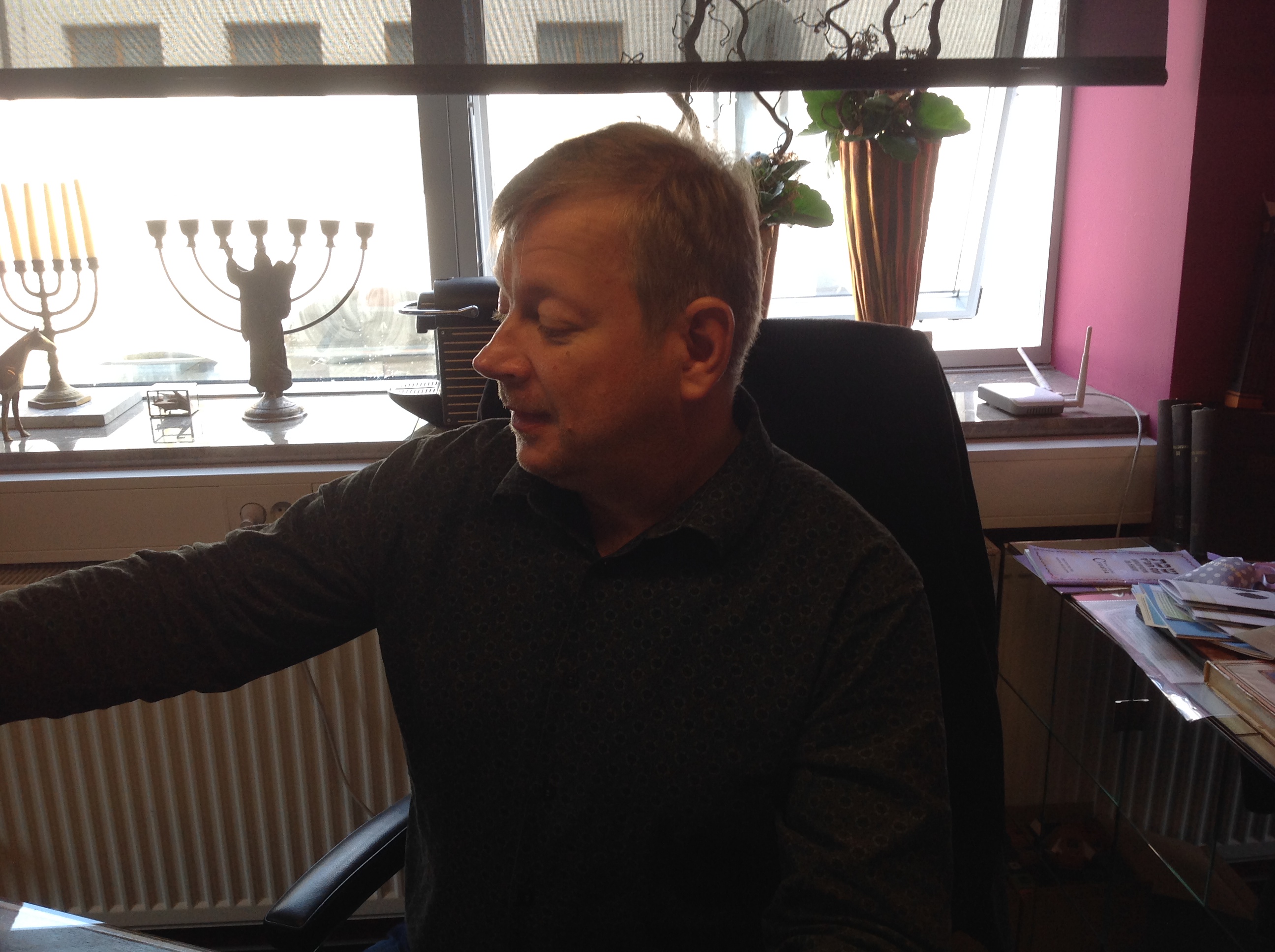
Robert Valtl is a artistic director of an independent mini -theater in Ljubljana, director, actor, puppeteer, political activist of left-wing beliefs, the most successful theater manager of Slovenia. Robert Valtle told his wife, politicians and puppets, politicians and puppets, art in the European Union and metaphysics in his office in his office on Kristevnishka Street, some of which was presented to the theater by the city. Translation of Midenen Ukhlik .
- Robert, why did you take up the puppet theater? What were you while studying, who were your friends, what was the country? Was it back in Soviet times?
- In fact, I met dolls by accident. When I studied at the Theater Academy in Ljubljana, no one was engaged in the puppet theater here. But once on tour in Slovenia was a well -known Belarusian director, Alexei Lelyavsky, who asked him to be helped by two young actors. I gladly accepted this proposal and played in his play “Rygorka - Red Dawn”, in the lead role. Rygorka is St. George, and I portrayed him.
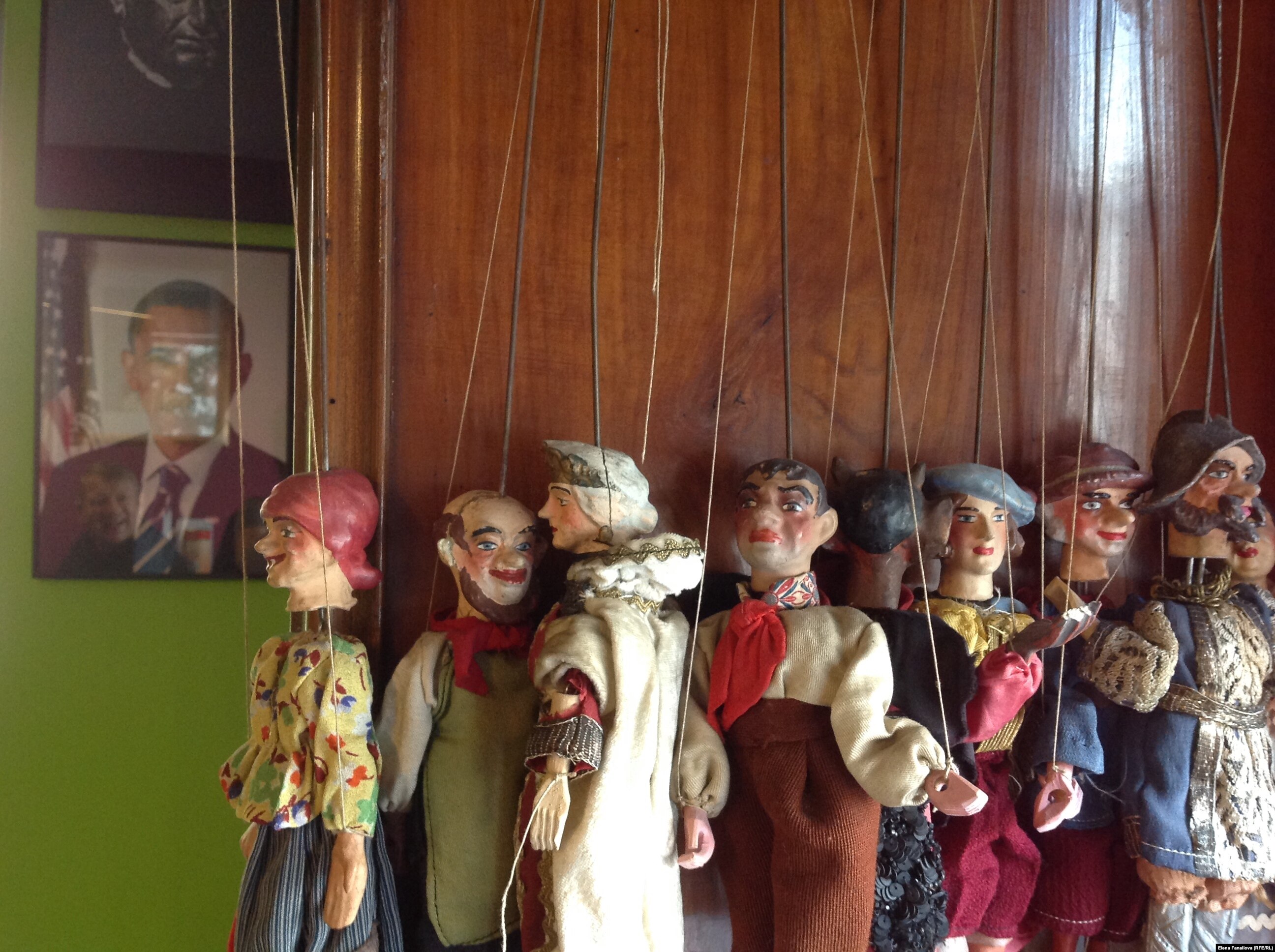
It was a sufficiently mystical performance staged during perestroika, when the border between the West and the East collapsed, the Soviet Union was destroyed, Yugoslavia broke up. This topic symbolically attended a performance that spoke of the struggle between good and evil. I did not work directly with dolls, but was an actor who played the role of St. George. My partners were different dolls, one might say, even sculptures, huge sculptures that express different characters. Since I am from the wilderness, from a small Slovenian town, in childhood I did not see a puppet theater, and after this experience I decided to see, get acquainted with dolls better, began to be interested in everything that was then in Ljubljana. I must say that my first meeting with the Slovenian Puppet Theater was a disappointment. And the impression remained so until the moment when I saw the old performance with puppets, which were made by the Slovenian artist of the 1920s. The artist is Dr. Milan Klementchich, it was a reconstruction. We are talking about the play “Doctor Faust”, where the dolls were not more than 10 centimeters in size. The dolls performed in one box, the size of which could be compared with the TV. After this performance, I came to the full enthusiasm: I found out that the dolls mean and what they can portray. This performance motivated me to become a puppeteer, an animator and an actor who works with dolls. I must also recall that in the 90s the World Congress of the Union of UNIMA puppeteers took place in Ljubljana, where I took part in six productions and looked at the performances from around the world. At that time, I started working at the Puppet Theater and at the same time in informal little theaters that were revived in Slovenia. We are talking about the 90s.
- Is this after the fall of the Berlin wall and the decay of the Soviet bloc? In Russia, it was poor, fun and with a great hope for the future. What was then in Slovenia, what did your friends, actors, directors say?
- In Slovenia it was quite like. My colleagues and my colleagues had a lot of optimism and joy, we hoped that we would conquer the world with our work. The mood in Slovenia was quite positive, despite the fact that when we gained independence, Slovenia was not a rich country. Everyone hoped for the best future. We could not attract a lot of money, but got down to business with interest.
-As a cultural manager, one of the most successful managers of the country, managed to realize your hopes of the 1990s? Are you satisfied with what is happening with the theater, with you, with colleagues? Are there any things that you do not like in modern culture, what would you like to change?
- Since I am the only person in Slovenia, who managed to create a private, non -state theater, I think that some of my dreams have come true. I am not very pleased with the state of culture, and I am dissatisfied with the fact that some things in the field of culture have not changed in 70 years, almost since the time of Yugoslavia. This applies primarily to financing in the field of culture in a country where official theaters, as well as during socialism, use great advantages, receive money. As a private theater, we should try much more to them. Until now, as in socialism, state institutions are used by simple, direct access to state money. I want to mention another noticeable fact: in the last 10 years, the status of culture in comparison with the status of socialism in the eyes of ordinary people has decreased very much. If immediately after obtaining independence, everyone repeated that culture is the most important thing that determines our life, today culture is considered something second-rate. It seems that when they reduce budget funds - this is what you need to get rid of first of all? However, they begin to reduce the culture.
As for the accession of Slovenia to the European Union, one of the most positive points is that we can submit applications for European competitions for some cultural projects and then organize our activities with European money without worrying about the support of the state. The ability to take part in European competitions is very important for our theater. Because our theater, unlike some others, does not rely on the ideas of national Slovenian culture, but on the contrary, it works on the idea of internationalism. We invite foreign authors here, foreigners put performances with us. So the idea of internationalism is considered the main feature of our theater. And the European Union, of course, gives us financial support.
- It is surprising that even Norway and Luxembourg perform with you in joint products. Tell us about the concept of your theater. This concept is declared as a “post -dramatic theater” and a theater for youth. Moreover, critics write that you want to be both elite and almost pop cultural, if I may say so. I can hardly imagine any European theater in which there would be simultaneously performed performances staged by Jean to his wife and Elfrid Elinek, and on the tales of Pushkin and Andersen.
- That's right. But this cultural schizophrenia is understandable. My theater concept is based, firstly, on the love of the children's theater. I am building this theater based on a selection of the best texts for children. Secondly, I rely on Lemmon's postpraced concept. This means that we are looking for less well -known works of great authors. At the same time, we try to connect different dramatic techniques and approaches. We put dance performances, we combine different techniques of different theaters in each performance, musical, puppet. This, so to speak, is a collage.
If the traditional drama theater is based primarily on the text, on the play, then the post -dramatic theater has another concept, another attitude to the spectacle. This is a combination of all available funds. We try to combine the text with other techniques, including completely new ones; I'm talking about music, dancing, performance, about a voice, about a combination of different levels. The text is a support of the story, but not the only one. Such a theater is a combination and use of all arts.
-Do you have any favorite performance in the current repertoire?
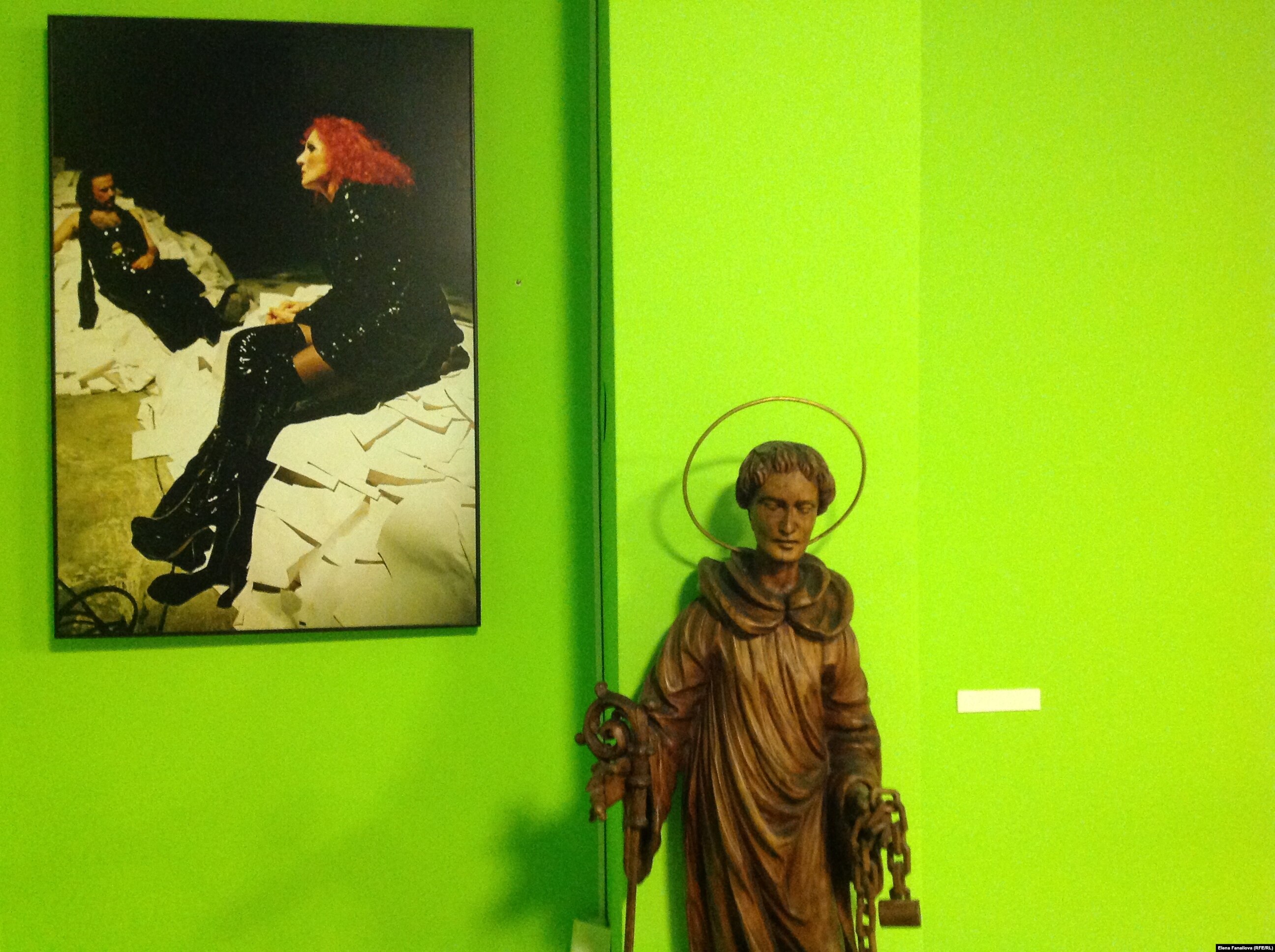
-If we are talking about some paradigmatic type, I would mention Macbeth here on Shakespeare, a play that was converted by Heiner Miller, a German playwright. He changed the text of Shakespeare and immediately took a step towards the post -dramatic theater. Almost this performance has been on our scene for five years, we show it around the world. Recently, we put it in Lisbon, and wrote about it in famous European newspapers, in the French “Humanite” or, for example, in the English “Gardian”, and talked about the new type of performance.
He must mention his friend with whom we lead this theater, this is Ivitsa Bulian . The most important Croatian director, but in my opinion, today he is one of the most important directors throughout Europe. He put in France, in Germany, in Portugal, in England, even in Africa. He consistently works on the texts of the authors of the twentieth century, such as the German Hayiner Miller, or the Frenchman Bernard-Marie Kolits , or Peter Handke, or Swiss Robert Walzer, whose tradition was continued by Elfrid Elinek. He personifies what is called the Patopramatic Theater.
Ivitsa Bulian considers Anatoly Vasilieva one of her teachers. Ivitsa and I are always happy to return to Moscow. For example, we staged the play “Snow Maiden of the Afterparty” in Meyerhold center about 5 or 6 years ago. I will say about the last project of Ivitsa Bulian. He now staged with dolls the play “The Grave for Boris Davidovich” based on the book of stories Danila Kisha . It seems to me that in today's context of the conflict of Russia and Ukraine, this is one of the important texts that help us understand what is happening.
- If this is important in the context of the current political situation, then let's recall what we are talking about.
- One of the most important stories in the book for me is the story of the Russian Communist, activist Boris Novsky. This is one of the communists of the early period, a member of the Bolshevik party before the 17th revolution, which becomes a participant and witness of the revolution, but later, in the thirties, he, as an adversary of the new totalitarianism, went to prison and committed suicide.
Danilo Kish is one of the most important Yugoslav authors, who, in my opinion, would be most correct to consider cosmopolitan. He is half the Montenegrin Serb, half a Hungarian Jew. And this means that he very well mastered the languages of Central Europe, and on the other hand, he was engaged in both the Russian and French literary tradition. After the release of the book “The Grave for Boris Davidovich” in Yugoslavia in the late 70s there was a big scandal, some authors even tried to prove that it was plagiarism. Danila Kish emigrated to France, worked as a lecturer of the Serbo-Khorvat language in Strasbourg and constantly translated. For example, he translated Mandelstam, Tsvetaeva, was one of the leading translators of Hungarian poetry. One of the main trends in our theater is to maintain creative contacts with authors from the rest of the former Yugoslav republics. Here, the “grave for Boris Davidovich” plays a large role, since we, together with Ivitsa Bulian, created a performance in contact with Serbian, Croatian and Slovenian actors and artists.
- Tell me, can the theater be a means of expressing political ideas? Can dolls express them?
- Can the dolls be expressers of political ideas, the question is controversial. It depends on people: whether we use the theater for political purposes, whether we promote something. We know well that different modes used the theater for their own purposes. I think that the theater, theatrical genres are undoubtedly an expression of political ideas. But I try to express my personal positions in all performances, and not those who dictate politicians or other powerful of this world.
- If we talk about your personal positions, I know that you were the organizer of demonstrations against the right -wing politicians in Slovenia. Tell us about it.
- It seemed to me that the ruling elite, which we had before last year, the elite of the right -wing parties, the elite of Janise Yanshi , they had to leave before. At the moment when they clearly lost the direction, not knowing how to lead the state, it seemed to me very useful for me to organize manifestations and that I would take part in other protests.
During the manifestations, provocateurs appeared, these were primarily participants in the Nazi movements. My main intention was to impede conflicts, violence during these shares. Therefore, I then offered my colleagues to arrange cultural events during demonstrations.
- What did it look like? Street manifestations, theatrical performances?
- We organized performances and readings on the streets, organized puppet processions even, street processions, where the puppets had the faces of politicians. Our main desire was to avoid primitivism and violence between demonstrators.
- How long did these manifestations and the participation of theaters in street politics last?
- The protests themselves lasted several months. We continue to work with these street cultural actions that should attract attention and criticize the steps of the new government, despite the fact that it is different, all these political anomalies. I think that the theater can and should attract the attention of society to the mistakes of the authorities.
- Who writes you texts for these ideas, how is the idea built?
- As for the texts and the ideas themselves, we create all this together with our artists, poets, actors, puppeteers. Here, of course, there is a moment of improvisation, which focuses on topical issues. One of the consequences of the latest demonstrations is the formation of a new party, a young left -wing party, which is a Slovenian analogue of Die Linke in Germany.
We are talking about young smart people who criticize traditional parties, whether left or right. They fight for the equality of all citizens and criticize the elite, despite the liberal, right, Catholic or other traditional positions. These are young enthusiasts. Another interesting fact is that such a young party managed to enter the parliament, they have 5 deputies in parliament.
- Do you enter this party or just sympathize?
- I personally do not enter into any party, but I supported them in different ways and promotions, organized their round tables and ideas in this house, since the media did not talk about them very often, now it has changed. This new party is called a single left, and it was formed here in our theater.
- Are these your viewers?
- Among the members of this party, there are even some actors of our theater.
- Is it possible to say that you are an open gay, you can talk about your sexual orientation in Slovenia? In the social, political space, you do not speak about this?
- No, I can't say so, and I do not want to talk about it. I just always take part in all demonstrations for the rights of others, all those that differ, all minorities, national, sexual - and against the Nazis.
- You support the Jewish cultural center. This is due to your ideas for supporting minorities or it is something fashionable in Europe: people of culture should talk about the Holocaust, this is some duty, or what?
- I do not agree with you. I think that in Europe there is just a reverse trend, against Jews, anti -Semitism expands, for example, in France, even among intellectuals. Of course, this is due to the war in Israel. I witnessed criticism from the part of people who identify Jews with Israeli politics. I decided to take part in the institution of the Jewish center in order to draw attention to the fact that in Slovenian history it is often forgotten: Jews lived in these spaces since the 10th century. On the one hand, this year there are 500 years of the expulsion of Jews from the space of internal Austria, including from Slovenia. We are talking about the ban on the times of Emperor Maximilian. On the other hand, there is a taboo topic of persecution and death of Jews during the Second and Second World Wars, their emigration to America and Israel, finally, the theme of the Holocaust. Under socialism, Slovenian society avoided mentioning the Holocaust, during which 90% of the Jews who lived in the space of current Slovenia were killed. Unfortunately, the Jewish community here failed to recover from the shock of World War II, actively form, this is a very small community that is faced with serious financial problems. It seems to me it is important to find a way to continue this tradition, which was in some way taboo during socialism and even later. It is interesting that the Slovenian-or even the Austro-Hungarian-Jews in the 19th century adhered to the movement of the secular type, they were not believers. This is a problem if today only a believer, an orthodox Jew is considered a Jew. Mostly now the descendants of Jews in Slovenia are secular people who adhere to left -wing views. Therefore, it seemed to me that in addition to religion, except Judaism, I should try to revive other cultural Jewish traditions, in the sense of art, creativity, and this is one of the main goals of our Jewish cultural center.
This year, one of our main projects is to put, for the first time in Slovenia, the play “Berry Girl”, the author of which is the Israeli Savion Librocht. There the story comes from the point of view of a German girl, the wife of an officer, and her friend is a young Jewish who is dying in the Holocaust.
-Robert, is it possible to assume that you are doing some kind of play on the anger of the day, an absolutely political pamphlet in the spirit of Brecht, or are you a person who, through Shakespeare, Pushkin, modernists of the twentieth century, tries to talk about the present?
- Always through the texts of the great authors, never through direct statements and political pamphlets.
- Your favorite doll, who is she?
- The absolute queen of dolls is a puppet. The most important, poetic, metaphorical doll, which represents the metaphysical animation of matter.
- Your favorite work as an actor and director?
– Что касается кукольного театра, наверное, это первый спектакль, который я поставил здесь, в Мини-театре. Пьеса по роману хорватской детской писательницы начала ХХ века, Иваны Брлич-Мажуранич , который называется “Необыкновенные приключения подмастерья Хлапича”. Я выступал в разных странах, в том числе в Белоруссии. Самыми запоминающимися были выступления в маленьких деревнях в Боснии, в Хорватии, совсем незаметных, заброшенных, разрушенных войной. Что касается ролей в театре для взрослых, лучше чувствую себя, когда исполняю героев Бернара-Мари Кольтеса в пьесах “Ночь на краю леса” или “В одиночестве хлопковых полей”. Итак, герои Кольтеса, похожие друг на друга бедные люди, которые живут на социальном дне среди проституток и опасных преступников. С другой стороны, я недавно выступал в роли дяди Вани в пьесе Чехова, я был дядя Ваня – и это тоже одна из моих любимых ролей.