
Translated material
What is wrong with the "sniper"
VOX: The film of Clint Eastwood, claiming Oscar, shamelessly covers the war in Iraq
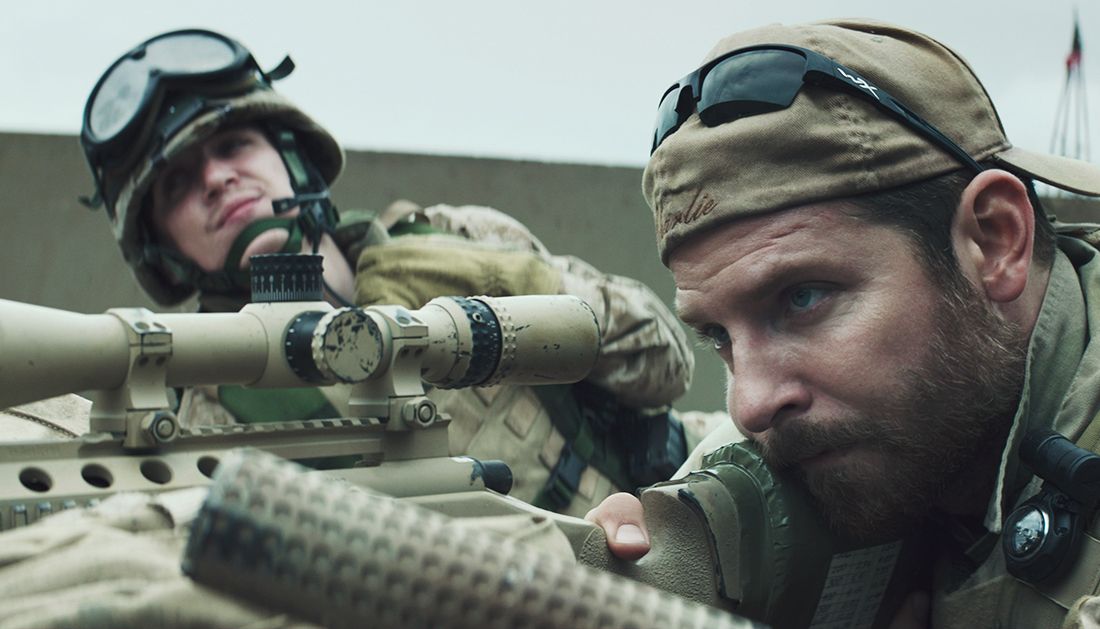
The new picture of Clint Eastwood “Sniper”, dedicated to the invasion of the United States to Iraq, is nominated for an Oscar in six categories, including “Best Film”, and celebrates a triumph in the box office. The film is based on the memoirs of Chris Kyle, the famous American sniper, who shot at least 160 people in the army - and this is only the information officially confirmed by the Pentagon. Two years ago, Kyla was killed at the shooting range in Texas. His memoirs are one of the most controversial documents about the war in Iraq, the reliability of which is called into question. The film turned out to be even more controversial: it seems to many that it, in fact, distorts the history of war in Iraq. The VOX publication explains why the “sniper” “shamelessly entrusts” the invasion of Iraq and the administration of George Bush.
The personality of the prototype of the protagonist of the “sniper” Chris Kyle deserves separate attention. After leaving military service, he told a lot of stories, more like inventions-like a bike about how he and his friend-Sniper shot marauders in New Orleans, destroyed by a hurricane "Catherine". Some of these stories were completely a lie - for example, Kyle’s memories of a fight with a politician and former wrestler Jesse Ventura; The result of these memoirs was a lawsuit against a sniper family for more than a million dollars.
Something similar can be found in the film of Clint Eastwood. The first claim of VOX journalists to the Oscar Nominee is to conduct a direct connection between September 11, 2001 and the war in Iraq. At the same time - not a word about Dick Cheney, George Boucher, and the weapons of mass defeat not found: first, the audience is shown the reaction of Chris Kail on September 11, then he is already fighting in Iraq. The film implies that the invasion of Iraq was an inevitable response to the largest terrorist attack in the history of the United States, while in reality the reason for this was Iraq’s military program, which Bush warned in 1998, that is, three years until 9/11.
If you believe the Sniper, the United States in Iraq from the very first day fought against Al-Keda. And the truth: the terrorist network actively operated on the territory of Iraq, but only after the American invasion. The parish of foreign troops created favorable conditions for the development of Islamic terrorist groups: Al-Keda appeared in Iraq precisely as a result of the American invasion and took advantage of many US mistakes (including the dissolution of the Iraqi army) to recruit new supporters.
The Iraqis in Sniper are shown by evil savages and terrorists whom Kyle should kill. It is as savages that the main character of the picture calls them, forgetting about those Iraqis who fought against the militants of al-Keda, and about the social and religious division of society in Iraq into Shiites and Sunnis. There is nothing terrible in simplifications - this is normal for Hollywood, but the facts are directly distorted in Sniper, which is unacceptable, Vox notes.
So, from the film it follows that the war in Iraq was a response for September 11, and the United States fought with al-Keda during its course, although all this partly or completely does not correspond to reality. Sniper brings this logic to the limit: condemnation of the Iraqi campaign or simply not enough active praise is equated with betrayal. A suitable example is the scene of the funeral of one of the soldiers in Sniper, on which a relative of the murdered reads an anti -war letter. The main character at that moment tells the wife of the deceased soldier that this letter was killed by her husband.
Without delving into the reasons why the Iraqis take up the weapons - whether the US mistakes or the internal conflict between the Sunnis and Shiites - the Sniper does not give any understanding that Kyle’s judgments about the war in Iraq. In the film, the war in Iraq is nothing more than an armed confrontation with Al-Keda, the only victims of which were only American soldiers.
In the real world and in any at least a little true work of art it is impossible to talk about the moral of war in Iraq, without mentioning both sides of the medal. At the Sniper, this question is reduced to the moral of the super -simple film about superheroes: one side is good, the other is bad. To sell itself to the public, the “sniper” turns the story into an unrecognizable Crendel (English.).