
Translated material
Inventors of a repressive bicycle
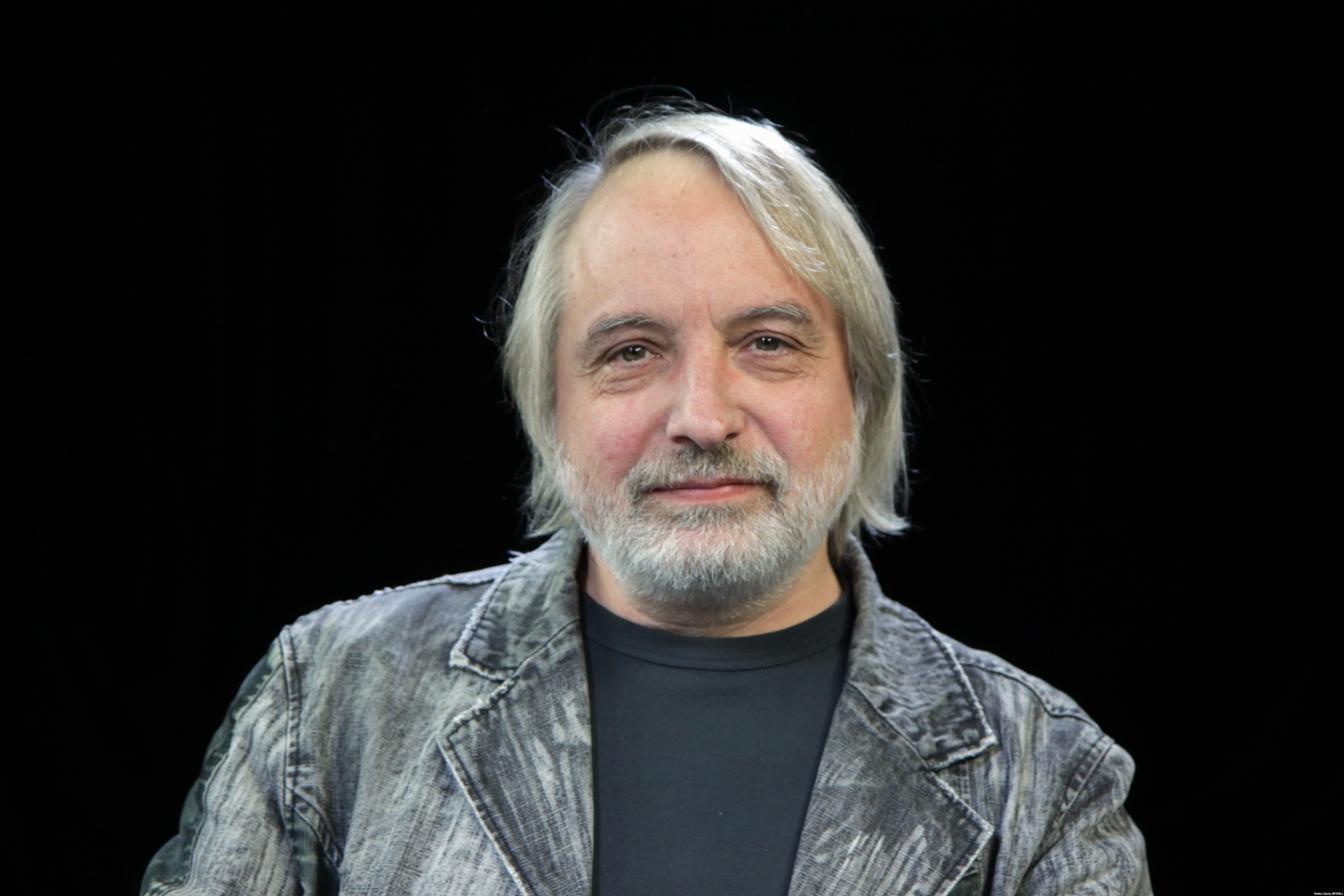
Historian Nikita Petrov about the attempts of Russian deputies to return the Soviet past and prohibit "undesirable"
Another brick in the construction of a police dictatorial state, which is not based on right, - this is how the historian and one of the leaders of the Memorial Society Nikita Petrov about the current Russian laws dedicated to non -profit organizations responded.
The last of them is the bill adopted by the State Duma in the first reading on the "undesirable" foreign or international organizations , that is, those that, according to the Russian authorities, pose a "threat to the defense or security of the state, or public order or health of the population." And, as it is said, in order to “protect the foundations of the constitutional system, morality and rights,” the activities of these organizations can be declared undesirable in Russia.
This decision, according to the new law, can make the Prosecutor General’s Office on the basis of data received from the internal affairs bodies and security authorities.
The punishment for such "undesirable" activities is not limited to fines - we can talk about deprivation of liberty for up to eight years.
The work of non -profit organizations in Russia is already complicated by the previous law on the so -called "foreign agents", and, of course, we are talking primarily about organizations engaged in human rights activities.
Dragon laws
“This law is the next sobering sign indicating how rapidly the Russian authorities advance to the main freedoms and suppress the work of independent public organizations in the country,” said the director of the Moscow representative office of the International Amnesty Sergey Nikitin :
- ideas that threaten basic freedoms literally roll through the Duma and turn into dragon laws that compress the space for expressing opinions of disagreements and for independent civil activity ... Given the recent practice, there is every reason to assume that the law will be adopted and applied to strangle international representatives of civil society and to undermine the independence and freedom of actions of Russian human rights organizations ... formulating the law of the law Open wide opportunities for its arbitrary application.
Nikita Petrov also notices this tendency to the Russian authorities to unconscious formulations and says that this was also characteristic of the Soviet government:
The internal affairs and security bodies suspected something somewhere and are not even burdened by the obligation to prove
- Extremely uncomfortable, extremely menacingly. This must be sounded as "undermining of defense capabilities" and the like. This is a desire to give freedom to your hands, so that, using this formulation, to close anything. It is alarming not only the wording itself, but also the invented mechanism - the closure of the prosecutor's office is closing. But after that, our state cannot be called not only legal, but even striving for the primacy of rights. Because any public organization can be closed only by court decision, and this is a natural thing for a state that wants to look legal and democratic. The court is adversarial, the court is the provision of materials, the court is proof. And here it turns out that the internal affairs bodies and safety were suspected somewhere and are not even burdened with the obligation to prove, it is enough for them to say something to the prosecutor-and everything is done. This mechanism crosses Russia from a number of civilized states that build their domestic policy on the basis of law, ”says Nikita Petrov.
Call for overthrowing, undermining or weakening
It is likely that it is not enough to compare the current Russia with times of the Stalinist repressions, but some formulations of the Law on “undesirable organizations” cause vague associations with the famous 58th article, brightly described by Solzhenitsyn in the “Gulag Archipelago”: “No point of the 58th article was interpreted as expandatory and with such a burning of revolutionary conscience as a tenth. The sound was:“ Propaganda or propaganda or propaganda or propaganda or propaganda or propaganda or propaganda or propaganda or propaganda or propaganda or propaganda Agitation containing a call to overthrow, undermine or weakening of the Soviet regime ... as well as the distribution or production or storage of literature of the same content. "And this item stipulated in peacetime only the lower limit of punishment (not lower! Not too much!) The upper one was not limited!
Nikita Petrov notes that when comparing our time with the Soviet era, it must be understood that the Soviet regime had a mechanism for the extrajudicial persecution of citizens to use Article 58.10 to use Article 58.10 and all its other variations, when no one needed to prove anything:
Russia confidently goes towards Soviet lawlessness
- Therefore, this article worked. But after all, the same thing was in the already later Soviet times, when the 70th article "Anti-Soviet agitation and propaganda in order to undermine or weakening of the Soviet regime" acted. Here is the wording! What is meant by "anti -Soviet agitation and propaganda" - of course, there were no explanations. But everything that is directed, from the point of view of the authorities, against herself, she interpreted this way. And the current laws are a noose for independent non -governmental organizations. And this, of course, is another brick in the construction of a police dictatorial state, which is not right. But when we are talking about associations, yes, indeed, the current Russia confidently goes towards Soviet lawlessness and Soviet practice of violating human rights.
This is a genetic memory
- How do you explain it? Current deputies are unlikely to remember that heritage well. Does the current Duma come up with these formulations again? Or is it a natural consequence of the fact that the authorities are trying in this way - "protective" - to protect itself? Or are there people who simply continue the tradition of the Stalin 58th article, and then the later 70th article, which you talked about?
- I think there are no such mossy old people who remember Stalin's practices there. I would joke and say that this is a genetic memory. They sometimes invent a bicycle, but most often they repeat the basics of Soviet repressive demagogic practice of combating dissent. After all, the purpose of the deputies is simple - to strangle everything that, from their point of view, can be an opposition or front, or a group of persons who critically relate to the current domestic and foreign Russian politics and the institutions in which these Duma are the same Duma, the same Council of the Federation. This is an attempt to simply limit everyone and everything in the possibility of freedom of expression of their opinion. Trying to close people and organizations that do not obey the Kremlin express their point of view. From my point of view, this is counterproductive for the simple reason that a state where there are no sound opposition votes, it is doomed because it is not able to quickly correct existing shortcomings. In words, everyone will tell you: “Yes, of course, non -governmental organizations are needed, they help in many ways,” - but in reality that part of non -governmental organizations that are engaged in human rights, just cause the greatest irritation among the Russian authorities.
Deputies are trying to return the Soviet past to us
Soviet time for our deputies is probably an unattainable ideal. Then there were no non -governmental organizations and independent associations of citizens who could express their opinion. In Soviet times, no foreign organizations could exist in the Soviet Union. And today we see the heritage of the times of freedom, the development of democratic Russia, as was the case in the early 90s, that constitution, which actually gives broad rights and our citizens to create independent associations, and to foreign organizations to act with us. Deputies are fighting just with the fruits of the legal state that we had, and are trying to return to us exclusively the Soviet past. And the arbitrariness here is open in full space. Our deputies deny the rights and freedoms of citizens as such that they can realize, financing from from anywhere, if this does not violate, of course, financial laws, if it is transparent and if this activity is not terrorist. Sorry, what kind of criterion this is: the security authorities were regarded as harmful and turned to the prosecutor's office. This is arbitrariness, and it is laid here, in fact, in the formulations themselves already.
In today's Russian times, there are a lot of belching of the same Soviet arbitrariness
- In Stalin's times, people were judged for espionage in favor of any countries of the world, at the same time British, Japan, then it was possible on the list ...
- In Soviet times, of course, this just bloomed with a terry color during mass campaigns and repression. Investigators of the NKVD and the MGB did not even bother with the invention, they sculpted everything that would please. They did not need to create a folding and consistent picture or outline of events. But we will not go far, and in current Russian times we have a lot of belching of that very Soviet arbitrariness. Because those “spy”, relatively speaking, the processes that in recent times went against scientists, against physicists who, as it were, had, from the point of view of the FSB, unwanted contacts with abroad, because, in fact, there were also shameful facts. Another thing is that in many cases it was possible to somehow stop these cases or partially broke up. But the very occurrence of these cases is a bad symptom, a bad sign. And I believe that just from the excesses of the performers, as they say, we are not just not just insured against such laws, but these excesses are laid down in such formulations that are applied in the laws adopted by deputies. Because the rights of the parties, the protection of these rights, the right to the trial of any claims of the state - to the person, to public unification, to a foreign organization should be clearly defined.