
Translated material
Dense sound, voice tells the story
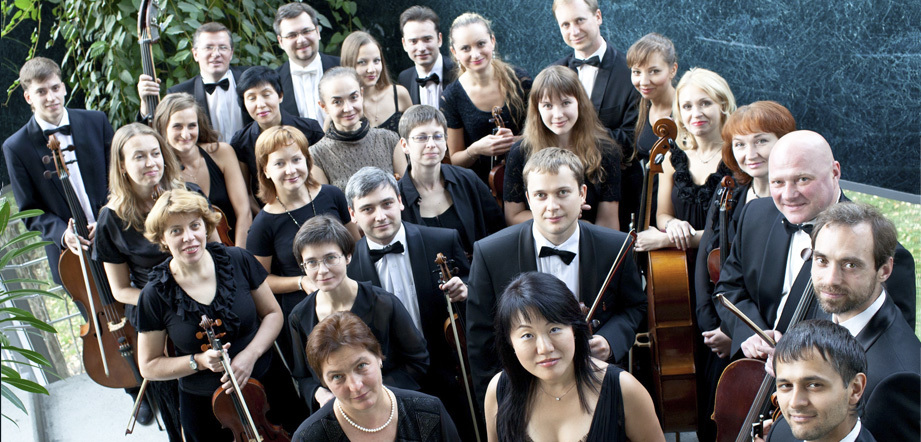
January 23 and 24 in Novosibirsk a program will be presented that would probably be considered to be a cash register in Moscow: under the control of Rainer Held’s conductor, the “four hymns” of Van-Wilems, “insight” of Britten, the Suite for the String Orcheste Schurha string orchestra. The maestro is confident in the success: he has been working with the chamber orchestra of the Novosibirsk Philharmonic, he knows well the Novosibirsk audience well, which he introduces the year after the year with new Swiss music. Tenor Tino Bruch, who performs in Russia for the first time, will also take part in concerts.
Tino belch
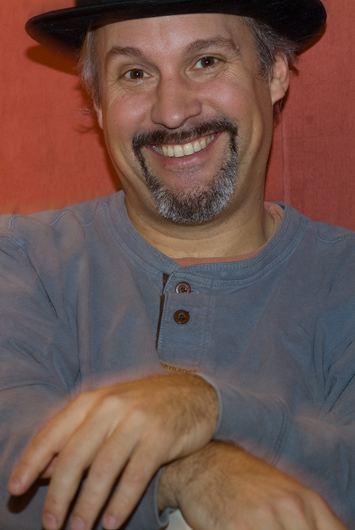
“Tino, doesn’t you think such an exquisite program, where there is not a single hit well familiar to the public?”
-In our Novosibirsk program-two large cycles for tenor and strings: “Four anthem” of Van-Wileams and “insights” of Britten. “Insights” are an absolute masterpiece, and in England they would consider that there are two hits in the program. At the same time, many have a prejudice against music of the twentieth century. Since this is my first (but, I hope not the last) speech in Russia, I can’t say in advance whether the public will like it. But I can try to convey to her confidence that this is a great music that should be listened to. In addition to the well -known English works, we will perform the play “Strokes” of the young Swiss composer Sirila Shürch (the world premiere was presented by the State Hermitage Orchestra six months ago) and a suite for the string orchestra of the Schoke defender. The fact that Sheok is an outstanding master of late romanticism is recognized around the world. He is one of those composers who are now opening again. On the recently released CD Rainer Helda - two of his large orchestral works.
- In your discography about a dozen CD . Which of them are most important for you? Does it make sense to make new notes in the conditions of the market crisis, which your colleagues have been talking about for many years?
- I really love the Swiss composer Frank Marten, his “three poems about death” for tenor, baritone, bass and three electric guitars are wonderful - I am happy that she made this entry, she is from my loved ones. The other is Erwin and Elmira, Schoke, one of his early works, even in a late -romantic style, but already foreshadowing his future mature handwriting. And although Sheyok is the largest Swiss composer, the essay was not previously recorded. This is the so -called Zingspil, a cross between the opera and the composition for concert performance. Perhaps that is why it is not often performed - there is neither the dramatic fullness of the opera, nor the spectacularity of the oratorio or cantata.
In general, the recording market is a complicated matter. As for the ability to earn money on sales of records, this topic is more or less closed. Another thing is the concern for the cultural heritage, the preservation of music for history: among my records, the forgotten music of Swiss composers prevails, which, I am sure, should be discovered again. It would not be difficult for me to fill in it ten more CD . But to find funding is more and more difficult, and I do not have a permanent sponsor, thanks to which I could sign up as often as I would like.
Filling a voice with colors, you can tell the listener a few stories, interest him for about an hour.
- Swiss music is not very well known in Russia and abroad; What is Swiss music in general, in a few words?
- Swiss music of the many -sided, like Switzerland herself. It turned out that I became a big specialist on it; In my repertoire is a significant part of the important works of Swiss composers. Frank Marten, Willy Burkhard, Schomar Sheyok and Arthur Onegger are the largest Swiss composers of the twentieth century. But if Onegger was obviously influenced by French culture, then Martin found his own, unique path of development of the musical language. In turn, Schook is a successor of German late romanticism, and the tradition of the Protestant Church is very important for Burkhard. Ludwig Zenfl, the Swiss composer of the Renaissance, deserves no less attention.
- Your repertoire covers the music of several centuries; What is especially close to you? Do you prefer to sing in the opera, perform with an orchestra or pianist?
- I was lucky - my voice is flexible and changeable. I still like to sing the “Evening of the Blessed Virgin Mary” Monteverdi or the Evangelist party in the Bachs “Passion”. But I perform more and more romantic repertoire and music of the twentieth century - my voice has all the possibilities for this. I rarely sing operas, often oratorios, songs with an orchestra and leader; The balance between these three genres more than suits me.
- Is it true that young singers pay less attention to the leaders, while earlier for the vocalist it was an urgent bread?
- Lied for the singer is the most difficult. Only your voice and piano, no action, nothing more. Filling a voice with colors, you can tell the listener a few stories, interest him for about an hour. To succeed in this genre, you need an incredibly long time and effort - and this, of course, will not get rich. That is why not many singers are engaged in them. Nevertheless, this rich tradition continues to live.
Rainer Held

- Rainer, you are closely connected with several orchestras of the former USSR - you are working in Minsk, Krasnoyarsk, Lviv, several years ago performed in Crimea. How did these ties arise?
- For the first time I visited Russia in my youth. Since then I love your country, its culture and its public.
- How did your constant contact with the chamber orchestra of the Novosibirsk Philharmonic begin? How successful are your annual European tour?
- For the first time, we performed together in Switzerland in 2008, performed the music of Borodin, Tchaikovsky, Arena and Swiss composers, and touring in Switzerland every year. Thanks to the dense, warm sound and boundless technical capabilities of the orchestra there is an excellent reputation.
- You also perform in Ukraine - in May of this year, a world premiere under your management has been announced in Lviv. What kind of essay are we talking about?
- It will be the world premiere of the Passakali for the symphony orchestra Karl Rutti - three weeks later I will also perform this essay in Krasnoyarsk, where I will speak for the second time. I ordered this essay as a kind of prologue to the famous “liturgical symphony” by Arthur Onegger, who will sound next. It is based on the images of Giovanni Segantini, the famous Italian-Swiss artist.
A dense, warm sound, limitless technical capabilities.
- Your teachers were two outstanding conductor, Marcello Viotti and Herbert Blomsted ...
- Each of them is a large person, but another master - Gennady Provators affected me much more.
- You perform many prime ministers, including Swiss composers. Which of them are most important for you?
- Of all the prime ministers that I had to present to the public, I consider two works by Karl Rutti outstanding: these are “Visions of Nicolas from Fle” (symphony for the organ, soprano, string orchestra and drums) and a concert for the organ, shock and string. We will perform it three times on tour in Germany, where we will go immediately after two concerts in Novosibirsk. Both works were executed and recorded with the chamber orchestra of the Novosibirsk Philharmonic. Work on preserving and increasing the rich Swiss music, of course, is one of my conducting priorities. Including we are talking about the orders of our contemporaries of new works, which I try to fulfill as widely as I can.