
Translated material
Wine and sea water
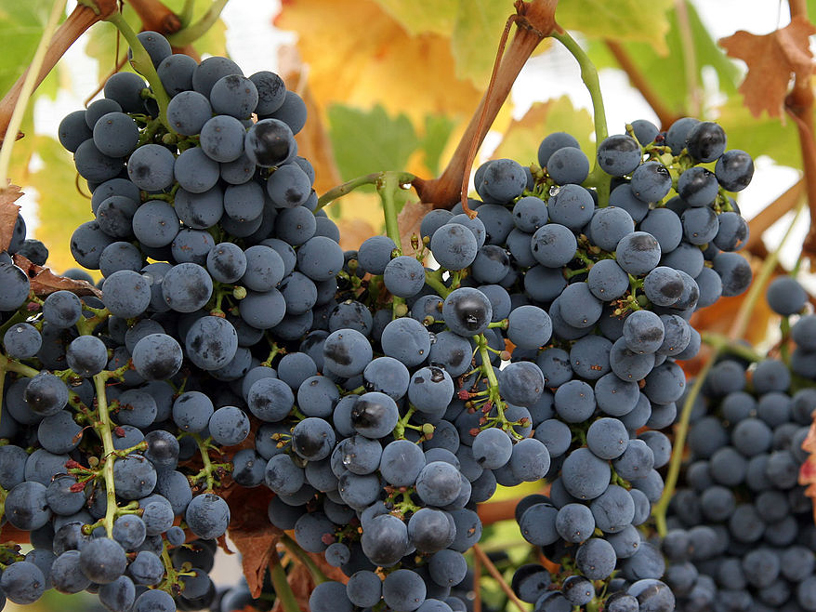
In Homer's poems, the sea is often called vine. However, when it came to the consumption of wine, the Greeks that drank wine in a mixture of water, usually used not sea but fresh water. But sooner or later, sea water and wine had to meet.
The legend about how this happened, said Pliny the Elder. On the island of Kos, one slave, who stole a little household wine, hid it, diluting it with water. But once he accidentally poured into the clay barrel not fresh, but sea water. Many liked the taste of the resulting wine, so they started to do this on this way. Pliny calls this wine with a white KOSK ( leuc OC OUM = λευκοκῶον).
From the 4th century BC, such wine began to be exported in large quantities from a braid. Winemakers from other places also took up its manufacture, the benefit of the salty taste smoothed the taste features of wine, and it was already extremely difficult to distinguish Koskoye from the Rhodes. However, such wine was called most often KOSS, regardless of the place of production. In the same way, we, violating strictly French wine legislation, unofficially call champagne any sparkling wine, and not just what is done in champagne. It was also often said simply οἶνοι τεθαλασσωμένοι “mixed with sea water”, the last Greek word is a participle from a special verb θαλασσόω “mix wine with sea water”.
In the Romans, this wine was not so popular, but even Caton Senior, who did not really approve of Greek innovations in Roman culture, in the work “On Agriculture” leads recipes for the manufacture of Vinum Graecum -in this case, not the Greek wine was called, but in a special way made wine with the addition of sea water or salt. Greek wine - writes Cato - you should do this: collect the "bee" grapes when it matures well. Having selected the best, hollow on the fur of this juice of two quadrants of established sea water or modification of pure salt: lower the salt in the basket and leave it, let him go into the juice (translations from the treatise “On Agriculture” hereinafter M.E. Sergeenko). Bee grapes in this case is the name of the variety, as Kolumella wrote: “If this grapes are not removed on time, it will be removed by winds, rains and bees; Due to the devastation produced by these last ones, he got his name. ” Pliny the Elder wrote: "Apian ( Apianae ) to the lots was given the name of bees ( APES ), especially to their berries tidbits."
Roman measures: quadrantal (amphora) = 26,2656 l = 48 sextarians; Modium = 8.754 l = 16 sextarians; Conggia = 3.2832 l = 6 sextarians; sextarium = 0.5472 lCato describes the workpiece of the “established sea water”: take from a deep place where fresh water does not reach, a quadrantal of sea water. Furry a half pound of salt, put it in the water and stir it with a stick until the steep chicken egg is swimming in it on top. Then stop stirring. Pour 2 Conggies of old wine there, Aminean or simple white, mix to conscience. Then pour everything into a shedding bowl and smear it. If you want to prepare more sea water, take everything accordingly with its number .
In another place of his work, Cato gives a more detailed recipe for wine with sea water, already calling it “Kossian wine”:
If you want to cook Koskoy wine, then take water in the open sea, when the sea is calm and there is no wind, 70 days before the grape collection, moreover, from a place where fresh water does not reach. Having scooped up sea water, pour it into the valves, but do not spill it out: let 5 quadrantals do not have enough to the top. Close the valleys with a lid, but leave it to the longtime. When 30 days pass, flying the water into another valleys, not muffling it; What is stopped at the bottom, leave. After 20 days, the water overwhelming in the same way in another shafts: leave there before the grape collection. From what kind of clusters you want to cook Koskoy wine, they leave them in the vineyard and let them give them well; When the rain passes and after it dries, then collect them and put them on two or three days in the sun in the open air, if there are no rains. If it rains, decompose them under the roof on the braids, and if the spoiled berries are located where, then cut them off. Then take the sea water, which is mentioned above, and pour into the fifty -shimfhor of the shares of 10 quadrantals of sea water. Then Narvi from the branches of the berries of the non -exchange grapes and put it in this valleys complemented. Suppress the grapes with your hands so that it is soaked in sea water. Filling the valleys, close it with a lid, but leave it to the hoarse. When three days pass, take out grapes from a valuance, squeeze it into Davilna and getting down this wine into pure, washed and dry valleys . Dopes are a large clay vessel, with a capacity of several dozens of amphora, in which fermentation of wine took place.
If it is difficult to get sea water, Cato has advice on this case:
In the estate that is far from the sea, do Greek wine like that. Pour 20 quadrants of grape juice into a copper or lead boiler; Dissat a fire under it. When the wine begins to bubble, make a fire. When this wine has cooled, pour it into the fortyAmphor valleys. Pour in a separate dish a quadrantal of fresh water and put salt modes there: let the brine make. When the brine is ready, pour it there in the same valleys. Supplies in a mortar sufficient amount of skewer and reed; Sexstarium, take it into the shares there so that the wine is fragrant. After 30 days, the valleys are smeared. By spring, spill wine along amphora. For two years let stand in the sun. Then bring under the roof. This wine will be no worse than Kosky .
Cato leads a special recipe for the preparation of wine, which was given to slaves in the estate. It should be noted that it was a pity to spend good wine on slaves. As a result, they got a variety of surrogates, therefore it is not surprising that ancient treatises on agriculture are full of recommendations on how to determine whether slaves are diluted with water wine.
Usually, after the collection and squeezing of grapes, the slaves went to the slaves . To prepare this “wine drink”, Varron advised to drop grape squirrels into shares and pour water. Columella reported a more detailed recipe: pour grape squeaks with water, pour wine sludge and foam from a defrut or sapa (to varying degrees of boiled grape juice), leave the squeezes to get wet in this at night, and then squeeze it out. A similar tincture of water on grape squeezes in Dahl’s dictionary is called “friend”.
But Lora ended soon. Here the recipe was used, which Cato called “Wine to Slaves for the Winter”, where we again meet with sea water: 10 quadrantals of grape juice of pounds into shares; Add there 2 quadrantals of strong vinegar, 2 quadrantals of sales, 50 quadrants of fresh water. Stir it with a stick three times a day in a row. Pour 64 sextaria of established sea water there, put the lid on the shafts and, after 10 days, smear it. This wine is enough for you to the summer solstice. What will remain after the solstice will be strong and excellent vinegar . The last phrase eloquently indicates the quality of the drink.
Regarding the quality of “Greek wine”, Roman authors disagreed. Columella wrote that salted water "increases the amount of wine and makes it tastier." But Pliny the Elder believed that “the most healthy would be wine to which nothing has been added; It is better even if it stood in an unlodder bowl. <...> Wine with sea water is especially harmful to the stomach, nerves and bladder. ” Galen also spoke in favor of salt wine.
Th centuries have passed since Pliny the Senior, but in the grandiose Byzantine arch of agricultural knowledge - the treatise of the middle of the 10th century “Geoponics” - we still find recipes for wines with sea water. One is still called the KOSK, but the number of its components has increased significantly:
Byzantine measures: Meter = about 38.5 liters; Circle = 0.27 l; Drachma = about 3.75 gPreparation of Kosky wine. Some boil up to one third of the mixture of three parts of Must and one part of the sea water. Others are mixed with two meters of white wine of the salt of one cot, three crocks, one cot Musta to one catfish of pea flour, Donnik STO DRAM, sixteen drams, NARDA of the Celtic Sixteen Drachm (translation of the Treaty of Geoponics E. E. Lipshitz).
Must - grape juice (wort) after spinning, Sapa - boiled juice. The Celtic Nard is a plant whose identification is difficult. Under the name of the Nard, several species were hidden (Indian plants Nardostachys Jatamansi and Andropogon Nardus , Lavandula Angustifolia lavender, Cymbopogon cymbolon). But the indication that the backgammon is used, it suggests that Valerian Alpine ( Valeriana Celtica ) was meant.
The second recipe from the “Geoponics” treatise is called beads wine. Here, sea water plays an auxiliary role:
We put mature grapes in the sun, each bunch separately, for five days for six; Then, at midnight, we remove them with hot and put them in a muse; Boiled in half with sea water. Having taken out the grapes from there, we put him in the crush for one night and day. Pour squeezed juice into the vessels. When he throws and cleanses, we pour the twenty -fifth of Sapa into it. After the spring equinox, cleansing, pouring into small vessels.
At Pliny the Elder, we meet another mention of the fault, for the preparation of which salted sea water is needed. It is denoted by the term θαλασσίτης. In this case, the vessels with wine were immersed in the sea so that it could withstand there. As Pliny notes, such wine quickly acquires all the qualities of an aged wine.
Here we can move to modernity and recall another case when the wine was stood under water. On July 6, 2012, on the Aland Islands lying in the Baltic Sea between Sweden and Finland, scuba divers at a depth of 55 meters found traces of shipwreck. On a small sunken ship, the name of which has not yet been installed, they found 30 perfectly preserved bottles of champagne.
It turned out that this is the famous brand “Widow Klicquot”, and even produced between 1782 and 1788, that is, one of the very first parties made by this company. Production was started in 1772, but the first finished product appeared after a ten -year exposure. It is assumed that the batch of bottles Louis XVI sent wine to Catherine II. In the archives of the company, even managed to find a record of the wine party that was sent, but not delivered to the addressee.
Diver Christian Ekstroem with a bottle of 230-year-old champagne.
Expert Ella Cromwell-Morgan (Ella Gruessner Cromwell-Morgan) was entrusted to try the champagne raised from the bottom. He found that the wine was still bubble and has a “absolutely fabulous” taste. The wine was dark golden with a very intense aroma. Cromwell-Morgan admitted that every five minutes she returned to the bottle left to the refrigerator to smell again and make sure that she was not sleeping. At the moment, it is the oldest wine that has retained its properties.
This incident was prompted by the winemaker Jim Dyke, the owner of Mira Winery in the California Walley Vinelian District , and the idea to conduct a series of experiments on the endurance of wines in bottles on the seabed. Experiments are carried out with wine of the Cabernet-Sovignon variety in the waters of the Atlantic Ocean near the city of Charleston (South Carolina). Jim Dike lowers metal cells with bottles to the bottom, in order to understand with time how light, water temperature, pressure, and currents will affect the nature of the wine. The bottles are fixed with special holders to protect them, but at the same time, water freely washes every bottle.
By analogy with the term Terroir (Terroir), indicating the soil, climate and other natural factors of the vineyard that affect the qualities of the wine, Dike has already come up with the term aquaoir, which should indicate the characteristics of the water medium where the wine is withstanded. The experimenter hopes that the ocean will accelerate aging and develop the qualities of wine.
The next batch of wine is ready to send to the bottom.
The experiments began in February 2013, when the first 48 bottles were immersed. Since then, Dike lays eight cells with bottles to the bottom every November and first checks their condition in six months. It fixes how the properties of wine in every batch change. According to his assumption, if it is possible to establish how different factors affect wine, this knowledge will be used to apply when withstanding wines in wine cellars.