
Translated material
Ilya Karpyuk: Special Crimea
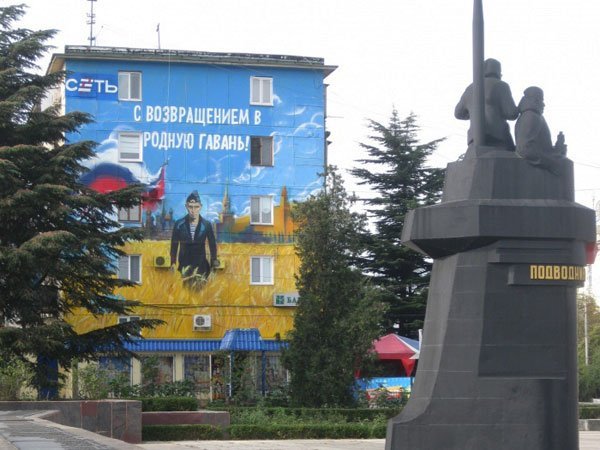
Ilya Karpyuk 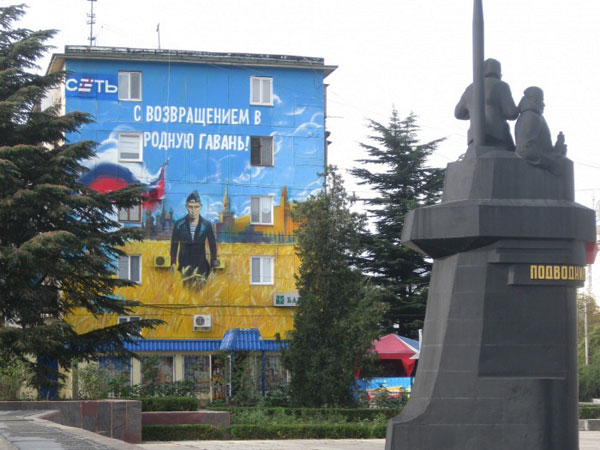 Crimea. Sevastopol photo: allcrimea.net
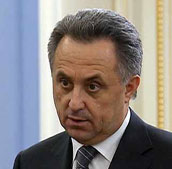 Vitaly Mutko
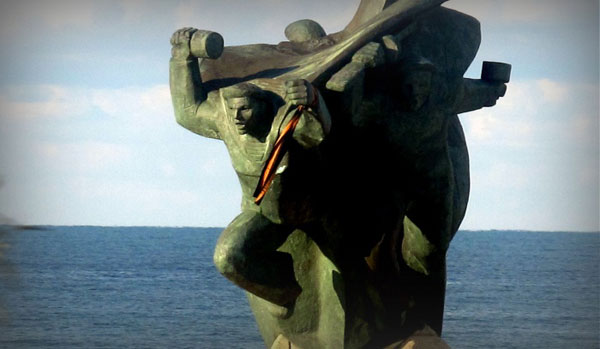 Evpatoria. Photo: allcrimea.net
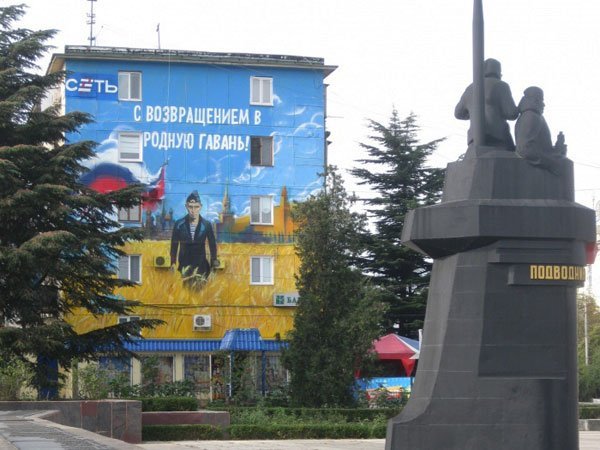 Crimea. Sevastopol photo: allcrimea.net
The Russian Football Union decided to exclude Crimean clubs from the competition of the second division of the Russian Football Championship. According to the estimated President of the RFU Vyacheslav Koloskov, the Crimean clubs themselves asked to remove themselves from the championship, although all the following statements are not closed: such statements are not made voluntarily.
Three Crimean football clubs, SKFFF (Sevastopol), Yalta Pearl and TSK (Simferopol) were allowed to participate in the system of Russian championships in July 2014, four months after the formal entry of Crimea into the Russian Federation.
Crimean clubs began to play in the southern zone of the second division of the Russian football championship, despite the fact that the predecessors of the SCFF and TSK, the Sevastopol and Tavria teams, respectively, played a fairly strong Ukrainian championship in the Premier League. Actually, in order to participate in the Russian championship, Crimean clubs were re -registered as legal entities and took other names - it was assumed that thanks to this maneuver, the RFU would not have problems regarding the participation of former Ukrainian clubs in the championship.
However, the leadership of the Football Federation of Ukraine (FFU) nevertheless protested the actions of the RFU in the Union of European Football Associations (UEFA). On December 4, the UEFA leadership made its decision: Crimean clubs are prohibited from participating in the Russian championship from January 1, 2015. Without the consent of UEFA and FFU, the Russian Football Union is not entitled to hold tournaments in the Crimea.
Vitaly MutkoThe Minister of Sports Vitaly Mutko has already suggested that its own football league under UEFA can be created in Crimea. In principle, such an experience is already there: the United Kingdom is represented in UEFA by four associations: England, Scotland, Wales and Northern Ireland. The problem, however, is that, firstly, in the British Islands this situation has developed earlier than the European Football Association appeared, and secondly, there are no such problems with finances-and the existence of all three Crimean clubs under a big issue due to the lack of sponsors.
Be that as it may, the exclusion of Crimea from Russian football geography is confirmed by a not too advertising fact: the Republic of Crimea and Sevastopol has a special status in Russia, because of which, and maybe thanks to which the annexed territories may not be finally into the Russian legal space.
Formally, the integration of Crimea into the Russian legal, tax and financial space ended on January 1, 2015. The request of the head of the Republic of Crimea Sergey Aksenov did not extend the transition period for a year in Moscow. Moreover, if we study Russian legislation - the current and the fact that it is only discussed in the State Duma, it becomes clear that the “especially” Crimea did not end at all with the end of the transition period.
Crimean officials, for example, unlike their Russian colleagues, have the right to have accounts in foreign banks and, moreover, have two citizenships. Obviously, this was done due to the fact that the procedure for leaving Ukrainian citizenship is sufficiently dreary from a bureaucratic point of view and implies not only the desire of the citizen, but also the consent of the state. Of course, the Ukrainian government did not agree that more than 2 million people living in Crimea lose citizenship.
In early January, President Vladimir Putin signed a law that introduces, so far only for 2015, his characteristics for arbitration processes in Crimea. Now, household and arbitration courts in the Crimea and Sevastopol have the right to accept documents in Ukrainian from the participants in disputes, however, only if they were compiled before the peninsula join Russia. Throughout the rest of the territory, arbitration proceedings are carried out exclusively in Russian.
In Crimea, there is also a special procedure for seizing land for state needs. The powers to regulate land relations, including the seizure of land for state -owners and determining its value, were transferred before January 1, 2017 by the Legislative Assembly of Crimea and Sevastopol, respectively, in the rest of the country, federal authorities make a decision.
In a special way, mobile operators work in the Crimea. Ukrainian companies gradually left the peninsula, and Russian giants are in no hurry to deploy their business there, mainly due to the threat of Western sanctions. Today, only one Russian operator K-Telecom operates on the peninsula, he occupied the frequencies of MTS-Ukraine. It is also prepared for the start of maintenance of CTK Telecom subscribers. The final beneficiaries of these companies are not publicly called, although according to the sources of “Vedomosti”, “K-Telecom” it represents the interests of MTS, and “KTK Telecom” is the structure of Tattelecom from Tatarstan.
Also in Crimea, actually operates its own banking system. The largest bank on the peninsula is the Russian National Commercial Bank, which several days before the opening of a representative office in Crimea changed the owners - the Bank of Moscow, which was part of the VTB group, got rid of its shares.
The crown of the “especiallyness of Crimea” was to be a special economic zone, which was conceived almost as an intra -Russian offshore. The Minister of Crimea, Oleg Savelyev, was even going to introduce a clause on the Law on the OEZ that foreign enterprises, when concluding contracts with Crimean legal entities, have the right to choose any jurisdiction to decide disputes, using at least the trade law and the high court of London.
As a result, however, the law on the free economic zone came to the tax benefits and a special customs regime. However, it is unlikely that the mood in the Ministry of Crimea has changed-this means that supporters of the liberal-economic approach are still involved in the problems of the peninsula.
The special status of Crimea was not prescribed in a separate law, as was the case during the operation of the transition period. Many industry acts contain points and subparagraphs, in which a special status of this territory is legally drawn up.
Evpatoria. Photo: allcrimea.netMoreover, the Crimea is not unique in the question of "especiallyness". Now the government contains ministries in the affairs of the North Caucasus and the Far East, which, obviously, achieve that the wards of the regions live in a slightly different legal regime than all other subjects of the federation - otherwise there is simply no sense in the existence of these departments.
Considering that Crimea fit very well into the tendency of the Central Government’s special attitude to the distant or complex outskirts of the Federation, it is hardly worth counting on the fact that the peninsula will actually be integrated into the Russian legal space - everything indicates that the special status has not only ended with the transition period, but only strengthened.
Now, thanks to the exclusion of Crimean clubs from the Russian Football Championship, the special status of the peninsula has become noticeable even for ordinary citizens who are not too devoted to the legal subtleties of the legislative process.
See also: the RFU excluded Crimean clubs from the Russian Football Championship PayPal stopped working in Crimea Putin signed a decree on the recognition of military tickets to the inhabitants of Crimea and Sevastopol