
Translated material
In Germany and Poland, they offered to tighten sanctions against Russia after the shelling of Mariupol
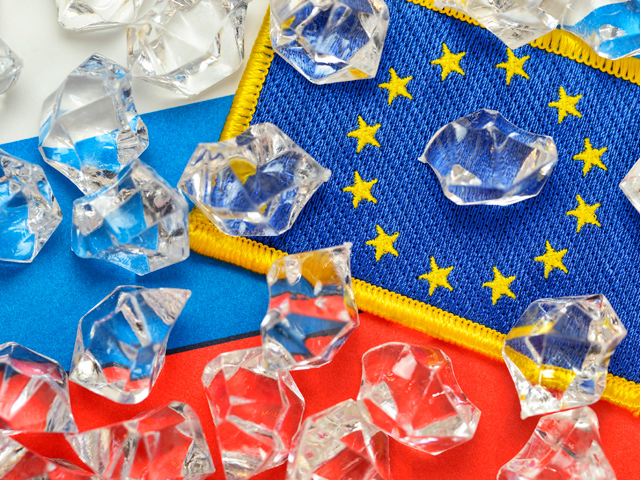
After the escalation of a military conflict in the east of Ukraine, in which in Kiev and in the West they blame the Donetsk separatists and supposedly supporting them Moscow, in the European Union thought about imposing new sanctions against Russia. This, in particular, is stated by politicians of Germany and Poland.
President of Poland Bronislav Komarovsky called on the European Union to consider the introduction of more stringent sanctions, saying that the "reaction of the Western world" to what is happening in Donetsk "should be very tough," writes Reuters.
According to the agency, Minister of Finance Jack Lew said that Washington has more instruments that would allow pressure on Moscow.
German Foreign Minister Frank-Walter Steinmeier explained that no one would blindly insist on introducing new sanctions, but indicated that the offensive of the separatists is changing the situation, and Europe would have to respond to this.
- Against the backdrop of an aggravation of the situation in Ukraine, Merkel conducted telephone conversations with Putin and Poroshenko
- The head of VTB: Disconnecting from SWIFT will put Russia and the USA on the threshold of war
- The West will hold consultations against the background of the escalation of the conflict
On the eve of the possibility of introducing new sanctions, they spoke in the Bundestag: the representative of the Karl-Georg Wellman, Deputy Chairman of the Social Democrats faction Rolf Musenchikh and the representative of the Green Party Omid Nuripur, writes DW-World , who was part of the ruling coalition of the Christian Democratic Union.
The Musenchikh pointed out that "ongoing and, apparently, aimed at blows on civilians are not only a violation of the Minsk agreements, but also elementary principles in Europe." Wellman accused Moscow of "it supplies the separatists with heavy weapons, fuel and carry out material and technical support." "The policy of escalation, which the Kremlin currently leads, should not remain unanswered EU," Nuripur believes.
The intention to introduce new sanctions was also spoke outside of Europe. President Barack Obama during a visit to India announced the day before that Washington was ready to continue pressure on Russia. The US Vice-President Joe Biden agreed to impose new sanctions with the need to impose new sanctions.
Sources of the Kommersant newspaper, close to the US State Department, did not rule out that the West would disable Russia from the SWIFT system. Earlier, deputies of the European Parliament invited the Council of Europe to extend sanctions against Russia to its energy sector, primarily to atomic energy.
It should be noted that earlier a number of experts who took part in the Davos economic forum finished last week, opposed mutual sanctions. Meanwhile, the other day, the National Security and Defense Council at its meeting decided to apply sanctions in Ukraine, the National Security and Defense Council website is indicated.
Recall that as a result of the shelling of Mariupol, about 30 people died on January 24, about a hundred were injured. On the same day, the OSCE introduced a report in which she entrusted the guilt for shelling on the separatists. Moscow continues to assure that the Kiev authorities are to blame for everything.
The West will hold consultations against the background of the escalation of the conflict
The situation in Ukraine on Monday will be discussed at an emergency meeting of the OSCE Permanent. Extraordinary consultations of the NATO -Ukraine commission will take place in Brussels. On Thursday, the Foreign Minister of 28 countries - members of the European Union will gather for an emergency meeting.
Earlier, the separatists voiced their offensive plans for Ukrainian troops. This happened against the backdrop of the ambulance to the Donbass replenishment from among the Russian military, and, noteworthy, after they signed the agreements with the Ukrainian military on the end of fire and the removal of heavy weapons (the agreement was concluded at the initiative of Kiev).
The West imposed sanctions against a number of Russian politicians, officials, businessmen, state companies and several sectors of the economy after the accession of Crimea to the Russian Federation and the beginning of an armed conflict in the Donbass. In response to this, the Government of the Russian Federation introduced restrictions on the import of foreign products.
On September 20, the contact group in Ukraine adopted a memorandum in Minsk, which determines the mechanism of introduction and maintenance of the ceasefire. Since December 9, at the initiative of Kiev , a regime of silence was introduced, which, however, was not fulfilled.
The EU discussed on January 19 the possibility of canceling sanctions against the Russian Federation, but did not find for this reason. Representatives of European countries agreed to discuss new sanctions against Russia in March. At the same time, the EU stated that they were ready to lift sanctions from Russia after the implementation of "absolutely all Minsk agreements."