
Translated material
Dialogue on Broadway
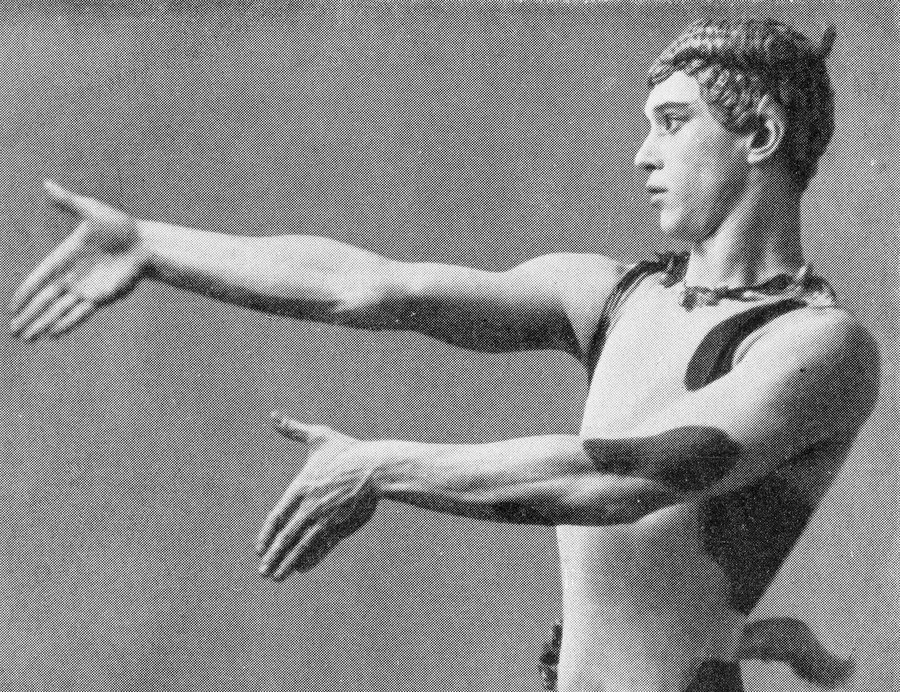
Baryshnikov plays Nizhinsky. Retrospective Oltmann in New York
Alexander Genis: today's issue of “Ach” will open our heading “Dialogue on Broadway”, which we and the musicologist and cultural scientist Solomon Volkov are leading from the Broadway studio Radio Liberty.
Solomon, what is they talking about Broadway?
Solomon Volkov: On Broadway, as we already said in our previous conversation, they expect Cuban artists. Because, as we know, the United States canceled economic and cultural sanctions against Cuba, the blockade of Cuba has been lifted. Many years have passed since Cuban artists could come legally, legally in New York, and now many are expecting a revival of cultural ties.
Alexander Genis: This, of course, is important news, because Cuba has always played a significant cultural role in the Western Hemisphere. By the way, in the eastern too. It is impossible not to say that during the time of Fidel Castro, even under Khrushchev, Cuba was considered such a liberal reserve, among other things - an oasis for non -physical art.
Solomon Volkov: both for avant -garde poetry, and for avant -garde dance.
Alexander Genis: No wonder Yevtushenko learned Spanish and was a frequent guest in Cuba. There were more tolerant of different types of modernist exercises. And the Gavan Biennale was famous for the fact that they allowed what was not allowed in Moscow.
I asked one Cuban writer, Hoza was taking why this happened. He said that the Cuban revolution was young and she, like the Russian revolution, loved the avant -garde. Actually, Russia was also an avant-garde country in the 1920s. Therefore, Cuban art possessed its charm. It is curious that there were collectors (Brodsky wrote about this in one essay), who collected Cuban art precisely because it fought with the totalitarian regime. In it, as Brodsky wrote, there was a slight taste of slavery, in any case, the struggle against slavery, and this seduced many collectors. Now Cuban art is about to appear in America, in New York, because, of course, they are waiting for him here.
What else are they talking about on Broadway?
Solomon Volkov: Broadway is discussing the news that Baryshnikov is going to show the performance at the Spoleto festival, of course, everyone hopes that this production will eventually appear on Broadway.
Alexander Genis: Either in a BAM in Brooklyn, but one way or another in New York it will be shown.
Solomon Volkov: I think this will happen. We are talking about a performance for one person where the Baryshnikov will play the role of Vaclav Nizhinsky.
Alexander Genis: And the very famous Wilson will put this action ...
Solomon Volkov: Robert Wilson, who made a performance on Harms.
Alexander Genis: Recently, we talked about this in detail - about the play "Old Woman" according to Harms. We talked about this in detail, and twice: once with you, Solomon, where we produced the performance, and the second time with our young author Daria Borisova, who explained to us how not we are right. So, two points of view on Wilson were presented to the listener. A new performance is expected, of course, with great interest already because the Baryshnikov plays a great dancer. Baryshnikov said that he always dreamed of playing Nizhinsky and even negotiated about the possible setting of the film about Nizhinsky with anyone else with Bergman. How sorry that this did not happen.
Solomon Volkov: It would probably be a wonderful film. But here I want to emphasize that when Baryshnikov was asked if he would dance in this performance, Baryshnikov laughed and said that it could be, maybe there is no, but any production of Bob Wilson is always a choreography.
Alexander Genis: Let me answer you for Baryshnikov: It will be. Because if you have such a material in your hands as young ladies, not a single director can not use it.
Solomon Volkov: I do not agree with you here. Because Wilson can think of this thing in such a way so that his Nizhinsky would not dance at all. Moreover, the basis of the performance is not choreographic, the so -called Nizhinsky diaries, which, of course, are not actually any diaries, are not really - this is a certain book. I must tell you a unique example, as it seems to me, letters of the subconscious. This is one of the brilliant, it seems to me, documents of surrealism in prose, very rare. Few of the surrealists really brought to condition what they always preached: an automatic letter.
Alexander Genis: As you know, Breton, the dad of surrealism, said that "after decades of experiments, we must come to the sad conclusion: all these experiments were not successful." Indeed, an automatic letter was not interested in anyone.
Solomon Volkov: But Nizhinsky is interesting in the book, which has the conditional name of the diaries, they were published in Russian in the post-perestroika era in the Vagrius publishing house, which we always recall with some nostalgia. This book was called "Feelings." When I bought it, I was, of course, amazed: it was written in Russian, Russian-the language of the original. It is very difficult, I think, will translate this book, although it is outwardly simple, but there is some magic in it. Of course, a non-normal person wrote-this is known, this is a textbook fact that Nizhinsky, who was born in 1890, and died in 1950, spent most of his relatively short life in houses for the insane ones. He went very early, as they say, from the rail, very early, was very early, was probably a very impressionable, strange figure.
Fedor Vasilievich Lopukhov, the great Russian choreographer, with whom I was lucky to meet in Leningrad, because he taught us at the conservatory, where I studied then, at the department of choreographic skill. Sometimes I managed to talk to him. So, he told me that Nizhinsky, who was his fellow practitioner at the ballet school, was an idiot. So, without any difficulties, he characterized him with an idiot. It was, he said, a perfect idiot, which possessed incredible physiological data for the dance.
Alexander Genis: They say that he could hang in the air.
Solomon Volkov: And then I have to say that Lopukhov, to whose opinion I always listened with the greatest respect, was certainly wrong. Jealousy spoke in it, one might even say more - envy. You are sitting with a classmate nearby, he seems to you an idiot, then he makes not just some unique career, but he becomes the main figure in ballet. As they say: the conductor is Tuscanini, the artist is Picasso, the composer is Stravinsky.
Alexander Genis: Fruit - apple, poet - Pushkin.
Solomon Volkov: Dancer - Nizhinsky. No matter how we relate to such great dancers in the twentieth century as Nuriev, Baryshnikov or Vladimir Vasiliev, the legend of Nizhinsky, the Nizhinsky myth is at an inaccessible height. The legend of Nizhinsky can only be compared with the legend of Chaliapin, who, fortunately, did not need to go crazy for this. Of course, in the legend of Nizhinsky, his insanity plays a huge role. We are touched by the human drama, we see it in this tragic breakdown, that the artist has ceased to be so quickly on his creative activity, in all the vicissitudes of his fate, in his psychological and artistic dependence on Diaghilev, that his main role in Parsley in the ballet of Stravinsky was autobiographical. After all, he felt himself with this unfortunate doll, parsley, puppet in the hands of the magician Diaghilev. And this was in many ways a tragedy of his life. Well, in addition, his book, which I am with full responsibility to the masterpieces of a surreal letter. I will literally read a few lines from this book, related specifically to Stravinsky:
“Igor Stravinsky does not know what life is, for it does not love me. Igor thinks that I am the enemy of his goals. He is looking for rich and glory. Stravinsky is a good writer of music, but he does not write life. He invents plots in which there is no goal, and I do not like plots without a goal. I often made him understand what a goal was, but he thought that I was a stupid boy, so he spoke with Diaghilev, who approved all his ventures. I could not say anything, for I was considered a boy. Stravinsky was a long nose. He was not a Jew, his father was Russian, and Uncle Pole. I am also a Pole, but without a long nose. Stravinsky sniffs, I do not sniff out. Stravinsky is my friend who loves me in his soul, for he feels, but he considers me an enemy, for I bother him. ”
Alexander Genis: character Gogol could write.
Solomon Volkov: Or Harms. A very strong analogy with Harms.
Alexander Genis: That is why Wilson took up this project. Baryshnikov, as you said, will not be easy to transfer all this to the stage. But we recall that Baryshnikov has already played in the staging of Kafka and Harms, so the company is going to be worthy.
Solomon Volkov: Well, as a musical illustration, of course, I will put a fragment from the ballet “Parsley”, where Nizhinsky created his most brilliant image. I will put exactly the fragment that characterizes for us the spiritual world of Petrushka-Nizhinsky.
(Music)
Alexander Genis: This winter, in the Museum of Contemporary Art, our famous Moma, as all this museum in New York is called, the giant retrospective of Oltmann, a director, who was distinguished by incredible hard work. 50 programs were created in the museum in order to introduce Oltman's work in all its huge volume. After all, not everyone even knows that Oltman began as a technical director, he removed some kind of safety production tapes, something so utilitarian for the needs of industry. He shot music videos, he shot television episodes. Oltman worked in all conceivable genres. And now the gigantic incomparable retrospective of Oltmann, of course, attracts the attention of the New York, because Oltman is one of the favorite directors of America.
Solomon Volkov: Oltman, of course, a mysterious figure, extremely attractive. In the word, Oltmann immediately lines in my head a string of films that I really liked. The first thing you think about them is that there is an idea of who the director Oltman is, what is his creative manner. It is believed that Oltman is the creator of a multi -figure fresco with many characters, with intersecting, and sometimes not intersecting plot lines, everything happens very chaotically for him, people come across, go, diverge, dialogs are superimposed on another. This all creates the impression of an immersion in a real life, about which Oltman tells. But at the same time - very different films. There are films that I love very much, but which another director could theoretically make, but did not - shot Oltman. For example, I consider the best biographical film about Van Gogh and one of the best, made about the artist in general, Vincent and Theo, telling about the relationship between Van Gogh with his brother Theo, a 1990 film. In my opinion, you once told me that you do not like this film.
Alexander Genis: No, I did not like this film. In general, I believe that one of the advantages of Oltman is that many films do not like him. And this speaks, in my opinion, about his genius. I have a theory according to which a large artist should be mistaken, otherwise he will never go beyond what he can do. The artist should only do what he does not yet know how. Because otherwise it is doomed to repeat. I have to take risks. Why, for example, I didn't like Van Gogh? Yes, because this is a film in which we did not see the artist Van Gogh. I understand that it is very difficult to show how the artist feels. It is difficult-do not take it, but Olman took a chance and shot a film about a strange artist, about some kind of outlandish man, an original eccentric. But I am interested in Van Gogh not because he cut his ear, but because he drew Sunflower.
Solomon Volkov: By the way, it is still unknown whether he cut off.
Alexander Genis: God with him. You know, Solomon, speaking of Oltman, I would compare it - with Fellini.
Fellini, I will allow myself a retreat, my favorite film director. Many years ago, I decided that my favorite film is “Amarkord”. After that, I took up seriously the history of the cinema, subscribed to the special program “Netflix”, which allows you to watch all films in the world, there are already 175 thousand, in my opinion, films. I was addicted to Netfliks and watched the darkness of the films in 10 years. Now that they ask me what my favorite film is, I say again - “Amarkord”. As it was, it is, Fellini is my favorite director. But I do not like everything with him. He often, in my opinion, was mistaken. For example, the City of Women is a bad film.
In short, a great artist should have failures, otherwise he will not move forward. I don’t like Oltmann many films, but those who like are delighted. Oltman is the same director of author's cinema as Bergman, like Fellini, like Kurosava. But at the same time, Oltman is very different from all of them, because he worked on exclusively American material. Far from everyone can say this. For example, Woody Allen. Why do we all love Woody Allen so much? Because he is like a vestibule, he is between the new light and the old one, we feel so much European in it that it and I are easier to understand.
Oltmann is much more difficult to understand. And you very, in my opinion, correctly found one word for his cinema - chaos. Because Oltman is the great master of chaos. He builds his story in the background of being. And then I would like to recall the wonderful image of Shklovsky. When he had a chance to write about Mandelstam's prose, in my opinion, it was a review on a “journey to Armenia”, said that Mandelstam seemed to specifically break a vase to glue it again. Such is the prose of Mandelstam. But this can be said about the films of Oltman.
Solomon Volkov: This is an accurate observation. This is well suited to Mandelstam, but it is also very suitable for Oltman, this is precisely the creative manner of Oltman, I completely agree with you.
Alexander Genis: It is curious that Oltman was guarding his life all the time to shoot. His ideas about realism were much more complete than what we mean by realism. Because usually by realism we understand the plot, which, of course, is no longer realistic due to the fact that it is a plot. And Oltmann’s plot is never just told, it always glues. It is very difficult to keep track of all the threads, the plugs that constantly fall apart. For example, his film “Gosford Park”, which received an Oscars, because he could not achieve Oscars for a very long time ...
Solomon Volkov: In my opinion, he received for the script.
Alexander Genis: ... Yes, he received for the script, but this is a detective in which it does not matter to us who the killer, the solution does not matter. Everything that happens inside this English estate is a hundred times more interesting to the answer to the question of who is the killer. Life is more interesting than secrets. By the way, the fact that now everyone, as obsessed, is watching the “Downton Abbey” - this, I think, is a direct consequence of the success of the “Gosford Park”. In this film, the method of Oltmann was manifested - die of guarding life. Do you know how he did it? He said that when you make a movie, you do not turn off the camera, do not spare the films, let it be turned on when the episode ends, when the double is removed, when, it would seem, everything has already ended, then something interesting comes. Indeed, in the Gosford Park, remember, there was such a heroine played by Maggie Smith, in my opinion, a star of all time. So, when they had already finished shooting, the hero accidentally poured hot tea into trousers. Maggie Smith laughed at a brutally. None of this was in the script, but Oltman inserted this episode into the script, beat it, and this turned out to be the best scene in the film.
But the conversation about Oltman cannot do without music. In my opinion, the most interesting musical film that I saw in my life is his Nashville. What do you think about this picture, which, in my opinion, raised the vulgar Mishura of show business to a high tragedy?
Solomon Volkov: Here I agree with you and disagree. For me, nevertheless, the best film about music and about the process of composition remains the “blue” Kheslevsky.
Alexander Genis: This is my second favorite film about music, so we don’t have to argue here. Although, of course, Keslevsky’s film is a purely European film, this is the film of old Europe, and Nashville could only be made in America. And in this regard, Oltman, as I said, is an American phenomenon - like Western, like an apple pie. And “Nashville” is a film about the music “Country”, and this is a completely different music.
Solomon Volkov: Nashville is a wonderful film. I am not a fan at all, and even more so not a connoisseur of country music. When I think about Nashville, it’s not even the first to come to my mind that this is a film about country music. This is for me primarily a cut of American society, unusually, as you said correctly, life. Despite the fact that we live in New York, New York is a special territory on the body of America, between New York and Nashville, in my opinion, there is more difference than between New York and Neapol.
Alexander Genis: Bodriyar once said: New York, Hong Kong, Singapore-these are all artificial satellites of the Earth.
Solomon Volkov: Very similar. There, in Nashvil, of course, a completely different world. But at the same time, Oltman takes a pseudo-detective plot of some kind of story as in the Gosford Park. Вы совершенно правы, что в «Госфорд-парке» итог детектива неважен. В «Нэшвилле» между тем, при том, что там все еще гораздо более условнее то, что мы можем назвать детективным сюжетом, все-таки выстрел в конце ставит определенную точку, без этого фильм бы не существовал. Без того, чтобы не погрузить всю эту атмосферу музыки кантри в политическую, укутать в какую-то политическую вату.
Александр Генис: То есть ваза все-таки склеилась?
Соломон Волков: Склеилась в итоге именно благодаря этому выстрелу, за который Олтмана же упрекали, говорили, что это совершенно искусственный ход, что Олтман пытался таким образом свести концы с концами, что это нелогично. Да, именно вызывающая нелогичность этого действия и действует.
Александр Генис: Жизни нет никакого дела до логики.
Соломон Волков: Где логика во всех этих знаменитых американских политических убийствах? Они все вызывающе абсурдны. В этом их ужас и это для постороннего наблюдателя и делает их типично американскими событиями. Вот этот алогизм происшедшего: почему, как, за что, как это было возможно? Как было возможно убийство Джона Кеннади, его брата Роберта, Мартина Лютера Кинга.
Александр Генис: Да и покушение на Рейгана продолжает всю эту цепочку безумия. Но все-таки в «Нэшвилле» именно музыка играет решающую роль.
Соломон Волков: Я не переслушивал давно музыку «Нэшвилля», но когда готовился к нашему разговору, то сделал это опять, и вспомнил потрясающую песню, за которую «Нэшвилл» получил много наград в разных местах — это песня под названием "I'm Easy", которая стала визитной карточкой этого фильма.
Александр Генис: При том, что это - лишь один из 25 музыкальных номеров в фильме.
Соломон Волков: Тем не менее, он возвышается над всеми музыкальными номерами. Кит Кэррадайн сам сочинил, сам поет. Сейчас, послушав этот фрагмент, я был опять пронзен грустью, печалью, искренностью, ностальгией, тоской по невозвратному. Там столько всего сконцентрировано, столько всего спрессовано, что один этот музыкальный номер стоил того, чтобы сделать «Нэшвилл».
Песня Кита Кэррадайна из кинофильма Олтмана «Нэшвилл».
(Music)