
Translated material
"Thaw" ended in Crimea
The annual HRW report: Putin "screws the nuts" after the Olympics, the participation of Russia in the war in Ukraine is obvious
The Human Rights Watch International Human Rights Human Rights Office submitted another annual report on the observance of human rights in the world. HRW works in 90 countries of the world, and the authors of the report recognize that Ukraine and Russia are the main European problem today.
The Russian authorities over the past year strengthened their policy of infringing on human rights and freedoms under the international obligations of the Russian Federation. Moreover, new restrictions on freedom of expression of opinions were introduced in Russia, which in the most negative way affects civil society, on critics of power, and on the work of an independent press. This is evidenced by the program director of the Russian bureau Human Rights Watch, Tatyana Lokshina , who called the Dragon Dragon Laws adopted in Russia:
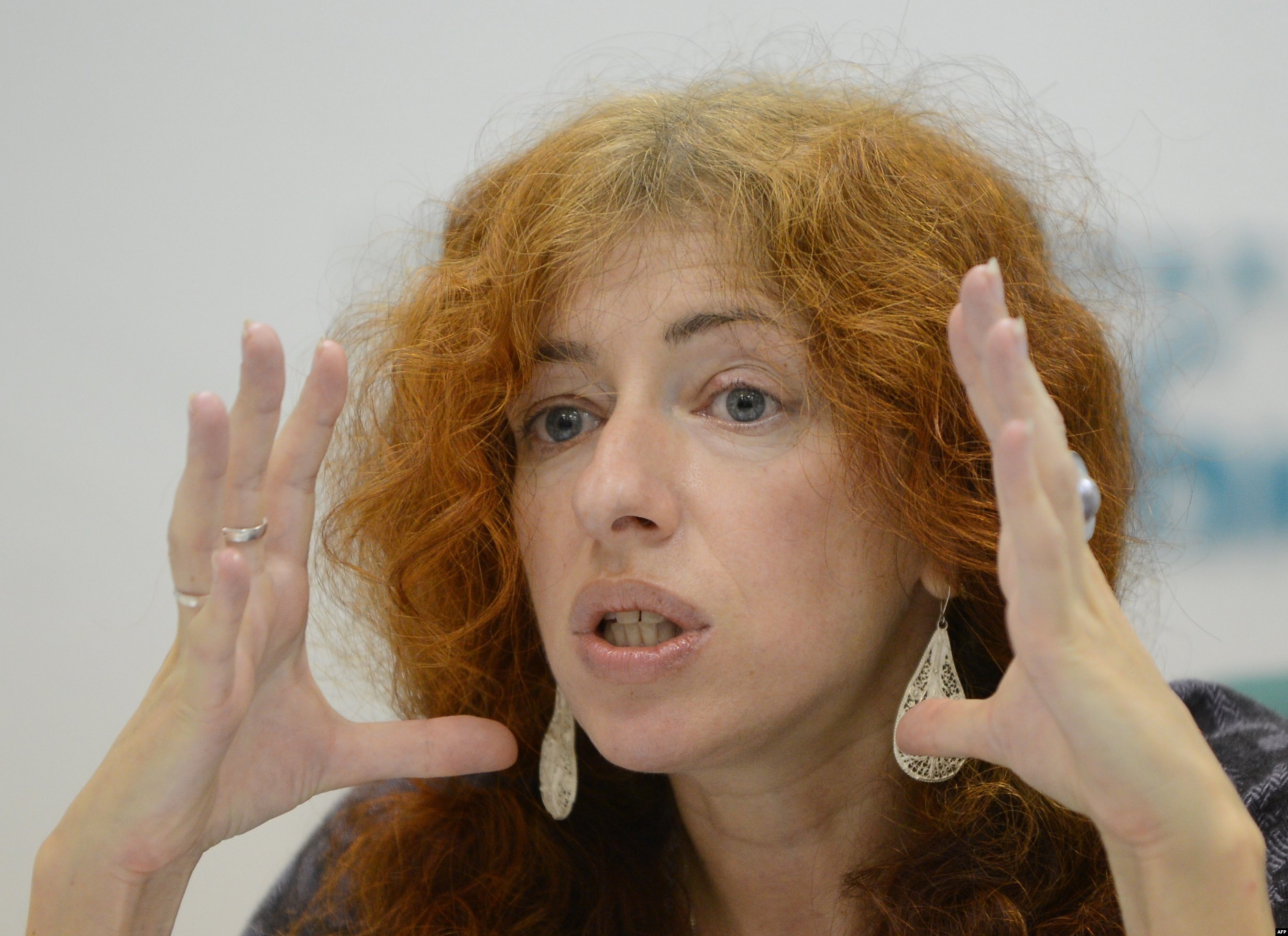
- It is important to note that in the context of the desire of the Russian authorities to control the submission of events about events in Ukraine, additional legislative and practical measures were taken to strictly regulate the activities of non -governmental organizations, the Internet and independent media. All this was accompanied by public campaigns by the authorities to discredit aligned critics. First of all, those who are critical in relation to the occupation of Russia Crimea, to Russia's policy in relation to Ukraine, to the support of Russia of separatists in eastern Ukraine. And this kind of public criticism was actually equated with enemy activities. It is not for nothing that President Putin in his speech at the beginning of the year used such a seemingly long-forgotten term as " national traitors ."
Tatyana Lokshina notes that the “unprecedented”, according to her in the new Russian history, the offensive to human rights began precisely after Vladimir Putin returned to the Kremlin, in May 2012:
The Olympiad in Sochi was a large extent by the personal project of Vladimir Vladimirovich Putin. It was necessary that this holiday did not overshadow
- Before and for some time after the Olympic Games in Sochi, this offensive was largely weakened, because at that time Russia was extremely interested in a positive international publicity so that all important guests came to the Olympics so that this holiday of Russian greatness, the Kremlin’s greatness took place. Of course, the Olympics in Sochi was a large extent by the personal project of Vladimir Vladimirovich Putin. It was necessary that this holiday nothing to overshadow. And it was shortly before the Sochi Olympics that the most famous Russian political prisoners, like Mikhail Khodorkovsky, Nadezhda Tolokonnikova and Maria Alekhina from the Pussy Ryot group, got out of the imprisonment. And these, of course, were significant events. Then, a number of so-called "marsh prisoners", that is, activists who at that time were behind bars due to their participation in the mass rally in Bolotnaya Square on the eve of the presidential inauguration of Putin, fell under the amnesty. Then ... it cannot be said that there was a kind of "thaw", but this crisis with human rights, the offensive on human rights has somewhat weakened.
The fact that this "thaw" is a temporary phenomenon, it became obvious when Russia went to the annexation of Crimea, which confirmed the worst expectations of human rights activists:
We could not assume for a second what level this pressure would reach, what scope would reach the offensive on the human rights
- In fact, we were waiting for further exacerbation in 2014, I will not hide it. We assumed that when the Olympic festivities end, the pressure on independent critics of the authorities will again increase. But, frankly, we could not assume for a second what level this pressure would reach, what scope would reach the offensive on the human rights. Instantly, after the end of the Olympics in Sochi, the occupation of Crimea occurred, and then the crisis with human rights in Russia has greatly aggravated. At the same time, for obvious reasons, the international community, the main international organizations, as well as the international press, focused on the events in Ukraine so much that they do not notice or not sufficiently pay attention to what is happening within Russia in connection with the new laws and practices that are aimed at making critics of the authorities to keep silent. That attack on the critics of the authorities, which was carried out so rigidly, so intense in the country throughout 2014, was primarily aimed at people who are critical of what the Russian authorities do in Ukraine and do with Ukraine. We are talking about people who criticized this on the Internet, and about the university professor, and the famous critical journalists and media leaders. And on the other hand, it would probably be legitimate to say that the occupation of Crimea and what is happening now in the east of Ukraine, of course, would not have happened if, after returning to the Putin Kremlin more than two years ago, the country would not accept such a rigid repressive, authoritarian development vector.
- To what extent did the events in the Crimea and in eastern Ukraine affect the situation with human rights around the world?
- Our organization works in 90 countries of the world. The Middle East is the supplier of bad news, let's think about what is happening in Syria, in Iraq, in Israel, which is happening in the gas sector. A number of foci of instability are burning in the world now, especially after the appearance of ISIS. Of course, if we talk about Europe that is happening now in Ukraine - this is a new war in Europe. And therefore, of course, this war cares in the first place.
- How and between whom is distributed, according to HRW, responsibility for violation of human rights in Ukraine?
We recorded serious violations of international humanitarian law on the part of all sides of the conflict - both separatists and from the Ukrainian forces
- From the point of view of what is happening in the Crimea, Russia, having occupied Crimea, took responsibility for observing human rights in the Crimea. And in the Crimea, according to our observations, and “Human Raits Watch” in the past year issued a whole report, a number of basic human rights are violated. And public criticism of the Russian authorities is suppressed, any protest activism is suppressed. First of all, we are talking about Crimean Tatars, but also about other critics of power. People are actually imposed on people. You can talk a lot about this, and Russia, of course, is responsible for these violations. As to the east of Ukraine, in this region there is an armed conflict, which we have been qualifying for many months as international. Because the support from Russia of the so -called separatists has long been obvious and confirmed by leading international organizations, and without the support of Russia there would be no this war. At the same time, according to our mandate, we are talking about violations of international humanitarian law, the laws of war, and the violation of human rights. Not about the war as political realities, not about who was the first to start, who is responsible for the fact that the war was unleashed. And I would like to emphasize that we recorded serious violations of international humanitarian law on the part of all sides of the conflict - both separatists and Ukrainian forces. We are talking about non -intended shots on settlements from both of them. We recorded similar strikes in the Donetsk region, in the Luhansk region, in the territories of controlled by separatists, and now we recorded the same blows from the separatists in Volnovakha and Mariupol. In addition, a strict handling of detainees, cruel handling with prisoners, which also occurs on both sides, should be separately noted.
-
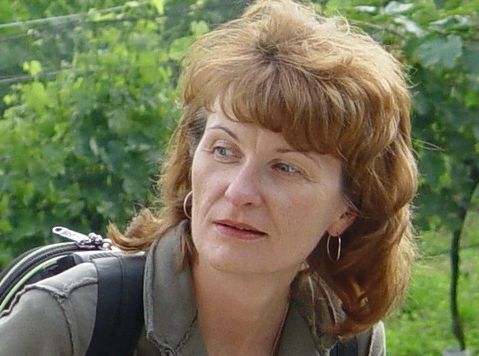

Evgenia Nazarets
Acting director of the Russian service Radio Liberty
Nazaretse@rferl.org