
Translated material
What to do with the old people
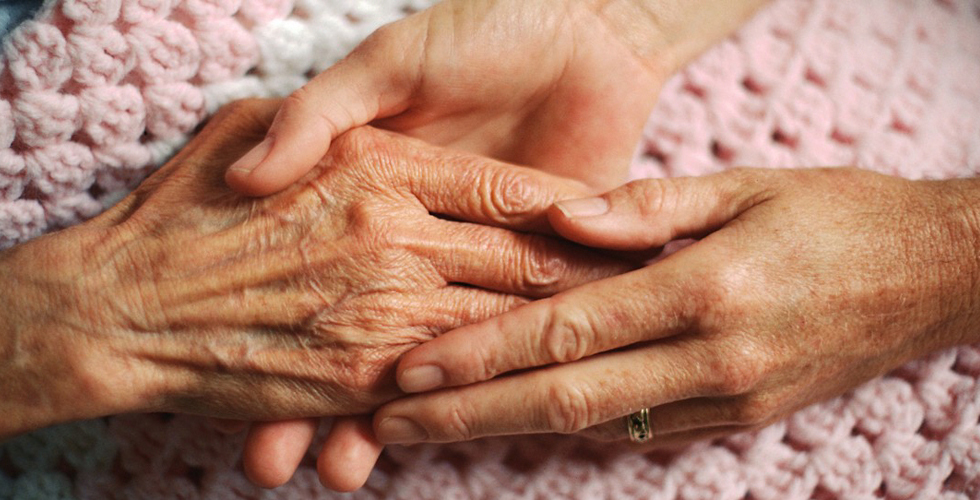
A good indicator of the maturity of the state - how many people are dying at home. In 1946, in the United States there were a majority-like in developing countries today: medicine is not available to everyone, and somewhere in Afghanistan, not every peasant who had pneumonia dumps from his feet, generally manages to see a doctor. Already in 1980, only 17 percent died in the United States in the United States (and the vast majority in hospitals). The victory of progress seems to be evident. But since then, the figure has grown and grew-23 percent in 2000 and 27 percent in 2010. Does this mean that all these people did not have enough money for a bunk in the ward? Rather, on the contrary: to die in your bed is a privilege that more and more people can afford.
What person pronounces the last words before dying? In the countries of the First World, this issue loses its meaning, because here they usually pass unconscious, after many months with a tube of the apparatus of artificial ventilation of the lungs in the mouth and with a catheter in the nose - and this excludes all kinds of conversations with loved ones. New medical technologies make it possible to maintain life for a long time so that the patient in the clinic manages to go without a hurry to go through all stages of helplessness.
Such reasoning would look good on the website of anti -Medicine activists who urge you not to spend money in vain, lower all the pills into the toilet, and to be treated with herbs and positive thinking from diseases. However, the author of the book of Atul Havande is a 49-year-old practitioner American surgeon, the Makanturov Foundation scholarships (this scholarship is called “Grant Genis”) and a constant columnist of New Yorker . Its main claim is not to the methods of medicine, but to the fact that medicine usurped the problem of aging and dying.
What if you allow the elderly at their own peril and the risk of drinking whiskey, smoking cigarettes and living in a separate house?
The high average life expectancy (in Japan - 84.2 years, in the USA - 78.8 years, in Russia - 70.5) means not only that pensioners have time to travel around the world. This means that a significant part of the population is people who cannot wear and cook themselves without outside help. Demand for this help is generated by a whole industry, and most of it with a medical bias. The old man is primarily a patient, because he is sick with something. Does this mean that it needs to be treated first?
Erwing Hoffman, a classic of the sociology of everyday life, in 1961 published the book “ Asylums ” (“Refuge”), where he discovers similar principles in the best clinics and bad prison: these are totalitarian states in miniature. Even the most friendly nurses do not cancel the fact that in the ward under a dropper you obey someone else's plan to your account. In traditional culture, a person has an earnings of a long successful life the right to “respect himself to force”, especially on his deathbed. Thanks to the progress in medicine, the Nobel laureates and the creators of huge companies in the last days of life unconditionally obey doctors and nannies.
The same medical approach is practiced by hospitals where people get with inoperable cancer, and the nursing home, where relatively healthy, but weak old people fall. To begin with, Havandda is dealt with a stereotype that only negligent children are selling to the homes of elderly parents. Caring for a 90-year-old man is a serious job: Havande in detail the case of a family, which took several years to recognize the task of an excessive one.
Another thing is that an alternative to nursing houses in the United States came up with a long time. What if you allow the elderly at their own peril and the risk of drinking whiskey, smoking cigarettes and living separately - but on the condition that, on a signal of anxiety for them, a nurse, who has the keys to the house day and night? Specially equipped villages, where the elderly live together in walking distance from the team of doctors, is Assisted practice Living , which appeared in the 1980s. The first such village called Park Paleys built in Portland at her own peril and risk, gerontologist Keren Wilson, exhausted by a feeling of guilt in front of her own mother, for whom there was nothing similar. By 2000, the Assisted Founded Wilson Living Concepts opened 184 such institutions in 18 states. And then numerous imitators appeared.
Most of all doctors are engaged in those who can no longer be cured. The last year of treatment before the death of lung cancer costs the United States in 94 thousand dollars.
If this recipe is suitable for many years of old age, then for several months of mortal illness, it is unlikely. What can help with pain and side effects of drugs? The rejection of the idea is that the main need of the patient is treatment.
Most of all doctors are engaged in those who can no longer be cured. The last year of treatment before the death of lung cancer costs an average of 94 thousand dollars - and usually we are talking about the second or third line of chemotherapy or operations that are obviously not able to save, but with a successful outcome, they pursue death for a month or two at a price of painful side effects. For comparison: in the first year after the diagnosis of the patient, they are operating or irradiated especially actively in the hope of winning or slowing down the disease for a long time (which often ends with success), but for all these procedures doctors write to insurers the average check of only 28 thousand dollars.
Havande sees the main flaw in the language of doctors: they have already learned to speak to people in person that the disease is not treated, but are not ready to develop this topic. To offer a choice of medicines that give a person an increasingly elusive chance to win another week or two, easier than telling the patient in time - he has two months or two years left, and it is useful to think about how to dispose of them. There are a number of practical dilemmas that would be nice to solve in advance: if during the operation there is a choice between complete paralysis and death on the operating table - is it worth reanimating? Doing the operation now or give a tumor to grow? Havande leads the stories of his and other people's patients who answered these questions in different ways. A professor of psychology at the age of 70, who agreed to the life of paralytics as a result of the operation, won ten years of his life in a wheelchair and managed to write two books. Havande's father, having estimated all the pros and cons, agreed to move the operation to an indefinite future until the tumor is intolerant, and gave himself several years of trips around the world and playing tennis before the intervention of the surgeon and chemotherapy, which made him helpless disabled. Everyone chooses himself, but the main thing is to put a person in time for a choice and let this choice himself. And the taboo on conversations about death and old age prevents that such questions are correctly asked and correctly meaningful.