
Translated material
Castling Blood
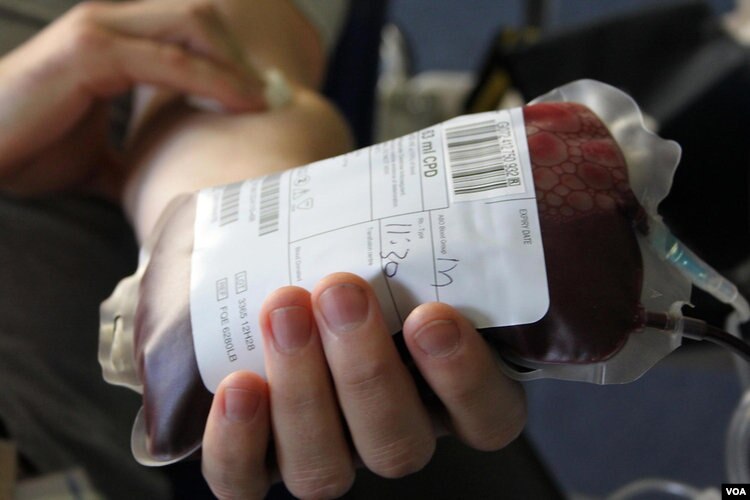
Donor-volunteers are evaluated not by the quality of the blood, but by the stamp about the registration in the passport
Russia has less than a year left to create a single base of blood donors. This project, as expected, will solve one of the main problems of donation in the country. In most hospitals and transfusion stations do not accept blood from people with registration in the "alien" region. Moreover, many receive a refusal already in the registers of hospitals: publicly they say about the ban on the ban, nor in any law there is no. Officially, such a problem does not exist.
“I'm in shock,” the heading shouted one of the topics at the popular Novosibirsk forum. His regular under the nickname Terra 2009 talked about what he encountered at the local blood transfusion station: “Friends called. The young girl dies in intensive care. I urgently need blood. All friends were raised to the ears, the blood is rare, but about six people were typed. The two were refused in the recreation due to the lack of city registration! I have no words ...”
Four days later, the user left a new message. "The man died ... but they could save."
In Ukraine, a “registration” is not needed for blood donation, and now, in Russia, it was required
A new problem appeared in the Crimea. In Ukraine, a “registration” is not needed to donate blood, but now, in the new political conditions, it was required. As a result, Crimeans have to rely only on themselves. “ My father was dying, I needed blood urgently. Two guys did not take blood with Ukrainian registration,” the participant with the name Cinik shared at the Alushta forum .
Donors in Russia continue to face the fact that often their blood - gratuitous, even rare - is not needed. Volunteers are evaluated not by the quality of blood, not by its Rh factor, but by the stamp in the passport. According to decades, it is very difficult to donate blood to a person who does not have local registration. Starting with the nineties, when millions of people began to go to work in other cities, the problem has become aggravated.
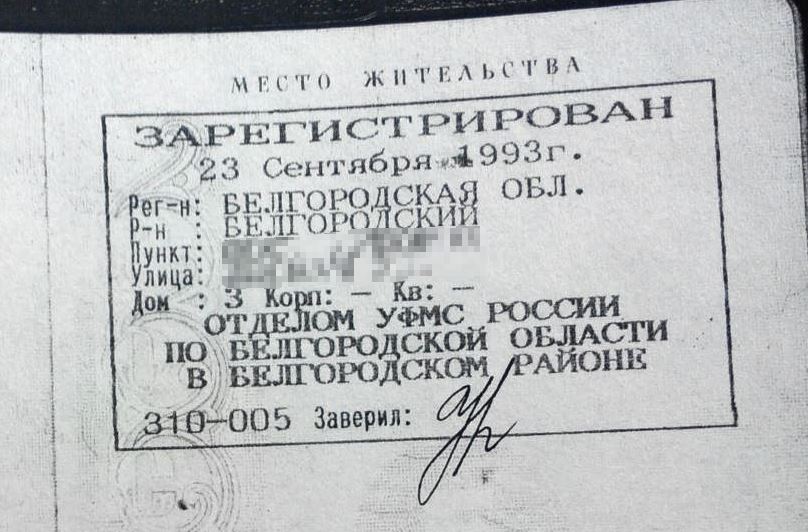
In the Federal Law "On the Donation of Blood and its Components" there are no regional restrictions on this procedure. All that is needed is to be capable, to be a citizen of the Russian Federation, to have a passport with you. Officially, at the absence of restrictions, they also insist in the Federal Medical and Biological Agency (FMBA) of Russia. Therefore, there are no statistics on what part of the donors faces such prohibitions.
- Donors, regardless of the registration, are carried out not only by federal, but also by regional blood transfusion stations. It’s just that the blood service institution is often due to the difficulties of information and technical interaction with specialized institutions of another region limit the reception of nonresident donors, ”says Alexander Vlasov, head of the press service of the FMBA.
In fact, a person who has a stamp in a passport from Tyumen will not be accepted in Ryazan. At the Moscow blood transfusion stations, only Muscovites and residents of the Moscow Region are waiting for. On the one hand, this is explained by concern for the quality of blood: there is no confidence that a person from someone else's region has no diseases. On the other hand, with the current development of communication, it is difficult to explain to a person why doctors constantly talk about a lack of blood, and they themselves outlines potential donors on a formal basis, without even trying to request data from colleagues in another region.
People obviously perceive the ban on donation without local registration as humiliation
On sites, in donor groups of social networks, disappointed messages appear daily. " What kind of nonsense ... ", " they don’t give a good deed ," it is probably impossible to spoil the blue blood of the Vomkadovites to their provincial . " People obviously perceive the ban on donation without local registration as humiliation.
Only in Moscow, according to some estimates, up to 30% of potential donors are lost due to this. In the capital and some other large cities, however, it is easier to solve the problem: the country has several federal medical centers that do not ask for registration. If you try and find their addresses, you can still donate blood. And there is nowhere to go to a native of the district center of the Primorsky Territory, who has been living in Vladivostok without a “registration”: in a single possible place, blood transfusion station, he will be refused.
Since the middle of the "zero" years, the Ministry of Health spoke about the creation of a single all -Russian base of donor blood. First, its launch was planned for 2011 , then for 2012 . Two years ago, plans nevertheless gained the form of the law . Now the base should earn by January 1, 2016.
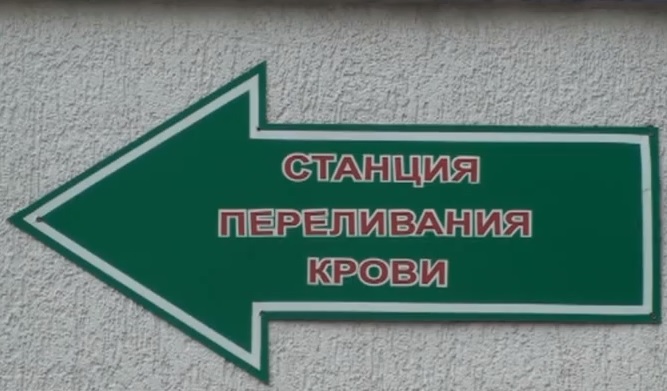
- We work a lot with youth, students who come from other regions. Therefore, we are looking forward to when we can use the data. At the same time, in our region it is impossible to say that the insoluble access to donation is completely prohibited - we have the right to accept students who have long been living in the Nizhny Novgorod region and have for more than six months here have been temporary registration, ”says Taisiya Gorina, coordinator of the Nizhny Novgorod Donor River.
According to Taisia, in its region, the statistics of donation are better than the average Russian. Despite the fact that 35 donors per 1000 people are considered to be a European indicator, in the Nizhny Novgorod region there are 18 per thousand (in the whole country - 14). This covers needs, assure the "River of Life". In Moscow and the Moscow region, statistics are almost twice as worse: 8 donors per 1000 inhabitants.
By the end of 2015, the main bureaucratic problem in blood donation, perhaps finally disappears
According to the FMBA of Russia, some regions have already received a technical opportunity to exchange data with neighbors: about 180 institutions of six hundred are connected or connected to the system. In mid -January, it became known that the Volgograd region received access to a single base; Earlier, to take nonresident steel in Khakassia. By the end of 2015, the main bureaucratic problem in blood donation, may finally disappear. At the same time, one more thing will be decided: campaigning youth to do a good deed and silent about the “small details”, activists sometimes get the opposite result - disappointed people who will no longer appear on the threshold of donor points.
-


Evgeny Kuzmin
School of the Vaclav Gavel Prize (a joint project of Radio "Freedom", the Ministry of Foreign Affairs of the Czech Republic and the Prague Freedom Foundation).
eugenekouzmin@gmail.com
Born in 1983 in the Far East. He graduated from the journalism department of Amur State University. One of the founders and the first head of the Amur.info news agency (Blagoveshchensk).