
Translated material
Kiosks are taken to leave
Monopoly or market? The head of the Department of the Media and Advertising of the Moscow City Hall believes that the retail reform will not make the businessmen and distributors in unprofitable, and the press is less accessible to readers
Monopoly or market? The head of the Department of the Media and Advertising of the Moscow City Hall believes that the retail reform will not make the businessmen and distributors in unprofitable, and the press is less accessible to readers
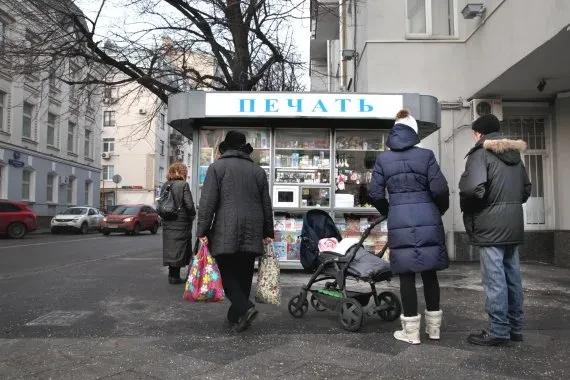
In December 2014, the Moscow City Hall announced that he would independently replace all the kiosks of the press with new ones (which she had previously required from the distributors), and for this she would take them to his ownership. Owners of outlets panicked: “deprivatization”, redistribution of the market? Moreover, the market of low-nature, which in the "stable" years experienced economic difficulties due to restrictions on the sale of related goods. And soon, for all kiosks in Moscow, including the kiosks of the press, the so -called trading fee (from 28 to 81 thousand rubles per quarter depending on the location) will be introduced. In general, when, against this background, the Moscow prefectures at the end of last year began to refuse the owners of the kiosks in extending the contracts and massively send out the dismissal instructions - it became scary for the retail sale of the press.
The correspondent of Novaya Gazeta was tried to reassure the head of the Department of the Media and Advertising of the Moscow Government Vladimir Chernikov.
- On December 3, 2014, at the city industry forum of the press, you turned to the distributors: “You had three whole years to replace the kiosks. But you did not. Therefore, today the city made the only right decision - to do it yourself. This will be a Moscow institution with 100 percent property, on the balance of which all the kiosks will be set. All that I said is a fundamentally adopted decision that should be implemented in the shortest possible time. ”
Only on December 25, Vice-mayor Alexander Gorbenko explained that the old places will not be played at new competitions, that the existing kiosks will serve the same operators as before. Is it necessary to understand that in these three weeks the “fundamentally made decision” has been changed? And if not, then why didn’t you explain on December 3 that no one will be playing outlets again?
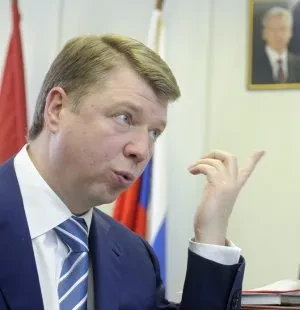
- This phrase is torn out of context, let's talk objectively. We have been talking with our community for more than one year. Yes, we have different relationships with representatives of the industry - because they are all different. And we, too, cannot be, like a gingerbread, equally sweet for everyone. But the key platform of our relationship is trust.
When a trend was taken to get rid of the outbursts of non -stationary trade, we defended the interests of the industry. The number of kiosks of other specializations was significantly reduced, and on behalf of the mayor, the seals on behalf of the mayor continued to function. We retained the existing placement scheme almost in full - by 80-85 percent.
Two years ago, my colleagues and I agreed that they would have to replace the kiosks. Some companies (even if they are not the majority), having heard this correctly, began to replace it. But someone decided that these were just words.
As a result of serious discussions, an offer arose to meet distributors towards. We told our colleagues in working order that we would take this work to replace the kiosks, leaving them in our ownership. Just on December 3, the forum was a place where it was possible and necessary to voice it officially. And here a little from the evil that colleagues did not know this. They knew perfectly. For some reason, the phrase that I turned to the industry did not sound in your quote: “Be careful, because we still need to finalize this issue to the end, including FAS, and with other organizations, so as not to violate anything.” At the same forum, at least three speakers (individual entrepreneur and two companies) supported this idea. And then our proposal began to be interpreted by someone. "The Moscow government wants to do business." "We are deprived of work." This background was beneficial to someone. We tried to understand his nature. In our opinion, they understood. The main engine of this idea was the desire of some colleagues to leave everything as it is: to prolong the contracts without replacing anything. There was more indignation from those who leased the kiosks. After all, arithmetic is simple. The city received from a kiosk ( for renting a place under it. - N. G. ) from 600 to 5000 rubles per year. Per year! And these kiosks were given at other prices - ten times more.
- How many kiosks of the press were leased?
- In our opinion, 70-80 percent. But there are those who surrendered nevertheless with control, but there are no control. There were places where they traded vegetables, not a press. There were 20 percent of the unscrupulous rental. This is a fairly serious figure.
- Thus, on December 3, did you know that retail outlets would not be played again?
- Yes, sure.
- Did you mean it or did you talk about it?
- Of course, he said. He said, but very carefully. And on December 25, this issue was voiced in an alternative with the impossibility of a different decision. If you want, December 25 was tougher. I used to speak softly enough, and some colleagues used it in terms of negativity. In the period from December 3 to 25, we set all the points over the "Yo".
- How will the rental rate be calculated? After all, there are kiosks of the press in the center, but in a small place, but there are kiosks on the edge of the city, but at the metro station, where sales are higher.
- In accordance with the Federal Law, the so -called trading fee will be introduced in Moscow. We understand that if the rental cost here is also imposed here, then we can immediately say that a torceous business will become completely unprofitable. Once we walked on the principle of the so-called zones. Today we see that the criterion of "cross -country" is also important, you are talking correctly.
We will agree on lease in terms of mutual interests - and the city (so that the city can at least compensate for its costs for new kiosks) and sellers. Our colleagues from the Department of Economic Policy and Development are connected. I think that together we will make this decision no later than March.
-The 197th Order of the Ministry of Communications for a city with a population of more than a million people recommend a rental rate not higher than 30 rubles per square meter per month. Is it real in Moscow? And in conditions when you plan to at least compensate for the costs from the budget?
- Really. Because still there is a trading fee, which we definitely cannot influence in any way. The minimum rental rate will be repelled somewhere from this indicator. Plus, we have the opportunity to lumber the deadlines. The quality of the pavilion itself guarantees its operation within 10-15 years. And if we (I open the veil, this is also discussed) we will divide the payback by 10-15 years, then the rental rate, of course, can be reduced.
- Will the bonds to communicate and maintenance also take on the connection of kiosks to communications?
- It is planned to leave the kiosks to the mains to the prefectures. And the costs of the current maintenance of the leased property, in accordance with the law, is charged by the tenant.
- Perhaps the main component of profitability is an assortment of related goods. Do you want it to be expanded? What are you doing for this?
- We want - within the framework of the permissible. The same snacks, the same coffee. We need to strengthen the industry. For this, we are actively working with the Department of Trade and Resistance. The zealous heads are trying to say now: “And let's return everything that was before the ban” ( for example, the sale of beer was banned in 2013, tobacco in 2014. - N. G. ). We will not be able to support this position. And to expand the assortment within the rational limits - this has a general understanding. I think that along with the schedule of replacement of the kiosk we will establish an assortment.
-The placement scheme is still not approved?
- The accommodation scheme is currently aimed by the Department of Trade to agree on municipal meetings. We offer 2838 press trade objects. These are 474 press tards and 2364 kiosk. 2095 places have already been agreed: we retain 1759 old places and introduce 336 new. Another 269 places are in addition. The scheme should also be accepted until March.
On December 25, we also realized what the dissatisfaction of the industry was still based on. Some of the kiosks that did not fall into the scheme were subject to dismantling. This was fair, because if the kiosk is not in the scheme, and the contract is over, then it should be dismantled in theory. And in relation to such kiosks, we introduced a moratorium on dismantling. Unfortunately, this agreement is not executed in the form of a regulatory document. This is an exception to all the rules.
- But there are kiosks that were in the scheme, but also received dismissal instructions.
-Two or three cases. Including a new kiosk was also dismantled. He just stood in the wrong place. Everything has already been compensated and restored.
We do not have a problem associated with the shaft of dismantling the stamp kiosks. We have some inconsistencies in which sometimes printing kiosks are dismantled. Why? In Moscow, the “Our City” portal is actively operating, to which the comments of citizens fall. For prefectures, not to execute an order in accordance with the regulatory document is a violation. When we realized what the problem was, we corrected the situation. Such facts are units. From December 25 to date, we have not a single appeal.
- Here I have dozens of instructions in my hands at dozens of addresses. Signatures of Zameni Zverev, deputy form of Yuvao Buyankina, head of the district of Orekhovo-Borisovo South ...
- By the bulk, we managed to react and leave the kiosks. I’ll say what I know: over the past year (especially in the autumn was a surge), 8-10 kiosks were dismantled. Their contracts have long been over. They did not remain even in the draft scheme. Now we have introduced a moratorium on such points. But after the approval of the replacement schedule, such kiosks will be dismantled as soon as possible, and the owners know about this.
- It was reported that one kiosk would cost about 650 thousand rubles. This is 1.5 billion rubles for 2364 kiosk. A year ago, the federal government spared 3 billion from the budget for the Russian Post for the delivery of signatures. Where does the “extra” 1.5 billion in the city budget, especially since it was adopted by the Moscow City Duma back in November 2014? What will be less than 1.5 billion this year less?
- A very simple question is for me. There is such a thing as non -tax income, which include, for example, advertising income. Last year, the budget received no less than 10 billion rubles for the placement of advertising structures in the city. That is, we ourselves earn this money. And today this money is already in the budget. I understand the irony of your question, but the question is serious. Yes, this money can be spent on other areas, and primarily social. But we will spend these 1.5 billion not at a time, but for at least one and a half to two years. Divide the figure, and it will already be easier. We have sources of income, and the effectiveness of their waste allows us to conclude that this will not fall on the budget and will not affect the Muscovites.
-The second year in a row in the rating of the freedom of the press, which is “reporters without borders”, Russia takes 148th place out of 180. The city hall will soon become the owner of the kiosks. Who guarantees that the tenants will not call and will not say: "But the" New Gazeta "wrote this, today we remove from the sale." Or, God forbid, your "Evening Moscow" will write something wrong ...
- For four years of work as the head of the media department, I have never received and did not give such instructions.
- So the city hall was not the owner before.
- We will be the owner from the point of view of streamlining of activities, and not influence on content. If there was such an opportunity, you, as with these prescriptions of prefectures, were presented to me and said: but how is it? I cannot imagine that we will give such instructions. To make the newspaper "Evening Moscow" spreads in the subway - I can. But not to the detriment of someone who can still spread there. It seems to me that the freedom of relations between business and power from us (I only take my direction) lined up from a positive point of view. It will happen - then let's discuss. But I think, I suppose and even sure: this will not happen.
- Now in the capital one kiosk accounts for almost 6,000 inhabitants. The Ministry of Communications for a big city recommends a European norm - one kiosk for 1,500 people. Is this norm necessary and achieved in Moscow?
- I think that the market itself should answer this question. This should not be determined by order. If the industry and I suddenly understand that we have a shortage, that we have lines at the kiosks, or the microdistrict opens, and here they definitely lack them, they will appear. And not a single official can ban this. If there is a situation in which there should be more kiosks, there will be more of them. They will come to us, say: "Well, a kiosk is needed here!" Let's make changes to the scheme and put it.