
Translated material
Putin outside of understanding
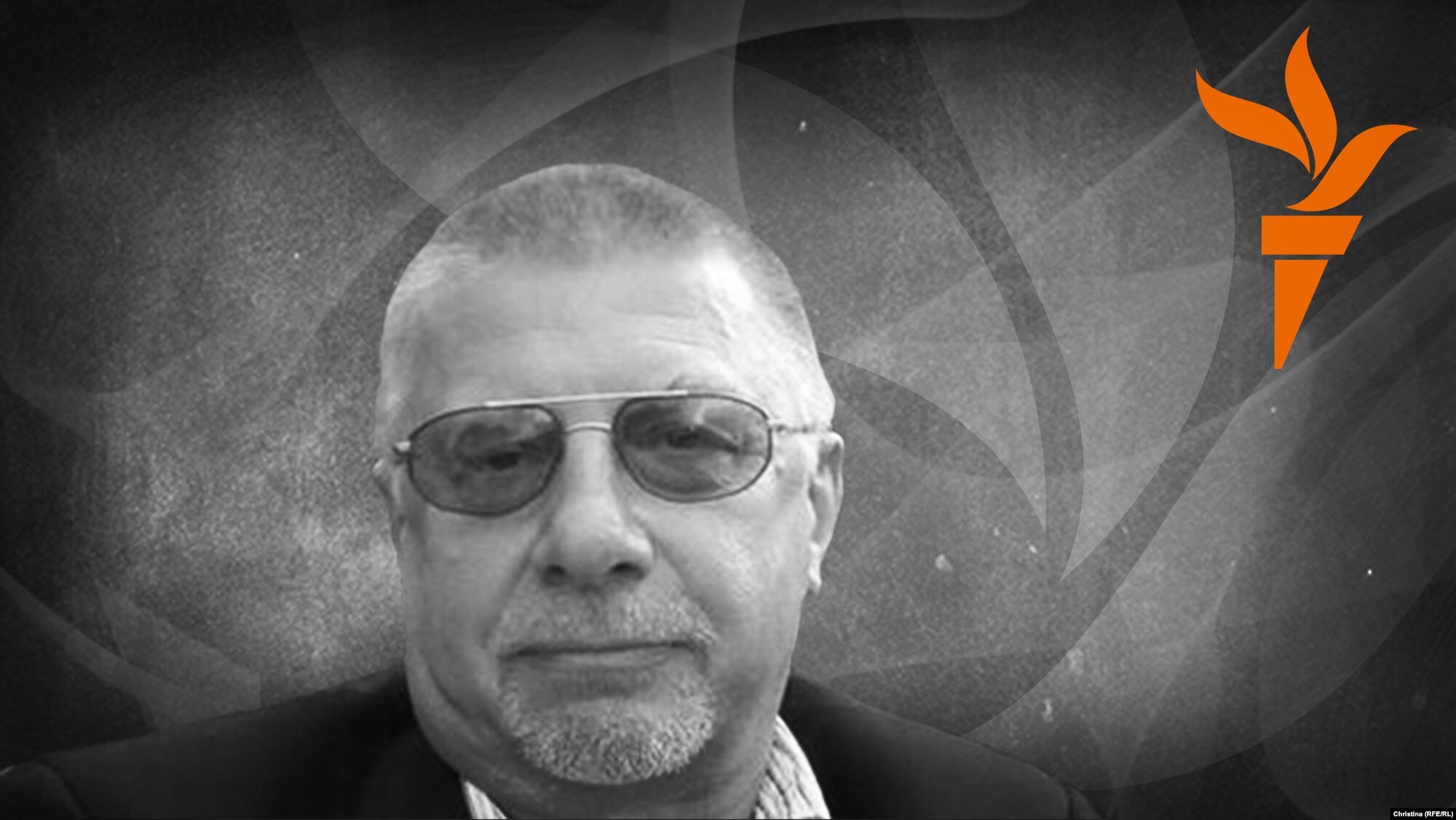
Political scientist Yuri Fedorov - about NATO, Kremlin towers, Narva scenarios and worst versions
Russia's unpredictability is the main problem for the West trying to formulate its policy against Moscow and the Ukrainian crisis, ”said foreign policy expert Yuri Fedorov.
Activation of battles in eastern Ukraine in particular and confrontation with Russia as a whole is the central issue for the West, says Fedorov, and this topic, without a doubt, will be discussed at a meeting of the defense ministers of NATO countries on February 4 and at the Munich Security Conference on February 6:
- A year ago, the very thought of, say, about the war in Europe and, especially, about the nuclear war in Europe seemed completely crazy. People who spoke not only about the prospects of such a war, but about the fact that in general it is necessary to somehow consider a military scenario in Europe, related to Russia, were considered a kind of city crazy. Now the most serious specialists, experts in governments and in academic circles are seriously thinking about it. There are several grounds for this. First of all, this is the so -called Narva scenario, that is, a repetition of Crimean events or events that occur in the Donbass, in the Baltic states, primarily in those areas of Estonia and Latvia, in which the majority make up the Russian -speaking population. This scenario is considered today as, unfortunately, quite realistic. In the event of such an invasion, the North Atlantic Alliance would face a very dangerous threat-to intervene, as follows from the article of the 5th Washington Treaty, to use the Armed Forces to protect NATO member states, in this case, Baltic states. But no one can guarantee that such a decision will be made unanimously by all NATO members, and decisions of this kind are made consensus. If NATO does not make such a decision, does not enter into military confrontation with Russia, then the question arises - what is the meaning of NATO? Here, in fact, the Russian leadership strategy is being built today-to put NATO in a situation where it will either risk its existence or risk the existence of some of its member states located near the Russian border.
- Indeed, this scenario was actively discussed in spring and summer. However, in the fall it began to say that - no, the position of Russia has staggered, this nuclear bluff, blackmail, failed. Do you think this threat persists?
-I will refer to the fact that events in the last year and a half are developing according to the worst possible scenario. Therefore, I would not exclude such a prospect.
Putin and his environment are in a very difficult position
- It seemed that Russia decided to stop, because the economic fee was too large, then the situation in the east of Ukraine suddenly worsened again. In your opinion, now everything is developing for the worse or is Russia trying to slow down?
- Russian policy is usually associated with the name of President Putin or with the decision of President Putin. This is true, but it must be borne in mind that these decisions are formed under the influence of what is called the Kremlin towers-some groups in his environment. Some of these groups (they are often called the "Party of War") are interested in a military resolution of the situation in Ukraine, that is, in a large -scale military operation, exciting either half of Ukraine, or the same land corridor in the Crimea, which has already been mentioned. Other groups advocate a milder policy, for attempts at some political solution to this problem. Still others insist on escalation strategies-to constantly put the West before the need to either retreat or raise the confrontation to some higher level, which is risky for the West and causes resistance to certain circles in Europe and in the USA. Here is the most dangerous, probably, is that almost no one can predict Russia's policy more or less reliably today. Unfortunately, all trends in recent times are more likely to indicate that the situation will develop according to the worst scenario, no matter how sad it seemed to us. I am afraid that Putin and his environment are in a very difficult situation. They fell into that very trap, into the same hole that they dug for others. And they will be forced to either retreat, or to escalate the situation further, whip the tension even more. This is the most sad and the most dangerous. Any attempt to solve the problem, at least on those conditions that seem to the Kremlin acceptable today, I think, are few real. Ukraine will not go to such fundamental concessions that the Kremlin requires, but I think that the West is also not ready to yield to the Kremlin on fundamental issues. Because it will mean, as it seems to me that the situation can repeat somewhere in other regions. For example, in the Baltic states or somewhere in the western part of the Black Sea basin-in relation to Romania, Bulgaria and other countries in the north of the Balkan Peninsula, which may be involved in new conflicts.
Where there are limits, and whether there are limits for the current Kremlin policy
-Do I understand correctly that now the West is trying to just wait until the sanctions act and the economy in a sense will appease Russia?
- It seems to me that in the West there is no clear understanding of how far Putin can go. Yes, in fact, no one has such an understanding. I am not even sure that Putin himself clearly understands where there are limits for which it is not worth crossing. This is probably a very dangerous option, a factor in a fairly dangerous development of events. Because the actions of Russia are unpredictable. Hence, discussions arise in the Western political community, in academic circles, polemics, in which two points of view are faced. Some assumes that Putin can go very far, while others believe that there is still some kind of self-preservation instinct that will not allow Putin to cross the line, beyond which the development of events can already become completely uncontrolled, which, unfortunately, can even lead to some limited nuclear war in Europe. The lack of a clear understanding of what can be further, where there are limits, and whether there are limits for the current Kremlin policy - this is the uncertainty in the western approach to the construction of relations with Russia. Hence this rather evasive policy: well, let's bet on economic sanctions today, let's hope that economic difficulties will stop the most aggressive part of the Russian establishment today. Maybe this point of view is fair. I would really like to hope that it is fair, but life can develop according to other scenarios.