
Translated material
Yakunin called the sanctions of the West "Economic War" and assured that they would not quarrel a Russian business elite with the president
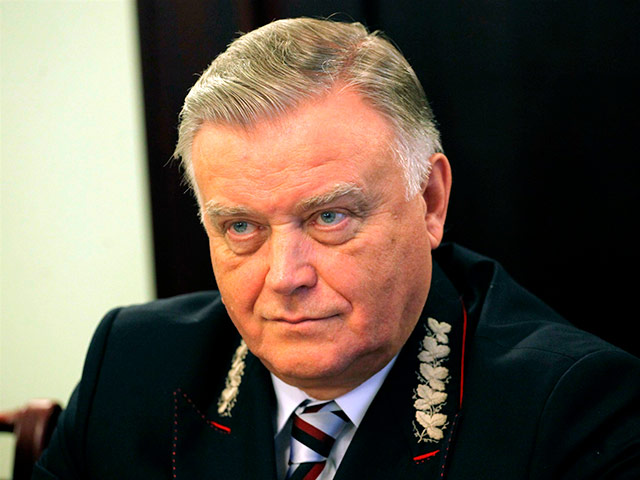
The West miscalculated, deciding that his sanctions imposed by him against Russia could quarrel President of the Russian Federation Vladimir Putin with people from his immediate environment. This was announced by Bloomberg by the head of the "Russian railways" Vladimir Yakunin. The interview was recorded on January 30, but the agency published it only on February 5.
In the material, the head of the Russian Railways said that the sanctions imposed on large entrepreneurs, who are ranked by Putin’s environment, are essentially an “economic war”. “These are not sanctions - this is an economic war, a war using economic and financial levers,” the agency quoted Yakunin as saying.
According to Yakunin, "to say that this can drive a wedge between the president and his, as they say, an environment, or a business elite, is completely biased." In his opinion, such actions only convince that Russian businessmen are not considered a world elite. “They are suffered because they have the largest yachts and mansions, because they brought real money to their market. But at any moment they exchange their well -being for their own interests,” Yakunin said.
The head of the monopoly noted that investors are kindly related to Russia, and called the decrease in the leading agencies of the sovereign rating of both the country, and the largest companies are "politically motivated." According to him, Russia is in a crisis due to systemic problems that have accumulated in the global economy over the past years.
Recall that the first sanctions against Russia were imposed by the West in March last year in response to the accession of Crimea . Initially, the restrictive measures of Western countries concerned representatives of the Russian authorities and large entrepreneurs, whom the initiators of the sanctions consider Putin's entourage. Yakunin himself fell under the sanctions of the United States and Australia, but did not enter the European Union list.
In the future - against the backdrop of a military conflict in the Donbass - the sanctions were tightened. In July 2014, the EU introduced sectoral economic sanctions against Russia, in September they were expanded. In parallel in the Western press, the first reports appeared that under the influence of Western sanctions in the highest leadership of the country there was a split : supporters of the tough political course allegedly encountered representatives of business elite, fearing for their business interests.
In October 2014, Bloomberg reported that Putin’s environment will quarrel among themselves, divided into two main groups. According to the agency, the first group, headed by Prime Minister Dmitry Medvedev, was concerned about the sanctions and the actual isolation of Russia from world financial systems. The second group, led by the head of Rosneft, Igor Sechin, which includes representatives of the power bloc, supported the president’s actions and spoke out to strengthen control over the economy.
In January 2015, the agency wrote that Putin allegedly reduced his environment to a small group of security forces. The sources of the publication claimed that the head of state began to be suspicious of large businessmen who fell under sanctions, supposedly because of their discontent by the actions of the Russian leadership.
Then the press secretary of the President Dmitry Peskov denied these messages. He stated that there were no businessmen among those close to Putin. Billionaire Gennady Timchenko and Boris Rotenberg did not comment on Putin’s position in Ukraine, the representative of Arkady Rotenberg said that the entrepreneur did not criticize the president’s policy.
In January 2015, the European Union countries agreed to extend the effect of a black list in relation to a number of Russian politicians, officials, businessmen, state organizations and banks for another six months - until September. And the day before, a number of publications reported that the EU plans to expand the list by including Russians and representatives of the self -proclaimed republics in the Donbass, participating in the hostilities against Kiev.