
Translated material
Oil Byzantium
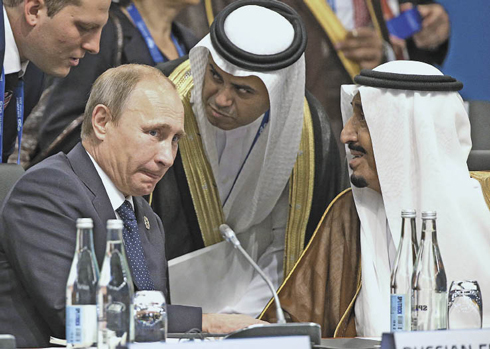
President Vladimir Putin tells the future king of Saudi Arabia Salman Ibn Abdel-Aziz As-Saud at the G20 summit in Australia, Brisben, on November 15, 2014 , on February 3, The New York Times published an article that began with the words “Saudi Arabia is trying to put pressure on President Vladimir Putin so that it refuses to refuse from The support of the Syrian President Bashar al -Assad ... ”The Russian establishment was indignant - the refutations fell from the Kremlin and from the State Duma, so what, the authoritative Nyt erupted in vain? Or vice versa-opened the veil over the secret negotiations of Moscow and Riyadh? Not just.
In the negotiations of the last year, there are two clear plots between Riyadh and Moscow-Syria and oil prices. Few of the world's leading newspapers did not write at the end of 2013-early 2014 about the attempts of Saudi intelligence chief Sultan Bandar “Seduce Putin” by multibillionar (mentioned a figure of $ 15 billion) contracts for Russian enterprises, including the purchase of Russian weapons. Allegedly, in exchange for refusing to support Bashar al -Assad. And all in vain - "Moscow did not give in!" This is then, even before the Crimea and the Ukrainian crisis.

And the end of November 2014: oil prices rolled down, and the dollar jumped up. The Saudis are again in Moscow, again discuss the “Syria problem” and oil prices. The Russian economy is in a crisis, but in Moscow (in particular, Rosneft Vice President Mikhail Leontyev) loudly accuse of our troubles “Er-Riyada’s manipulations in the oil market”, recalling its “intrigues” in Syria. Since then, the Saudi princes and sheikhs seem to have been trying to go around Moscow.
In Riyadh, they believed (according to the results of negotiations on November 21) that Moscow is not ready to reduce oil production itself, but wants the Saudis to go to this. On November 27, all OPEC countries said “no” to such one -sided abbreviations. We see the result of this decision at oil prices - although now the price for a barrel is approaching $ 60, few doubts that it can fall down again. But to argue that it is for the good of the oil producing Arab monarchies is naive and even stupid, since they lose no less than Russia. According to the IMF, if in 2014, oil -dependent Arab monarchies recorded the growth of their total GDP by 4.6 %, then this year it is expected to fall by 6.3 %. The same Saudi Arabia, with today's fluctuations in oil prices, will lose 10.1 % of its national GDP.
This suggests that the oil problem is loosened as independent and extremely destructive for manufacturers of this product. The whole world will have to agree on it. Leaving the notorious Assad aside or trying to simultaneously find approaches to the problem of Syria. But this seems to be secondary question.