
Translated material
Man from the "Reserve"
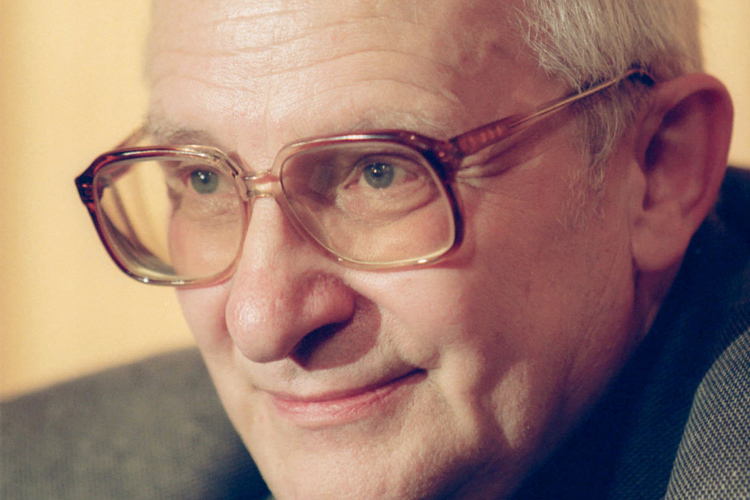
On February 8, Sergey Muratov, a director, filmmaker, a filming, a researcher and television theorist, raised more than one generation of Russian television people, passed away. Telekritic Yuri Bogomolov knew him for half a century.
Saying goodbye to life, Sergey wrote a book called "Reserve". He began her with a joke about the pianist who was sitting behind the piano and presses on one key - “before”. To him: "Look how others play - on the entire keyboard." He: "What are others ... They are all looking for, but I have already found it." And it presses further his “do-do-do”.
Sergey was not such a pianist.
About 60 years ago, at the time of the thaw, he came up with the program “Evening of Fun questions”, which was slammed with the scandal, and four years later reformatted and took the air under the name “KVN”. She is still alive today. In what form is another question. Gloomy. Let's leave him here unanswered.
The thaw is always deceiving. One could get used to this pattern of nature. But the kidneys of trees are not getting used to it. Citizens too. In each warming, they begin to swell and in other cases to bloom - especially those who are still not a thorough.
The first to “bloom” writers and poets. Then - painters, filmmakers, artists, documentary, musicians ... Finally, television people. Like in the song: "And even a stump on a spring day, he dreams of becoming a birch again ..."
He came up with the program “Evening Fun questions”, which was slammed with a scandal.
Whatever we say about TV, which gave the first sprouts in public life in the middle of the last century, no matter how much its artistic ambitions and communicative potencies became the organic part of the information space. And the organic is such a thing - it is difficult to argue with it: it can be limited, but it is not possible to naval at all. It did not work out even with the Soviet regime. Living TV drove into the door, and it returned out the window.
Muratov’s “squeezed out”, as they say today, the broadcast and the program - he began to write scenarios of documentary films with one purpose: to rehabilitate the living life of a living person on the television screen. So he mastered the note "Re". Then - and other notes. Went to science and in teaching.
At that time, many went to science. Like a monastery. In it one could feel a relatively free person. And the theory of television was an entertaining and exciting business.
It was then that Mikhail Romm came with an acute polemic article “We will look at the road”, where the great future predicted television, and death and the theater predicted. Then Sergey Eisenstein’s paradoxical judgments about the extraordinary possibilities of new technical muses began to quote often. A little later, Maklyuen's works appeared. At the same time, the book of theatrical critic of Vladimir Sappack “Television and We”, where the fundamental funny questions, on which we, young TV researchers, tried to give more or less serious answers were asked.
Living TV drove into the door, and it returned out the window.
The most popular question was: "Television is an art or just a new information tool?" There were no convincing answers. Life reasoned us: television can be considered to some extent show business, in some kind of political show. Today it came to what, from which it seemed that we left 20 years ago - to the agitprope living according to the laws of wartime.
Sergei Muratov felt the unnaturalness of this triple alliance. He gave so much strength to the study of the ethical component of television creativity. Its farewell book “Reserve” is largely devoted to her.
The name has a museum Oberton. At first, it seems that we will talk about fenced, fencedry reality, like Dovlatov’s novel “Reserve”. But Muratov has the meaning of the heading different. His reserve is a dozen commandments that should be guided by while working with television tools. And also - a collection of observations and impressions delayed in his memory. And understanding your own professional experience. He mastered the entire keyboard of television culture. And, perhaps, there is in his farewell book and roll call with a Dovlatov story. Their heroes are protected people.
Nevertheless, it is symbolic that he parted with life at the time when the matter of his life turned out to be a spoiled and overshadowed modern practice of Russian TV.