
Translated material
Lesson and reproach
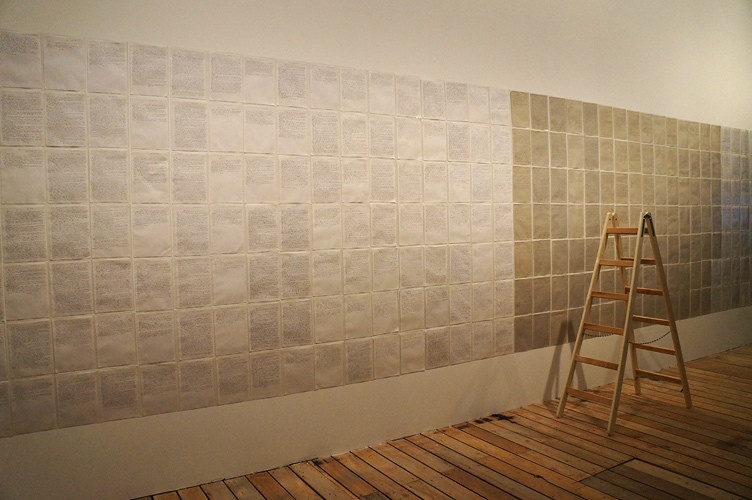
In the "Garage" the exhibition "Grammar of Freedom / Five Lessons. Work from the collection of Arteast 2000+ " . All works - and this is mainly the art of eastern Europe of the Soviet and post -Soviet periods - brought from the Ljublian Museum of Modern Art M Oderna Galerija .
The use of the word "freedom", especially in a wide context, is always alarming. In the artistic disputes of recent decades, the inflation of this concept was noticeable - holes in theoretical constructions shut up too often. The public fermentation of the last four years and the reaction that followed him, on the one hand, made a conversation about freedom inevitable, but, on the other hand, at first this word lost any positive content during the aggravated disputes of heterogeneous political groups about its significance, and then it was returned to life in a strongly simplified form: it is believed that today in the Russian Federation freedom is in common, when there is no ourselves in power. To make an exhibition in such a situation, where freedom, according to the organizers, is a key concept (and it is simply made into the name) is quite problematic.
We must pay tribute to the curators - the director of M Oderna Galerija Zdenka Badovinats, an employee of the same Museum of Boyana Pishkur and Snezhana Krasteva from the Garage: divided into five parts- “Lessons”, the exhibition details the selected topic. It is unlikely that a system of half -water elements can be called grammar, but as a scheme, thanks to which you can navigate in space built by curators, it works quite. Lessons - about the body as an instrument of liberation; on the cooperation of artists, despite political and regional differences; about ways to change or deceive the existing art system; on the value of self -organization and alternative art practices; About difficulties as a challenge that mobilizes the artists, seem simple and clear, which for an exhibition designed for a wide audience with a rather confusing content is a clear good.
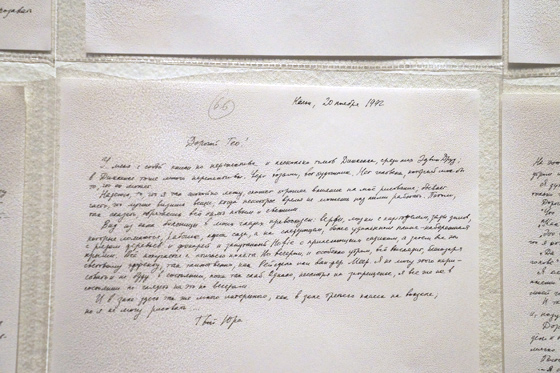 © colta.ru Yuri Albert. Letters to Brother Theo. 1992-1994
The curatorial concept affects, of course, the experience of “real socialism” and a new, post -Soviet world of wild capitalism, common to Eastern Europe. This is written in short explanations for each of the lessons. At the same time, during the opening of the Badovinz, it was quite neat, in general, she said that they would also like to talk about the relevance of the collection brought from the liennial, partly implying the similarity of the current situation in Russia with what happened in Eastern Europe before the collapse of social camps. However, the curators avoided the extreme, into which many activist projects have recently flowed, and did not bring all to monosyllabic moves and calls. The relevance (if any) is given to the viewer to find himself - there are no chewing out the obvious and unambiguous hints, as well as didactics and moral pathos. (Although, of course, you need to be aware that this picture of the past and the present is constructed by curators, having selected - at first in M Oderna itself Galerija in the ARTEAST 2000+ collection, and then for the exhibition in the Garage-certain works, but without turning it on. No such a drawing of historical events or social reality can claim truth - they forget about it too often.)
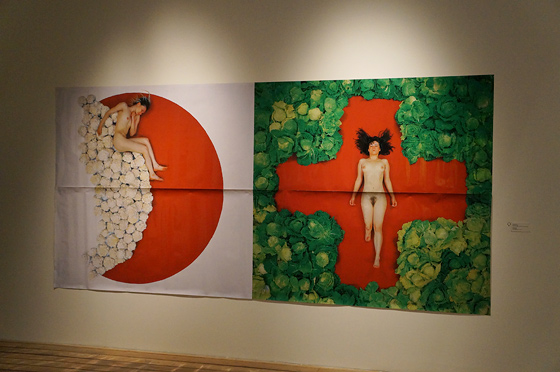 © colta.ru Kozyra Qatarzhina. Blood ties. 1995
The general mood of the exhibition can rather be designated as fun, but not so, violent and close to ecstasy, which was often found in post-Soviet cultural products-but restrained, emanating from people, more or less soberly aware of their weakness and strength, who were in a hostile environment or at least in cultural isolation, and it is not only about socialist time. Therefore, the first and important component of most works is the output outside in various types. Here, for example, is Croatian artists: one, stripping naked, walks along the crowd streets, raises his hands welcome, suddenly begins to push up, etc. (Tomislav Kholovts, “Zagreb, I love you!”, 1981), but the other becomes with the urn for voting on the street, asking the passers -by, he is or not (Goran Trbulyak, “referendum”, 1972).
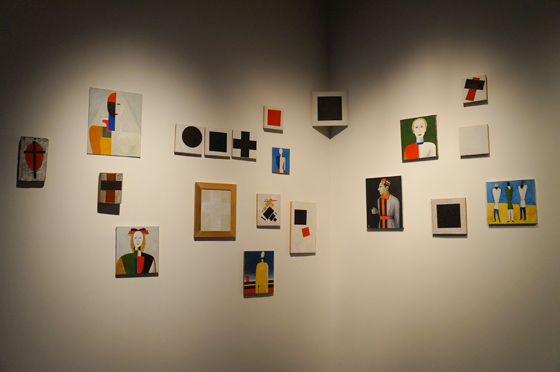 © colta.ru Kazimir Malevich (Goran Georgievich). The last futuristic exhibition. 1985-1986
For other artists, such a way out was a video that made it possible to transfer from the world of restrictions into a changed reality, where everything is not so hopeless (by the way, in Russia, for these purposes, they often used the area, let’s say, literary; an example from the exhibition-the letters of Van Gogh to his brother Theo rewritten in the early 1990s). One of the most important artists of Eastern Europe of the second half of the twentieth century, Yon Grigreska , Romanian Bruce Nauman , is presented at the exhibition in the Garage by several video performations of the 1970s, in one of which, for example, he boxes with himself, and in the other talks with a man in the mask of Nicholas Chaushu. Serbian artist Militsa Tomich is trying to break out of the intricacies of ethnic and confessional identities that became the causes of a series of bloody conflicts in the former Yugoslavia. In the video “I am Militsa Tomich” she acts “from the position of the wound”, as stated in her statement given at the exhibition, and not on behalf of any social group. The team “what to do” together with the students of the school of involved art in the video “Excluded”, which was shown a few months ago on Colta.ru and which tells about the atmosphere of discrimination and stigmatization, which reigning in today's Russian society, put this method of shooting at least through the video in question - there is nowhere to run.
Militsa Tomich. I am Militsa Tomich. 1998
The parallel line of this exhibition is the question of the collection itself. Zdenka Badovinats already told Colta.ru , how it happened that this museum appeared in Ljubljana, and there were so many interesting and important works in it over the past half a century; It is more important why nothing equal happened in Moscow. As the art critic Anna Tolstova noted , "so far in Moscow they endlessly discussed the question of what our museum of contemporary art, trying to keep up with New York, London and Berlin, made this museum in Ljubljana." In fact, this exhibition is reproach-not dumb, but screaming-to everyone who supported this endless discussion (including the leadership of the “garage”) without any results, and when the process moved a little bit , it became clear that this is a fateful delay: the economic crisis and re-profiling of the entire state to almost prehistoric (for example, history with the former houses of the new culture ). It is unlikely that the health of Badovinz wanted to turn to this urgent problem, but it has already happened.
So it turns out that the “grammar of freedom” is like late -Soviet cinema, about the importance of which I had to write for understanding modern art: there is laughter and tears.