
Translated material
"Everything seems to be true, but it is not true!"
A special project “School of the 90s” , launched by Colta.ru, the educational portal “Your History” and the “Lessons of the nineties”, is dedicated to the era of the 1990s in the context of Russian history. For the most important period in the latest history of Russia, we will look at the main signs of that time and its key events through the eyes of famous teachers of history and literature.
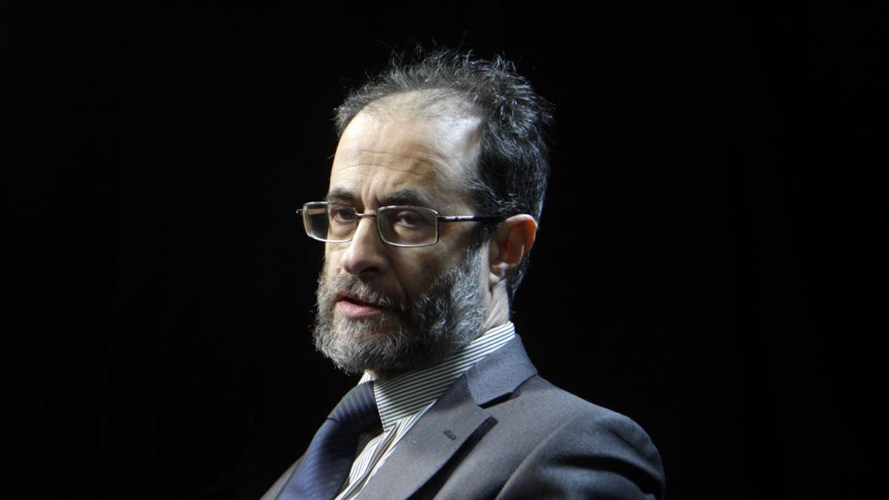
Leonid Aleksandrovich Katskva is the author of dozens of textbooks and history manuals, laureate of the Moscow City Hall in the field of education. He has been working in gymnasium No. 1543 in the south-west since 1980.
I got into this school by accident. By distribution in the city department of education, I was offered a choice of three schools, and all of them were at least an hour from my house in the Proletarsky district. I just chose the southwest by belly, believing that this area is more intelligent than the city of Moscow as a whole. I liked it here: the director painstakingly selected teachers to this school, and there was a nice team here. Since the 1990s, it has become a gymnasium, and it did not make sense to leave here at another school. Work at the school is addictive, and it becomes difficult to combine it with something else. So I work here the 35th year. Moreover, in our school there are people with greater experience. The director, organizer of extracurricular work and one of the teachers have been working from the founding of the school, that is, since 1975. And there are people who have a total experience in teaching, but they came to our school later.
"Leonid Sanych, get up, revolution!"
On August 19, 1991, I was traveling on a train with my graduates, whom I took on a hike to the Kola Peninsula. I woke up when some kind of, as it seemed to me, a completely idiotic performance, swore, turned over, rolled over to another side and fell asleep. After half an hour, I woke up because my beloved graduate shook me by the shoulder and shouted: “Leonid Sanych, get up, coup!” The rest of the time-and we arrived in Moscow in the morning of the 20th-we, together with all the train, sat like on needles. Information came to us only on train radio, which transmitted exclusively the information of the State Emergency Committee. On August 19, somewhere at five hours, the train entered the city of Petrozavodsk. No matter how much I drove by train, at large stations I always saw the same picture - the train stops, men jump out of all wagons and run to buy beer. In Petrozavodsk 1991, the men and Strekgov jumped out of all wagons, trying to get ahead of each other, ran to the newspaper kiosk. And it is closed - there are no newspapers, the newspapers did not come out.
If the GKChP won, then 1992 would not have passed without hungry riots, or perhaps without a civil war.
Then we arrived in Moscow, and, leaving the Leningradsky station, I saw a leaflet in support of Yeltsin, written by hand and soaked on the wall of the station. Then I felt completely scared, because I thought that all the typographic possibilities, all the printers were captured by supporters of the State Emergency Committee. Well, I came home. And my house was then located a wall in a wall with the building of the radio committee on Novokuznetskaya Street. Right at my entrance there was an armored personnel carrier, which was set to guard the radio committee. Then it became a little easier for me, because the boys climbed the armored personnel carrier, and there was a feeling that the crew was determined peacefully. I asked the commander of the Bronika: "Have you been put here for a long time?" He answered me melancholy: "Three days." It was August 20, I then had a three -month -old child, and I went to him, and not to the White House. I still think that if then the GKChP won, then 1992 would not have passed without hungry riots, and maybe without a civil war.
After the August events of 1991, nothing changed for me at school. Back in 1984, my graduates told me that "in your lessons, we learned not to make a deal with our conscience." It was a deep Soviet time, I was a young teacher, who worked for only four years, and I believe that it was worth a lot. In the late piercing period, I already set out both in the lessons and in extracurricular communication with the children everything that I considered necessary.
I spent the coup of 1993 at school. I had lessons. When the shooting began, we gathered all high school students who came to school, in the offices where there are TVs, sat and looked: neither schoolchildren nor we could move away from this and conduct lessons. My sympathies were all the time on the side of the political force that Yegor Timurovich Gaidar personified. Today they are on the side of this force, although, unfortunately, Gaidar is no longer there and this political force is not there either. The wording of the "dashing 90s" never suited me. I believe that these were years of economically heavy and complex. But it is quite clear why: firstly, a rusty, no suitable, but still operating economic machine, went to scrape, and it was necessary to create a new machine. And secondly, oil prices were then $ 15 per barrel, not even $ 56-60, as it is now.
There were more loads
In 1994, we became gymnasium No. 1543 with the official name "Moscow Gymnasium in the South-West." The gymnasium had the right to take away children - not to the first grade, of course, but in the fifth. Gymnasiums had the opportunity to start profiled training before. The initiative to transform into gymnasium did not belong to the administration, but part of the team. She appeared after a very strong mathematics teacher Boris Petrovich Heidman came to the school and special mathematical classes were typed. Then, as a historian and several philologists, I initiative to create humanitarian classes. Then we had biological classes, this made the school transition to a valid gymnasium status, and we ceased to be a secondary school named after Gagarin No. 43. Later we had the fourth department-physico-chemical.
In the nineties of the gymnasium, they had another curriculum, more saturated, now the curriculum in all educational institutions has one maximum permissible load. In addition, in the 90s there was a maximum set into classes-25 people. We had classes that graduated from 17 people, and there was a class that graduated from 12 people. This, of course, was comfortable. Now 25 people are both the minimum and the maximum. Less than 25 - can close the division of the class into subgroups; Closer to 30 - the pressure begins on the administration from the part of the educational authorities. Now we have classes where 30 people are studying. And in the Soviet years, my personal record was 43 people-42 were sitting at the desks, and in those rare cases when no one was ill, the 43rd I had to plant at my table.
In the nineties, there were larger stress in the humanitarian classes. First of all, because we did not have such an object as social studies, and, accordingly, with its introduction of a watch, we decreased the story. Plus, the economy, some more objects ... By the way, this affected not only the humanitarian classes; We brought the clock to the allowed minimum and in non -humanitarian specialized classes. Well, what to do?
And what does a small salary have to do with it?
Three years ago, one of my colleagues, a teacher of history/social science, wrote an article that had a paradoxical name: “I want to get a small salary.” The fact is that the 1990s were economically very difficult for all of us. My personal record is when I worked in five works: at school, at a certain methodological institute, at the courses, in the teacher’s certification commission and somewhere else. Because living with the money that we paid at school was impossible. But the 90s had one big advantage: all people who previously considered their duty to give guidelines and demand their execution, instantly disappeared. There were no inspectors, methodologists ceased to appear, polite uncles from the district committees, party and Komsomolsky, and other inspectors ceased to come. Nobody interfered with the teachers to engage in creativity. And in the 2000s-and this really happened in parallel to the growth of wages-the beginning of the reporting in a wide variety of forms began to multiply.
There was no such bureaucratic madness at school before.
In recent years, I have not been a class teacher, and this reporting concerns me to a lesser extent, but I see what people who are class teachers. They are required to write paper by every step. You lead the children to the theater - make an order for access to the theater. You lead the children on an excursion to the museum - make an order to go out with lists. In Soviet times, orders for exit in the city were not written. In addition, every child should sign in the book that he listened to the safety instruction. And at the same time, in order to let the child go home not from the door of the school, but from, for example, the theater in the city center, I must have special paper from his parents, for each, that he is allowed to return myself. Despite the fact that he will go from school all the same, and perhaps it will take him more time. There was no such bureaucratic madness at school before. And what does a small salary have to do with it? When she was small, we always lacked teachers. Vacant places were even in our prosperous school. When teachers in Moscow began to steadily receive inconspicuous money, unemployment was overcome, and now there are almost no vacancies in Moscow. In this situation, the supervisory authorities considered that they have the right to demand, and demand, and demand. And if someone is indignant and says: “I, perhaps, will go from here”-“Come, replace it with another.”
There is nothing to do on this field for loners
For all their difficulties, the 1990s are years of freedom. I used this freedom to the fullest: I wrote textbooks in the 90s, which then entered the federal set-enough children studied on them. I could not do this either in Soviet times or now, since we have decided that in Russia the variability of the types of educational institutions and educational literature is not needed. We have adopted the so-called historical and cultural standard, according to which all textbooks should be written. At first, in general, it was about the fact that the textbook would be one, one, then, I think, this decision came across the stubborn resistance of the publishing business (and it is quite strong) - well, probably, the professional community began to be indignant a little. We played back: in the fall of 2015, not one textbook will appear, but three, probably, within the framework of a single historical and cultural standard. A competition was to be announced, but nothing is known about its results yet. However, there is nothing to do on this field on this field.
As part of this instruction, I am ready to write two chapters about the nineties, the content of which will be the opposite.
The concept of the historical and cultural standard is written quite neutral, but there are topics that are not written discussion, although they are debatable. Let's see what is said about the first period of the 1990s-92–93 years: “... should be characterized as a post-Soviet, although in many ways a transitional one. In a short time, in the context of the ongoing economic crisis in the Russian Federation, the dismantling of the Soviet economic system was carried out and the foundations of a market economy were laid. These tasks were implemented during the liberal in content, radical for the execution of economic reforms, begun by the Government of Yeltsin and Gaidar in January 1992. Shock therapy has led to a sharp decrease in the standard of living of the population. ” Everything seems to be true, but it is not true! Because not shock therapy led to a sharp decrease in the standard of living of the population, but everything that happened to this. Yes, prices in 1992 increased by 15 times, but the fact is that before that the stores were simply empty, there was actually a card system. I had a personal record - I stood in line for bread for three hours. A little more-and there would already be the level of the February revolution. Shock therapy was the result of a fall in the standard of living, and not the standard of living fell due to shock therapy. But even many of my colleagues of this substitution will not notice and they will tell the children that "shock therapy led to a fall in the standard of living."
We read on: “The voices of critics of radical reforms, including members of the deputy corps, intensified” is pure truth. “The socio-economic crisis, the collapse of management structures, separatist trends due to the collapse of the USSR” is a lie. This collapse of the USSR occurred due to accumulated separatist trends. “The consequences of the struggle of the center for the loyalty of autonomy, the policy of autonomy of Gorbachev, the call of Yeltsin“ take as much sovereignty as you want ” - all this led to the growth of centrifugal tendencies in the regions in Russia” is not true. If it were not for Yeltsin’s statement “take as much sovereignty as you want”, these centrifugal trends would be sharper and more radical - my deep conviction. And the willingness of the center to negotiate and conclude agreements on the division of powers is what helped to maintain the Russian Federation from the collapse. “The confrontation between the presidential and parliamentary branches of the authorities in 1993, which had grown in 1993, increased to the political and controversial crisis and paralysis of the authorities,” was the absolute truth. "Russia was on the verge of a civil war." And I don’t know what happened in October 93rd-it was “on the threshold of the Civil War” or she, albeit local? But the most important thing is that a completely negative sensation is created from reading this text.
Different children need different textbooks, and different teachers need different textbooks.
We read further: “The second period in the history of Russian statehood is 1993-2000. In 1998, the economy was shocked by a new financial crisis, default , which had a temporary beneficial influence on economic processes. ” Defolt had a temporary beneficial effect on these processes? This is also nonsense. The devaluation carried out together with the default, because it allowed some import substitution, which was aggravated by government leapfrog, corruption scandals, and a political crisis in the Chechen Republic. “In these conditions, President Yeltsin resigned, and in accordance with the constitution, the head of the state became Prime Minister Putin, who was soon elected by the new president of Russia.” And then, as you know, the tonality of the text changes sharply. I am ready to write two chapters about the nineties to the dispute in the framework of this instruction, the content of which will be the opposite. One will be completely liberal, and the second - sovereign, and even with a chauvinistic slope. And in fact, it is good that this is allowed. But those obvious punctures that I have stopped at is bad.
It seems to me that the decision on the transition to a single textbook is erroneous. Because it will not achieve the goal that its initiators want to achieve. The creation of a single patriotic text does not lead to an increase in patriotism, this is achieved in completely different ways. And, of course, this decision is deeply erroneously pedagogical, because in Russian education there are a lot of different types of schools, no matter how they try to unify them. Different children need different textbooks, and different teachers need different textbooks.
They tried to expel my acquaintance of history in Arkhangelsk from work, because his position on the Crimea did not coincide with the state.
Who is dangerous as a historian?
In Soviet times, I told my students: “I will tell you between us, as it was, but in the outside world you are about this.” In the 1990s and 2000s, I said something else: “You do not know who you will run into the exam. You can run into the teacher-heomalist, a nationalist or a communist, so the exam is not a place for the manifestation of political radicalism. You must express points of view and not come across a stupid fishing rod: “But what do you think?” - And if you are asked a question with an obviously provocative subtext, then you need to say: “I go to the university for this to develop my own point of view.” Today we are talking about that the child does not run into conflict with a single correct, highly approved point of view. God forbid, he, say, will critically respond to religion: what if the feelings of a believing teacher will be offended?
I have a familiar history teacher in Arkhangelsk, who experienced pressure due to the fact that his position did not coincide with the state in the Crimea-they tried to drive him out of work and threatened him with various sanctions. I know another case when the archivists, the people who worked in the archives and were looking for data on the repressed, began to pursue in connection with the law on maintaining the secrets of personal data supposedly the heirs of the repressed, although the matter is not about them. I am afraid that the name of the last book of my teacher Vladimir Borisovich Kobrin "Who are you dangerous, historian?" It can become relevant in connection with the emergence of a single textbook. I know that some scientists-historians are now not easy. There is no limit of this evolution, but I would like it to stop, not reaching the level of witch hunt. But where will she stop, who knows?
The material was prepared as part of the special project “School of the 90s” , launched by Colta.ru with the support of the educational portal “Your History” and the “Lessons of the nineties”.
Recorded Denis Boyarinov