
Translated material
Memory. Nikolai Gamaleya
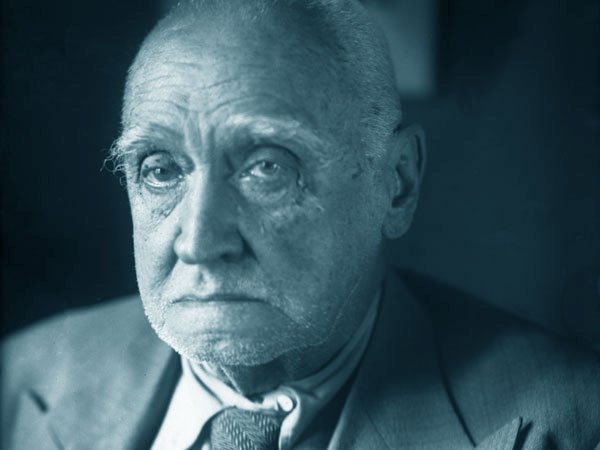
On February 17 (5), 1859, a doctor Nikolai Gamaleya, founder of domestic medical microbiology, was born.
Personal business
Nikolai Fedorovich Gamaley (1859–1949) was born in Odessa. He graduated from private gymnasium and entered the natural department of the Physics and Mathematics Faculty of Novorossiysk University. Studying there, he traveled to Strasbourg for three years in a row, where he studied biochemistry under the leadership of Felix Goppe-Sieler . In his laboratory, Gamaleya conducted the first study on the effect of oxygen on fermentation and decay. In 1881 he graduated from the University, having received the degree of candidate of medicine, and went to St. Petersburg to continue education at the Military Medical Academy. At the end of the Academy in 1883, Gamaleya returned to Odessa, where he became a resident in the clinic of nervous diseases Osip Mochutkovsky. Then, inspired by the work of Pasteur and the discovery of phagocytosis by Mechnikov, he arranged a microbiological laboratory at home. Working with Mechnikov, Gamaleya helped him in obtaining pure cultures for research on phagocytosis and at the same time mastered microbiological methods. In 1885, on a competitive basis, Nikolai Fedorovich was elected for a business trip to Paris to the laboratory of Louis Pasteur. During the work of Hamalea, Pasteur took place a famous case of salvation of several Russian peasants, who were bitten by a frantic wolf and arrived in Paris to Pasteur. After that, Pasteur decided to create a network of special stations for vaccinations in different countries of the world. In Odessa, such a station was opened by swordsmen, Gamaleya and Jacob Barda . At first it was located in the scientist’s apartment. During the time of work with Pasteur, Gamaley also mastered the methods of weakening of the bacteria of anthrax, which allowed it to use the vaccine from this disease. The Odessa Laboratory, the second in the world after Paris, conducted active scientific work and carried out mass vaccinations of people and animals. In 1892, Nikolai Gamaleya defended his doctoral dissertation "Etiology of cholera in terms of experimental pathology." He participated in the practical struggle against epidemics of cholera, typhoid and plague. From 1899 to 1908 he headed the bacteriological institute in Odessa he founded. In 1912, Nikolai Gamaleya moved to St. Petersburg, where he headed the St. Petersburg Office of Jenner. Since 1930, he has been living in Moscow, heading the Central Institute of Epidemiology and Bacteriology. In 1939, he was elected a corresponding member, and in 1940-an honorary academician of the USSR Academy of Sciences. Since 1938, Nikolai Gamaleya has been a professor at the Department of Microbiology of the 2nd Moscow Medical Institute, since 1939 also the head of the Laboratory of the Institute of Epidemiology and Microbiology of the USSR Academy of Medical Sciences.
What is famous
Nikolai Gamaleya is the founder of domestic medical microbiology and bacteriology. He made a significant contribution to the development of epidemiology, the doctrine of the variability of microorganisms. Working with a pasteur, Gamaleya developed the theory of vaccine fever, proving that the vital vaccine causes an increase in temperature in vaccinated animals, a feverish reaction is one of the manifestations of the production of immunity to the pathogen. In 1908, he first proved that rash typhus was transmitted through lice, substantiated the role of disinsection in the fight against typhoid. In the St. Petersburg (Petrograd) Opening Institute, he conducted research, more than once raised the question of mandatory dispute in Russia. On his initiative and with the help of the method of preparing the anti -deposited vaccine in 1918, a general vaccination against smallpox was carried out in Petrograd, which was then adopted throughout the country, according to the Decree of the Council of People's Commissars of April 10, 1919
What you need to know about
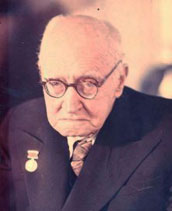 Nikolai Gamaleya
Nikolai Gamaleya took a large part in a practical struggle against infectious diseases. Working in the foci of cholera in Odessa, Saratov, St. Petersburg, Baku, he studied in detail the epidemiology of this disease. He was offered a detailed plan to combat cholera in cities by recovering water supply and sewage systems, which was not implemented by the authorities. In 1902, during the elimination of the outbreak of bubonic plague in Odessa, he first organized a service for the fight against rats and conducted a deratization on the scale of the whole city. Gamalea was the first to express the new idea of the creation of the anti -epidemic service in the army and developed a program of combating contagious diseases at the front. From 1910 to 1913, N.F. Gamaley published and edited the magazine "Hygiene and Sanitaria" for personal funds, where the urgent problems of public health are reflected. He raised issues of the organization of the Ministry of Health, institutions of sanitary bodies of supervision, restructuring water supply, city layout, preventing and suppressing contagious diseases, and improving housing conditions.
Direct speech
“Deeply Reasonable Joseph Vissarionovich! As one of the oldest scientists of our country, I appeal to you with this letter that has absolutely no personal points, and affecting one extremely important issue, which has a great political and public importance. <...> For me, as for many of my friends and acquaintances, it is a completely incomprehensible and amazing fact that the revival of such a shameful phenomenon as anti -Semitism, which reappeared in our country several years ago and which, oddly enough, begins to bloom again, taking diverse species and forms. Anti -Semitism begins to poison the healthy atmosphere of our Soviet society, begins to destroy the great friendship of peoples. Judging by the completely indisputable and obvious signs, the newly appeared anti-Semitism does not go from the bottom, from the masses, among which there is no enmity to the Jewish people, and it goes from above by someone's invisible hand. Anti-Semitism now comes from some high persons who have settled in the leading party bodies who are in charge of the selection and arrangement of personnel. ” From a letter from N.F. Gamaley Stalin on February 4, 1949
12 facts about Nicholas Gamaley
- Nikolai Gamaleya comes from an old Cossack family, originating, as it is believed, from Colonel Grigory Vysotsky, who was in the diplomatic service of the hetman Bogdan Khmelnitsky. He was probably the prototype of the hero of the poem Shevchenko “Gamalia” .
- The scientist’s grandfather was a headquarters, the author of a monograph on a Siberian ulcer, which was translated into German.
- The father of Nikolai Gamalei, the Guards Officer, participated in the war of 1812 and in the foreign campaigns of the Russian army.
- Nikolai Fedorovich was the twelfth child in the family.
- Interest in science by Nikolai Gamalei was born by Michael Faradey's book “History of the Candle”.
- When in 1886 it was necessary to prove the harmlessness of vaccinations against rabies, Gamaleya became the first healthy person to make such a vaccine.
- In St. Petersburg, Gamaley united a group of social doctors who monitored the sanitary condition of the overnight stays (“Meeting of the Non-term doctors”).
- Nikolai Gamaleya wrote a number of public books to disseminate knowledge about diseases and methods of combating them (“measles”, “smallpox”, “smallpox and disputation”, “rats and the fight against them”, “flu”, “rabies”). Many of them were translated into Ukrainian, Kazakh, Belarusian, Bashkir and Buryat languages. The scientist also wrote popular articles for the magazines “Science and Life” and “Knowledge - Power”.
- Gamalea took an active part in the struggle for the release from the conclusion of the famous microbiologist Leo Zilber , a researcher of tick -borne encephalitis. Together with scientists Nikolai Burdenko, Leon Orbeli, Vladimir Engelhardt, Zinaida Ermolyeva and writer Veniamin Kaverin Gamaley signed a letter to Stalin, which spoke about Zilber’s innocence.
- Having devoted many years to the study of tuberculosis, Gamaleya called the pathogen of this disease - Koch's wand - his “favorite microbe”.
- While working in Kazakhstan, local residents called the scientist Gamal-Aga.
- A month before the death of Gamaley, he sent two letters to Stalin about the strengthening of anti -Semitism in state policy, but did not receive an answer.
Materials about Nicholas Gamaley
Article about Nicholas Gamaley on Russian Wikipedia
State Research Institute of Epidemiology and Microbiology named after N.F. Gamaley
Rossyanov K.O. Gamaley Nikolay Fedorovich
Interview with the grandson of the scientist - doctor of biological sciences, head of the department of the Institute of Experimental Pathology, Oncology and Radiobiology of the National Academy of Sciences of Ukraine Nikolai Gamaley
Ilya Mechnikov, Nikolai Gamaleya: microbiologists against anti -Semitism
N.F. Gamaleya in the archives of the RAS